
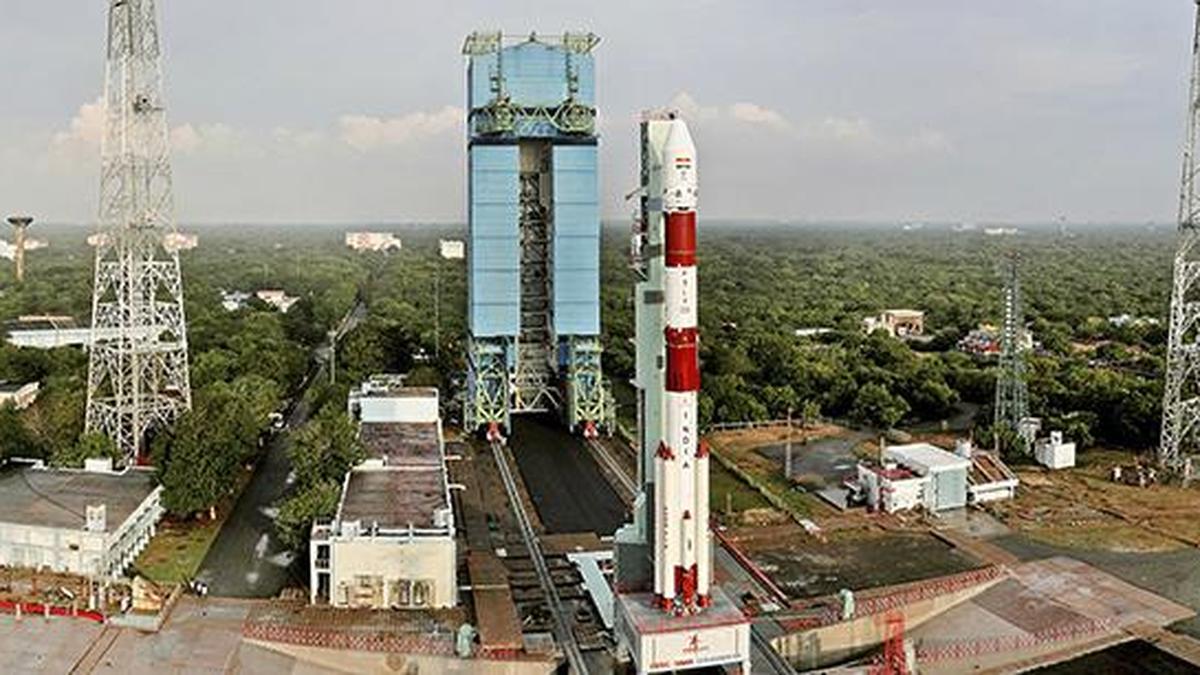
On May 18, 2025, the PSLV-C61 mission was a rare launch failure for the Indian Space Research Organisation (ISRO). The rocket has a reputation as a ‘workhorse’ because ISRO had had a string of successes with it and each of those launches had been thoroughly as intended. Today, however, ISRO faces two PSLV mission failures in a row following the apparent non-fullfilment of the PSLV-C62 mission as well.
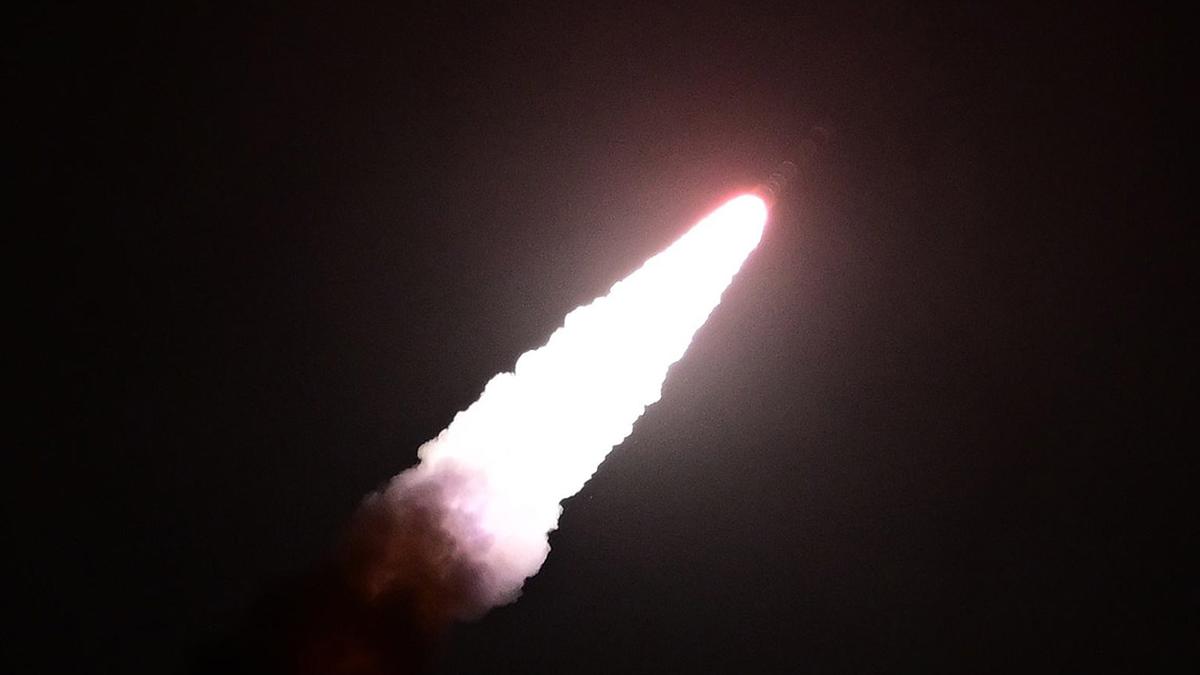
On January 12, roughly 50 minutes after the 10.17 am liftoff of the PSLV-C62 mission from Sriharikota, ISRO chairman V. Narayanan confirmed that the rocket’s third stage had suffered an anomaly. He added that ISRO would analyse the stage’s performance further and return with more details.
PS3 solid motor
The PSLV rocket has four stages. The C61 mission saw the rocket in its XL configuration, with six boosters strapped on to its first stage. Its primary payload was the EOS-09 (a.k.a. RISAT-1B) satellite, a heavy radar-imaging satellite designed to observe the earth’s surface in all weather conditions, and was to be used for disaster response and strategic surveillance. The rocket was to place it in a sun-synchronous polar orbit at an altitude of around 529 km.
The lift-off was normal. The first and second stages performed nominally, separating as planned and the rocket was on the correct trajectory in these phases. The anomaly occurred when the third stage, PS3 — a motor using solid fuel — was operating.Around 203 seconds into the flight, telemetry data indicated a sharp and unexpected drop in the motor’s chamber pressure within the third stage motor.The drop resulted in the engine not generating the requisite thrust, causing the rocket to not be able to reach its intended orbit. ISRO subsequently aborted the mission and the rocket, along with the EOS-09 satellite, fell back.
Editorial | Tough timing: on ISRO PSLV-C61 mission, India’s space programme
After the incident, a Failure Analysis Committee (FAC) got to work and (presumably) pinpointed the issue to be the PS3 solid motor system. The particular defect seemed to be a structural or material failure within the third stage’s nozzle or casing system, leading to the loss of pressure. The suspect mechanism? A potential issue with the flex nozzle control system or the insulation lining, which failed to contain pressurised gases, effectively choking the engine’s power.
ISRO also responded by grounding all PSLV launches for around eight months while it implemented strict quality control measures and reinforced the design of the third stage.
Failure Analysis Committee report
Note in the previous passage the use of the words “potential”, “presumably”, “seemed to be”, “suspected”, etc. — they’re not accidental. This is because ISRO falls under the Department of Space, which comes under the Prime Minister’s Office (PMO). The FAC submitted its report to the PMO, but which hasn’t cleared the report for public release.

The most plausible reason for the secrecy isn’t the rocket but the payload. EOS-09 (RISAT-1B) had applications in defence. ISRO has released detailed failure reports for other rockets, such as when the cryogenic engine of the GSLV-F10 mission failed, relatively quickly. A full failure report will require disclosing the precise flight profile and deployment sequence of the satellite. In fact if RISAT-1B had any defence-related components, there may have been concerns that revealing how it broke up or which debris survived re-entry could expose classified material technologies or specific orbital intent that the military wants to keep off the public record.
But this isn’t the full picture. For one, it should still be possible to release the FAC report while redacting any sensitive information. After all it was clear that the problem was localised to the PS3 stage, and did not involve the PS4 stage or any of the payloads installed on the rocket.
For another, ISRO is aggressively pushing the PSLV as a commercial product through NewSpace India, Ltd (NSIL). The PS3 is a solid fuel motor and a technologically mature component; it shouldn’t fail. So a failure here suggests a lapse in quality assurance or supply chain management rather than a design flaw per se.
If the root cause was simple negligence, such as a manufacturing defect — which media reports of the FAC’s conclusions indicated — or a missed inspection, admitting this in public could be devastating for the PSLV’s commercial insurance premiums and reputation. It is plausible, although to what degree of certainty is unclear, that the report is also being withheld to prevent claims of gross negligence from commercial partners or to avoid ‘spooking’ the market right before the PSLV-C62 launch.
Second, technically speaking, saying the mission failed due to a “drop in chamber pressure” is almost a tautology: it’s describing the symptom, not the cause. This is like saying a person with a severe disease died of heart failure or brain death. Ultimately a person in India can die only of these causes, yet it’s also not useful to know for a person studying the disease and trying to understand how it inflicted its harm.
A sudden pressure drop in a solid motor usually implies a casing breach (a.k.a. An explosion) or a nozzle blowout. If the nozzle blew out, such an incident would raise important questions about the integrity of the materials used in the entire fleet. By keeping the report classified, ISRO avoids having to publicly answer whether this was a bad batch of materials, which would ground the fleet for longer, or a fundamental design fatigue in the “workhorse” rocket alone.
Taken together, there are many reasons to believe the FAC report isn’t simply stuck with the PMO. It remains plausible that it’s being contained because the truth involves either sensitive military data or an embarrassing lapse in quality control that would harm India’s nascent efforts to privatise space and spaceflight endeavours.
Effects of unintended roll
This is the context against which the PSLV-C62 mission failure operates. ISRO Chairman V. Narayanan said following the PSLV-C62 launch that PS3 had suffered a “roll rate disturbance, leading to a deviation in its flight path”.
The roll refers to the rotation of the rocket around its longitudinal axis, which is the imaginary line running from the nose cone to the tail.
For a rocket to reach orbit, it must maintain a very precise orientation. While some rotation, called spin stabilisation, is sometimes intentional, an unintended roll, or disturbance, can be fatal for two reasons. First, the rocket’s ‘brain’, the inertial navigation system, uses gyroscopes to know which way is ‘up’. If the rocket acquires a high roll rate, meaning if it starts spinning violently, the sensors can become saturated or dizzy, leaving the system to lose track of which way it’s pointing. Eventually it can no longer steer the rocket towards the correct orbit.
Second, while the PS3 motor generally provides thrust, it doesn’t have its own roll control thrusters. Instead it uses the small thrusters of the stage sitting on top of it, i.e. the PS4 stage, to keep it steady. The disturbance reported during the PSLV-C62 mission implies something on the PS3 motor, for example a gas leak from the side of the nozzle, generated a large twisting force. This torque could have been stronger than what the small PS4 thrusters could counteract, leaving the rocket to corkscrew out of control.
To be sure, this is a preliminary analysis. Think of it as an educated guess. Only a full-fledged failure analysis by technical teams at ISRO can reveal what actually went wrong.
Big picture
That being said, given the apparent mode of failure of the PSLV-C62 mission, it’s hard to believe the two consecutive failures are unrelated. PSLV-C61 suffered a “drop in pressure”, suggesting that the nozzle throat could have eroded too fast or the casing was breached, venting gas sideways. Assuming this was the issue in PSLV-C61 and assuming the same breach happened slightly differently in PSLV-C62 — say, a jet of gas leaked out the side of the nozzle joint — it would have created a large pinwheel effect, leaving the rocket spinning out of control.
However, irrespective of the precise causes of failure, the fact that it happened at all is an indictment of the decision to keep the PSLV-C61 FAC report internal. Because by doing that, ISRO also avoided external checks of its ‘return to flight’ criteria, which will be under greater scrutiny now, including to consider whether ISRO implemented a superficial fix.
Put another way, whatever is still up in the air, the big picture right now is certainly that ISRO launched the PSLV-C62 mission eight months after a major failure while concealing the investigation’s results.