

Skip to content
  • Facebook
  • X
  • Linkedin
  • WhatsApp
  • YouTube
  • Associate Journalism
  • About Us
  • Privacy Policy
  • 033-46046046
  • editor@artifex.news
Artifex.News

Artifex.News

Stay Connected. Stay Informed.

  • Breaking News
  • World
  • Nation
  • Sports
  • Business
  • Science
  • Entertainment
  • Lifestyle
  • Toggle search form
  • Date, Earnings Call Details And Share Price History Business
  • Access Denied World
  • India vs South Africa 3rd T20I: Tilak Varma Century Guides India To 11-Run Win Over South Africa
    India vs South Africa 3rd T20I: Tilak Varma Century Guides India To 11-Run Win Over South Africa Sports
  • IPL | When players go beyond cliches and illuminate the format
    IPL | When players go beyond cliches and illuminate the format Sports
  • Dolby bets big on Indian automobile sector to replicate China success story
    Dolby bets big on Indian automobile sector to replicate China success story Business
  • Access Denied Sports
  • Jemimah Rodrigues says World Cup win has fuelled India Women’s hunger for more success ahead of CT 2027
    Jemimah Rodrigues says World Cup win has fuelled India Women’s hunger for more success ahead of CT 2027 Sports
  • Parle collaborates with IBM to drive digital transformation using cloud, AI
    Parle collaborates with IBM to drive digital transformation using cloud, AI Business
TB vaccine offers clue to retrain immune system against Alzheimer’s

TB vaccine offers clue to retrain immune system against Alzheimer’s

Posted on August 10, 2026 By admin


As the immune system ages, it enters a state of chronic, low-grade inflammation called ‘inflammaging’.

In the brain, inflammaging is especially damaging. Immune cells that normally clear toxic amyloid-beta, a protein that can clump together to form the plaques characteristic of Alzheimer’s disease, instead become dysfunctional, fuelling the neuroinflammation that drives the disease.

So a vaccine that stimulates the immune system would seem an unlikely treatment for a disease driven by brain inflammation. But a new study in Communications Medicine suggests the century-old tuberculosis vaccine Bacillus Calmette-Guérin (BCG) does the opposite: rather than boosting immunity, it retrains innate immune cells within the ageing brain.

Training the immune system

The study is based on trained immunity, a phenomenon in which certain vaccines give innate immune cells a long-lasting memory, making them more effective against unrelated threats. Unlike antibodies, which recognise specific germs, trained immunity makes the innate immune system respond more effectively to many different threats. Clinicians have also long observed that bladder cancer patients treated with BCG have a lower incidence of dementia.

To test whether this immune training extends to the central nervous system, researchers at the Massachusetts General Hospital, U.S., enrolled 23 older adults, roughly half with and half without cerebrospinal fluid biomarkers of Alzheimer’s disease. Participants received two BCG doses a month apart and researchers tracked blood and the fluid over the following year.

Measuring this fluid is hard.

“From a 10-ml blood draw, you get about 10 million immune cells. During a lumbar puncture, you get about 10,000,” said Mahesh Chandra Kodali, a neuroscientist and study co-author at Massachusetts General Hospital.

But even with so few cells, the team found that monocytes — the predominant immune cells in cerebrospinal fluid in the study — switched on genes linked to a faster, more alert immune response, mirroring similar changes in the bloodstream.

“The findings strikingly reveal that trained immunity-like responses can occur within” the central nervous system, which is normally shielded from much of the body’s immune activity, Soumen Basak, an immunologist at the National Institute of Immunology, Delhi, said.

Notably, when the team reexposed these cells to BCG itself in the lab, they didn’t respond more strongly than before. But they did respond more strongly to an unrelated bacterial molecule called lipopolysaccharide (LPS) — suggesting the vaccine had put cells on general alert, rather than teaching them to recognise BCG alone, Dr. Kodali said.

Immune cells respond differently depending on the tissue they inhabit. Cells in the liver, for example, react differently to the same signal than similar cells in the lungs. So Dr. Basak suggested the brain may similarly shape how these cells respond.

This illustration made available by the National Institute on Ageing/National Institutes of Health depicts cells in an Alzheimer’s affected brain, with abnormal levels of the beta-amyloid protein clumping together to form plaques (brown) that collect between neurons and disrupt cell function.

This illustration made available by the National Institute on Ageing/National Institutes of Health depicts cells in an Alzheimer’s affected brain, with abnormal levels of the beta-amyloid protein clumping together to form plaques (brown) that collect between neurons and disrupt cell function.
| Photo Credit:
AP

Race against time

Whether this change in the way immune cells respond actually helps clear amyloid plaques from the brain is a separate question — and here the data suggest a race against time.

In participants without established Alzheimer’s, the results were promising. Amyloid levels fell in the cerebrospinal fluid and rose in the blood over the year — a pattern consistent with retrained immune cells helping move amyloid out of the brain and into the body. The authors did say this is descriptive rather than proof of clearance.

However, in participants with established Alzheimer’s, this change didn’t materialise. Dr. Kodali attributed this to the brain’s “ongoing inflammatory milieu and … dementia-related cascades,” referring to an environment where an already overwhelmed immune system has little capacity to respond. A damaged blood-brain barrier or dense amyloid plaques could also impede amyloid clearance even if immune cells had been retrained.

“This somewhat dents the therapeutic appeal of BCG in Alzheimer’s, while supporting its plausible utility as a preventive measure,” Dr. Basak said.

Resolving the paradox

In blood plasma, the vaccine triggered the expected sustained rise in inflammatory signalling proteins, especially in Alzheimer’s patients. But across the blood-brain barrier, which normally keeps the brain’s immune environment separate from the rest of the body, the cerebrospinal fluid changed into a calming, regulatory state in everyone, with no sign of runaway neuroinflammation. 

As Dr. Kodali put it, the trial was designed to understand the biology of BCG’s effects, not to test whether it treats or prevents Alzheimer’s.

With just 23 participants split into two groups, the study was too small to draw firm conclusions.

The study also lacked a placebo group, so it’s impossible to rule out other explanations for the changes observed. Cognitive scores barely moved either way — unsurprising, Dr. Kodali said, since “dementia itself occurs over a period of several years,” which is too long for a one-year study to capture.

That said, a different Massachusetts General Hospital trial may offer a clue to what a longer timeline could reveal. Dr. Kodali pointed to work by his colleague Denise Faustman, who has followed BCG-vaccinated type I diabetes patients for over five years and has recorded early improvements in a key Alzheimer’s linked marker.

Dr. Kodali said this is consistent with a broader pattern in BCG research: the vaccine’s effects rely on slow chemical modifications that influence how genes are switched on or off, and which may take longer than a year to fully show up.

Clinical effects

Modern anti-amyloid drugs are expensive, Dr. Kodali said, whereas BCG is cheap and has decades of safety data behind it. That’s part of why the Banner Alzheimer’s Institute has submitted a roughly $200-million grant application to fund a large, randomised trial testing BCG as an Alzheimer’s preventive, he said.

Dr. Basak cautioned that any conclusions about the vaccine’s real-world relevance to disease will have to wait for such a trial. However, he also said the study points to the patterns of gene activity inside the brain’s own immune cells to be a promising new target for future therapies, potentially reaching beyond Alzheimer’s to other neurodegenerative diseases driven by inflammation.

Anirban Mukhopadhyay is a geneticist by training and science communicator from New Delhi.

Published – August 13, 2026 09:15 am IST


Source link

Science

Post navigation

Previous Post: Supreme Court allows Abhishek Banerjee to travel abroad for eye treatment
Next Post: Woman farmer breaks down as over 100 trees felled for power tower in Kallakurichi

Related Posts

  • World’s first wooden satellite built by Japan researchers
    World’s first wooden satellite built by Japan researchers Science
  • When you spill coffee, why does it leave circular stains?
    When you spill coffee, why does it leave circular stains? Science
  • How much salt should you take every day?
    How much salt should you take every day? Science
  • What the ‘science’ of delimitation and fertility struggles to capture
    What the ‘science’ of delimitation and fertility struggles to capture Science
  • Why public health nutrition policies need novelty, precise targeting
    Why public health nutrition policies need novelty, precise targeting Science
  • The Science Quiz | Non-classical states of matter
    The Science Quiz | Non-classical states of matter Science

More Related Articles

The world is moving on from paying publishers — India should too The world is moving on from paying publishers — India should too Science
Using AI to classify neem fruits based on azadirachtin content Using AI to classify neem fruits based on azadirachtin content Science
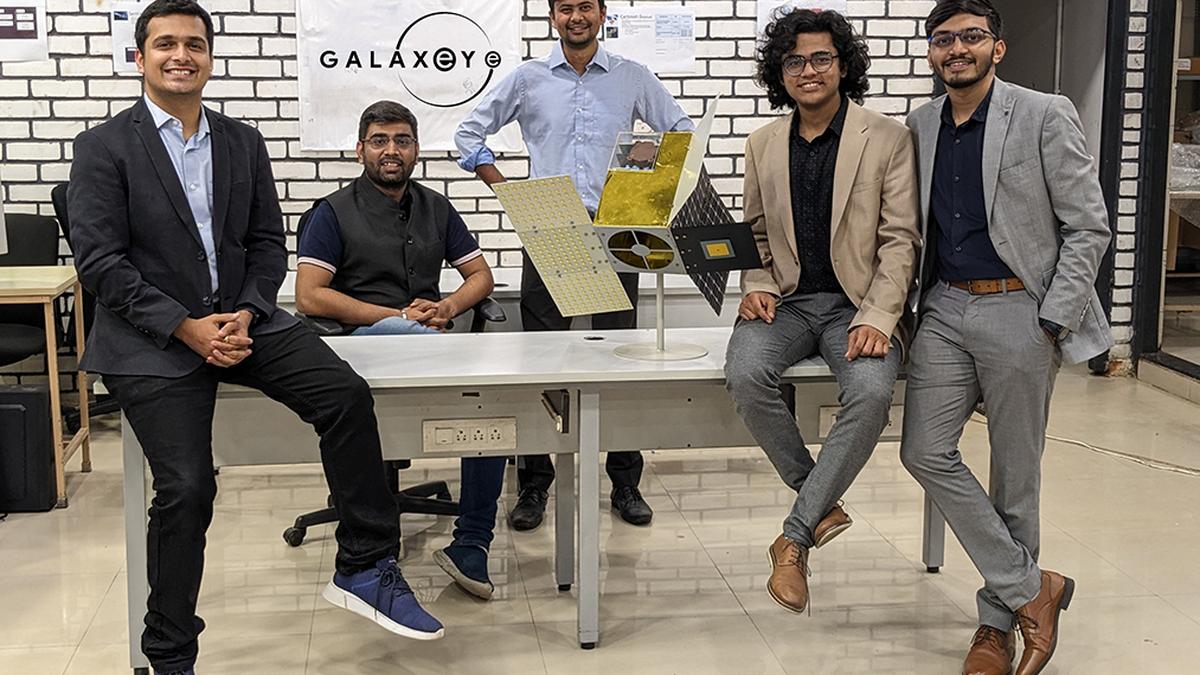
Space-tech firm GalaxEye to launch world’s first multi-sensor EO satellite in 2026 Space-tech firm GalaxEye to launch world’s first multi-sensor EO satellite in 2026 Science
ISRO successfully launches NVS-02 satellite; creates history with the 100th launch from Sriharikota ISRO successfully launches NVS-02 satellite; creates history with the 100th launch from Sriharikota Science
IISc researchers develop sustainable method to remove heavy metal contaminants from groundwater IISc researchers develop sustainable method to remove heavy metal contaminants from groundwater Science
Tonga volcano could cause unusual weather for rest of decade: study Tonga volcano could cause unusual weather for rest of decade: study Science
SiteLock

Archives

  • August 2026
  • July 2026
  • June 2026
  • May 2026
  • April 2026
  • March 2026
  • February 2026
  • January 2026
  • December 2025
  • November 2025
  • October 2025
  • September 2025
  • August 2025
  • July 2025
  • June 2025
  • May 2025
  • April 2025
  • March 2025
  • February 2025
  • January 2025
  • December 2024
  • November 2024
  • October 2024
  • September 2024
  • August 2024
  • July 2024
  • June 2024
  • May 2024
  • April 2024
  • March 2024
  • February 2024
  • January 2024
  • December 2023
  • November 2023
  • October 2023
  • September 2023
  • August 2023
  • July 2023
  • June 2023
  • May 2023
  • April 2023
  • March 2023
  • February 2023
  • January 2023
  • December 2022
  • November 2022
  • October 2022
  • September 2022
  • August 2022
  • July 2022
  • June 2022
  • May 2022

Categories

  • Business
  • Nation
  • Science
  • Sports
  • World

Recent Posts

  • Congress govt. committed to ensure welfare of the poor, says Bhatti
  • World Cup hockey: India begins with a solid win over Wales
  • APEPDCL honours 100 outstanding employees with appreciation certificates
  • IT rights body writes to Labour Ministry over Wipro’s onboarding delays
  • Mahatma Gandhi Temple sees crowd surge for 80th Independence Day celebrations

Recent Comments

  1. BradleyHug on UP Teacher Who Asked Students To Slap Muslim Classmate
  2. RichardCeX on UP Teacher Who Asked Students To Slap Muslim Classmate
  3. AnthonyQuend on UP Teacher Who Asked Students To Slap Muslim Classmate
  4. Williamfuers on UP Teacher Who Asked Students To Slap Muslim Classmate
  5. Williamfuers on UP Teacher Who Asked Students To Slap Muslim Classmate
  • Access Denied World
  • U.S.-Israeli strikes kill Iran Guards intelligence chief: Guards
    U.S.-Israeli strikes kill Iran Guards intelligence chief: Guards World
  • United Nations’ Antonio Guterres says ‘injustices’ against Africa must be corrected
    United Nations’ Antonio Guterres says ‘injustices’ against Africa must be corrected World
  • BJP Questions Rahul Gandhi’s Silence
    BJP Questions Rahul Gandhi’s Silence Nation
  • Access Denied Business
  • Pakistan vs England 3rd Test Day 3 LIVE Scorecard Updates
    Pakistan vs England 3rd Test Day 3 LIVE Scorecard Updates Sports
  • Sensex At Lifetime High, Nifty Hits Record High As HDFC, TCS Stocks Surge
    Sensex At Lifetime High, Nifty Hits Record High As HDFC, TCS Stocks Surge Nation
  • State Bank of India returns to dollar debt market, bankers see strong demand
    State Bank of India returns to dollar debt market, bankers see strong demand Business

Editor-in-Chief:
Mohammad Ariff,
MSW, MAJMC, BSW, DTL, CTS, CNM, CCR, CAL, RSL, ASOC.
editor@artifex.news

Associate Editors:
1. Zenellis R. Tuba,
zenelis@artifex.news
2. Haris Daniyel
daniyel@artifex.news

Photograher:
Rohan Das
rohan@artifex.news

Artifex.News offers Online Paid Internships to college students from India and Abroad. Interns will get a PRESS CARD and other online offers.
Send your CV (Subjectline: Paid Internship) to internship@artifex.news

Links:
Associate Journalism
About Us
Privacy Policy

News Links:
Breaking News
World
Nation
Sports
Business
Entertainment
Lifestyle

Registered Office:
72/A, Elliot Road, Kolkata - 700016
Tel: 033-22277777, 033-22172217
Email: office@artifex.news

Editorial Office / News Desk:
No. 13, Mezzanine Floor, Esplanade Metro Rail Station,
12 J. L. Nehru Road, Kolkata - 700069.
(Entry from Gate No. 5)
Tel: 033-46011099, 033-46046046
Email: editor@artifex.news

Copyright © 2023 Artifex.News Newsportal designed by Artifex Infotech.