

Skip to content
  • Facebook
  • X
  • Linkedin
  • WhatsApp
  • YouTube
  • Associate Journalism
  • About Us
  • Privacy Policy
  • 033-46046046
  • editor@artifex.news
Artifex.News

Artifex.News

Stay Connected. Stay Informed.

  • Breaking News
  • World
  • Nation
  • Sports
  • Business
  • Science
  • Entertainment
  • Lifestyle
  • Toggle search form
  • Space startup Agnikul raises ₹150 crore to fund reusable rockets
    Space startup Agnikul raises ₹150 crore to fund reusable rockets Science
  • FSSAI licence suspended, Zayaka Food Court in Kondapur ordered to shut as inspections uncover hygiene violations
    FSSAI licence suspended, Zayaka Food Court in Kondapur ordered to shut as inspections uncover hygiene violations Nation
  • Woman Strangles Newborn To Death While Feeding, Cites Girl Child Stigma
    Woman Strangles Newborn To Death While Feeding, Cites Girl Child Stigma Nation
  • SpaceX selloff an ominous sign as lockup expiry looms
    SpaceX selloff an ominous sign as lockup expiry looms Business
  • RBI sees rupee as undervalued; FCNR(B) inflows cross  billion
    RBI sees rupee as undervalued; FCNR(B) inflows cross $32 billion Business
  • Access Denied World
  • WikiLeaks’ Assange pleads guilty in deal with U.S. that secures his freedom, ends legal fight
    WikiLeaks’ Assange pleads guilty in deal with U.S. that secures his freedom, ends legal fight World
  • U.S. military pause on Iran attack: India tracking developments, says Centre
    U.S. military pause on Iran attack: India tracking developments, says Centre World
The first definition of the metre

The first definition of the metre

Posted on July 25, 2026 By admin


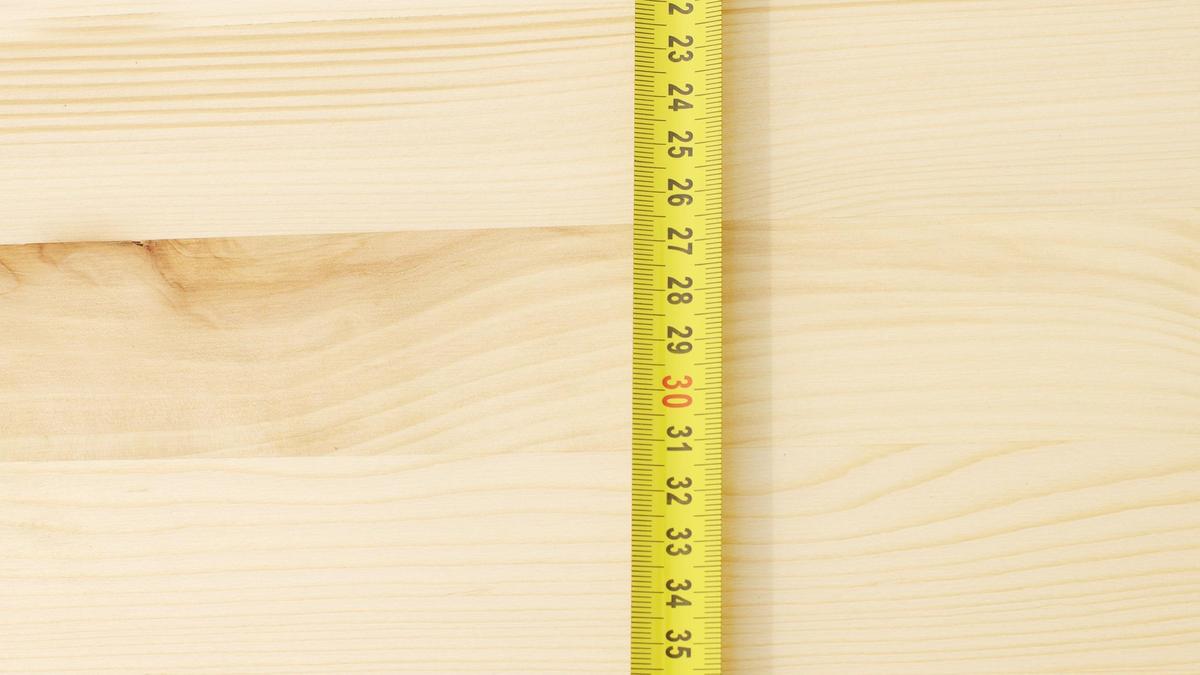
What is your height? This seemingly innocuous question, if you come to think of it, doesn’t always hand you the same answer. No, I’m not talking about the numerical part of the answer that is bound to be different for different people owing to their different heights. I am, instead, drawing your attention to the units that follow the numerical part of the answer. 

For many of us, that answer could be in feet and inches. The rest of us, meanwhile, would stick to metres, the international system of units (Systeme International d’Unites, SI). This difference was at the heart of the birth of the metre, especially during a time when there were no standards. 

Need for standardisation

We live in a hyperconnected modern world where the accurate measurement – be it of length, weight, or anything else – and precise definition are non-negotiables. From the smallest of electronic gadgets to the largest of buildings or transportation systems, global economies today function in a way such that items that make up the whole are sourced from around the world. For this earthly jigsaw puzzle to function at scale, the interchangeability and reproducibility has to be a given as the pieces have to fit perfectly every time, right from the first time. 

We take this for granted now as we live in a time when the standards have been established beyond doubt and accuracy of measurement is probably at its best through history. Things, however, were rather different earlier, even if we were to dial back a little over 230 years and head to a time late in the 18th Century. 

French connection

History-buffs out there will surely know the French Revolution as one of the biggest political, societal and historical events in history. What many might not know is the fact that it also served as the origin of the metric system.

Once the revolution was underway in 1789, the French public demanded uniform weights and measures everywhere in the nation in order to facilitate trade and avoid confusion. There was a clamour to replace the diverse regional systems of Europe with a new universal decimal system that was founded upon some “natural and invariable base”. The origin of the metric system was thus intertwined with the birth of the metre. 

By 1790, this project was green flagged by the National Assembly and a basic unit of length measurement, the metre, was proposed. Some of the best minds of the age were involved in defining it and they chose one that was based on the quarter meridian – a metre was to be a decimal unit one ten-millionth of the distance between the terrestrial pole and the equator.

Also read: Greenwich, the historic home of the prime meridian

Measuring expedition

French mathematician, astronomer, historian and geodesist Jean Baptiste Joseph Delambre and fellow mathematician, astronomer and surveyor Pierre Francois Andre Mechain embarked on an expedition from Paris. Their objective was to establish the definitive length of the metre by taking geodetic measurements between Dunkirk and Barcelona as it formed an arc section of the meridian that passed through Paris. This arc measurement, which took them the better part of six years from 1792-98, thereby served as the basis for the very first definition of the metre.

Even as Delambre and Mechain were triangulating their way towards an accurate measure, the French National Assembly, on August 1, 1793, “affirmed the decimal system and the meridianal definition of the meter, ordered the continuation of the work, and decreed that the Academy provide for the manufacture, distribution, and explanation of provisional meters for general use while it prosecuted its measurements.”

Following the survey of the arc, three platinum standards and several iron copies of the metre were made. Additionally, in order to help the populace familiarise with the new measure, it was decided to place the standard in the busiest places. More than 10 were installed in Paris alone and a couple of them have even survived to this day. 

Metre is redefined

In case you were under the impression that that was it, it wasn’t. For decades later, it was revealed through subsequent examinations that Delambre and Mechain had erred in their measurement. Given that many years had since passed, the metre was redefined rather than alter its length. Therefore, instead of a metre being one ten-millionth of the distance between the terrestrial pole and the equator, it was redefined as the distance between the two marks on a bar. 

The 1875 Treaty of the Meter, or the Meter Convention, was signed on May 20 to “assure the international unification and improvement of the metric system”, helping create the International Bureau of Weights and Measures (French: Bureau international des poids et mesures, BIPM). The BIPM, a diplomatic organisation tasked with the responsibility of maintaining an international system of units, continues to facilitate the standardisation of measurements world-wide to this day. In its 151 years of existence, the definition of the metre has been altered a number of times to the current version that we now learn at schools. 

The many metres

Here are the different definitions of the metre over time.

First definition (1793 onwards): One ten-millionth of the distance from the equator to the North Pole, measured along a meridian passing through Paris.

Prototype-based definition (1889 onwards): Once the error in the meridian measurement was identified, the metre was redefined as the distance between the two marks on a platinum bar that had served as the prototype until then. 

 Closeup of National Prototype Meter Bar made in 1889 by the BIPM.
| Photo Credit:
Wikimedia Commons

In 1889, a new prototype meter was created and internationally adopted. This was an improved platinum-iridium bar with lines inscribed at each end and the distance between them defining the metre. 

Replicas of this prototype that were accurate, but not identical, were then created to disseminate the length standard to various national laboratories. While this definition afforded stability, there was still the dependence on a physical reference.

Atomic and optical standards (1960 onwards): The 1960 definition of a metre was based on a krypton-86 radiation from an electric discharge lamp. As the metre was redefined in terms of a specific number of wavelengths emitted by krypton-86 atoms, it marked the departure from definitions that were dependent on physical objects. Instead, the definition was now based on natural phenomena. 

Speed of light definition (1983 onwards): The metre was further redefined in 1983 as the length of the path travelled by light in a vacuum during 1/299,792,458 of a second. By linking the metre with the speed of light, the unit of length was being linked to a fundamental constant of nature. 

In 2002, a clarification was provided stating that the metre represents a unit of proper length. The most recent revision came in 2019 when the definition was rephrased to explicitly incorporate the definition of the second based on the caesium-133 atomic frequency.

Also on August 1: Andrew Smith Hallidie conducted a successful demonstration of a cable car in San Francisco in 1873

Published – August 01, 2026 07:57 am IST


Source link

Science Tags:Has the definition of metre changed with time?, metre French Revolution metric system, The birth of the metre, The first definition of the metre, What is the definition of a metre?

Post navigation

Previous Post: U.S. court rejects Trump administration bid to revive $100,000 H-1B visa fee
Next Post: Bihar government appoints cricketers Akash Deep and Mukesh Kumar as DSPs

Related Posts

  • 315 successful space launches in 2025, finds Indian Space Situational Assessment Report
    315 successful space launches in 2025, finds Indian Space Situational Assessment Report Science
  • Gene that helps race horses manage BP could help human athletes, too
    Gene that helps race horses manage BP could help human athletes, too Science
  • Attend to | What does Tamil Nadu’s Namakkal district have in ordinary with the moon?
    Attend to | What does Tamil Nadu’s Namakkal district have in ordinary with the moon? Science
  • Calorie, a year-long exhibit at the Science Gallery Bengaluru, questions our relationship with food
    Calorie, a year-long exhibit at the Science Gallery Bengaluru, questions our relationship with food Science
  • Ancient genomes reveal legacies of human sacrifice and mediaeval epidemics
    Ancient genomes reveal legacies of human sacrifice and mediaeval epidemics Science
  • Sex systems drive faster mitochondrial evolution in many insects
    Sex systems drive faster mitochondrial evolution in many insects Science

More Related Articles

In Pictures | Artemis II’s voyage to the moon and back In Pictures | Artemis II’s voyage to the moon and back Science
Why do fish in schools have an easier time swimming in rough waters? Why do fish in schools have an easier time swimming in rough waters? Science
In breakthrough, scientists find pressure sensor in fat tissue In breakthrough, scientists find pressure sensor in fat tissue Science
The Science Quiz: AI in science, from neurons to nodes The Science Quiz: AI in science, from neurons to nodes Science
Sci-Five | The Hindu Science Quiz: On Sea Wolves Sci-Five | The Hindu Science Quiz: On Sea Wolves Science
Europe pioneers ‘firefighter donkeys’ to prevent wildfires Europe pioneers ‘firefighter donkeys’ to prevent wildfires Science
SiteLock

Archives

  • August 2026
  • July 2026
  • June 2026
  • May 2026
  • April 2026
  • March 2026
  • February 2026
  • January 2026
  • December 2025
  • November 2025
  • October 2025
  • September 2025
  • August 2025
  • July 2025
  • June 2025
  • May 2025
  • April 2025
  • March 2025
  • February 2025
  • January 2025
  • December 2024
  • November 2024
  • October 2024
  • September 2024
  • August 2024
  • July 2024
  • June 2024
  • May 2024
  • April 2024
  • March 2024
  • February 2024
  • January 2024
  • December 2023
  • November 2023
  • October 2023
  • September 2023
  • August 2023
  • July 2023
  • June 2023
  • May 2023
  • April 2023
  • March 2023
  • February 2023
  • January 2023
  • December 2022
  • November 2022
  • October 2022
  • September 2022
  • August 2022
  • July 2022
  • June 2022
  • May 2022

Categories

  • Business
  • Nation
  • Science
  • Sports
  • World

Recent Posts

  • Tamil Nadu Budget 2026: TVK government merely changed names of DMK’s schemes, criticises Udhayanidhi Stalin
  • Come 15th, we’ll be ready with all the answers: Gambhir
  • Bihar model schools makeover: Principals vow to follow renaming, repainting directives
  • Vijay government’s debut Budget strikes a balance between welfare and fiscal prudence
  • Yakshagana entering formal academic sphere a welcome move: Patla Satish Shetty

Recent Comments

  1. Arturocew on UP Teacher Who Asked Students To Slap Muslim Classmate
  2. RobertMix on UP Teacher Who Asked Students To Slap Muslim Classmate
  3. JamesSmalo on UP Teacher Who Asked Students To Slap Muslim Classmate
  4. JamesSmalo on UP Teacher Who Asked Students To Slap Muslim Classmate
  5. LouieExtip on UP Teacher Who Asked Students To Slap Muslim Classmate
  • Argentina Foreign Minister Sacked For Voting To Lift US Embargo On Cuba
    Argentina Foreign Minister Sacked For Voting To Lift US Embargo On Cuba World
  • Access Denied
    Access Denied Nation
  • Quad Foreign Ministers Warn Of Terrorists Using New Technology
    Quad Foreign Ministers Warn Of Terrorists Using New Technology World
  • Misogynist Influencer Andrew Tate’s Romania House Raided Over Rape Charges
    Misogynist Influencer Andrew Tate’s Romania House Raided Over Rape Charges World
  • Gary Kirsten, 4 Months After Taking Pak Coaching Job, To Quit. Here’s Why
    Gary Kirsten, 4 Months After Taking Pak Coaching Job, To Quit. Here’s Why Sports
  • Europe’s Digital Markets Act is forcing tech giants to make changes. Here’s what that will look like
    Europe’s Digital Markets Act is forcing tech giants to make changes. Here’s what that will look like World
  • After Women’s Quota, 76 Women To Enter Madhya Pradesh Assembly
    After Women’s Quota, 76 Women To Enter Madhya Pradesh Assembly Nation
  • Access Denied World

Editor-in-Chief:
Mohammad Ariff,
MSW, MAJMC, BSW, DTL, CTS, CNM, CCR, CAL, RSL, ASOC.
editor@artifex.news

Associate Editors:
1. Zenellis R. Tuba,
zenelis@artifex.news
2. Haris Daniyel
daniyel@artifex.news

Photograher:
Rohan Das
rohan@artifex.news

Artifex.News offers Online Paid Internships to college students from India and Abroad. Interns will get a PRESS CARD and other online offers.
Send your CV (Subjectline: Paid Internship) to internship@artifex.news

Links:
Associate Journalism
About Us
Privacy Policy

News Links:
Breaking News
World
Nation
Sports
Business
Entertainment
Lifestyle

Registered Office:
72/A, Elliot Road, Kolkata - 700016
Tel: 033-22277777, 033-22172217
Email: office@artifex.news

Editorial Office / News Desk:
No. 13, Mezzanine Floor, Esplanade Metro Rail Station,
12 J. L. Nehru Road, Kolkata - 700069.
(Entry from Gate No. 5)
Tel: 033-46011099, 033-46046046
Email: editor@artifex.news

Copyright © 2023 Artifex.News Newsportal designed by Artifex Infotech.