


Skip to content
  • Facebook
  • X
  • Linkedin
  • WhatsApp
  • YouTube
  • Associate Journalism
  • About Us
  • Privacy Policy
  • 033-46046046
  • editor@artifex.news
Artifex.News

Artifex.News

Stay Connected. Stay Informed.

  • Breaking News
  • World
  • Nation
  • Sports
  • Business
  • Science
  • Entertainment
  • Lifestyle
  • Toggle search form
  • Durand Cup | TRAU weathers a barrage from Navy to post a win
    Durand Cup | TRAU weathers a barrage from Navy to post a win Sports
  • The world needs to stop taking water for granted
    The world needs to stop taking water for granted Science
  • Rajasthan to host nationwide roadshows ahead of agritech meet
    Rajasthan to host nationwide roadshows ahead of agritech meet Nation
  • Israel Hamas War Qatar Says Mediation Will Lead To Release Of Hamas Hostages “Very Soon”
    Israel Hamas War Qatar Says Mediation Will Lead To Release Of Hamas Hostages “Very Soon” World
  • Access Denied
    Access Denied Nation
  • Deposed Bangladesh PM Sheikh Hasina admits ‘mistakes were certainly made’ by security forces during 2024 uprising
    Deposed Bangladesh PM Sheikh Hasina admits ‘mistakes were certainly made’ by security forces during 2024 uprising World
  • ,000 Bounty On Woman, With Ties To India, Wanted For Son’s Murder
    $25,000 Bounty On Woman, With Ties To India, Wanted For Son’s Murder World
  • Trump Calls For Canada To Become “51st State” Again
    Trump Calls For Canada To Become “51st State” Again World
Why are auto firms opposing Delhi’s revised electric vehicle policy?

Why are auto firms opposing Delhi’s revised electric vehicle policy?

Posted on June 27, 2026 By admin


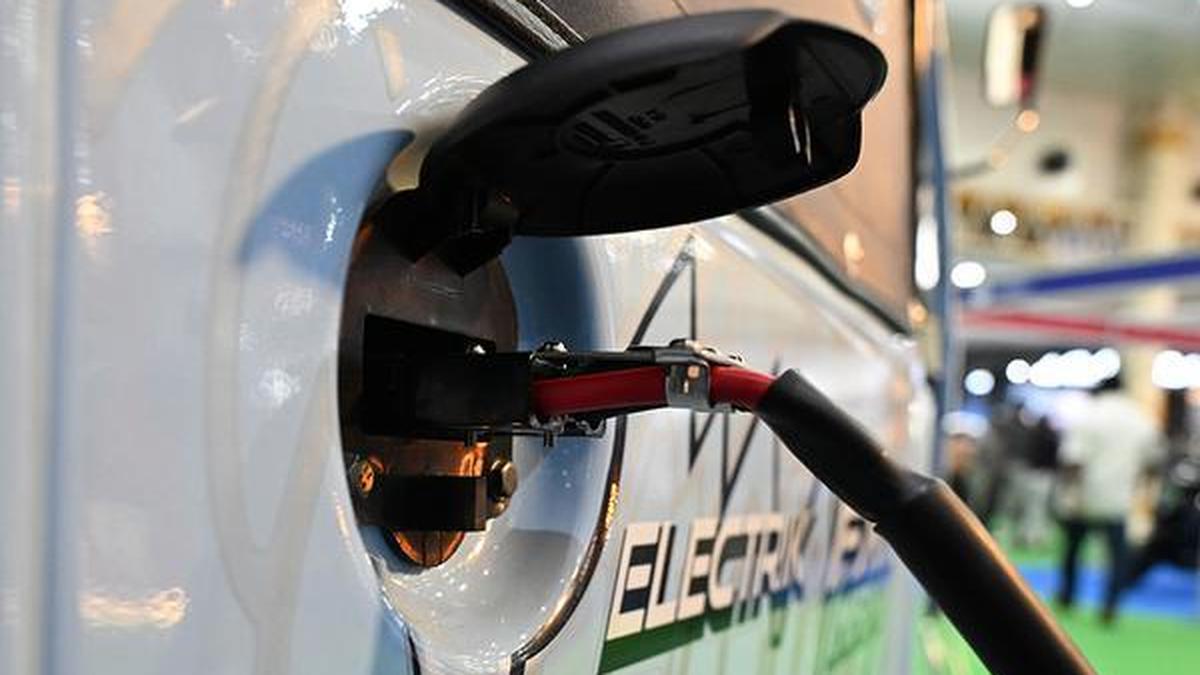
The story so far: Building on the momentum gained from its 2020 EV policy, which led to Delhi achieving almost 14% EV penetration by 2025, when the national average over the same period was about 8%, the Delhi Government has proposed what is arguably one of the most ambitious transport electrification policies in the country.

The revised draft EV Policy, issued in early April and currently under stakeholder consultation, envisages a complete ban on the registration of new internal combustion engine (ICE) three-wheelers from January 1, 2027. While this might seem drastic, the likelihood of achieving this target is considerably more manageable given that the three-wheeler segment has already witnessed relatively high levels of electrification compared with other vehicle categories.

What appears to be the real game changer, however, is the proposed ban on new ICE two-wheeler registrations from April 1, 2028 — barely two years from now. The rationale behind this is straightforward: an overwhelming 67% of Delhi’s registered vehicle stock comprises two-wheelers, and if the national capital is to achieve cleaner air in the foreseeable future, this segment requires targeted attention to enable the transition. The draft policy cites estimates by the Commission for Air Quality Management (CAQM) that vehicular emissions contribute around 23% of Delhi’s winter air pollution, making transport electrification central to the city’s clean-air strategy.

With a similar approach to other polluting segments, the revised draft policy proposes electrification mandates for school buses — with a target of 30% electrification by 2030 — fleet aggregators such as cab-hailing platforms and delivery services, as well as government transport fleets. The rationale here is that while the number of vehicles in these segments is considerably smaller than private two-wheelers, their pollution burden is disproportionately higher because of their daily utilisation.

Also Read | Govt. unveils ₹3,954-cr. draft policy to drive EV adoption, curb pollution

Who is objecting? And why?

Industry bodies and stakeholders have objected to these mandates, though largely not in the public domain. Industry executives and people familiar with the stakeholder consultations say manufacturers represented by bodies such as the Society of Indian Automobile Manufacturers (SIAM) have expressed reservations about their ability to scale up production of electric variants within the proposed timelines. Their concerns stem not only from the possibility of losing market share, but also from the argument that the market is not yet ready to pivot to an all-electric paradigm, as economies of scale have not yet reduced EV prices sufficiently to compete with comparable ICE two-wheelers.

They also point to gaps in both public and private charging infrastructure. While there has been considerable progress in the former through charger deployment mandates, service delivery and reliability remain a concern, with breakdowns, theft of charging equipment and power outages reported at several locations. In fact, a 2024 study by the Institute for Energy Economics and Financial Analysis (IEEFA) found that a 84% of the public charging stations it surveyed in Delhi were non-functional because of maintenance issues, theft and unreliable power supply. As for private charging, there has been persistent hesitation among Resident Welfare Associations and apartment complexes in permitting community charging stations, even though home charging is expected to account for the bulk of EV charging demand.

There are other issues as well. Stakeholders point to the lack of competitive financing, particularly for electric light commercial vehicles, quality after-sales service, and the decline in resale values of used EVs. Battery replacement costs and India’s continued dependence on imported battery technologies are also being flagged, particularly as much of the global EV battery supply chain — from cell manufacturing to processing of critical minerals — remains concentrated in China, with Indian manufacturers largely undertaking vehicle assembly.

Automobile manufacturers have therefore argued for a more market-led transition driven primarily by demand-side incentives, similar to the approach adopted under Delhi’s 2020 EV policy, and one that aligns more closely with Central government schemes such as PM E-DRIVE, which seeks to accelerate electrification of public transport and commercial vehicle fleets across the country.

Also Read | 100% road tax waiver for electric cars priced up to ₹30 lakh till Mar 2030: Delhi’s draft EV policy

What are supporters of the revised EV policy saying?

Proponents, however, argue that regulation — much like the Corporate Average Fuel Efficiency (CAFE) norms that pushed manufacturers to improve fuel efficiency in conventional vehicles — must sometimes push the envelope in pursuit of a larger public good. In this case, they argue, the public good is Delhi’s clean air, and that the industry, left to market forces alone, may not achieve the pace of transition required.

Indeed, the express aim of both the 2020 policy and the revised draft is to address the contribution of road transport to Delhi’s hazardous winter air pollution.

Think tanks and critics have, however, also applied a social justice and labour lens, arguing that the policy must address the underbelly of the sector — the vast network of after-sales service providers built around ICE vehicles that will now have to pivot to a new technology. Many of these small businesses may be ill-equipped to make that transition within a short span of two years unless the State Government simultaneously mandates large-scale reskilling programmes, easier financing for small workshops and incentives to upgrade their equipment as part of the broader EV transition.

Also Read | EV shift: poor infra, high costs keep autorickshaw drivers worried

Is India’s power grid ready for the impact?

There is another urgent issue that must be addressed in parallel if such a rapid scale-up is to succeed — the ability of Delhi’s electricity grid to handle peak-time charging loads and the substantial increase in power demand that widespread transport electrification will bring. Here, however, there is some reassurance. Studies by WRI India, CSTEP and other energy think tanks have suggested that if charging is managed through smart charging, time-of-day tariffs and staggered charging patterns, the additional electricity demand from EVs is unlikely to overwhelm Delhi’s grid in the near term. Instead, they argue that the larger challenge lies in strengthening local distribution infrastructure, particularly transformers and distribution feeders, rather than overall generation capacity.

Published – June 28, 2026 04:24 am IST


Source link

Business Tags:delhi electric vehicles policy, delhi ev policy, delhi ev three wheelers

Post navigation

Previous Post: War on Iran | The story of a shipwrecked hegemon
Next Post: Governor’s appointment of Sajitha Rani as Kerala Agricultural Varsity V-C (in-charge) sparks row

Related Posts

  • Technical glitch delays market opening at Multi-Commodity Exchange; probe initiated
    Technical glitch delays market opening at Multi-Commodity Exchange; probe initiated Business
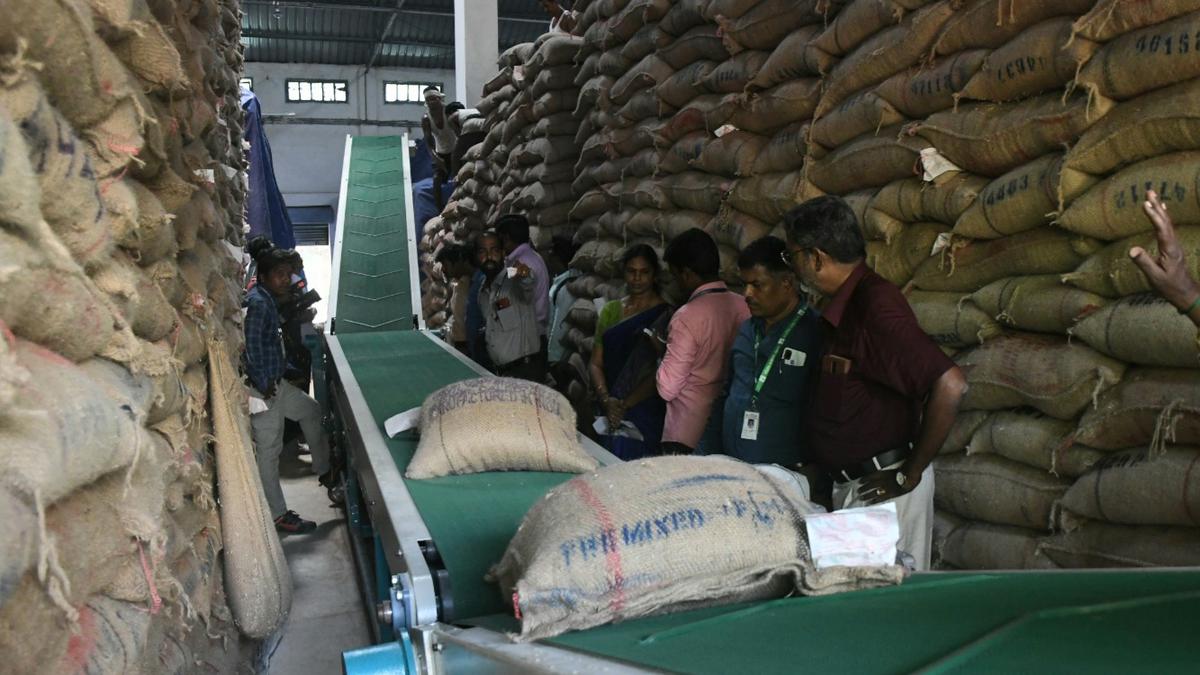
  • To curb price rise, Centre tells traders, millers to declare rice stocks on government portal
    To curb price rise, Centre tells traders, millers to declare rice stocks on government portal Business
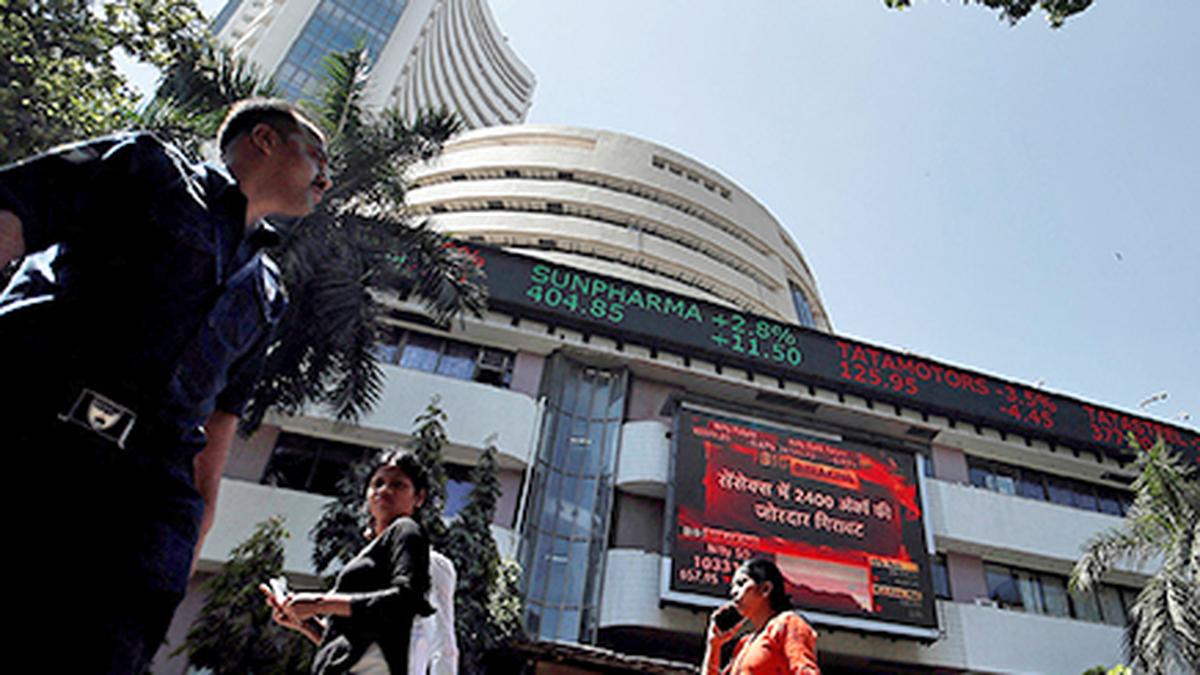
  • Stock market today: Sensex, Nifty slump over 2% as Middle East conflict deepens
    Stock market today: Sensex, Nifty slump over 2% as Middle East conflict deepens Business
  • Access Denied Business
  • Access Denied Business
  • Rupee falls 1 paisa to all-time low of 84.38 against U.S. dollar in early trade
    Rupee falls 1 paisa to all-time low of 84.38 against U.S. dollar in early trade Business

More Related Articles

Economic Survey flags growing challenges in global trade Economic Survey flags growing challenges in global trade Business
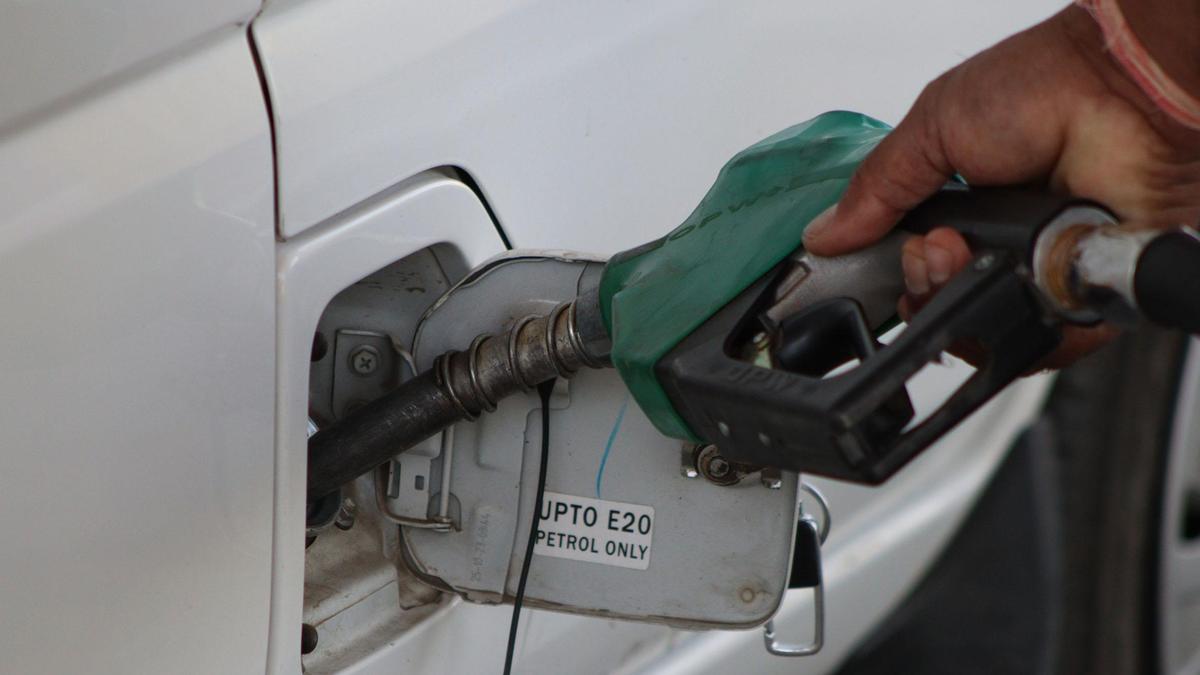
Maruti, Tata, Mahindra privately shared concerns on E20 with Government before public retreat Maruti, Tata, Mahindra privately shared concerns on E20 with Government before public retreat Business
Zomato CEO Deepinder Goyal’s hiring update on Chief of Staff post, says ‘Nobody paid anything to work with us’ Zomato CEO Deepinder Goyal’s hiring update on Chief of Staff post, says ‘Nobody paid anything to work with us’ Business
PM Modi Says Indian Products Must Be Synonymous With Top Quality Business
Access Denied Business
India’s Index of Core Industries gets an updated series: What has changed? | Explained India’s Index of Core Industries gets an updated series: What has changed? | Explained Business
SiteLock

Archives

  • September 2026
  • August 2026
  • July 2026
  • June 2026
  • May 2026
  • April 2026
  • March 2026
  • February 2026
  • January 2026
  • December 2025
  • November 2025
  • October 2025
  • September 2025
  • August 2025
  • July 2025
  • June 2025
  • May 2025
  • April 2025
  • March 2025
  • February 2025
  • January 2025
  • December 2024
  • November 2024
  • October 2024
  • September 2024
  • August 2024
  • July 2024
  • June 2024
  • May 2024
  • April 2024
  • March 2024
  • February 2024
  • January 2024
  • December 2023
  • November 2023
  • October 2023
  • September 2023
  • August 2023
  • July 2023
  • June 2023
  • May 2023
  • April 2023
  • March 2023
  • February 2023
  • January 2023
  • December 2022
  • November 2022
  • October 2022
  • September 2022
  • August 2022
  • July 2022
  • June 2022
  • May 2022

Categories

  • Business
  • Nation
  • Science
  • Sports
  • World

Recent Posts

  • U.S. military says it killed 4 in strike on alleged drug-smuggling boat in Caribbean
  • Davis Cup: Czechs beat USA to qualify for finals
  • Ed Sheeran set to return to stage after Palestinian controversy
  • Asian Games 2026 opens in Japan with 11,000 athletes competing | LIVE updates
  • Union Home Minister Amit Shah falls ill in Hubballi, skips function

Recent Comments

  1. AlvinNet on UP Teacher Who Asked Students To Slap Muslim Classmate
  2. AlvinNet on UP Teacher Who Asked Students To Slap Muslim Classmate
  3. Jamesslits on UP Teacher Who Asked Students To Slap Muslim Classmate
  4. MichaelClear on UP Teacher Who Asked Students To Slap Muslim Classmate
  5. Jamesslits on UP Teacher Who Asked Students To Slap Muslim Classmate
  • Access Denied
    Access Denied Nation
  • Jammu And Kashmir Orders Transfer Of 7 Police Officers Following Poll Body Directive
    Jammu And Kashmir Orders Transfer Of 7 Police Officers Following Poll Body Directive Nation
  • New Delhi To Cut Tariffs To 40% For Mercedes, Other Players, Reports Say Business
  • Access Denied
    Access Denied Nation
  • Access Denied Sports
  • Son Of First Wife Behind Man’s Murder In Jharkhand, Arrested: Cops
    Son Of First Wife Behind Man’s Murder In Jharkhand, Arrested: Cops Nation
  • Remembering Dhirendra Sharma, quintessential dissenter and academic-activist
    Remembering Dhirendra Sharma, quintessential dissenter and academic-activist Science
  • Three Telangana districts cross 45℃ on May 17, Nizamabad hottest at 45.7℃
    Three Telangana districts cross 45℃ on May 17, Nizamabad hottest at 45.7℃ Nation

Editor-in-Chief:
Mohammad Ariff,
MSW, MAJMC, BSW, DTL, CTS, CNM, CCR, CAL, RSL, ASOC.
editor@artifex.news

Associate Editors:
1. Zenellis R. Tuba,
zenelis@artifex.news
2. Haris Daniyel
daniyel@artifex.news

Photograher:
Rohan Das
rohan@artifex.news

Artifex.News offers Online Paid Internships to college students from India and Abroad. Interns will get a PRESS CARD and other online offers.
Send your CV (Subjectline: Paid Internship) to internship@artifex.news

Links:
Associate Journalism
About Us
Privacy Policy

News Links:
Breaking News
World
Nation
Sports
Business
Entertainment
Lifestyle

Registered Office:
72/A, Elliot Road, Kolkata - 700016
Tel: 033-22277777, 033-22172217
Email: office@artifex.news

Editorial Office / News Desk:
No. 13, Mezzanine Floor, Esplanade Metro Rail Station,
12 J. L. Nehru Road, Kolkata - 700069.
(Entry from Gate No. 5)
Tel: 033-46011099, 033-46046046
Email: editor@artifex.news

Copyright © 2023 Artifex.News Newsportal designed by Artifex Infotech.