


For the first time in about four billion years of life on the earth, one species is learning not just to read the book of life but to write new versions.
Our quest to understand and explain the natural world has always carried a double consequence: every success also enhances our ability to change the world. By understanding how diseases act, we create drugs and vaccines that change the prevalence of infectious agents. The elimination of smallpox is one example. Understanding the basis of some hereditary disorders has meant that dietary management can help those affected to live full lives. Phenylketonuria, a condition in which the body cannot process a common amino acid, phenylalanine, is one such example.
Verbosity in genes
At the core of our efforts to understand and explain the extraordinary diversity of forms and functions of life lies one molecule: deoxyribonucleic acid, popularly known by its abbreviation, DNA. DNA resides in cells, the unit of construction of our bodies — indeed of any organism — and we humans are made up of trillions of cells.
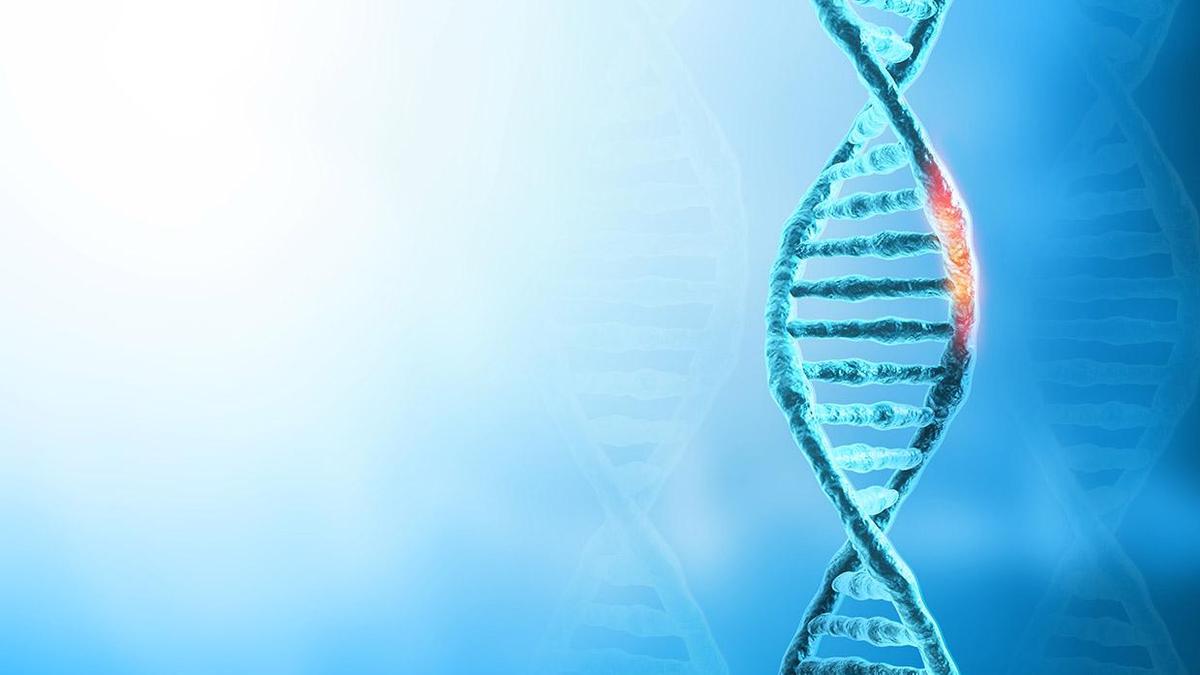
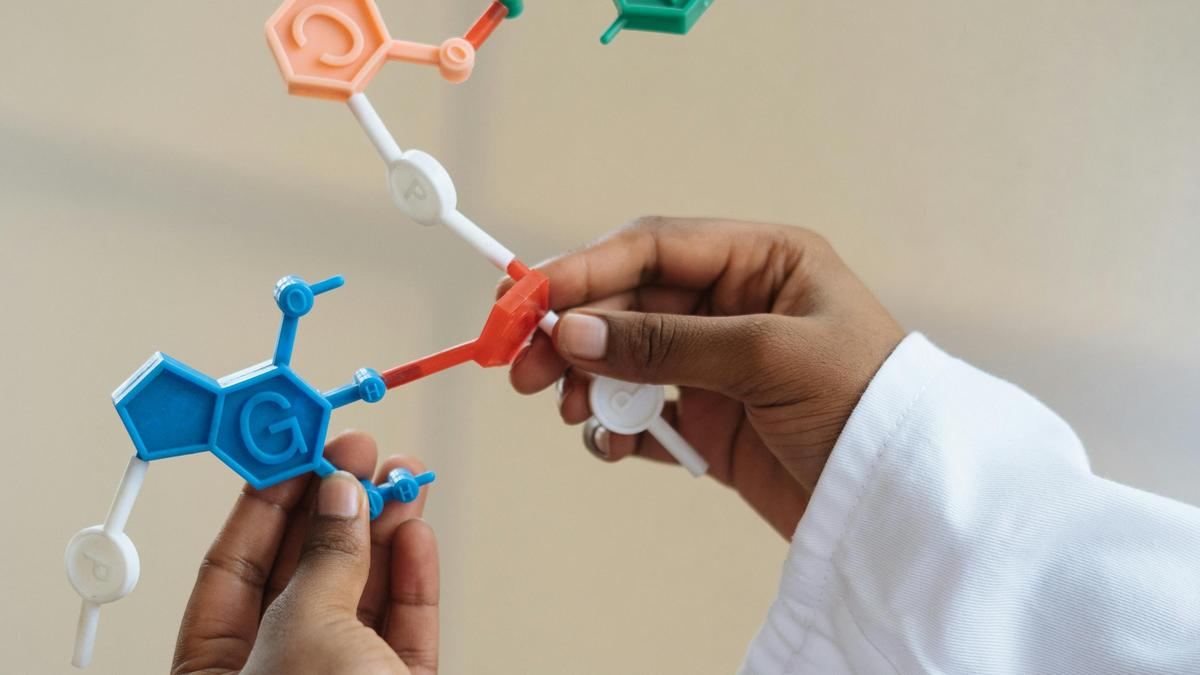
The DNA in a cell is called its genome. The linear thread of DNA that makes up the genome has an alphabet of four molecules, denoted by the letters ‘A’, ‘T’, ‘G’, and ‘C’. A genome can have thousands of genes, and through the specific ordering of these letters, each gene can encode a specific protein. Proteins in their various forms make up, or help manufacture, all that is needed for each cell to perform its unique function.
If we were to look simultaneously at a bacterium, a fruit fly, a mouse, and a human, and think about their varying complexity, we would be tempted to hypothesise that the human has many thousands of times more genes than the fly or the bacterium. After all, we are a far more complex organism than a tiny, unicellular bacterium.
However, the commonly studied bacterium Escherichia coli has about 4,300 genes. The fruit fly, about 17,000. The mouse, about 21,000. And the human, about 22,000. There is only a fivefold difference in gene number between a bacterium and a human. The mouse has more protein-coding genes than us, and a water flea, Daphnia, has about 31,000 genes, more than either us or the mouse.
Verbosity in genes, as in conversation, is not a measure of complexity. Just as one can convey something complex and information-dense in a short, non-redundant paragraph, it is how, when, how much, and where in the cell gene products are expressed that determines complexity. While genes encode proteins, they also have DNA sequences involved in regulating when, where, and to what extent genes are expressed. These regulatory regions are locations where other specific proteins, called transcription factors bind, to turn genes ‘on’ and ‘off’. These regulatory proteins are themselves encoded by genes.
Three extraordinary insights
The decreasing cost and increasing speed of DNA sequencing means that we can, today, sequence the genome of any organism we choose. At the start of the Human Genome Project, sequencing a human genome took more than a decade, cost close to $3 billion, and involved thousands of scientists across about 20 countries. Today this is possible in a few hours, at a cost of a few hundred dollars, in a small laboratory. As our computational capacity also increases, so does our ability to study the genomes we have sequenced. The growing bank of genome sequences across organisms offers three extraordinary insights into all life on the earth.
First, genome sequences taken together give us a history of life on the planet, the relatedness of organisms, and how the tree of life branched in different ways. The exquisite detail that genomes provide complements the fossil record where it is available — but it also tells us the history of life where no fossil record exists. No social history of humans can provide this degree of precision and accuracy over such an extended period.
Second, when we examine genomes in the context of how an organism (bacterium, plant or animal) functions in its environment, we learn how they are adapted. Genes, famously described as selfish, ensure their own propagation by using their host organism’s survival as a vehicle for their transmission. By studying variations in genes, we learn how mutations are selected as organisms adapt to their environments. Human populations that today carry genes predisposing them to type II diabetes are typically descended from groups that lived in environments where food supply rose and fell cyclically over long intervals. In today’s environment of abundant food, this genetic inheritance leads to disease.

Third, just as with DNA sequencing, we are rapidly accumulating detailed information on all aspects of the cellular environment across a variety of organisms — which genes are expressed, where their products are localised, what they do, and so on. When taken together, this detailed ‘cell map’ can give us a picture of all the complexity within a cell in each organism we study. When gathered over the entire life of a cell or organism — and we are far from this stage of data collection — the volume and complexity of data to be analysed is mind-boggling. Yet the tools for storing, analysing, and interrogating such ‘big data’ are also growing.
While scepticism remains, this may therefore not only be a feasible project in theory, but also one in practice. We already see early glimpses of such comprehensive pictures appearing from diverse attempts around the world. From all of this, one can expect a substantial advance in our understanding of how life in all its diversity came about, how organisms are made, and how they work. New hypotheses will be formed and tested, and new fundamental knowledge and applications will appear.
Never before seen
With this knowledge will come expanded power in synthetic biology. Our understanding of how genes, cells, and environments collaborate to make organisms has already enabled us to engineer nature in many ways. But what we can currently do with genetic engineering is modest compared to the potential from new avenues now opening. Engineering cells and organisms not just at the level of one or a few genes, but on a genome-wide scale, is becoming possible. These technologies will become more accurate, less expensive, and more accessible.
With access to computing power and memory that AI provides, it is possible to analyse cellular and environmental information and design sections of genomes or entire genomes, with the desired properties on our computers.
Today, the predictability of what happens when such designs are implemented still remains low: cells and organisms are notorious for resisting simplistic in silico predictions. But this too will change, through a combination of analytical and experimental work. Designer cells that make chemicals, drugs, materials, and fuels are already with us but they will become ubiquitous and far broader in their uses than what we see today.
It is not only cells for biotechnological applications that will be created, often making products never before seen in nature. Creating complex new forms of multicellular organisms, plants or animals, is also a real possibility. Replacing the genome of a cell with one designed and manufactured by humans is now feasible for small genomes and will soon be possible for larger ones.
In 2010, the American scientist J. Craig Venter (1946-2026) and his team chemically synthesised a complete bacterial genome and introduced it into a bacterial cell whose native DNA had been removed. This was, at a first approximation, digitally created life. They watermarked their creation by encoding three quotations into non-coding regions of the synthetic DNA — a biological ‘cipher’ in which letters were mapped to codons: James Joyce, from A Portrait of the Artist as a Young Man: “To live, to err, to fall, to triumph, to recreate life out of life”; Richard Feynman: “What I cannot build, I cannot understand”; and J. Robert Oppenheimer: “See things not as they are, but as they might be.”
While we are currently limited by the speed and cost of genome-wide synthesis, this will change. It will then be possible to create large genomes, introduce them into defined cellular environments we construct, or into fertilised eggs whose own genomes have been removed.

With great power
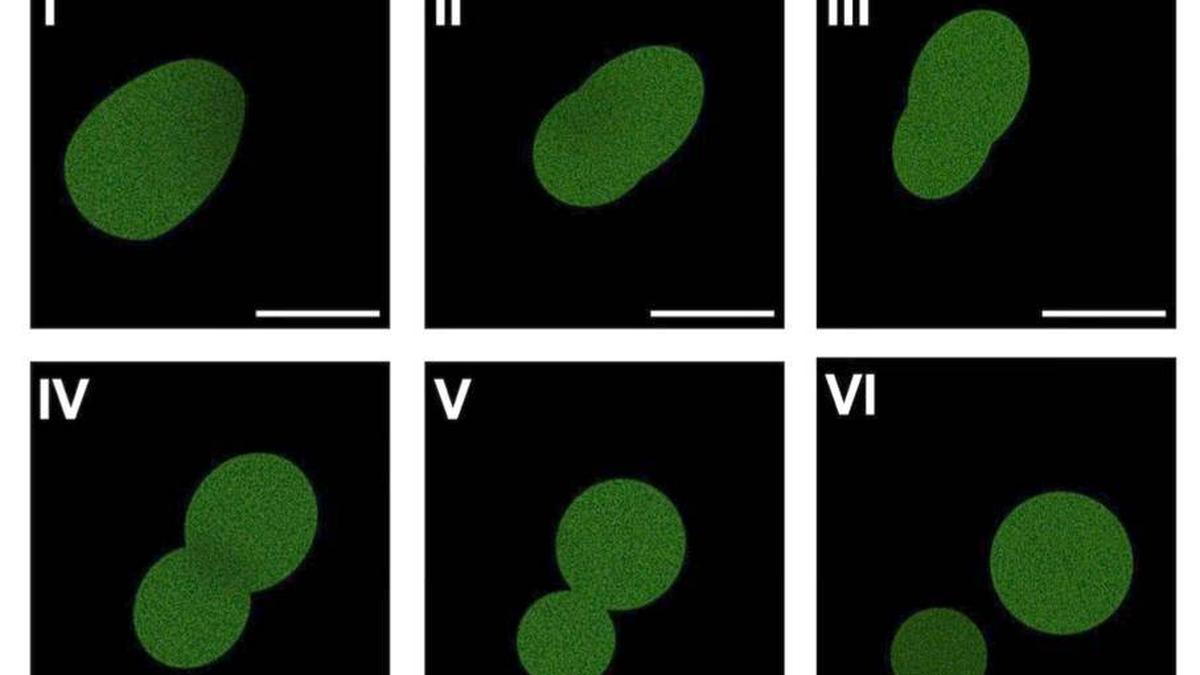
Complementing this top-down approach, which draws on billions of years of genomic history to create new forms of life, there is a bottom-up alternative. Pioneered by Jack Szostak and others, this approach aims to synthesise a primordial cell from scratch, modelling what the earliest living systems may have looked like before the first genome was ever written.
Szostak’s laboratory at the University of Chicago builds protocells — fatty-acid vesicles that can spontaneously form closed membranes, encapsulate RNA, and, in the right conditions, copy that RNA and divide. The aim is to solve the great mystery of how life first originated from non-living chemistry. In working towards this, we too will develop the power to create new and complex self-replicating biological systems.
All of this raises the ‘genie conundrum’ that humanity has grappled with across the centuries. Our quest to understand the universe releases the genie from the lamp. Kept inside, the genie is of no use and, more relevant, we leash human thought and creativity. Released but unregulated, we risk creating new and unforeseen problems. Released and used wisely, the applications are many and valuable.
These are challenges that regulators face not only in biology but in other domains too: how does one regulate chemistry or nuclear power, for example? But the engineering of life has a feature that the engineering of a spaceship or a nuclear plant does not: the ability to convert information into a self-replicating product. Here, we must ‘see things not as they are, but as they might be’. Both for what must be done, and for what we must refrain from doing.
K. VijayRaghavan isDAE-Homi Bhabha Chair, TIFR-National Centre for Biological Sciences, Bengaluru.