

Skip to content
  • Facebook
  • X
  • Linkedin
  • WhatsApp
  • YouTube
  • Associate Journalism
  • About Us
  • Privacy Policy
  • 033-46046046
  • editor@artifex.news
Artifex.News

Artifex.News

Stay Connected. Stay Informed.

  • Breaking News
  • World
  • Nation
  • Sports
  • Business
  • Science
  • Entertainment
  • Lifestyle
  • Toggle search form
  • A World-First Discovery – Twin Stars Trapped Orbiting Galactic Black Hole
    A World-First Discovery – Twin Stars Trapped Orbiting Galactic Black Hole World
  • “Put My Playing Days Behind Me”: Dinesh Karthik Officially Announces Retirement
    “Put My Playing Days Behind Me”: Dinesh Karthik Officially Announces Retirement Sports
  • Access Denied
    Access Denied Nation
  • Big Blow For Australia: Star All-Rounder Rendered Doubtful For India Tests
    Big Blow For Australia: Star All-Rounder Rendered Doubtful For India Tests Sports
  • Access Denied Sports
  • Canada Vows Strong Response, Mexico Urges Calm In Face Of Trump Threats
    Canada Vows Strong Response, Mexico Urges Calm In Face Of Trump Threats World
  • Government cuts windfall tax on crude petroleum
    Government cuts windfall tax on crude petroleum Business
  • North Korea’s Kim Jong Un says he will strengthen ties with China more vigorously, say reports
    North Korea’s Kim Jong Un says he will strengthen ties with China more vigorously, say reports World
Why do mosquitoes love some people more than others?

Why do mosquitoes love some people more than others?

Posted on March 30, 2026 By admin


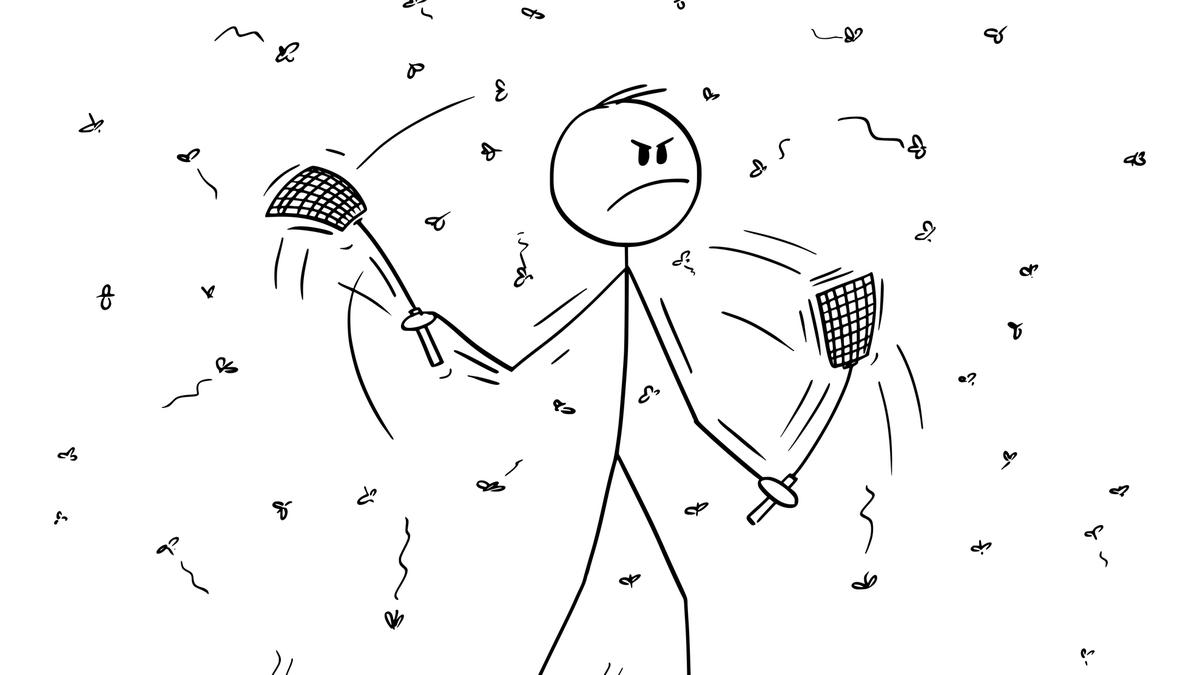
Vector cartoon stick figure drawing conceptual illustration.
| Photo Credit: Getty Images/iStockphoto

Mosquitoes annoy almost everyone. And sometimes, you might notice that you are getting far more mosquito bites than your friend sitting right next to you in the same room. It can feel unfair, but let’s clear up a common myth first: it is not because your blood is “sweet.”

In reality, mosquitoes do not choose people based on taste at all. Instead, these tiny insects rely on a range of biological signals from the human body to locate their targets. So why do mosquitoes seem to prefer some people over others?

Following the breath: Carbon dioxide

One of the main signals mosquitoes track is carbon dioxide (CO₂), the gas humans release every time they breathe out. Mosquitoes have specialised sensors that allow them to detect CO₂ from several metres away, helping them locate potential hosts even in the dark. People who exhale larger amounts of carbon dioxide tend to attract more mosquitoes. This is one reason adults are usually bitten more often than children. Pregnant women, who produce more CO₂ as their bodies work harder, may also draw more mosquitoes. Similarly, people who have been exercising or have higher metabolic rates can become easier targets. Once mosquitoes detect this invisible trail of CO₂, they begin moving closer to the source.

Heat and movement

Once mosquitoes follow the trail of carbon dioxide and move closer, they rely on other signals to identify their target more precisely. One of these is body heat. Mosquitoes are highly sensitive to temperature and can detect the warmth of human skin, which helps them locate areas where blood vessels lie close to the surface. Movement also makes it easier for them to spot a potential host. A moving body releases more heat and scent into the air, making the signal stronger. Together, these cues help mosquitoes zero in on the exact spot where they can land and bite.

The role of skin bacteria

Another surprising factor lies on the surface of our skin. Human skin is home to trillions of bacteria that naturally live on the body. As these microbes break down sweat and other compounds, they produce a variety of chemical scents. Each person has a unique mix of these bacteria, which means the odours released from our skin also differ from one individual to another. Mosquitoes are highly sensitive to these chemical cues. Research suggests that certain bacterial compositions can produce scents that mosquitoes find especially attractive, making some people more likely to be bitten than others.

What about blood type?

Another common belief is that mosquitoes prefer certain blood types. Some studies have suggested that people with blood type O may attract more mosquitoes than those with other blood groups. However, the evidence is not entirely conclusive, and scientists continue to study this link. More importantly, mosquitoes do not detect blood before they land on a person. Instead, they rely primarily on cues such as carbon dioxide from breath, body heat, and chemical scents from the skin to choose their targets.

The bigger picture: Climate and mosquito spread

A mosquito was found in Iceland — a first for the country. For a long time, Iceland was known as one of the few places in the world without mosquitoes. But scientists have reported sightings in recent years. Mosquitoes generally prefer warmer temperatures to survive and reproduce. As global temperatures rise, conditions in some colder regions are slowly becoming more suitable for them. This expansion raises concerns about the possible spread of mosquito-borne diseases such as Dengue Fever, Malaria, and Chikungunya.

Fun facts
Only females bite

Male mosquitoes live on nectar. Females bite because they need protein from blood to produce eggs.

They love dark colours

mosquitoes have relatively poor eyesight, so they look for high-contrast silhouettes against the horizon. Dark clothes against a lighter background make a human “pop” visually to them. Mosquitoes are more attracted to people wearing dark clothing because darker colours absorb heat and stand out more visually to them.

Your feet attract them

Mosquitoes often bite ankles and feet because bacteria there produce strong odours they like.

They can smell you from far away

Mosquitoes can detect the carbon dioxide humans breathe out from up to 10–15 metres away, helping them track a person even in the dark.

They are the world’s deadliest animal

Despite their tiny size, mosquitoes are considered the deadliest animals on Earth because they spread diseases like malaria, dengue, and chikungunya.

They flap very fast

A mosquito beats its wings about 500 times per second, creating the familiar buzzing sound.

Published – March 30, 2026 02:41 pm IST


Source link

Science

Post navigation

Previous Post: Access Denied
Next Post: Access Denied

Related Posts

  • Biologists in slow and steady race to help North America’s largest and rarest tortoise species
    Biologists in slow and steady race to help North America’s largest and rarest tortoise species Science
  • All eyes on PSLV-C60 mission as ISRO looks to end 2024 on a high
    All eyes on PSLV-C60 mission as ISRO looks to end 2024 on a high Science
  • Sindhi’s along India’s west coast genetically distinct from Pakistani counterparts: CCMB
    Sindhi’s along India’s west coast genetically distinct from Pakistani counterparts: CCMB Science
  • What is helium and why is it used in rockets?
    What is helium and why is it used in rockets? Science
  • Photobiology: speeding up enzyme reactions in microbes using light
    Photobiology: speeding up enzyme reactions in microbes using light Science
  • What explains SpaceX, Blue Origin stepping up their moon plans? | Explained
    What explains SpaceX, Blue Origin stepping up their moon plans? | Explained Science

More Related Articles

Donald Trump praises Artemis astronauts: ‘You’ve made history’ Donald Trump praises Artemis astronauts: ‘You’ve made history’ Science
India successfully test-fires Agni-5 ballistic missile from Odisha India successfully test-fires Agni-5 ballistic missile from Odisha Science
Deepening India’s steps as a key space-faring nation Deepening India’s steps as a key space-faring nation Science
What causes some people to have greater sensitivity to certain types of pain? What causes some people to have greater sensitivity to certain types of pain? Science
Can white matter changes in the brain determine our ageing trajectory? Can white matter changes in the brain determine our ageing trajectory? Science
Honourable mention for bioeconomy in Interim Budget, with trillion-dollar potential in mind Honourable mention for bioeconomy in Interim Budget, with trillion-dollar potential in mind Science
SiteLock

Archives

  • May 2026
  • April 2026
  • March 2026
  • February 2026
  • January 2026
  • December 2025
  • November 2025
  • October 2025
  • September 2025
  • August 2025
  • July 2025
  • June 2025
  • May 2025
  • April 2025
  • March 2025
  • February 2025
  • January 2025
  • December 2024
  • November 2024
  • October 2024
  • September 2024
  • August 2024
  • July 2024
  • June 2024
  • May 2024
  • April 2024
  • March 2024
  • February 2024
  • January 2024
  • December 2023
  • November 2023
  • October 2023
  • September 2023
  • August 2023
  • July 2023
  • June 2023
  • May 2023
  • April 2023
  • March 2023
  • February 2023
  • January 2023
  • December 2022
  • November 2022
  • October 2022
  • September 2022
  • August 2022
  • July 2022
  • June 2022
  • May 2022

Categories

  • Business
  • Nation
  • Science
  • Sports
  • World

Recent Posts

  • Delhi on high alert over possible terror threat, security upped across key locations
  • Twelve Pakistani police officers killed in car bombing and shootout
  • ‘Bussy’ N. Anand: Vijay’s close confidante likely to be part of new Tamil Nadu Cabinet
  • Delhi judges grapple with rising threats and little protection
  • What is India’s first orbital data centre satellite?

Recent Comments

  1. JosephSpupE on UP Teacher Who Asked Students To Slap Muslim Classmate
  2. SteveTeF on UP Teacher Who Asked Students To Slap Muslim Classmate
  3. Andrewfoods on UP Teacher Who Asked Students To Slap Muslim Classmate
  4. DonaldGlymn on UP Teacher Who Asked Students To Slap Muslim Classmate
  5. ShaneElden on UP Teacher Who Asked Students To Slap Muslim Classmate
  • U.K. Elections 2023: Britons vote, as Labour projected to oust Rishi Sunak’s government
    U.K. Elections 2023: Britons vote, as Labour projected to oust Rishi Sunak’s government World
  • Auto retail sales up 11.21% in November riding on two-wheeler demand: FADA
    Auto retail sales up 11.21% in November riding on two-wheeler demand: FADA Business
  • Access Denied
    Access Denied Nation
  • Access Denied World
  • French Rail Network “Sabotaged” Ahead Of Olympics, 8 Lakh People Affected
    French Rail Network “Sabotaged” Ahead Of Olympics, 8 Lakh People Affected World
  • Cauvery Water Issue Will Be Resolved By Mutual Understanding: Deve Gowda
    Cauvery Water Issue Will Be Resolved By Mutual Understanding: Deve Gowda Nation
  • Access Denied Sports
  • Iran’s Parliament working on bill to impose fees on ships in Strait of Hormuz
    Iran’s Parliament working on bill to impose fees on ships in Strait of Hormuz World

Editor-in-Chief:
Mohammad Ariff,
MSW, MAJMC, BSW, DTL, CTS, CNM, CCR, CAL, RSL, ASOC.
editor@artifex.news

Associate Editors:
1. Zenellis R. Tuba,
zenelis@artifex.news
2. Haris Daniyel
daniyel@artifex.news

Photograher:
Rohan Das
rohan@artifex.news

Artifex.News offers Online Paid Internships to college students from India and Abroad. Interns will get a PRESS CARD and other online offers.
Send your CV (Subjectline: Paid Internship) to internship@artifex.news

Links:
Associate Journalism
About Us
Privacy Policy

News Links:
Breaking News
World
Nation
Sports
Business
Entertainment
Lifestyle

Registered Office:
72/A, Elliot Road, Kolkata - 700016
Tel: 033-22277777, 033-22172217
Email: office@artifex.news

Editorial Office / News Desk:
No. 13, Mezzanine Floor, Esplanade Metro Rail Station,
12 J. L. Nehru Road, Kolkata - 700069.
(Entry from Gate No. 5)
Tel: 033-46011099, 033-46046046
Email: editor@artifex.news

Copyright © 2023 Artifex.News Newsportal designed by Artifex Infotech.