Skip to content
  • Facebook
  • X
  • Linkedin
  • WhatsApp
  • YouTube
  • Associate Journalism
  • About Us
  • Privacy Policy
  • 033-46046046
  • editor@artifex.news
Artifex.News

Artifex.News

Stay Connected. Stay Informed.

  • Breaking News
  • World
  • Nation
  • Sports
  • Business
  • Science
  • Entertainment
  • Lifestyle
  • Toggle search form
  • Return to Ukraine’s pre-2014 borders not realistic: U.S. Defense chief Hegseth
    Return to Ukraine’s pre-2014 borders not realistic: U.S. Defense chief Hegseth World
  • Manchester City Face Real Madrid In Pick Of Champions League Play-Off Ties
    Manchester City Face Real Madrid In Pick Of Champions League Play-Off Ties Sports
  • Access Denied Sports
  • Access Denied World
  • Two killed in mass Russian drone attack on Ukraine, Zelenskyy says
    Two killed in mass Russian drone attack on Ukraine, Zelenskyy says World
  • Bihar Passes Bill To Curb Paper Leaks
    Bihar Passes Bill To Curb Paper Leaks Nation
  • At top UN court, Myanmar denies deadly Rohingya campaign amounts to genocide
    At top UN court, Myanmar denies deadly Rohingya campaign amounts to genocide World
  • Access Denied Sports
What is India’s first orbital data centre satellite?

What is India’s first orbital data centre satellite?

Posted on May 10, 2026 By admin


The story so far:

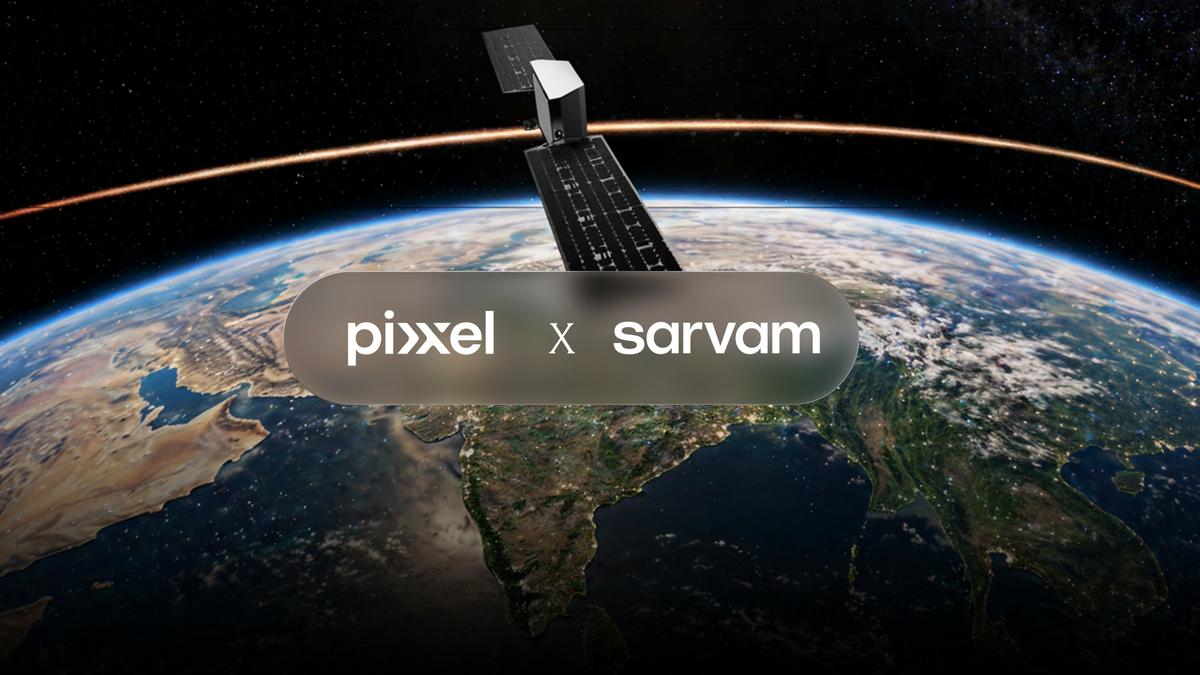
On May 4, Pixxel, a Bengaluru-based imaging satellite company, said that it would partner with the AI firm Sarvam to launch what is being described as India’s first ‘orbital data centre’ satellite, named Pathfinder. This is expected to be a 200 kg class satellite scheduled for orbit by the fourth quarter of 2026. It will carry datacentre-class GPUs (graphics processing units) alongside Pixxel’s hyperspectral imaging camera, the company’s bread-and-butter business.

What is an orbital data centre?

It is a constellation of satellites carrying the same kind of GPUs found in terrestrial data centres. It can train and run AI models in orbit rather than only relaying data to ground stations. Such a centre can do more demanding work than the low-power “edge” processors that conventional satellites use for tasks like signal compression. Edge computing on earth refers to the practice of running computation close to where data is generated rather than in a centralised cloud, and the same logic, applied in orbit, is what space-based compute promises to extend.

Pixxel’s Pathfinder is being built as a single-satellite demonstrator, designed to test whether ground-grade hardware can be made to function reliably in the harsh, hot environment of low Earth orbit. “It will start off as being one satellite, obviously, that we will try to launch before the end of this year,” Awais Ahmed, the company’s chief executive, told The Hindu.

Why are global firms suddenly interested?

Three factors have converged in the past two years, prompting large tech companies to strive towards making such centres real. Data centres are being constrained by limits on energy availability, land, water, and local regulation, all of which have been amplified by the demands of AI. In the right orbit, solar power is effectively continuous and offers free electricity, which proponents regard as the strongest argument for moving computation to space.

Earth observation satellites also generate detailed, heavy image files that are expensive to downlink; processing the data in orbit and beaming down only the conclusions has long been seen as a way to ease that bottleneck.

The third factor is competitive positioning. SpaceX CEO, Elon Musk said on X in 2025 that “simply scaling up Starlink V3 satellites, which have high-speed laser links, would work. SpaceX will be doing this.” He also argued that “Starship (the company’s most powerful rocket) could deliver 100GW/year to high Earth orbit within four to five years if we can solve the other parts of the equation.” Amazon founder Jeff Bezos’ Blue Origin, Microsoft’s Azure Space, and Lonestar Data Holdings have already begun pilot deployments. None of these efforts has yet produced a commercial-scale orbital data centre.

What are the challenges?

The GPU chips powered by electricity from solar panels become hot. Now space may be cold, and common sense may suggest it is a natural sink for the heat. However, space is also empty and its vacuum eliminates convection. This is the mechanism by which warm air on earth is normally carried away from terrestrial servers; in orbit, a hot GPU chip is effectively an oven unable to fan away its own waste energy, with no air to carry it off. The only solution to this is radiation, which requires that heat be pumped through ammonia-filled loops to deployable panels, where it can be radiated as infrared light into space. The history of crewed spaceflight is studded with reminders of how unforgiving this regime can be.

Radiation damage is the second problem and one that has shaped the design of every long-duration mission flown to date. ‘Bit flips’ — where bits and bytes of computers randomly change — and long-term semiconductor degradation are caused by cosmic rays, and radiation-hardened chips, which govern most space hardware, typically lag commercial GPUs by years. Power requires storage for eclipse periods, and maintenance is effectively impossible without robotic servicing, so redundancy must be designed in from the start.

What does the Pixxel–Sarvam partnership actually involve?

The Pathfinder satellite will be designed, built, launched, and operated by Pixxel. Sarvam, an Indian AI firm, will provide what it describes as the AI backbone, with full-stack language models being run on the satellite’s GPU layer for both training and inference. Pixxel’s hyperspectral camera will be carried on the same platform, giving the mission an immediate use case: imagery captured in orbit can be analysed in orbit, with only the conclusions transmitted to Earth. Mr. Ahmed declined to disclose costs, the number of GPUs, or the launch provider, saying the choice between ISRO and SpaceX would be determined by slot availability. However, the Pixxel team has several experts who have worked with the Indian Space Research Organisation and have experience in thermal management in space.

Can data crunching in space ever be cheaper than on ground?

Not yet, and not for some time, on the available evidence. Mr. Ahmed said that a single satellite carrying a given number of GPUs is more expensive than the same hardware on Earth. The argument for eventual parity is built on three assumptions: that constellations will be scaled to tens of thousands of satellites; that launch costs will be reduced sharply once SpaceX’s Starship is operational; and that the absence of cooling and grid-power expenses in orbit will eventually offset the higher capital outlay. Mr. Ahmed set the horizon at 5-10 years. “It would take about 100-500 satellites to replace a data centre in India and if someone were to pay for it, we could launch them even in 24 months,” he said. Independent assessments have been markedly more cautious than the timelines offered by Pixxel and its peers. Edge processing on satellites is judged viable in the near term by academic and agency reviews, but a wholesale replacement of terrestrial cloud is treated as a 10-to-30-year proposition.

Published – May 10, 2026 09:25 am IST


Source link

Science Tags:india

Post navigation

Previous Post: Pros and cons of bank deposits
Next Post: Delhi judges grapple with rising threats and little protection

Related Posts

  • Ahead of Chandrayaan-4, IIT and PRL team decodes moon’s titanium-rich rocks
    Ahead of Chandrayaan-4, IIT and PRL team decodes moon’s titanium-rich rocks Science
  • Astronomy Olympiad, held in Mumbai this year, suspends Israel from future editions
    Astronomy Olympiad, held in Mumbai this year, suspends Israel from future editions Science
  • India has world’s highest number of slum clusters in flood-prone areas
    India has world’s highest number of slum clusters in flood-prone areas Science
  • More than 3,600 food packaging chemicals found in human bodies
    More than 3,600 food packaging chemicals found in human bodies Science
  • Science Snapshots: September 6, 2026
    Science Snapshots: September 6, 2026 Science
  • Space telescopes stumble on rule-breaking black hole in early universe
    Space telescopes stumble on rule-breaking black hole in early universe Science

More Related Articles

IISc researchers find out how the brain suppresses itch during stress IISc researchers find out how the brain suppresses itch during stress Science
Scientists urge caution about mystery Mars rock found by NASA rover Scientists urge caution about mystery Mars rock found by NASA rover Science
National Science Day | What do scientists do?  National Science Day | What do scientists do?  Science
What are colours and how do people understand them? | Explained What are colours and how do people understand them? | Explained Science
Artemis II: Indian-American Amit Kshatriya, senior NASA official behind U.S.’s moon mission Artemis II: Indian-American Amit Kshatriya, senior NASA official behind U.S.’s moon mission Science
Scientists warn Centre against accepting ‘compromise formula’ at plant treaty meet in Peru Scientists warn Centre against accepting ‘compromise formula’ at plant treaty meet in Peru Science
SiteLock

Archives

  • October 2026
  • September 2026
  • August 2026
  • July 2026
  • June 2026
  • May 2026
  • April 2026
  • March 2026
  • February 2026
  • January 2026
  • December 2025
  • November 2025
  • October 2025
  • September 2025
  • August 2025
  • July 2025
  • June 2025
  • May 2025
  • April 2025
  • March 2025
  • February 2025
  • January 2025
  • December 2024
  • November 2024
  • October 2024
  • September 2024
  • August 2024
  • July 2024
  • June 2024
  • May 2024
  • April 2024
  • March 2024
  • February 2024
  • January 2024
  • December 2023
  • November 2023
  • October 2023
  • September 2023
  • August 2023
  • July 2023
  • June 2023
  • May 2023
  • April 2023
  • March 2023
  • February 2023
  • January 2023
  • December 2022
  • November 2022
  • October 2022
  • September 2022
  • August 2022
  • July 2022
  • June 2022
  • May 2022

Categories

  • Business
  • Nation
  • Science
  • Sports
  • World

Recent Posts

  • Women stage silent demonstration at Kathipara against police action on anti-CEC protesters in Delhi
  • DGCA bans specific power banks on flights
  • Saudi Supreme Court sets aside Sri Lankan migrant worker’s death penalty
  • Nedumbassery accident: CPI(M) stages protest march to police station over ‘indifference’ in handling of case
  • Why CJI Surya Kant said ‘no’ to Rahul Gandhi’s request to meet | Explained

Recent Comments

  1. RobertTes on UP Teacher Who Asked Students To Slap Muslim Classmate
  2. Manuelret on UP Teacher Who Asked Students To Slap Muslim Classmate
  3. RobertTes on UP Teacher Who Asked Students To Slap Muslim Classmate
  4. RobertTes on UP Teacher Who Asked Students To Slap Muslim Classmate
  5. BrentWes on UP Teacher Who Asked Students To Slap Muslim Classmate
  • Sharad Pawar Hits Back At PM Narendra Modi’s Jibe On His Tenure As Agriculture Minister
    Sharad Pawar Hits Back At PM Narendra Modi’s Jibe On His Tenure As Agriculture Minister Nation
  • India vs New Zealand Live Streaming Olympics 2024 Men’s Hockey Live Telecast: When And Where To Watch
    India vs New Zealand Live Streaming Olympics 2024 Men’s Hockey Live Telecast: When And Where To Watch Sports
  • Former Thai MP accused of shooting local official and driver: police
    Former Thai MP accused of shooting local official and driver: police World
  • Shreyas, Tare combine powers Falcons to a win
    Shreyas, Tare combine powers Falcons to a win Sports
  • Pashupati Paras Declares Support For NDA, Silent On Nephew Chirag Paswan
    Pashupati Paras Declares Support For NDA, Silent On Nephew Chirag Paswan Nation
  • Heavy security, elaborate traffic curbs in place for Kerala Cabinet swearing-in
    Heavy security, elaborate traffic curbs in place for Kerala Cabinet swearing-in Nation
  • ICTS professor Deepak Dhar awarded prestigious 2026 Dirac Medal
    ICTS professor Deepak Dhar awarded prestigious 2026 Dirac Medal Science
  • FIFA World Cup 2026 | Saudi Arabia vs Uruguay LIVE
    FIFA World Cup 2026 | Saudi Arabia vs Uruguay LIVE Sports

Editor-in-Chief:
Mohammad Ariff,
MSW, MAJMC, BSW, DTL, CTS, CNM, CCR, CAL, RSL, ASOC.
editor@artifex.news

Associate Editors:
1. Zenellis R. Tuba,
zenelis@artifex.news
2. Haris Daniyel
daniyel@artifex.news

Photograher:
Rohan Das
rohan@artifex.news

Associate Journalists
1. Subrata Paul - AN/2020/01
2. Quamruz Zaman - AN/2021/22
3. Ahmed Sha - AN/2021/035
4. Ajay Kumar Shaw - AN/2021/39
5. Tahqiqul Hoda - AN/2021/21

Artifex.News offers Online Paid Internships to college students from India and Abroad. Interns will get a PRESS CARD and other online offers.
Send your CV (Subjectline: Paid Internship) to internship@artifex.news

Links:
Associate Journalism
About Us
Privacy Policy

News Links:
Breaking News
World
Nation
Sports
Business
Entertainment
Lifestyle

Registered Office:
72/A, Elliot Road, Kolkata - 700016
Tel: 033-22277777, 033-22172217
Email: office@artifex.news

Editorial Office / News Desk:
No. 13, Mezzanine Floor, Esplanade Metro Rail Station,
12 J. L. Nehru Road, Kolkata - 700069.
(Entry from Gate No. 5)
Tel: 033-46011099, 033-46046046
Email: editor@artifex.news

Copyright © 2023 Artifex.News Newsportal designed by Artifex Infotech.