
Skip to content
  • Facebook
  • X
  • Linkedin
  • WhatsApp
  • Associate Journalism
  • About Us
  • Privacy Policy
  • 033-46046046
  • editor@artifex.news
Artifex.News

Artifex.News

Stay Connected. Stay Informed.

  • Breaking News
  • World
  • Nation
  • Sports
  • Business
  • Science
  • Entertainment
  • Lifestyle
  • Toggle search form
  • ‘Cat Ladies’ Unite Against JD Vance’s Sexist Remark For Kamala Harris
    ‘Cat Ladies’ Unite Against JD Vance’s Sexist Remark For Kamala Harris World
  • Access Denied Sports
  • India vs Vietnam Highlights, International Friendly: India Draw 1-1, Go Winless In 11 Consecutive Games
    India vs Vietnam Highlights, International Friendly: India Draw 1-1, Go Winless In 11 Consecutive Games Sports
  • Central Force Recce At Kolkata Hospital Where Doctor Was Raped, Murdered
    Central Force Recce At Kolkata Hospital Where Doctor Was Raped, Murdered Nation
  • Singapore Hosted Over 1.2 Million Visitors From India In 2025: STB Business
  • Dispute Over Goat Grazing Costs 5 Lives In Madhya Pradesh
    Dispute Over Goat Grazing Costs 5 Lives In Madhya Pradesh Nation
  • Nellore police arrests auto-driver accused in minor girl rape case
    Nellore police arrests auto-driver accused in minor girl rape case Nation
  • Radical Preacher Amritpal Singh, In Jail, Fails To Take Oath As MP
    Radical Preacher Amritpal Singh, In Jail, Fails To Take Oath As MP Nation
Decolonising and de-Nobelising science – The Hindu

Decolonising and de-Nobelising science – The Hindu

Posted on February 25, 2026 By admin


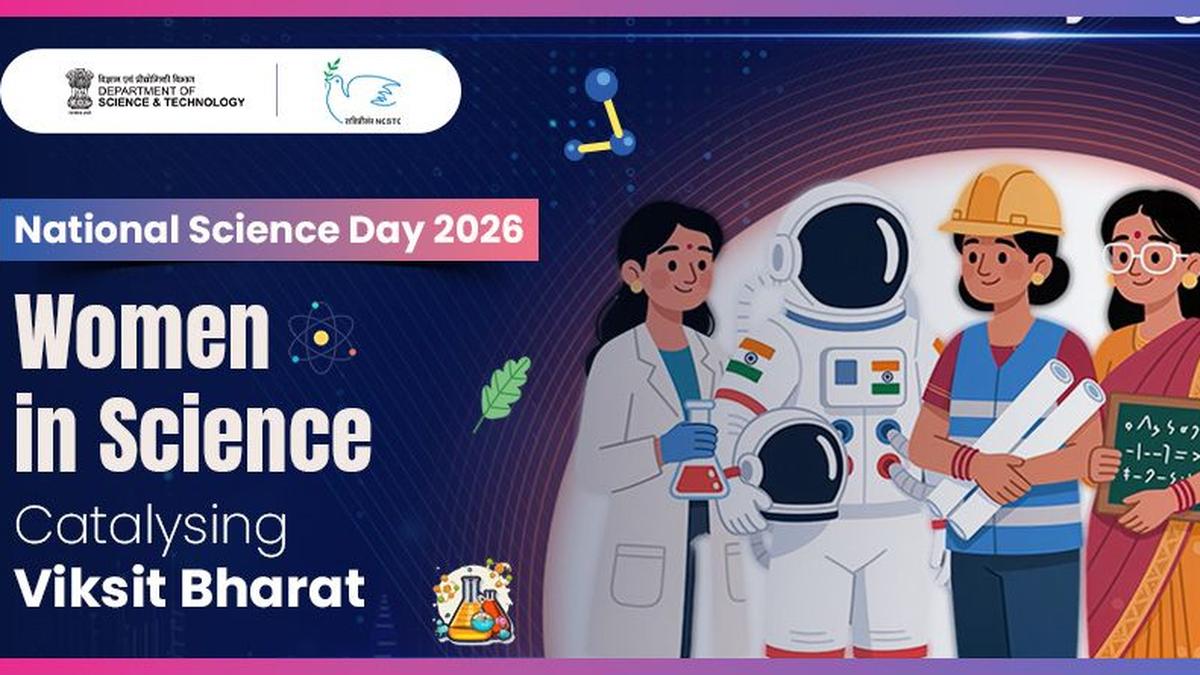
‘National Science Day should become an annual day of discussion of what counts as science, including the work of technicians, field staff, nurses, lab attendants, data collectors, and others whose labour is essential to make new knowledge but is rarely commemorated.’ Photo: dst.gov.in

Every February 28, India celebrates National Science Day to commemorate C.V. Raman’s announcement of the Raman effect in 1928, a discovery that won him the Nobel Prize in Physics in 1930. Such national rituals are said to be just acts of remembrance, but they are not; they also legitimise what the state says counts as science.

Three keywords

A new book about keywords offers a useful way to read this ritual itself as a word with a political life. Decolonial Keywords, edited by anthropologists Renny Thomas and Sasanka Perera, argues that some everyday terms can be treated as archives of history and power and that their definitions are often a political rather than a linguistic achievement. ‘National Science Day’ and ‘Nobel Prize’ can also be treated as such keywords: ones that organise India’s public imagination of science. There is a reason we mark a date that can be narrated with a “world-class discovery” rather than a date on which, say, a public hospital improved maternal outcomes.

If decolonising science is to mean anything in India, it must include the need to de-Nobelise how the state understands and valorises science. Specifically, it must stop treating external prestige as the main proof of scientific worth and expand the cast of legitimate scientific actors and sites. Three keywords from the book — ‘jugaad’, ‘poromboke’, and ‘laboratory’ — help show how this recognition works through institutional infrastructures.

Researcher and author Pankaj Sekhsaria’s essay on ‘jugaad’ begins by using the word’s instability — it can plausibly be read as a virtue, a compromise, or corruption — to explain how it creates space for powerful actors to amplify the meanings that suit them and discard those that don’t. He also shows how the word has been absorbed into managerial talk as a laudable synonym for frugal innovation while other resonances remain harder to hear or take seriously.

This is how innovation tends to behave in the public theatre of National Science Day. It becomes a stage-managed synonym for ingenuity that the stage packages for elite consumption, preferably in English, preferably legible to global management culture, and preferably compatible with award narratives. Prof. Sekhsaria ends with a question that cuts through this template: what words do farmers, fishers, and craftspeople use to describe their own inventiveness? Answering this question forces our attention away from the elite markers of prestige and towards the vocabularies that people use to produce and name practical knowledge.

Professor Banu Subramaniam’s chapter on ‘poromboke’ makes a parallel argument about classification, anchored in Tamil political ecology. The state often glosses over ‘poromboke’ as wasteland, or land that does not generate revenue for the state. Her point is that the revenue category has always been a social category in disguise because the state’s accounting decides which landscapes count as productive and so which people’s uses count as legitimate. Historically, the term also referred to land set aside for public use, whereas in contemporary practice it covers a range of commons that remain essential for marginalised communities precisely because they are not private property.

She also remarks on how the word has become a pejorative in common Tamil speech, meaning ‘good for nothing’. When the state declares a landscape to be disposable, the people who depend on it become easier to declare disposable as well. In the same way, some kinds of inquiry are said to be ‘national science’ while others of less prestige are rendered ‘routine work’ or ‘local practice’. This is why what we celebrate on National Science Day is not value-neutral but a way to sort the labour of science.

Dr. Thomas focuses on ‘laboratory’ and his analysis begins by distinguishing between elite ‘mega labs’ and the ‘minor labs’ ubiquitous in towns and villages, especially diagnostic centres (‘pathology labs’). Raman’s own story is inseparable from laboratory infrastructure — he announced the Raman effect while working at the Indian Association for the Cultivation of Science in Calcutta — but Dr. Thomas’s point is that this recognisability is something we manufacture. When schools teach the laboratory as the place where great people work in isolation, the everyday diagnostic lab, where most Indians actually encounter scientific authority, becomes conceptually minor even though it is central to society.

And once we treat a ‘lab’ as a social institution, its politics become part of its definition. Dr. Thomas has found in his own work that lab-mates do science but also share rituals, gossip, and celebrate occasions together, and is often a space where people reproduce hierarchies of caste and gender. But in other settings, it is also a place where the authority of ‘science’ is routinely performed before the public.

What counts as science

The keywords thus clarify what a de-Nobelised imagination of science, paralleling the decolonisation of science, would require. It would force India to ask how Indians produce the thing called ‘recognition’ — through discoveries and papers as much as by institutions that sort labour into celebrated and hidden.

National Science Day, then, should not simply reproduce a Nobel-shaped story about genius and external validation. It should become an annual day of discussion of what counts as science, including the work of technicians, field staff, nurses, lab attendants, data collectors, and others whose labour is essential to make new knowledge but is rarely commemorated.

Published – February 26, 2026 12:57 am IST


Source link

Science Tags:1930 Nobel Prize in Physics, C.V. Raman’s 1928 announcement of Raman effect, India National Science Day

Post navigation

Previous Post: Access Denied

Related Posts

  • ‘Universal’ equation predicts how often bird, bat, insect wings beat
    ‘Universal’ equation predicts how often bird, bat, insect wings beat Science
  • Loggerhead turtles use geomagnetic field to navigate large distances
    Loggerhead turtles use geomagnetic field to navigate large distances Science
  • Summer 2023 was the hottest in 2,000 years, says study
    Summer 2023 was the hottest in 2,000 years, says study Science
  • A man received 217 COVID shots — what does his body teach us?
    A man received 217 COVID shots — what does his body teach us? Science
  • If tardigrades crowd-sourced their remarkable genes, can humans?
    If tardigrades crowd-sourced their remarkable genes, can humans? Science
  • India could generate 11 million tonnes of solar waste by 2047: Study
    India could generate 11 million tonnes of solar waste by 2047: Study Science

More Related Articles

New scheme to triple those with access to top journals New scheme to triple those with access to top journals Science
Asteroid that doomed the dinosaurs originated beyond Jupiter Asteroid that doomed the dinosaurs originated beyond Jupiter Science
Australia’s enigmatic pink sand was born in Antarctic mountains: new research Australia’s enigmatic pink sand was born in Antarctic mountains: new research Science
HIV strains in India resist some top broadly neutralising antibodies HIV strains in India resist some top broadly neutralising antibodies Science
How are zebrafishes able to repair damaged hearts? How are zebrafishes able to repair damaged hearts? Science
Team led by PRL Ahmedabad finds ozone on Jupiter’s moon Callisto Team led by PRL Ahmedabad finds ozone on Jupiter’s moon Callisto Science
SiteLock

Archives

  • February 2026
  • January 2026
  • December 2025
  • November 2025
  • October 2025
  • September 2025
  • August 2025
  • July 2025
  • June 2025
  • May 2025
  • April 2025
  • March 2025
  • February 2025
  • January 2025
  • December 2024
  • November 2024
  • October 2024
  • September 2024
  • August 2024
  • July 2024
  • June 2024
  • May 2024
  • April 2024
  • March 2024
  • February 2024
  • January 2024
  • December 2023
  • November 2023
  • October 2023
  • September 2023
  • August 2023
  • July 2023
  • June 2023
  • May 2023
  • April 2023
  • March 2023
  • February 2023
  • January 2023
  • December 2022
  • November 2022
  • October 2022
  • September 2022
  • August 2022
  • July 2022
  • June 2022
  • May 2022

Categories

  • Business
  • Nation
  • Science
  • Sports
  • World

Recent Posts

  • Decolonising and de-Nobelising science – The Hindu
  • Access Denied
  • Access Denied
  • Access Denied
  • Access Denied

Recent Comments

  1. BrianLilia on UP Teacher Who Asked Students To Slap Muslim Classmate
  2. Richardlen on UP Teacher Who Asked Students To Slap Muslim Classmate
  3. GeorgePag on UP Teacher Who Asked Students To Slap Muslim Classmate
  4. Michaelguido on UP Teacher Who Asked Students To Slap Muslim Classmate
  5. Robertnailm on UP Teacher Who Asked Students To Slap Muslim Classmate
  • Ahead Of Maharashtra Polls, Uddhav Thackeray’s Huddle With Congress
    Ahead Of Maharashtra Polls, Uddhav Thackeray’s Huddle With Congress Nation
  • Why India urgently needs a legal framework for genomics
    Why India urgently needs a legal framework for genomics Science
  • Access Denied Business
  • I-T notifies ‘Angel Tax’ rules for valuing investments in startups
    I-T notifies ‘Angel Tax’ rules for valuing investments in startups Business
  • MK Stalin Urges Centre To Release Job Scheme Funds
    MK Stalin Urges Centre To Release Job Scheme Funds Nation
  • Actor Mohanlal On Kerala MeToo Allegations
    Actor Mohanlal On Kerala MeToo Allegations Nation
  • Access Denied
    Access Denied Nation
  • Sahyadri Sanchaya shows how you can help tribal students in govt schools in Karnataka
    Sahyadri Sanchaya shows how you can help tribal students in govt schools in Karnataka Nation

Editor-in-Chief:
Mohammad Ariff,
MSW, MAJMC, BSW, DTL, CTS, CNM, CCR, CAL, RSL, ASOC.
editor@artifex.news

Associate Editors:
1. Zenellis R. Tuba,
zenelis@artifex.news
2. Haris Daniyel
daniyel@artifex.news

Photograher:
Rohan Das
rohan@artifex.news

Artifex.News offers Online Paid Internships to college students from India and Abroad. Interns will get a PRESS CARD and other online offers.
Send your CV (Subjectline: Paid Internship) to internship@artifex.news

Links:
Associate Journalism
About Us
Privacy Policy

News Links:
Breaking News
World
Nation
Sports
Business
Entertainment
Lifestyle

Registered Office:
72/A, Elliot Road, Kolkata - 700016
Tel: 033-22277777, 033-22172217
Email: office@artifex.news

Editorial Office / News Desk:
No. 13, Mezzanine Floor, Esplanade Metro Rail Station,
12 J. L. Nehru Road, Kolkata - 700069.
(Entry from Gate No. 5)
Tel: 033-46011099, 033-46046046
Email: editor@artifex.news

Copyright © 2023 Artifex.News Newsportal designed by Artifex Infotech.