


Skip to content
  • Facebook
  • X
  • Linkedin
  • WhatsApp
  • YouTube
  • Associate Journalism
  • About Us
  • Privacy Policy
  • 033-46046046
  • editor@artifex.news
Artifex.News

Artifex.News

Stay Connected. Stay Informed.

  • Breaking News
  • World
  • Nation
  • Sports
  • Business
  • Science
  • Entertainment
  • Lifestyle
  • Toggle search form
  • Intel outlines details of first PC chip made on its new manufacturing tech
    Intel outlines details of first PC chip made on its new manufacturing tech Business
  • Disabled Man Not Given Wheelchair By Airlines, Drags Himself Off Plane
    Disabled Man Not Given Wheelchair By Airlines, Drags Himself Off Plane World
  • RBI to allow small finance banks to extend credit lines through UPI
    RBI to allow small finance banks to extend credit lines through UPI Business
  • Arjuna Awardee Paramilitary CRPF Officer Khajan Singh Guilty Of Sex Abuse, Faces Dismissal
    Arjuna Awardee Paramilitary CRPF Officer Khajan Singh Guilty Of Sex Abuse, Faces Dismissal Nation
  • Access Denied Business
  • Gautam Gambhir Left Fuming At Ricky Ponting’s “2 Hundreds In 5 Years” Remark For Virat Kohli
    Gautam Gambhir Left Fuming At Ricky Ponting’s “2 Hundreds In 5 Years” Remark For Virat Kohli Sports
  • Access Denied Sports
  • ‘Masked’ Shubman Gill Reaches Ahmedabad Ahead Of India vs Pakistan World Cup Clash. Watch
    ‘Masked’ Shubman Gill Reaches Ahmedabad Ahead Of India vs Pakistan World Cup Clash. Watch Sports
If tardigrades crowd-sourced their remarkable genes, can humans?

If tardigrades crowd-sourced their remarkable genes, can humans?

Posted on November 6, 2024 By admin


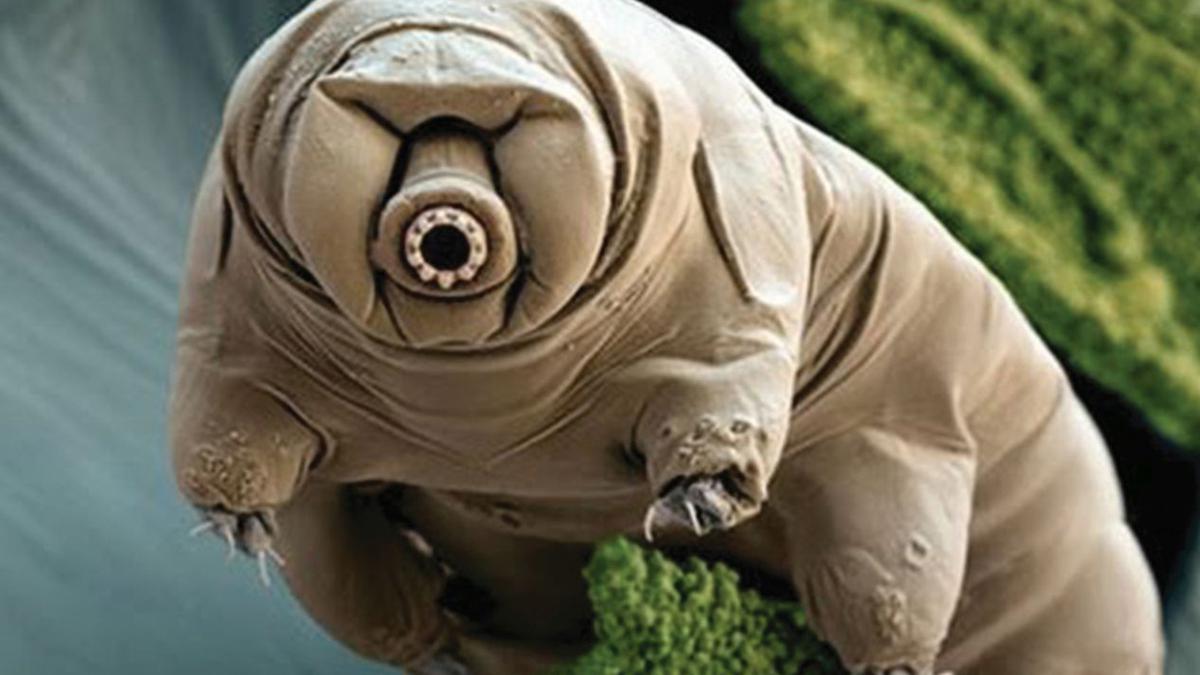
Tardigrades are one of the most resilient as well as enigmatic life forms on the earth. These organisms, also called water bears and moss piglets, are microscopic eight-legged creatures without a backbone.

They inspire awe with their remarkable ability to survive in extreme environments, including areas so very radioactive that they are easily lethal to humans. They can also survive starvation, lack of air and water, and subzero temperatures.

An ancient survivor

Belonging to a phylum of their own (Tardigrada), these remarkable creatures inhabit some of the more extreme ecosystems on the planet, from the frigid expanses of the Arctic and deep-sea floors to scorching deserts and even the vacuum of space. Researchers have identified more than 1,300 tardigrade species to date; each species is uniquely adapted to conditions that would be deadly to most other forms of life.

Evolutionarily, the tardigrades are an ancient species. The earliest known fossils date from around 90 million years ago, in the Cretaceous Period. Molecular dating suggests they originated at least 600 million years ago.

When facing hostile environments, tardigrades can enter a state called cryptobiosis, effectively pausing almost all their biological processes and lingering in a state of suspended animation. This peculiar state allows them to tolerate extreme dryness, intense radiation, and freezing. Tardigrades’ ability to survive radiation is due to specialised mechanisms that can shield their genetic material from damage. In fact, they don’t just survive otherwise hazardous radiation: they are able to recover and resume normal life.

Lessons of the tardigrade

Their features have rendered tardigrades a subject of intense scientific study. Researchers hope unlocking the secrets of their specialised survival mechanisms will pave the way to advances in human medicine, space exploration, and others.

Research has indicated the presence of many mechanisms that help tardigrades, and insights into them are expected to hold great biomedical and industrial value. For example, researchers have of late been discussing the role of a specific class of proteins: these proteins have flexible bodies and don’t have an intrinsic structure. Thus they have been named intrinsically disordered proteins.

One subgroup of these is secretory-abundant heat-soluble proteins. Researchers recently attempted to synthesise these proteins in other microbes by cloning the underlying genes and transferring them to the latter. Their work suggested such a method is capable of enhancing the tolerance of the microbes against desiccation (completely drying up). This work was published in Nature Communications Biology in May.

Another paper published last year in the same journal explored molecules called small heat shock proteins and, in a similar approach, demonstrated that they could enhance microbes’ ability to survive hot conditions as well as prevent proteins from clumping up when they dry out.

Survival begins in the cell

More recently, researchers from China reported a new tardigrade species, Hypsibius henanensis. Their findings, reported on October 25 in Science, included a chromosome-level genome assembly that revealed many details about the genes that give tardigrades the ability to withstand radiation. They exposed tardigrades to gamma rays at doses around 1,000-times greater than the lethal limit for humans, and tracked which genes were expressed using genomic tools.

The researchers found thousands of genes upregulated when the tardigrades were exposed to extreme radiation. Further analysis suggested that the radiation resistance is likely modulated by genes that can be acquired by horizontal transfer, i.e. from other species in their environment. The researchers also discovered some tardigrade-specific genes, as well as genes similar, yet not identical, to ones in other organisms.

In fact, horizontal gene transfer contributed more than 0.5% of the tardigrades’ genes, which is a significant fraction that signals its significance to the tardigrades’ survival and evolution. The DODA1 gene is of particular note: tardigrades need it to synthesise betalains, a type of antioxidant pigments that could be protecting the tardigrades’ cells against radiation damage. The creatures probably acquired it from a bacterial species.

A second class of genes involved in radiation resistance are unique to the tardigrades themselves. One of them is TRID1, which plays a role in repairing damaged DNA mediated by phase separation. Another is NDUFB8, associated with mitochondrial function. The researchers identified them to be crucial to the species’ ability to survive extreme conditions by (likely) helping maintain the stability of cells and sustaining energy production even under high radiation stress. Effectively, the tardigrades’ survival advantages begin at the cellular level.

Applications on the horizon

Tardigrade biology may seem exotic at this time and the research exploring it may seem esoteric. But a lot of biology makes sense in the light of evolution (to adapt the words of Theodosius Dobzhansky), and unlocking the mysteries of the tardigrade may quickly translate to breakthroughs in real-world challenges with far-reaching implications. Recall that scientists developed CRISPR-Cas9 based on a unique mechanism in a bacteria to repair its DNA.

Consider protein stability in tardigrades. We are using biological therapies such as protein vaccines, antibodies, and enzymes to treat a variety of diseases more often. If we can find a way to stabilise the proteins involved in these technologies, we can increase their biological efficacy as well.

As the field of cell therapies continues to grow, researchers are looking for technologies to protect these therapeutic products in harsh conditions they may encounter during storage, transport, and administration. Tardigrades possess unique adaptations to resist or even sidestep cellular damage, and researchers can learn from them to find ways to stabilise cells in research and biomedicine.

Taken together, tardigrades provide a unique blueprint for developing robust biological systems and materials. Their exceptional survival mechanisms could inspire new strategies in medicine, biotechnology, and beyond, leaving critical therapies and technologies more resilient, effective, and crucially, widely accessible.

Sridhar Sivasubbu and Vinod Scaria work at Karkinos Healthcare Pvt. Ltd. and are adjunct professors at IIT Kanpur and the D.Y. Patil Medical College, Pune.

Published – November 06, 2024 05:30 am IST


Source link

Science

Post navigation

Previous Post: Donald Trump Leads In 2 Red States As Counting Begins For US Elections
Next Post: The Hindu Morning Digest, November 06, 2024

Related Posts

  • Climate change is causing marine ‘coldwaves’ too, killing wildlife
    Climate change is causing marine ‘coldwaves’ too, killing wildlife Science
  • RNA editing promises to go where DNA editing can’t
    RNA editing promises to go where DNA editing can’t Science
  • Will cattle be the next evolutionary lab for flu host-switching?
    Will cattle be the next evolutionary lab for flu host-switching? Science
  • Ergosphere: Making a rotating black hole work
    Ergosphere: Making a rotating black hole work Science
  • CSIR-IICT scientists identify microalgae as a potential protein supplement
    CSIR-IICT scientists identify microalgae as a potential protein supplement Science
  • Daily Quiz: On earthquakes – The Hindu
    Daily Quiz: On earthquakes – The Hindu Science

More Related Articles

V. Narayanan appointed new Space Secretary and ISRO chief V. Narayanan appointed new Space Secretary and ISRO chief Science
The curious history of how quantum mechanics came to be ‘seen’ in an electrical circuit The curious history of how quantum mechanics came to be ‘seen’ in an electrical circuit Science
Chinese fossil reveals evolution of skin in feathered dinosaurs Chinese fossil reveals evolution of skin in feathered dinosaurs Science
What is Google’s ‘quantum advantage’ leap? | Explained What is Google’s ‘quantum advantage’ leap? | Explained Science
NASA scheduling move poised to bring Starliner astronauts home days sooner NASA scheduling move poised to bring Starliner astronauts home days sooner Science
Scientists, civil society members write open letter to Bharat Biotech and ICMR over prosecution of researchers Scientists, civil society members write open letter to Bharat Biotech and ICMR over prosecution of researchers Science
SiteLock

Archives

  • May 2026
  • April 2026
  • March 2026
  • February 2026
  • January 2026
  • December 2025
  • November 2025
  • October 2025
  • September 2025
  • August 2025
  • July 2025
  • June 2025
  • May 2025
  • April 2025
  • March 2025
  • February 2025
  • January 2025
  • December 2024
  • November 2024
  • October 2024
  • September 2024
  • August 2024
  • July 2024
  • June 2024
  • May 2024
  • April 2024
  • March 2024
  • February 2024
  • January 2024
  • December 2023
  • November 2023
  • October 2023
  • September 2023
  • August 2023
  • July 2023
  • June 2023
  • May 2023
  • April 2023
  • March 2023
  • February 2023
  • January 2023
  • December 2022
  • November 2022
  • October 2022
  • September 2022
  • August 2022
  • July 2022
  • June 2022
  • May 2022

Categories

  • Business
  • Nation
  • Science
  • Sports
  • World

Recent Posts

  • ATS questions 57 in Maharashtra over alleged gangster network links
  • Nicobarese oppose proposal for three wildlife sanctuaries
  • Visakhapatnam Collector calls for inter-departmental synergy to boost investments
  • Kohli’s masterful knock powers Royal Challengers to the top
  • Senior IPS officer Asra Garg posted IGP Intelligence

Recent Comments

  1. RichardClage on UP Teacher Who Asked Students To Slap Muslim Classmate
  2. StevenLek on UP Teacher Who Asked Students To Slap Muslim Classmate
  3. Leonardren on UP Teacher Who Asked Students To Slap Muslim Classmate
  4. NathanQuins on UP Teacher Who Asked Students To Slap Muslim Classmate
  5. Davidgof on UP Teacher Who Asked Students To Slap Muslim Classmate
  • Access Denied
    Access Denied Nation
  • Access Denied World
  • Access Denied
    Access Denied Nation
  • Access Denied Sports
  • Archer Aviation aims to start electric air taxi trials in India next year
    Archer Aviation aims to start electric air taxi trials in India next year Business
  • Amid War, UK PM Rishi Sunak To Visit Israel Today
    Amid War, UK PM Rishi Sunak To Visit Israel Today World
  • Access Denied World
  • Did Mohammed Siraj Bowl 181.6 Kmph Delivery In Pink-Ball Test vs Australia? Speed-Gun Error Goes Viral
    Did Mohammed Siraj Bowl 181.6 Kmph Delivery In Pink-Ball Test vs Australia? Speed-Gun Error Goes Viral Sports

Editor-in-Chief:
Mohammad Ariff,
MSW, MAJMC, BSW, DTL, CTS, CNM, CCR, CAL, RSL, ASOC.
editor@artifex.news

Associate Editors:
1. Zenellis R. Tuba,
zenelis@artifex.news
2. Haris Daniyel
daniyel@artifex.news

Photograher:
Rohan Das
rohan@artifex.news

Artifex.News offers Online Paid Internships to college students from India and Abroad. Interns will get a PRESS CARD and other online offers.
Send your CV (Subjectline: Paid Internship) to internship@artifex.news

Links:
Associate Journalism
About Us
Privacy Policy

News Links:
Breaking News
World
Nation
Sports
Business
Entertainment
Lifestyle

Registered Office:
72/A, Elliot Road, Kolkata - 700016
Tel: 033-22277777, 033-22172217
Email: office@artifex.news

Editorial Office / News Desk:
No. 13, Mezzanine Floor, Esplanade Metro Rail Station,
12 J. L. Nehru Road, Kolkata - 700069.
(Entry from Gate No. 5)
Tel: 033-46011099, 033-46046046
Email: editor@artifex.news

Copyright © 2023 Artifex.News Newsportal designed by Artifex Infotech.