


Skip to content
  • Facebook
  • X
  • Linkedin
  • WhatsApp
  • YouTube
  • Associate Journalism
  • About Us
  • Privacy Policy
  • 033-46046046
  • editor@artifex.news
Artifex.News

Artifex.News

Stay Connected. Stay Informed.

  • Breaking News
  • World
  • Nation
  • Sports
  • Business
  • Science
  • Entertainment
  • Lifestyle
  • Toggle search form
  • Opinion: Opinion | Pawan Kalyan: Reel Meets Real
    Opinion: Opinion | Pawan Kalyan: Reel Meets Real Nation
  • Access Denied Sports
  • Houthis Pledge “Huge” Response to Israel Strike As Gaza Violence Spreads
    Houthis Pledge “Huge” Response to Israel Strike As Gaza Violence Spreads World
  • Access Denied Sports
  • Access Denied Business
  • Access Denied Sports
  • Kennedy Center will close for 2 years for renovations in July: Trump after performers’ backlash
    Kennedy Center will close for 2 years for renovations in July: Trump after performers’ backlash World
  • Access Denied Sports
What are carbon capture and utilisation technologies? | Explained

What are carbon capture and utilisation technologies? | Explained

Posted on February 26, 2026 By admin


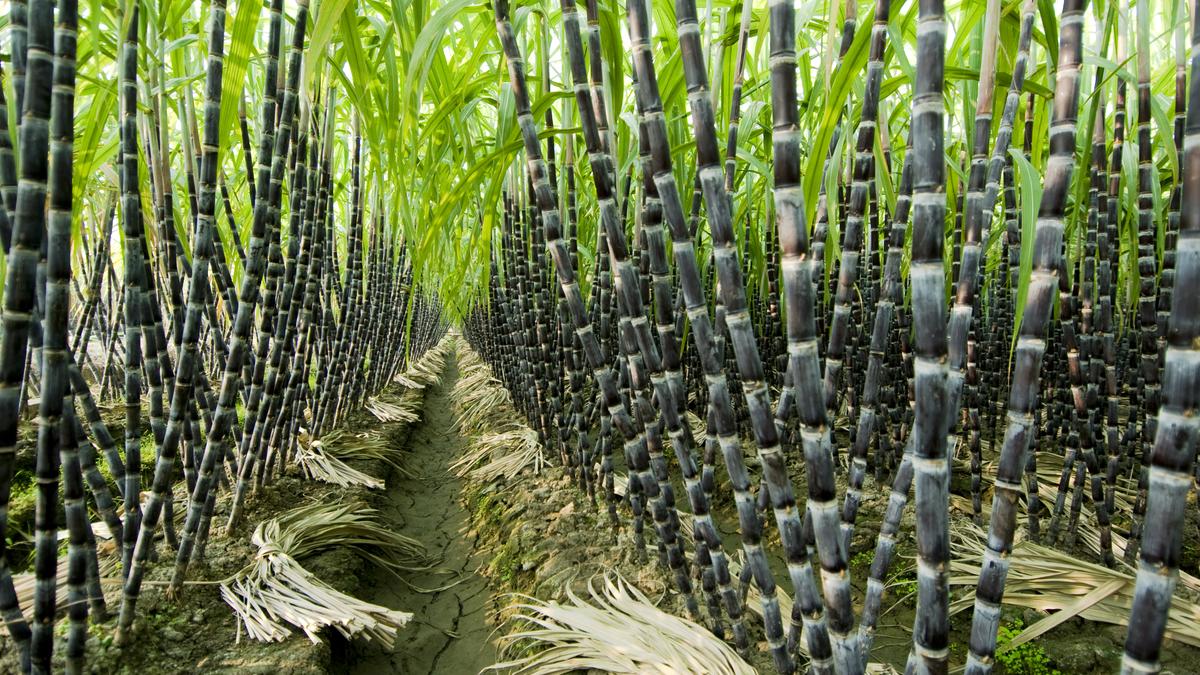
For representative purposes.
| Photo Credit: Getty Images

The story so far:

Carbon Capture and Utilisation (CCU) refers to a set of technologies that capture carbon dioxide emissions from industrial sources or directly from the air and convert them into useful products. This process removes carbon from the atmosphere and puts it into the economy as inputs for fuels, chemicals, building materials, or polymers. Unlike carbon capture and storage, where captured CO₂ is permanently stored underground rather than reused, CCU uses up the captured carbon.

Why does India need CCU?

India has consistently been the world’s third-largest emitter of CO₂, with emissions driven largely by power generation, cement, steel, and chemicals. While renewable energy may reduce future emissions, many industrial processes are inherently carbon-intensive and difficult to decarbonise. CCU offers a pathway to reduce emissions from these “hard-to-abate” sectors while simultaneously creating new industrial value chains. It also aligns with India’s net-zero target for 2070 and its push to build a circular, low-carbon economy.

Also Read | Union Budget 2026: ₹20,000 crore earmarked for carbon capture, storage scheme

Where does India stand today?

India has begun supporting CCU through research funding from the Department of Science and Technology which has created a specific research and development roadmap for these technologies. The draft 2030 roadmap for Carbon Utilisation and Storage (CCUS) presented by the Ministry of Petroleum and Natural gas has identified projects that can be used for CCUS purposes. In the private sector, Ambuja Cements (Adani Group) is working on an Indo-Swedish CCU pilot with IIT Bombay to convert captured CO₂ into fuels and materials. JK Cement is collaborating on a CCU testbed to capture CO₂ for applications such as lightweight concrete blocks and olefins. Beyond cement, Organic Recycling Systems Limited (ORSL) is leading India’s first pilot-scale Bio-CCU platform, valorising CO₂ from biogas streams into bio-alcohols and specialty chemicals.

What are other countries doing?

The EU Bioeconomy Strategy and Circular Economy Action Plan explicitly supports CCU as a way to turn CO₂ into feedstocks for chemicals, fuels, and materials, linking it to circularity and sustainability targets. ArcelorMittal and Mitsubishi Heavy Industries, Ltd. are working with a climate tech company, D-CRBN, to trial a new technology to convert CO2 captured at ArcelorMittal’s plant in Gent, Belgium into carbon monoxide which can be used in steel and chemical production. The U.S. uses a combination of tax credits and funding to scale CCUs, particularly for CO₂-derived fuels and chemicals. The UAE’s Al Reyadah project and planned CO₂-to-chemicals hubs leverage CCU with green hydrogen.

What are the risks ahead?

The foremost risk in scaling CCU in India is cost competitiveness. Capturing, purifying, and converting CO₂ is energy-intensive and expensive. Without policy incentives, CCU-derived products will struggle to compete with cheaper, fossil-based alternatives. A second risk lies in infrastructure readiness. CCU requires co-located industrial clusters, reliable transport of CO₂, and integration with downstream manufacturing, all of which are unevenly developed across Indian industrial regions. Finally, the absence of clear standards, certification, and market signals creates uncertainty for investors and limits demand for CO₂-derived products.

India has taken positive steps through the development of roadmaps to achieving CCU, and their appropriate implementation will be necessary for achieving India’s goals.

Shambhavi Naik is chairperson, Takshashila Institution’s Health & Life Sciences Policy,

Published – February 26, 2026 08:30 am IST


Source link

Science Tags:carbon capture and utilisation technologies, carbon capture technologies, carbon capture technologies in India, carbon capturing explained, India news

Post navigation

Previous Post: Access Denied
Next Post: Access Denied

Related Posts

  • Precision biotherapeutics | Explained – The Hindu
    Precision biotherapeutics | Explained – The Hindu Science
  • Global push for cooperation as space traffic crowds earth orbit
    Global push for cooperation as space traffic crowds earth orbit Science
  • ISRO satellites closely tracking Cyclone Fengal
    ISRO satellites closely tracking Cyclone Fengal Science
  • PM Modi “directs” ISRO to land man on moon by 2040
    PM Modi “directs” ISRO to land man on moon by 2040 Science
  • The Science Quiz | Underwater tunnels
    The Science Quiz | Underwater tunnels Science
  • The Science Quiz: Rovers on the moon and Mars
    The Science Quiz: Rovers on the moon and Mars Science

More Related Articles

Why are earthquakes frequent in Afghanistan? | Explained Why are earthquakes frequent in Afghanistan? | Explained Science
In snake genes, study finds they evolved 3x faster than other reptiles In snake genes, study finds they evolved 3x faster than other reptiles Science
How BioPharma SHAKTI can transform biologics with non-animal models How BioPharma SHAKTI can transform biologics with non-animal models Science
Chile’s giant ‘living fossil’ frog faces threat from climate change and humans Chile’s giant ‘living fossil’ frog faces threat from climate change and humans Science
SpaceX Starship disintegrates after completing most of third test flight SpaceX Starship disintegrates after completing most of third test flight Science
Moon was formed around 4.51 billion years ago: study Moon was formed around 4.51 billion years ago: study Science
SiteLock

Archives

  • May 2026
  • April 2026
  • March 2026
  • February 2026
  • January 2026
  • December 2025
  • November 2025
  • October 2025
  • September 2025
  • August 2025
  • July 2025
  • June 2025
  • May 2025
  • April 2025
  • March 2025
  • February 2025
  • January 2025
  • December 2024
  • November 2024
  • October 2024
  • September 2024
  • August 2024
  • July 2024
  • June 2024
  • May 2024
  • April 2024
  • March 2024
  • February 2024
  • January 2024
  • December 2023
  • November 2023
  • October 2023
  • September 2023
  • August 2023
  • July 2023
  • June 2023
  • May 2023
  • April 2023
  • March 2023
  • February 2023
  • January 2023
  • December 2022
  • November 2022
  • October 2022
  • September 2022
  • August 2022
  • July 2022
  • June 2022
  • May 2022

Categories

  • Business
  • Nation
  • Science
  • Sports
  • World

Recent Posts

  • Bi-weekly special train now to run as bi-weekly regular service
  • 15 security officials killed in militant attack in northwest Pakistan
  • As model code ends, wall posters make a comeback in Tiruchi
  • Explosion at coal mine in Colombia, at least four trapped
  • Telangana hotel association seek LPG relief, urge PM Modi for rationalisation

Recent Comments

  1. Richardhoabe on UP Teacher Who Asked Students To Slap Muslim Classmate
  2. Robertnof on UP Teacher Who Asked Students To Slap Muslim Classmate
  3. EnriqueExins on UP Teacher Who Asked Students To Slap Muslim Classmate
  4. Andrewfoods on UP Teacher Who Asked Students To Slap Muslim Classmate
  5. DonaldStype on UP Teacher Who Asked Students To Slap Muslim Classmate
  • Access Denied
    Access Denied Nation
  • Access Denied World
  • Former Chief Justice Dipak Misra
    Former Chief Justice Dipak Misra Nation
  • Sweater Worn By Luigi Mangione Sold Out One Day After His Court Appearance
    Sweater Worn By Luigi Mangione Sold Out One Day After His Court Appearance World
  • ICE officers shoot, wound man during immigration arrest in California
    ICE officers shoot, wound man during immigration arrest in California World
  • Access Denied
    Access Denied Nation
  • India Can Do A Lot With BRICS
    India Can Do A Lot With BRICS Nation
  • Access Denied
    Access Denied Nation

Editor-in-Chief:
Mohammad Ariff,
MSW, MAJMC, BSW, DTL, CTS, CNM, CCR, CAL, RSL, ASOC.
editor@artifex.news

Associate Editors:
1. Zenellis R. Tuba,
zenelis@artifex.news
2. Haris Daniyel
daniyel@artifex.news

Photograher:
Rohan Das
rohan@artifex.news

Artifex.News offers Online Paid Internships to college students from India and Abroad. Interns will get a PRESS CARD and other online offers.
Send your CV (Subjectline: Paid Internship) to internship@artifex.news

Links:
Associate Journalism
About Us
Privacy Policy

News Links:
Breaking News
World
Nation
Sports
Business
Entertainment
Lifestyle

Registered Office:
72/A, Elliot Road, Kolkata - 700016
Tel: 033-22277777, 033-22172217
Email: office@artifex.news

Editorial Office / News Desk:
No. 13, Mezzanine Floor, Esplanade Metro Rail Station,
12 J. L. Nehru Road, Kolkata - 700069.
(Entry from Gate No. 5)
Tel: 033-46011099, 033-46046046
Email: editor@artifex.news

Copyright © 2023 Artifex.News Newsportal designed by Artifex Infotech.