
Skip to content
  • Facebook
  • X
  • Linkedin
  • WhatsApp
  • YouTube
  • Associate Journalism
  • About Us
  • Privacy Policy
  • 033-46046046
  • editor@artifex.news
Artifex.News

Artifex.News

Stay Connected. Stay Informed.

  • Breaking News
  • World
  • Nation
  • Sports
  • Business
  • Science
  • Entertainment
  • Lifestyle
  • Toggle search form
  • Access Denied
    Access Denied Nation
  • Access Denied Sports
  • Raw Emotions As Sheetal Devi Clinches Her First Paralympics Medal. Watch
    Raw Emotions As Sheetal Devi Clinches Her First Paralympics Medal. Watch Sports
  • KCL | Anand’s late-game heroics put Titans in final
    KCL | Anand’s late-game heroics put Titans in final Sports
  • Tamil Nadu swearing-in ceremony LIVE: TVK president C. Joseph Vijay to take oath as Chief Minister
    Tamil Nadu swearing-in ceremony LIVE: TVK president C. Joseph Vijay to take oath as Chief Minister Nation
  • H1N1 cases on the rise, experts say no cause for alarm
    H1N1 cases on the rise, experts say no cause for alarm Nation
  • ‘Adopt electric cooking, mobility for clean energy transition’
    ‘Adopt electric cooking, mobility for clean energy transition’ Nation
  • Race to global eradication of Guinea worm disease nears finish line
    Race to global eradication of Guinea worm disease nears finish line Science
How BioPharma SHAKTI can transform biologics with non-animal models

How BioPharma SHAKTI can transform biologics with non-animal models

Posted on March 24, 2026 By admin


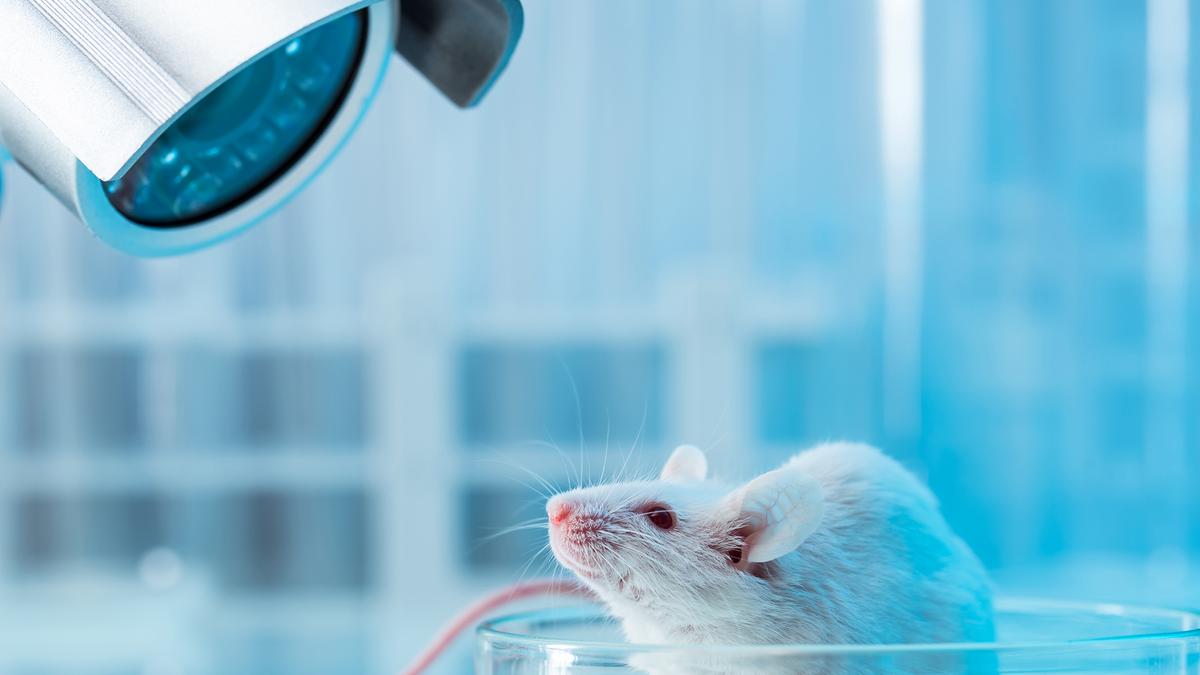
In 2006, London woke up to a tragedy. Six healthy men involved in a phase I clinical trial of theralizumab, a monoclonal antibody (mAb) designed to treat rheumatoid arthritis, developed multiple organ failure. The antibody triggered an intense immune reaction that the researchers didn’t observe in rhesus monkeys in preclinical tests because their immune cells responded differently from human immune cells.

The Northwick Park Tragedy, as it was called, became a textbook example of why animals can’t be used as proxies to test human drugs. Similarly, in 2022, the mAb semorinemab failed to work in 457 patients with Alzheimer’s disease during phase II trials despite demonstrating effectiveness in a preclinical mouse model.

mAbs, vaccines, and insulin all belong to a growing class of drugs called biologics — large, complex molecules produced by living cells. Their use is rising worldwide as they treat many chronic diseases.

Recognising their importance, the 2026 Union Budget of India announced the Biopharma SHAKTI strategy to boost domestic production of biologics and their generic counterparts, biosimilars.

However, animal models may not reliably predict the safety and efficacy of biologics. This has prompted a shift towards bioengineered, human-relevant systems such as organoids, organ-on-a-chip, and 3D bioprinting, which are derived from human cells and thus replicate human biology more faithfully.

Human-relevant models

These models are collected under the term non-animal methodologies (NAMs) and are used worldwide to reduce the use of experiments in animals. For example, last year, the U.K. published a roadmap to phase out animal experiments and promote the adoption of NAMs. 

Thanks to the New Drugs and Clinical Trials (Amendment) Rules 2023, India is also promoting the use of NAMs in the development of novel drugs. However, their potential remains untapped in the domain of biologics and biosimilars.

“Biologics are highly specific,” University of Illinois adjunct professor Sarfaraz Niazi said. “They bind to particular receptors in the human body. But those receptors are sometimes missing or function differently in animals, which makes animal testing less predictive.”

One 2024 study in Cell reported a breast cancer-on-chip model to study the effectiveness of CAR T-cell therapy, a leading biologic therapy, against solid tumours.

While CAR T-cell therapy has proven effective against blood cancers, solid tumours like breast cancers pose additional challenges like abnormal blood vessel formation and difficulties for T-cells to find and attack the cancerous cells.

The breast cancer-on-chip model recreated this tumour environment in the lab, and the authors of the 2024 study perfused T-cells through it to observe whether they could enter the tumour and mount an immune attack, assessing both treatment benefit and potential safety risks without animals.

These models can also reduce costs and shorten development timelines, making them attractive to pharmaceutical companies. A 2019 analysis in Drug Discovery Today estimated that organ-on-chip technologies could lower overall drug development costs by 10-26%. They also found the time required for lead optimisation, when scientists identify a promising drug candidate from a pool of molecules, could drop by 19%.

Future of biologics

Even if NAMs are promising models, they are not as accessible as animal systems. More than 90 academic labs in India are working on these models. However, the innovation here is not translating into industry use.

“Translating NAMs into industry-ready assays requires a clear context of use, robust documentation, and standardised, reproducible protocols, even before qualification. While institutions support entrepreneurship, sustained commercialisation needs stronger, modern policy support,” Kasturi Mahadik, Chief Manager at the Centre for Predictive Human Model Systems (CPHMS), AIC-CCMB, said. (Note: the author works at CPHMS.)

The development of NAMs also requires sustained funding and infrastructure. With an outlay of ₹10,000 crore, Biopharma SHAKTI can provide the necessary backing.

“I think the best use of these funds would be not to develop a single product but to build systems that enable many companies to do so,” Dr. Niazi added.

“The culture of entrepreneurship is also a challenge in India,” Narendra Chirmule, CEO of  SymphonyTech Biologics, said. “Although there is an increase in the number of start-ups and MSMEs in biologics (supported by DBT, ICMR, and other grants), exponentially greater investment, as well as support for the development of supply chain materials, is needed to create real impact. Additionally, investors are not well versed in the risks and potentials of the biologics industry.”

Regulatory, market challenges

Another area supported by Biopharma SHAKTI is biosimilars, generic versions of biologics that are reverse-engineered once the original product goes off patent. However, there are additional financial risks and regulatory adjustments involved, which require greater attention from the government.

One challenge is patent evergreening, which allows the exclusive rights of an original biologic to be extended. For example, although the intravenous form of the cancer drug trastuzumab was approved in 2000, the manufacturer later introduced a subcutaneous formulation with a separate patent. Because of this prolonged market exclusivity, cheaper biosimilar versions weren’t available until 2018.

Before being commercialised, biosimilars also have to receive a nod from the Central Drugs Standard Control Organisation (CDSCO), India’s apex regulatory body. These approvals are based on set guidelines; however, the updated guidelines are still in draft form.

“While India has been updating its biosimilars guidelines to accommodate NAMs, implementation has been slow, and regulatory confidence in independently validated NAM models is still evolving. If accelerated, this would expedite the adoption of NAMs in the biologics and biosimilars field, helping Biopharma SHAKTI achieve its goals,” says Mahadik.

Therefore, aligning with industry realities and securing regulatory clarity for their use will make biosimilars and biologics manufacturing in India faster, more predictive, and cost-efficient, thus realising the vision set by Biopharma SHAKTI.

Mohit Nikalje is a science communicator at the Centre for Predictive Human Model Systems, Hyderabad.

Source link

Science

Post navigation

Previous Post: Access Denied
Next Post: Access Denied

Related Posts

  • An unlikely mystery: studies shed new light on how genes are made
    An unlikely mystery: studies shed new light on how genes are made Science
  • COVID-19: anosmia as a marker for susceptible brain damage
    COVID-19: anosmia as a marker for susceptible brain damage Science
  • science for all newsletter What are Trojan asteroids?
    science for all newsletter What are Trojan asteroids? Science
  • Why is WHO cagey about publishing Meghalaya polio case details
    Why is WHO cagey about publishing Meghalaya polio case details Science
  • Science Snapshots: May 10, 2026
    Science Snapshots: May 10, 2026 Science
  • How will Gaganyaan astronauts return safely to earth? | Explained
    How will Gaganyaan astronauts return safely to earth? | Explained Science

More Related Articles

Joel Mokyr’s story of how science becomes technology is incomplete Joel Mokyr’s story of how science becomes technology is incomplete Science
China launches Shenzhou-19 spaceship with new crew to join its space station China launches Shenzhou-19 spaceship with new crew to join its space station Science
How new fossils and modern technology are tracing the origins of snakes How new fossils and modern technology are tracing the origins of snakes Science
The biology of belief, optimism, and good health The biology of belief, optimism, and good health Science
Putin says Russia is close to creating cancer vaccines Putin says Russia is close to creating cancer vaccines Science
Fossils suggest even smaller ‘hobbits’ roamed an Indonesian island 700,000 years ago Fossils suggest even smaller ‘hobbits’ roamed an Indonesian island 700,000 years ago Science
SiteLock

Archives

  • October 2026
  • September 2026
  • August 2026
  • July 2026
  • June 2026
  • May 2026
  • April 2026
  • March 2026
  • February 2026
  • January 2026
  • December 2025
  • November 2025
  • October 2025
  • September 2025
  • August 2025
  • July 2025
  • June 2025
  • May 2025
  • April 2025
  • March 2025
  • February 2025
  • January 2025
  • December 2024
  • November 2024
  • October 2024
  • September 2024
  • August 2024
  • July 2024
  • June 2024
  • May 2024
  • April 2024
  • March 2024
  • February 2024
  • January 2024
  • December 2023
  • November 2023
  • October 2023
  • September 2023
  • August 2023
  • July 2023
  • June 2023
  • May 2023
  • April 2023
  • March 2023
  • February 2023
  • January 2023
  • December 2022
  • November 2022
  • October 2022
  • September 2022
  • August 2022
  • July 2022
  • June 2022
  • May 2022

Categories

  • Business
  • Nation
  • Science
  • Sports
  • World

Recent Posts

  • Aaditya Thackeray to join Pune MPSC protest, backs demand for chairperson’s exit
  • Scientists decode solar eruptions using Aditya-L1, Proba-3
  • Drone strikes in the Black Sea raise fears of Russian escalation to test NATO’s response
  • Bengaluru signs sister airport agreement with Vancouver
  • Non-tariff barriers are biggest hurdle in India-China trade, says Nirmala Sitharaman

Recent Comments

  1. Davidbrurf on UP Teacher Who Asked Students To Slap Muslim Classmate
  2. Danielwhipt on UP Teacher Who Asked Students To Slap Muslim Classmate
  3. Danielwhipt on UP Teacher Who Asked Students To Slap Muslim Classmate
  4. CharlesGah on UP Teacher Who Asked Students To Slap Muslim Classmate
  5. Danielwhipt on UP Teacher Who Asked Students To Slap Muslim Classmate
  • Access Denied
    Access Denied Nation
  • Summer Games showcase reveals a plethora of delightful, digital adventures
    Summer Games showcase reveals a plethora of delightful, digital adventures Nation
  • Access Denied Sports
  • What caused the storm that led to Dubai floods? | Explained
    What caused the storm that led to Dubai floods? | Explained World
  • Access Denied
    Access Denied Nation
  • If equality prevails, next UN chief will be a woman, says top contender Rebeca Grynspan
    If equality prevails, next UN chief will be a woman, says top contender Rebeca Grynspan World
  • M Mukesh Need Not Resign As MLA Amid MeToo Allegations: CPI(M)
    M Mukesh Need Not Resign As MLA Amid MeToo Allegations: CPI(M) Nation
  • SpaceX Falcon 9 may resume flights while FAA probe underway
    SpaceX Falcon 9 may resume flights while FAA probe underway Science

Editor-in-Chief:
Mohammad Ariff,
MSW, MAJMC, BSW, DTL, CTS, CNM, CCR, CAL, RSL, ASOC.
editor@artifex.news

Associate Editors:
1. Zenellis R. Tuba,
zenelis@artifex.news
2. Haris Daniyel
daniyel@artifex.news

Photograher:
Rohan Das
rohan@artifex.news

Associate Journalists
1. Subrata Paul - AN/2020/01
2. Quamruz Zaman - AN/2021/22
3. Ahmed Sha - AN/2021/035
4. Ajay Kumar Shaw - AN/2021/39
5. Tahqiqul Hoda - AN/2021/21

Artifex.News offers Online Paid Internships to college students from India and Abroad. Interns will get a PRESS CARD and other online offers.
Send your CV (Subjectline: Paid Internship) to internship@artifex.news

Links:
Associate Journalism
About Us
Privacy Policy

News Links:
Breaking News
World
Nation
Sports
Business
Entertainment
Lifestyle

Registered Office:
72/A, Elliot Road, Kolkata - 700016
Tel: 033-22277777, 033-22172217
Email: office@artifex.news

Editorial Office / News Desk:
No. 13, Mezzanine Floor, Esplanade Metro Rail Station,
12 J. L. Nehru Road, Kolkata - 700069.
(Entry from Gate No. 5)
Tel: 033-46011099, 033-46046046
Email: editor@artifex.news

Copyright © 2023 Artifex.News Newsportal designed by Artifex Infotech.