

Skip to content
  • Facebook
  • X
  • Linkedin
  • WhatsApp
  • YouTube
  • Associate Journalism
  • About Us
  • Privacy Policy
  • 033-46046046
  • editor@artifex.news
Artifex.News

Artifex.News

Stay Connected. Stay Informed.

  • Breaking News
  • World
  • Nation
  • Sports
  • Business
  • Science
  • Entertainment
  • Lifestyle
  • Toggle search form
  • Access Denied
    Access Denied Nation
  • Elon Musk must face fraud lawsuit for disclosing Twitter stake late
    Elon Musk must face fraud lawsuit for disclosing Twitter stake late World
  • Kerala HC sets aside Centre’s order refusing FCRA renewal to two NGOs over alleged Vizhinjam port protest funding
    Kerala HC sets aside Centre’s order refusing FCRA renewal to two NGOs over alleged Vizhinjam port protest funding Nation
  • Two foreign nationals among 795 arrested in Operation Toofan against drug menace in Kerala
    Two foreign nationals among 795 arrested in Operation Toofan against drug menace in Kerala Nation
  • Access Denied
    Access Denied Nation
  • Access Denied
    Access Denied Nation
  • 7 Killed As Bus Crashes Into River In Russia’s St Petersburg: Cops
    7 Killed As Bus Crashes Into River In Russia’s St Petersburg: Cops World
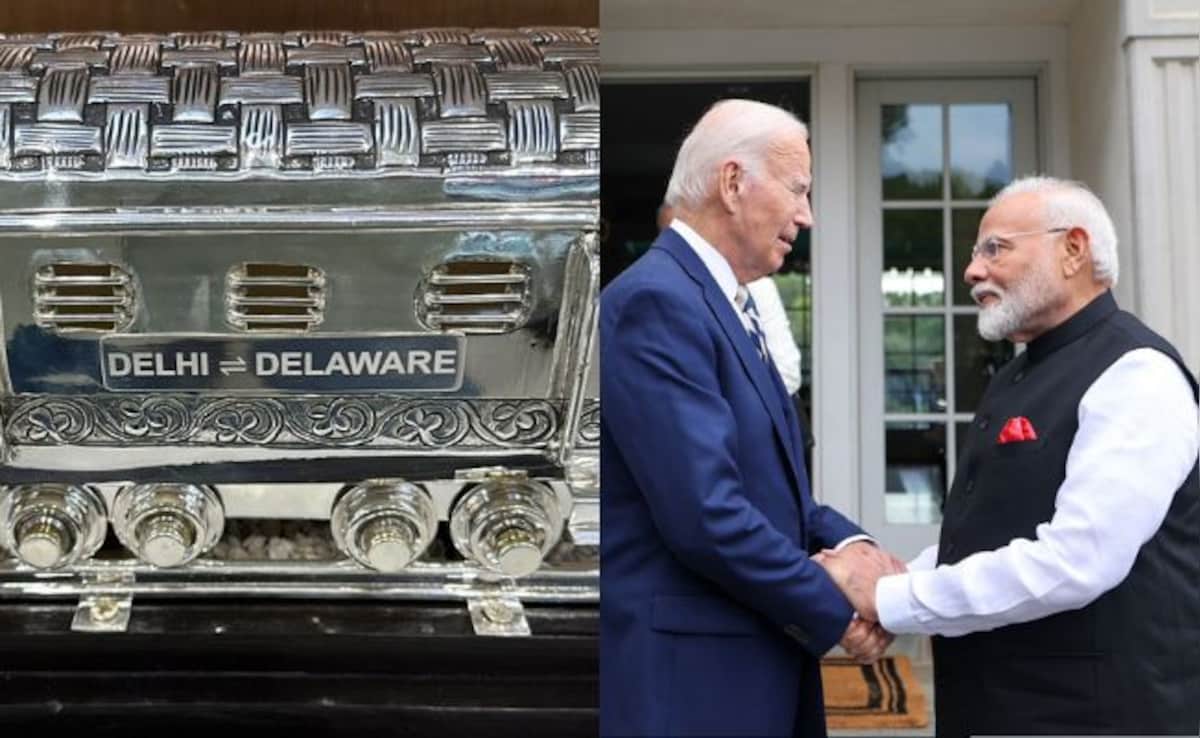
  • PM Narendra Modi Gifts Joe Biden A Silver Hand-Engraved Train Model, Jill Biden A Pashmina Shawl
    PM Narendra Modi Gifts Joe Biden A Silver Hand-Engraved Train Model, Jill Biden A Pashmina Shawl World
A small piece of RNA copies itself, hinting at how life first began

A small piece of RNA copies itself, hinting at how life first began

Posted on February 22, 2026 By admin


In a 1953 experiment, two scientists named Stanley Miller and Harold Urey attempted to recreate the conditions of the early earth long before life existed. They showed that organic molecules such as amino acids, the building blocks of proteins, could form spontaneously in the conditions that prevailed on a primitive earth, 3.5-4 billion years ago.

While the experiment was revolutionary,  it did not settle the question of life’s origins. Critics pointed out that while amino acids could form, there was still no sign of genetic material, i.e. neither DNA nor RNA. Living organisms don’t merely contain proteins: they rely on genetic information encoded in DNA or RNA to build them. Demonstrating that proteins could arise was therefore only part of the story. 

Importantly, life must be able to produce more life. For that, a primitive system would need genetic information and also a way to copy that information. This created a problem. Usually, DNA or RNA stores instructions to make proteins called polymerases. These polymerases then copy the DNA or RNA so that, when a cell divides, each new cell receives a complete set of genetic information. It was and remains a classic chicken-or-egg problem.

Then, in the early 1980s, scientists discovered that RNA itself could perform simple chemical reactions, including being able to cut and paste pieces of itself. This discovery strongly shifted scientists’ thinking towards the possibility that RNA could have been the earliest genetic material on the primitive earth. If a single molecule could both store information and carry out chemical reactions, it could bypass the chicken-and-egg problem of needing proteins to copy genetic material. 

However, while scientists have already developed RNA molecules that could build other RNA molecules, they still lack an RNA that could copy the information contained within itself. The difficulty was structural: the RNA enzymes capable of copying other RNAs were large and complex — between 150-300 nucleotides — and in trying to fold into their functional shapes they could not easily serve as templates for their own replication. In other words, RNA could help other proteins replicate but couldn’t self-replicate.

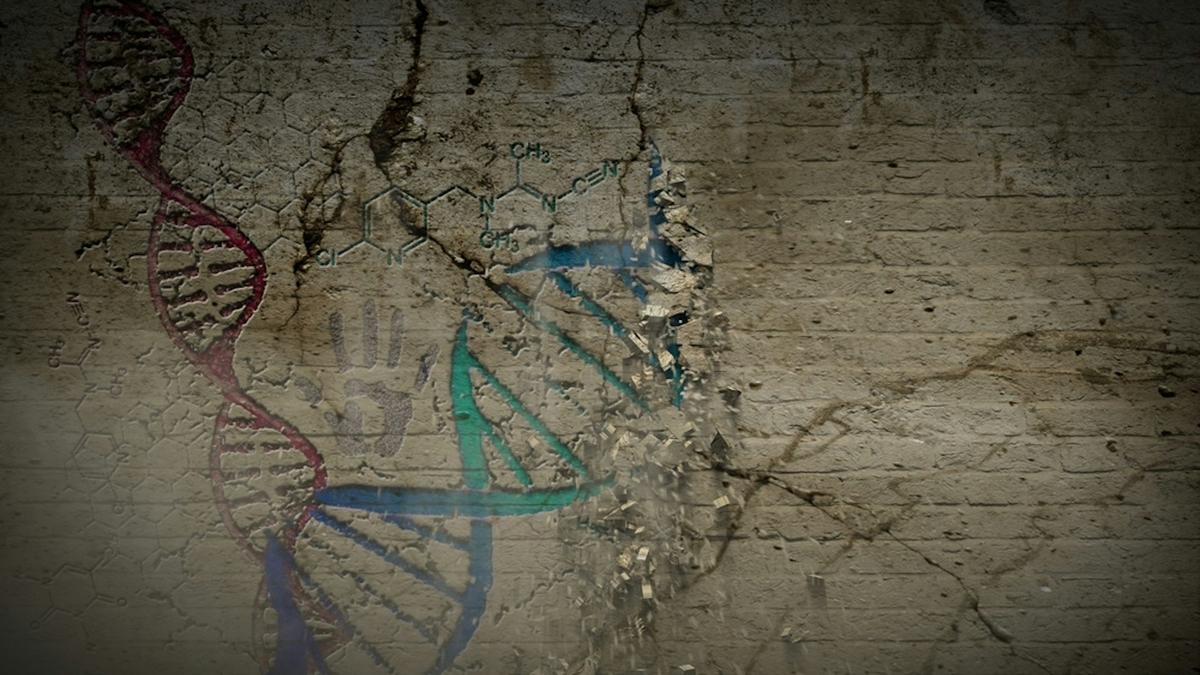
Now, however, in a paper in Science, scientists from the MRC Laboratory of Molecular Biology in the U.K. have reported that they have generated a self-replicating RNA molecule. Specifically, the researchers produced a small RNA molecule, just 45 nucleotides long, that could copy its own genetic information.

To do this, they first sifted through enormous pools of RNAs, building on earlier work with much larger RNA enzymes, and repeatedly selected those rare sequences that showed even faint signs of replication. This led to the development of QT45, which is, according to the researchers, the world’s first RNA molecule that can make copies of itself.

However, while the QT45 RNA can do this, its process of self-replication was extraordinarily slow and required special conditions. Producing a single full-length copy took weeks. In contrast, modern cellular polymerases can copy 45 nucleotides in less than a second. Though the difference is dramatic, primitive earth had millions of years, so even QT45’s stringent and slow copying conditions could realistically have occurred and been sustained.

Also, modern enzymes add nucleotides one at a time, reading the template, and making a new chain of complementary nucleotides. QT45 used short three-nucleotide building blocks, even if it also followed the same logic: it first assembled a complementary negative strand, then used that as the template to reproduce the original copy.

However, the most striking, and in many ways the most beautiful, feature of the QT45 RNA was that it was imperfect. Its copying accuracy was only about 92-94%. This means it makes mistakes when replicating the genetic information, a property at the core of a true copying system. Every mistake creates variation, and variations are the raw material upon which natural selection can act.

While the development of the QT45 RNA is indeed a breakthrough, it is important to remember that while it strengthens RNA’s case as the first genetic material, it doesn’t prove it. QT45 merely shows that self-replicating RNAs can exist and that that could be the way in which life on the earth first began.

The exact manner in which life originated may remain lost to history forever, but discoveries like QT45 show that inert matter can sometimes begin to behave like life. At the heart of it, it’s just chemistry, slowly learning to remember itself.

Arun Panchapakesan is an assistant professor at the Y.R. Gaitonde Centre for AIDS Research and Education, Chennai.

Published – February 25, 2026 07:00 am IST


Source link

Science

Post navigation

Previous Post: Access Denied
Next Post: Access Denied

Related Posts

  • How dual-use satellites are blurring the lines of modern space war
    How dual-use satellites are blurring the lines of modern space war Science
  • First conclusive evidence that a terrestrial leech species can jump
    First conclusive evidence that a terrestrial leech species can jump Science
  • ISRO’s SpaDex mission advances lunar exploration, sample return missions and other objectives: ATL
    ISRO’s SpaDex mission advances lunar exploration, sample return missions and other objectives: ATL Science
  • Shubhanshu Shukla to pilot Axiom-4 Mission: My journey to space will be the journey of 1.4 billion fellow Indians
    Shubhanshu Shukla to pilot Axiom-4 Mission: My journey to space will be the journey of 1.4 billion fellow Indians Science
  • Why can’t humans tell animal faces apart?
    Why can’t humans tell animal faces apart? Science
  • What is orbital docking?
    What is orbital docking? Science

More Related Articles

What we can learn from nature switching off human genes What we can learn from nature switching off human genes Science
What does ‘visibility’ mean in weather science? What does ‘visibility’ mean in weather science? Science
Ancient human DNA from a South African rock shelter sheds light on 10,000 years of history Ancient human DNA from a South African rock shelter sheds light on 10,000 years of history Science
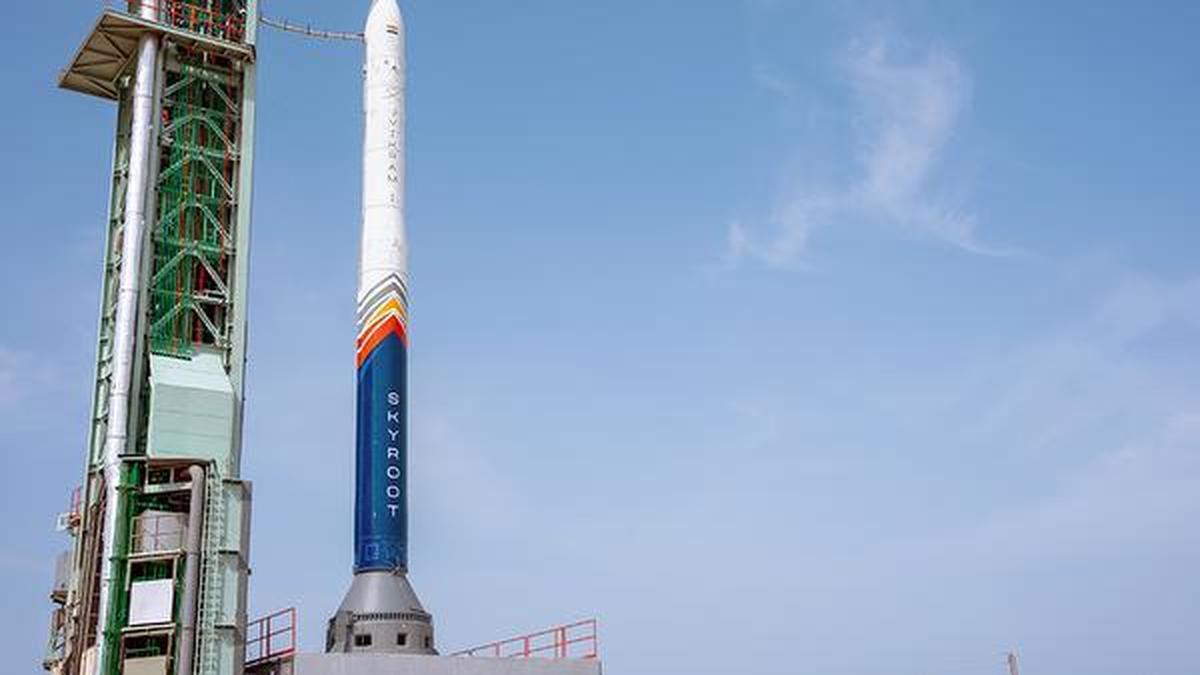
Vikram-1, India’s first privately developed orbital-class rocket lifts off from Sriharikota Vikram-1, India’s first privately developed orbital-class rocket lifts off from Sriharikota Science
Loggerhead turtles use geomagnetic field to navigate large distances Loggerhead turtles use geomagnetic field to navigate large distances Science
Emerging H5N1 mutations raise risk of human infections Emerging H5N1 mutations raise risk of human infections Science
SiteLock

Archives

  • September 2026
  • August 2026
  • July 2026
  • June 2026
  • May 2026
  • April 2026
  • March 2026
  • February 2026
  • January 2026
  • December 2025
  • November 2025
  • October 2025
  • September 2025
  • August 2025
  • July 2025
  • June 2025
  • May 2025
  • April 2025
  • March 2025
  • February 2025
  • January 2025
  • December 2024
  • November 2024
  • October 2024
  • September 2024
  • August 2024
  • July 2024
  • June 2024
  • May 2024
  • April 2024
  • March 2024
  • February 2024
  • January 2024
  • December 2023
  • November 2023
  • October 2023
  • September 2023
  • August 2023
  • July 2023
  • June 2023
  • May 2023
  • April 2023
  • March 2023
  • February 2023
  • January 2023
  • December 2022
  • November 2022
  • October 2022
  • September 2022
  • August 2022
  • July 2022
  • June 2022
  • May 2022

Categories

  • Business
  • Nation
  • Science
  • Sports
  • World

Recent Posts

  • Saudi Arabia confirms Yemen’s Houthi rebels tried to attack its capital with ballistic missile
  • Martin recovers from early setback to win Austrian sprint and retake championship lead
  • Arsenal thrashed by Brighton, sorry Spurs lose again
  • Shamli Police book six over alleged ‘misleading’ social media posts on Ayush Malik High Court proceedings
  • What is the India-Pakistan conflict at sea about? | Explained

Recent Comments

  1. AlvinNet on UP Teacher Who Asked Students To Slap Muslim Classmate
  2. AlvinNet on UP Teacher Who Asked Students To Slap Muslim Classmate
  3. Jamesslits on UP Teacher Who Asked Students To Slap Muslim Classmate
  4. MichaelClear on UP Teacher Who Asked Students To Slap Muslim Classmate
  5. Jamesslits on UP Teacher Who Asked Students To Slap Muslim Classmate
  • Why do some sounds hurt? 
    Why do some sounds hurt?  Science
  • EAM Jaishankar hands over India-assisted agro-processing facility in South Trinidad
    EAM Jaishankar hands over India-assisted agro-processing facility in South Trinidad World
  • Cristiano Ronaldo bids adieu to World Cup with ‘clear conscience’
    Cristiano Ronaldo bids adieu to World Cup with ‘clear conscience’ Sports
  • “Peeche Kyu?”: Neeraj Chopra’s Wholesome Reply To Kishore Jena’s “Will Follow” Remarks At Asian Games 2023
    “Peeche Kyu?”: Neeraj Chopra’s Wholesome Reply To Kishore Jena’s “Will Follow” Remarks At Asian Games 2023 Sports
  • Access Denied
    Access Denied Nation
  • Bundesliga: Julian Brandt Strikes Late For Dortmund As Leverkusen Stay Top
    Bundesliga: Julian Brandt Strikes Late For Dortmund As Leverkusen Stay Top Sports
  • Pakistan vs Bangladesh Cricket World Cup 2023: Preview, Prediction, Head-To-Head, Pitch And Weather Reports
    Pakistan vs Bangladesh Cricket World Cup 2023: Preview, Prediction, Head-To-Head, Pitch And Weather Reports Sports
  • Access Denied Business

Editor-in-Chief:
Mohammad Ariff,
MSW, MAJMC, BSW, DTL, CTS, CNM, CCR, CAL, RSL, ASOC.
editor@artifex.news

Associate Editors:
1. Zenellis R. Tuba,
zenelis@artifex.news
2. Haris Daniyel
daniyel@artifex.news

Photograher:
Rohan Das
rohan@artifex.news

Artifex.News offers Online Paid Internships to college students from India and Abroad. Interns will get a PRESS CARD and other online offers.
Send your CV (Subjectline: Paid Internship) to internship@artifex.news

Links:
Associate Journalism
About Us
Privacy Policy

News Links:
Breaking News
World
Nation
Sports
Business
Entertainment
Lifestyle

Registered Office:
72/A, Elliot Road, Kolkata - 700016
Tel: 033-22277777, 033-22172217
Email: office@artifex.news

Editorial Office / News Desk:
No. 13, Mezzanine Floor, Esplanade Metro Rail Station,
12 J. L. Nehru Road, Kolkata - 700069.
(Entry from Gate No. 5)
Tel: 033-46011099, 033-46046046
Email: editor@artifex.news

Copyright © 2023 Artifex.News Newsportal designed by Artifex Infotech.