
Skip to content
  • Facebook
  • X
  • Linkedin
  • WhatsApp
  • YouTube
  • Associate Journalism
  • About Us
  • Privacy Policy
  • 033-46046046
  • editor@artifex.news
Artifex.News

Artifex.News

Stay Connected. Stay Informed.

  • Breaking News
  • World
  • Nation
  • Sports
  • Business
  • Science
  • Entertainment
  • Lifestyle
  • Toggle search form
  • PM Modi, UAE Foreign Minister Discuss India-Middle East-Europe Corridor
    PM Modi, UAE Foreign Minister Discuss India-Middle East-Europe Corridor Nation
  • “No Delivery Is Unplayable But…”: Gautam Gambhir’s Blunt Take On Mitchell Starc’s ‘Ball Of IPL 2024’
    “No Delivery Is Unplayable But…”: Gautam Gambhir’s Blunt Take On Mitchell Starc’s ‘Ball Of IPL 2024’ Sports
  • Access Denied Business
  • Kamala Harris After Biden’s Trump Supporters “Garbage” Remark
    Kamala Harris After Biden’s Trump Supporters “Garbage” Remark World
  • Sensex climbs 145 points in early trade after two days of decline
    Sensex climbs 145 points in early trade after two days of decline Business
  • Alick Athanaze Heroics Guide West Indies To South Africa Draw
    Alick Athanaze Heroics Guide West Indies To South Africa Draw Sports
  • PM Modi Leads Yoga Session In Srinagar To Mark 10th International Yoga Day
    PM Modi Leads Yoga Session In Srinagar To Mark 10th International Yoga Day Nation
  • Trump delays strikes on Iran again, says talks are going ‘well’
    Trump delays strikes on Iran again, says talks are going ‘well’ World
GST 2.0 could undermine dietary health

GST 2.0 could undermine dietary health

Posted on September 8, 2025 By admin


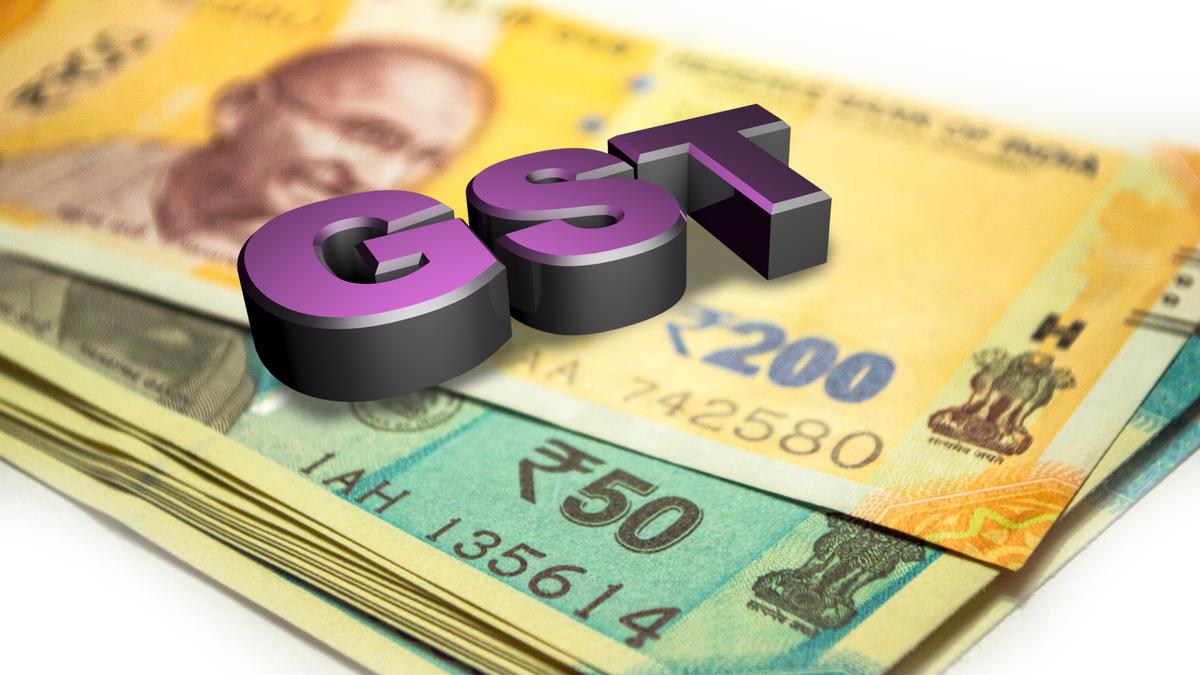
On September 22, India will simplify its GST rates into two main slabs, 5% and 18%, with a special 40% bracket for “sinful” and ultra-luxury goods. Many everyday foods get cheaper. For example, pizza bread will drop from 5% to zero and a long list of sugar-based products, including sugar-boiled confectionery, chocolates, jams, and fruit jellies, will move from12-18% to 5%. Aerated and other sugar-based drinks, by contrast, will move to 40%.

While policymakers have framed GST 2.0 as being more rational, a public health lens suggests affordability gains could bypass the goal of healthier consumption. For example, pizza bread can be made of whole wheat flour, refined flour (maida) or sourdough. Sourdough bread should be more affordable because it’s healthier, yet maida will also be more accessible now even though it’s unhealthy. Similarly, slashing GST on confectionery pulls in products that are nutritionally the opposite of what India’s non-communicable disease (NCD) strategy needs.

In this context, India’s lacklustre food regulation apparatus assumes greater significance. Without trustworthy food labelling, blanket affordability gains can actually tilt demand in favour of unhealthy products.

The 40% bracket for aerated and sugar-based beverages is a public health win. Modelling and real-world studies have found similar taxes have reduced consumption in Asia and Africa by 2.5-19% and nudge reformulation, especially when accompanied by labels and advertising restrictions.

However, the GST revamp also moves a bevy of sugar-based calorically dense and nutritionally poor foods to the 5% bracket. Price cuts without warning labels expand access but do not help shoppers tell healthy and unhealthy foods apart.

Stagnant food labelling rules

India’s front-of-pack labelling (FOPL) debate has been stalled since a 2022 draft. In July this year, the Supreme Court gave the Food Safety and Standards Authority of India (FSSAI) three months to finalise recommendations and indicated a preference for warning labels over health star ratings. In August, the regulator convened a national meeting on labelling. A public health consensus published earlier this month also called for warning labels, the use of WHO-SEARO or ICMR-NIN thresholds, and a science-led process insulated from industry capture.

These thresholds are cut-offs that determine which products must carry a warning label and thus prevent noisy over-labelling. To this end, India needs thresholds that are category-specific, per-quantity, and sugar-sensitive. A 10 g/100 g sugar limit means different things in beverages (which are consumed in larger volumes) versus solid snacks. WHO-SEARO’s Nutrient Profile Model (NPM) addresses this by applying category-based limits for total/added sugars, sodium, fats and saturated fats, and flags any non-nutritive sweetener use.

Per-quantity is required to avoid “per serving” warnings, which allow manufacturers to shrink serving sizes to evade warning thresholds. Per-100 g or -100 ml is more comparable on the shelf and the global FOPL norm. Finally, warnings should be tied to added sugars so that fruit-only products aren’t penalised, and to total sugar where reformulation is common. Products using non-nutritive sweeteners to reach sugar thresholds should still carry warnings to keep manufacturers from pivoting from sugar to sweeteners in children’s products.

Health and pricing policy

If India adopts a mandatory “high in” warnings system with robust thresholds, GST can also be differentially applied to compliant and noncompliant products. This way, labels can serve as an enforceable bridge between health policy and pricing policy. Products breaching any “high in” threshold — sugar, sodium or saturated fats — shouldn’t enjoy the 5% rate even if they are staples in marketing terms. This could avoid the current mismatch between penalising sugary beverages while discounting sugary foods.

Likewise, if beverages become more expensive but confectionery becomes cheaper, consumers, especially adolescents, may substitute one sugar source for another. A threshold-linked structure can close that gap.

Role of advertisements

Food advertising also plays an important role in connecting tax cuts with changing consumer behaviour. Since 2020, FSSAI regulations have banned ads or the sale of HFSS (high in fat, sugar, salt) foods within 50m of schools. The 2022 guidelines of the Central Consumer Protection Authority restrict misleading ads and impose due diligence on endorsers. The ASCI Code, which was updated in July, also applies content rules and disclosure norms across media platforms.

Yet India still lacks a comprehensive HFSS advertising regime with time-of-day and platform-wide restrictions and automatic linkages to FOPL. In Chile, for example, anything bearing a “high in” sign can’t be advertised to children on TV or online during specific hours. Evidence suggests that child-directed as well as time-based restrictions are more effective than narrow, programme-based limits. India should move in that direction and make ad restrictions across TV, print, and social media contingent on FOPL status.

GST 2.0 won’t improve Indians’ health by itself. Instead, the country needs mandatory FOPL warnings with category-specific, per-quantity thresholds aligned to the WHO-SEARO NPM and ICMR-NIN 2024 guidelines. Second, the GST treatment should be contingent on FOPL status: “high in” products should be taxed 18% or more while compliant products should be taxed 5% or less. Third, the rate cuts shouldn’t discount confectionery and desserts while also hiking drinks. Instead, all products crossing “high in” thresholds should face higher tax and ad limits.

Fourth, the advertising rules should go beyond school-based thinking. If a product carries any “high in” warning, it can’t be advertised to children, can’t be advertised during peak child-viewing hours, and should have restricted placement options on media platforms. Finally, the government should redirect sin-tax revenues to NCD prevention, labelling enforcement, and monitoring reformulation practices.

Robust warning labels and GST rates rationalised along public health lines will help consumers make better dietary choices at a time when the government is expanding access to many foods. Otherwise, GST 2.0 may end up adding to India’s burgeoning NCD burden.

Published – September 09, 2025 01:38 am IST


Source link

Science Tags:GST 2.0, GST revamp, Health treatment affordability, Healthier consumption, public health

Post navigation

Previous Post: Access Denied
Next Post: India, China should counter unfair U.S. tariffs: Chinese envoy

Related Posts

  • RNA editing promises to go where DNA editing can’t
    RNA editing promises to go where DNA editing can’t Science
  • Later-onset menopause linked to lower heart disease risk
    Later-onset menopause linked to lower heart disease risk Science
  • Science quiz: On vexillography – The Hindu
    Science quiz: On vexillography – The Hindu Science
  • Queensland positions itself as a strategic partner in India-Australia biotech collaboration at BioAsia 2026
    Queensland positions itself as a strategic partner in India-Australia biotech collaboration at BioAsia 2026 Science
  • A twist in the tale: are scientists wrong about dark energy?
    A twist in the tale: are scientists wrong about dark energy? Science
  • Nanometre ‘tank’ of helium reveals weird waves never seen before
    Nanometre ‘tank’ of helium reveals weird waves never seen before Science

More Related Articles

Ancient DNA suggests women were at the heart of social networks in Celtic society in Britain Ancient DNA suggests women were at the heart of social networks in Celtic society in Britain Science
Names proposed by Kerala-based researchers approved for Martian landforms Names proposed by Kerala-based researchers approved for Martian landforms Science
Chandrayaan-3 | ISRO one step away from landing on Moon as Lander Module completes second deboost operation   Chandrayaan-3 | ISRO one step away from landing on Moon as Lander Module completes second deboost operation   Science
Science retracts NASA arsenic bacteria paper after years of controversy Science retracts NASA arsenic bacteria paper after years of controversy Science
Science for all newsletter: Insects’ mastery over flowering-plant mimicry dates back 99 million years Science for all newsletter: Insects’ mastery over flowering-plant mimicry dates back 99 million years Science
Steve Smith’s eye-blacks and the slippery slope of cricket’s tool rules Steve Smith’s eye-blacks and the slippery slope of cricket’s tool rules Science
SiteLock

Archives

  • October 2026
  • September 2026
  • August 2026
  • July 2026
  • June 2026
  • May 2026
  • April 2026
  • March 2026
  • February 2026
  • January 2026
  • December 2025
  • November 2025
  • October 2025
  • September 2025
  • August 2025
  • July 2025
  • June 2025
  • May 2025
  • April 2025
  • March 2025
  • February 2025
  • January 2025
  • December 2024
  • November 2024
  • October 2024
  • September 2024
  • August 2024
  • July 2024
  • June 2024
  • May 2024
  • April 2024
  • March 2024
  • February 2024
  • January 2024
  • December 2023
  • November 2023
  • October 2023
  • September 2023
  • August 2023
  • July 2023
  • June 2023
  • May 2023
  • April 2023
  • March 2023
  • February 2023
  • January 2023
  • December 2022
  • November 2022
  • October 2022
  • September 2022
  • August 2022
  • July 2022
  • June 2022
  • May 2022

Categories

  • Business
  • Nation
  • Science
  • Sports
  • World

Recent Posts

  • Sivaganga police arrest five under Goondas Act in double murder case
  • Mining project threatens future of rare Jeypore ground gecko
  • Tata Trusts row: Noel, son Neville Tata move Bombay HC and Mumbai civil court with caveats
  • Ranji Trophy 2026-27 | Sarwate’s resolute 95 helps Kerala deny Jharkhand an outright win
  • Private bus operators to begin indefinite hunger strike on October 27

Recent Comments

  1. RobertTes on UP Teacher Who Asked Students To Slap Muslim Classmate
  2. Manuelret on UP Teacher Who Asked Students To Slap Muslim Classmate
  3. RobertTes on UP Teacher Who Asked Students To Slap Muslim Classmate
  4. RobertTes on UP Teacher Who Asked Students To Slap Muslim Classmate
  5. BrentWes on UP Teacher Who Asked Students To Slap Muslim Classmate
  • How ‘scalpel’ changes to F1 will change the racing at the Miami Grand Prix
    How ‘scalpel’ changes to F1 will change the racing at the Miami Grand Prix Sports
  • Access Denied
    Access Denied Nation
  • Zelenskyy warns of nuclear risk, urges countries to accept his peace plan
    Zelenskyy warns of nuclear risk, urges countries to accept his peace plan World
  • Byju’s breached loan terms, small stake sale blocked, arbitration order shows
    Byju’s breached loan terms, small stake sale blocked, arbitration order shows Business
  • Access Denied World
  • Access Denied World
  • Indian Man Charged For Terrorist Pannun’s Murder Plot Brought To US: Report
    Indian Man Charged For Terrorist Pannun’s Murder Plot Brought To US: Report World
  • Access Denied World

Editor-in-Chief:
Mohammad Ariff,
MSW, MAJMC, BSW, DTL, CTS, CNM, CCR, CAL, RSL, ASOC.
editor@artifex.news

Associate Editors:
1. Zenellis R. Tuba,
zenelis@artifex.news
2. Haris Daniyel
daniyel@artifex.news

Photograher:
Rohan Das
rohan@artifex.news

Associate Journalists
1. Subrata Paul - AN/2020/01
2. Quamruz Zaman - AN/2021/22
3. Ahmed Sha - AN/2021/035
4. Ajay Kumar Shaw - AN/2021/39
5. Tahqiqul Hoda - AN/2021/21

Artifex.News offers Online Paid Internships to college students from India and Abroad. Interns will get a PRESS CARD and other online offers.
Send your CV (Subjectline: Paid Internship) to internship@artifex.news

Links:
Associate Journalism
About Us
Privacy Policy

News Links:
Breaking News
World
Nation
Sports
Business
Entertainment
Lifestyle

Registered Office:
72/A, Elliot Road, Kolkata - 700016
Tel: 033-22277777, 033-22172217
Email: office@artifex.news

Editorial Office / News Desk:
No. 13, Mezzanine Floor, Esplanade Metro Rail Station,
12 J. L. Nehru Road, Kolkata - 700069.
(Entry from Gate No. 5)
Tel: 033-46011099, 033-46046046
Email: editor@artifex.news

Copyright © 2023 Artifex.News Newsportal designed by Artifex Infotech.