


Skip to content
  • Facebook
  • X
  • Linkedin
  • WhatsApp
  • YouTube
  • Associate Journalism
  • About Us
  • Privacy Policy
  • 033-46046046
  • editor@artifex.news
Artifex.News

Artifex.News

Stay Connected. Stay Informed.

  • Breaking News
  • World
  • Nation
  • Sports
  • Business
  • Science
  • Entertainment
  • Lifestyle
  • Toggle search form
  • India vs Sri Lanka, Asia Cup Final: Hourly Weather Update Of Colombo
    India vs Sri Lanka, Asia Cup Final: Hourly Weather Update Of Colombo Sports
  • Hamas Gunman’s GoPro Footage Shows Him On A Rampage, And His Death
    Hamas Gunman’s GoPro Footage Shows Him On A Rampage, And His Death World
  • GST Portal Seeks Extension For Filing Return As Portal Faces Technical Glitch
    GST Portal Seeks Extension For Filing Return As Portal Faces Technical Glitch Nation
  • Rupee recovers from all-time low, rises 6 paise to 88.70 against U.S. dollar
    Rupee recovers from all-time low, rises 6 paise to 88.70 against U.S. dollar Business
  • Ex Navyman Wanted For Murder Faked Death, Luck Ran Out 20 Years Later
    Ex Navyman Wanted For Murder Faked Death, Luck Ran Out 20 Years Later Nation
  • Access Denied Business
  • Why Do We Fight Wars? NSA Ajit Doval Explains Amid Russia-Ukraine War
    Why Do We Fight Wars? NSA Ajit Doval Explains Amid Russia-Ukraine War Nation
  • Access Denied World
Why restaurants in India are finding it difficult to retain staff

Why restaurants in India are finding it difficult to retain staff

Posted on October 10, 2025 By admin


The biryani lands on your table. You eat till the last morsel, follow it with dessert, make the payment and walk out, satisfied with what you call a “nice meal.” Rarely do we pause to think about what it takes to get that plate in front of us — the unseen reality of manpower.

Now, imagine this: you own a restaurant. You close at night, ready to open for business the next morning. At dawn, your phone buzzes relentlessly. Bleary-eyed, you read the message: The kitchen staff has quit.

Inside Masala Synergy
| Photo Credit:
Special Arrangement

Within a month of opening Tuya in Jubilee Hills, chef Suresh DC faced exactly this. His core team of five years, quit overnight without notice. “I had no time to react. I’m a chef, my sous chef was still there, so without wasting time we just got down to wash, chop, prep, cook, and serve 45 guests,” he recalls. With a skeletal service staff, they pulled it off.

But Suresh’s story is not unusual. Almost every restaurateur in India has lived this nightmare, sometimes scrambling for replacements, sometimes just surviving for days until they find their feet again.

The irony is the industry is booming. According to the National Restaurant Association of India (NRAI), the country’s food services market is projected to grow at 8.1% — outpacing GDP growth — and touch ₹5,69,487 crore by the end of this year. Yet, the churn of manpower continues to threaten kitchens across the country.

As the restaurant industry is growing rapidly in India it is also battling with staff issues. Diners at 10 Downing Street, Begumpet in Hyderabad

As the restaurant industry is growing rapidly in India it is also battling with staff issues. Diners at 10 Downing Street, Begumpet in Hyderabad
| Photo Credit:
RAMAKRISHNA G

Growth and expansion in the restaurant business is not directly proportional to the staff available. Shaaz Mehmood, managing committee member of NRAI points out, “Hyderabad alone has 74,807 restaurants and an organised food services market valued at ₹10,161 crore, ranking as the sixth largest in the country. Mumbai leads with ₹55,181 crore. Everyone talks about expansion —bigger spaces, elaborate menus, better infrastructure. But rarely about who will actually run the show on the ground. The service staff, the captain and his team, and the kitchen staff — the executive chef and his brigade — are the ones who make everything happen. Hiring is easy. Retaining is not.”

Shreya Kapoor, co-founder of Masala Synergy, a restaurant in Delhi , explains why attrition remains a persistent challenge: “The hospitality industry, especially restaurants, has always been a high-pressure environment. Long working hours, limited work-life balance, and the constant physical and mental demands often lead to burnout. With new restaurants and hotels constantly emerging, competition is intense, and employees tend to shift frequently for marginally better pay or benefits. The absence of structured training and clear career growth paths only adds to the problem.”
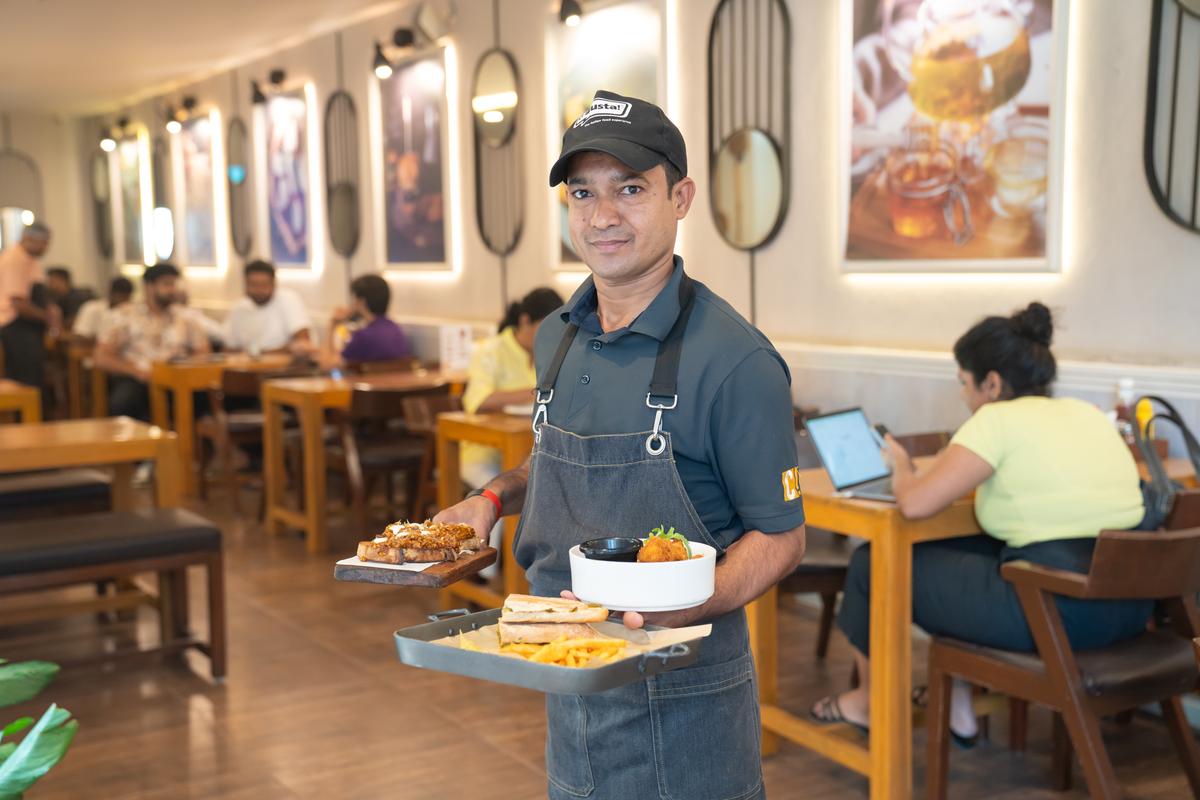
A busy day at Ci Gusta in Madhapur

A busy day at Ci Gusta in Madhapur
| Photo Credit:
Dinesh Kakollu

According to the Indian Brand Equity Foundation (a trust established by the Department of Commerce, Ministry of Commerce and Industry), the restaurant sector is projected to employ 10.3 million people directly by 2028, up from 8.5 million in 2024. This makes it one of the largest employers in India — larger than many other sectors — and the country’s third-biggest industry overall.

But size does not cancel out strain. “While all this is true, staffing continues to be an issue,” says Shaaz. “Here’s a rough breakdown of how it works. Most waiters’ salaries are fixed, and about 80% of it goes back to their families. They keep very little for themselves because most employers provide food and accommodation. But young people need more than just that. So when they’re offered even a ₹2,000 hike, they move. I also feel we must bring back the tipping culture because it was an incentive staff looked forward to — the service charge tax doesn’t add up.”

Training, he adds, is the other way forward. “When they learn, they see themselves growing.” As India positions itself to become the world’s third-largest food services market by 2028, overtaking Japan, the National Restaurant Association of India (NRAI) has also stressed the need for supportive policies and structured training to harness this potential.

Japtej Ahluwalia, co-founder and executive director of Pricol Gourmet (Double Roti, Chennai) and secretary of NRAI, lists the issues that drive attrition: “Untimely payment of salaries tops the list, followed by long working hours. Finally, because restaurants are largely in the unorganised sector, there’s no barrier to entry. Anyone with ₹50 lakhs can start a restaurant without understanding how the industry works. The glamour attracts people, but staff poaching happens with hikes as low as ₹500 or ₹1,000. When attrition issues pile up, staff simply walk out.”

Currently, the unorganised sector outpaces the organised, but this balance is expected to flip by 2028. “Which makes skill centres a necessity,” adds Shaaz. “We need to move away from the cookie-cutter approach to the food business.”

For Honey Guha, Hyderabad-based hospitality consultant, training is also a morale builder. “It’s not just about skills — when staff feel appreciated by guests, when they’re part of team outings, when their ideas are heard in group discussions, they feel they belong to the business. With training, they don’t just see themselves growing in this fast-paced industry; they see their families growing with them.”
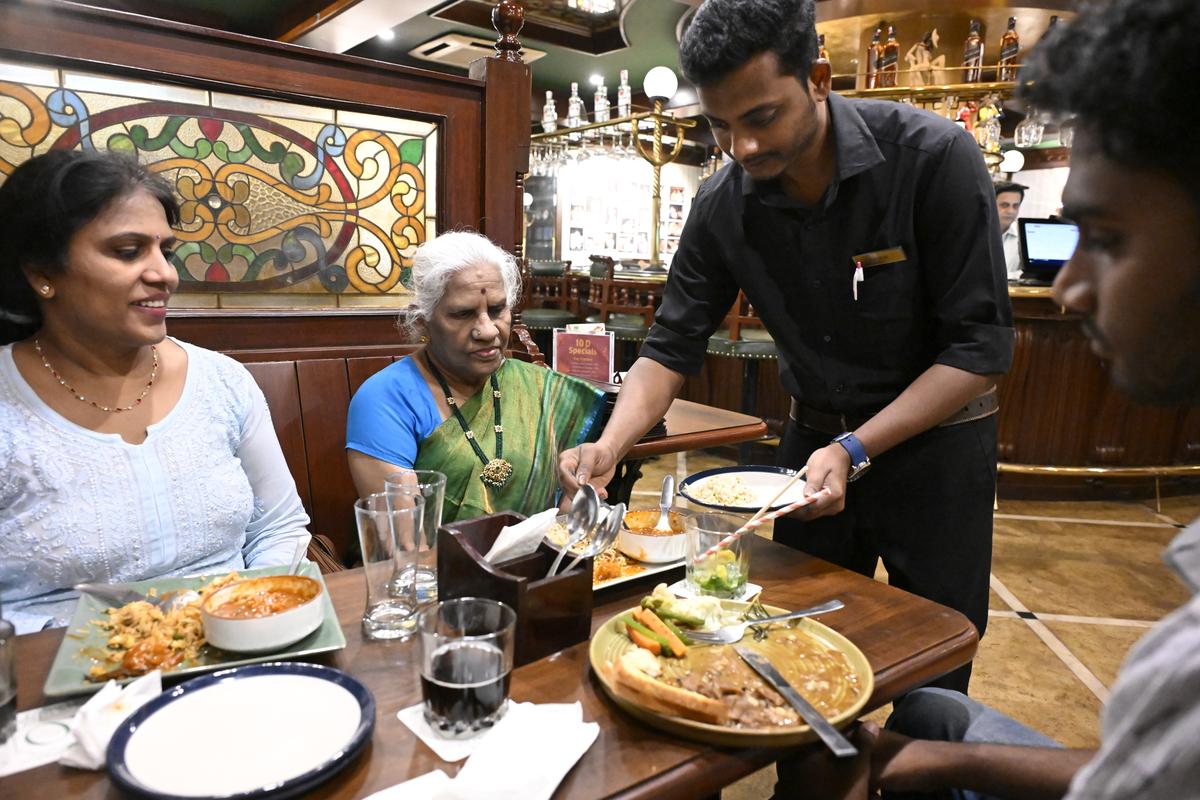
Diners at 10 D in Begumpet

Diners at 10 D in Begumpet
| Photo Credit:
RAMAKRISHNA G

Someone who worked with a brand in Hyderabad over 26 years says growth and training kept him motivated. Anthony Lawrence who started with 10 Downing Street as a bar back is currently the General Manager of the brand’s outlet in Gachibowli. Anthony started work with the OG guys of pubbing scene in Hyderabad—Mohan Ram Reddy, Vinod Reddy and Prahlad Rao and stuck around because of the professional grooming. Anthony said, “We were trained to interact, remember regular orders and to build a rapport with out guests at a professional level. All these training about attention to details of our regulars helped us to get better at our work. I never intended to move out because the management treated us with respect and love.”

Shreya Kapoor, co-founder of Masala Synergy, echoes this. “Fostering an environment of respect, inclusivity, and recognition is key. Offering skill-development programs, clear career pathways, structured shifts, and fair scheduling ensures staff feel valued both professionally and personally.”
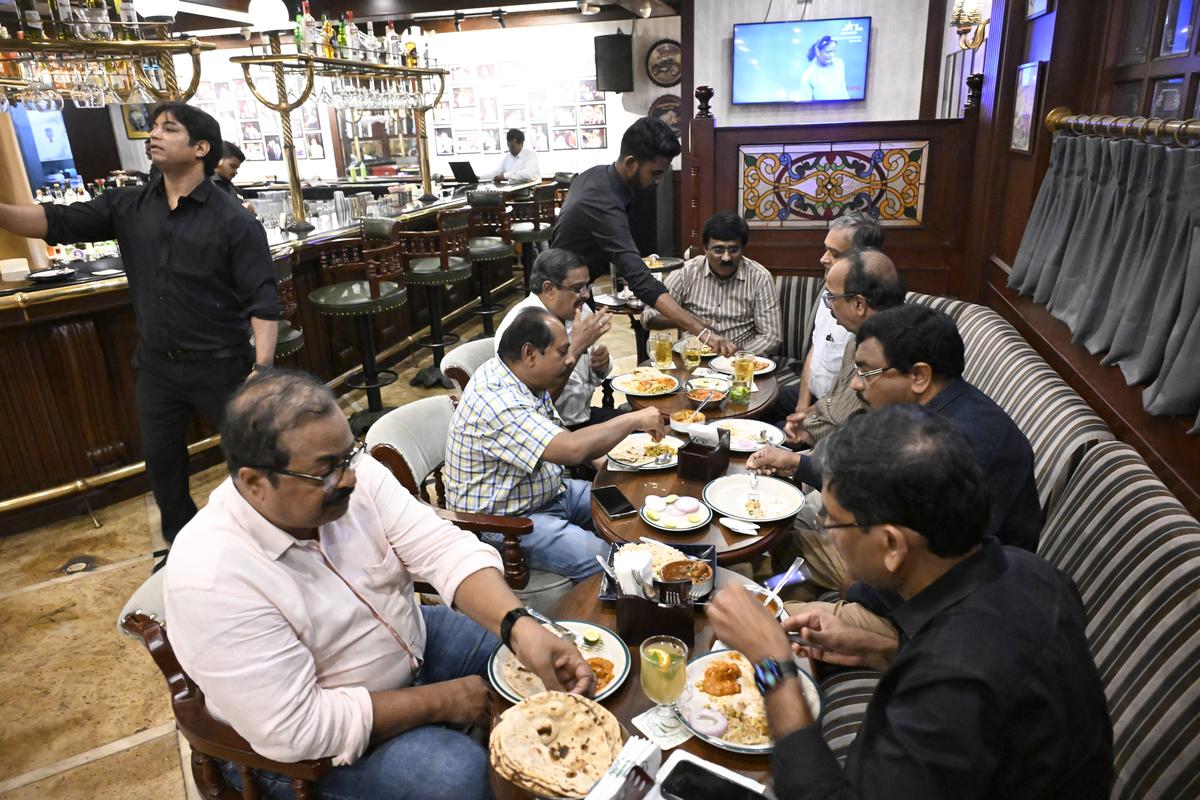
10 Downing Street is one of the oldest and most preferred eateries in Hyderabad

10 Downing Street is one of the oldest and most preferred eateries in Hyderabad
| Photo Credit:
RAMAKRISHNA G

The bigger shift, according to Vikrant Batra, co-founder of Café Delhi Heights, is to stop seeing restaurant jobs as stop-gap roles. “If nurtured the right way, these can be lifelong careers. As employers, it’s our duty to create a sense of work-life balance, which is essential but undervalued in this industry. We must also focus on fair pay. When employees feel they can build both a career and a life within the brand, attrition is no longer a challenge — it becomes loyalty and growth.”



Source link

Business Tags:Employment issues in unorganised sector, Issues of the restaurant Industry in India, NRAI, restaurant industry story, Restaurants in India, staff issues at restaurants in India

Post navigation

Previous Post: Israeli Military says ceasefire agreement in Gaza started at noon local time
Next Post: UNICEF urges full flow of aid into Gaza, warns child deaths could spike

Related Posts

  • Punjab Government rejects Centre’s draft policy on agricultural marketing
    Punjab Government rejects Centre’s draft policy on agricultural marketing Business
  • Access Denied Business
  • Asia braces for second wave of energy shocks from Iran war
    Asia braces for second wave of energy shocks from Iran war Business
  • Gautam Adani Indictments: A ‘bribery scheme’ to bag lucrative solar power contracts
    Gautam Adani Indictments: A ‘bribery scheme’ to bag lucrative solar power contracts Business
  • Access Denied Business
  • Air India orders 34 trainer aircraft for its flying school
    Air India orders 34 trainer aircraft for its flying school Business

More Related Articles

Access Denied Business
Rupee plunges 36 paise to close at all-time low of 88.47 against U.S. dollar Rupee plunges 36 paise to close at all-time low of 88.47 against U.S. dollar Business
Govt. approves fifth edition of credit guarantee scheme, extends cover to airlines Govt. approves fifth edition of credit guarantee scheme, extends cover to airlines Business
Sensex falls 453 points, Nifty down 126 in early trade Sensex falls 453 points, Nifty down 126 in early trade Business
Access Denied Business
SiteLock

Archives

  • May 2026
  • April 2026
  • March 2026
  • February 2026
  • January 2026
  • December 2025
  • November 2025
  • October 2025
  • September 2025
  • August 2025
  • July 2025
  • June 2025
  • May 2025
  • April 2025
  • March 2025
  • February 2025
  • January 2025
  • December 2024
  • November 2024
  • October 2024
  • September 2024
  • August 2024
  • July 2024
  • June 2024
  • May 2024
  • April 2024
  • March 2024
  • February 2024
  • January 2024
  • December 2023
  • November 2023
  • October 2023
  • September 2023
  • August 2023
  • July 2023
  • June 2023
  • May 2023
  • April 2023
  • March 2023
  • February 2023
  • January 2023
  • December 2022
  • November 2022
  • October 2022
  • September 2022
  • August 2022
  • July 2022
  • June 2022
  • May 2022

Categories

  • Business
  • Nation
  • Science
  • Sports
  • World

Recent Posts

  • ATS questions 57 in Maharashtra over alleged gangster network links
  • Nicobarese oppose proposal for three wildlife sanctuaries
  • Visakhapatnam Collector calls for inter-departmental synergy to boost investments
  • Kohli’s masterful knock powers Royal Challengers to the top
  • Senior IPS officer Asra Garg posted IGP Intelligence

Recent Comments

  1. RichardClage on UP Teacher Who Asked Students To Slap Muslim Classmate
  2. StevenLek on UP Teacher Who Asked Students To Slap Muslim Classmate
  3. Leonardren on UP Teacher Who Asked Students To Slap Muslim Classmate
  4. NathanQuins on UP Teacher Who Asked Students To Slap Muslim Classmate
  5. Davidgof on UP Teacher Who Asked Students To Slap Muslim Classmate
  • Surprise: reading a quantum clock can cost more than keeping it ticking
    Surprise: reading a quantum clock can cost more than keeping it ticking Science
  • Access Denied Business
  • India, Sweden can forge stronger partnership in climate solutions: Swedish officials
    India, Sweden can forge stronger partnership in climate solutions: Swedish officials World
  • Rupee settles 1 paisa higher to close at 94.15 against U.S. dollar
    Rupee settles 1 paisa higher to close at 94.15 against U.S. dollar Business
  • A Rare Akhilesh Yadav-Mayawati Bonhomie Over Defamation Case Demand
    A Rare Akhilesh Yadav-Mayawati Bonhomie Over Defamation Case Demand Nation
  • Colombian club president shot dead after match
    Colombian club president shot dead after match World
  • Business Matters | What can India learn from countries like Vietnam to become an export giant?
    Business Matters | What can India learn from countries like Vietnam to become an export giant? World
  • 2,500-km-long human chain to be formed today
    2,500-km-long human chain to be formed today Nation

Editor-in-Chief:
Mohammad Ariff,
MSW, MAJMC, BSW, DTL, CTS, CNM, CCR, CAL, RSL, ASOC.
editor@artifex.news

Associate Editors:
1. Zenellis R. Tuba,
zenelis@artifex.news
2. Haris Daniyel
daniyel@artifex.news

Photograher:
Rohan Das
rohan@artifex.news

Artifex.News offers Online Paid Internships to college students from India and Abroad. Interns will get a PRESS CARD and other online offers.
Send your CV (Subjectline: Paid Internship) to internship@artifex.news

Links:
Associate Journalism
About Us
Privacy Policy

News Links:
Breaking News
World
Nation
Sports
Business
Entertainment
Lifestyle

Registered Office:
72/A, Elliot Road, Kolkata - 700016
Tel: 033-22277777, 033-22172217
Email: office@artifex.news

Editorial Office / News Desk:
No. 13, Mezzanine Floor, Esplanade Metro Rail Station,
12 J. L. Nehru Road, Kolkata - 700069.
(Entry from Gate No. 5)
Tel: 033-46011099, 033-46046046
Email: editor@artifex.news

Copyright © 2023 Artifex.News Newsportal designed by Artifex Infotech.