




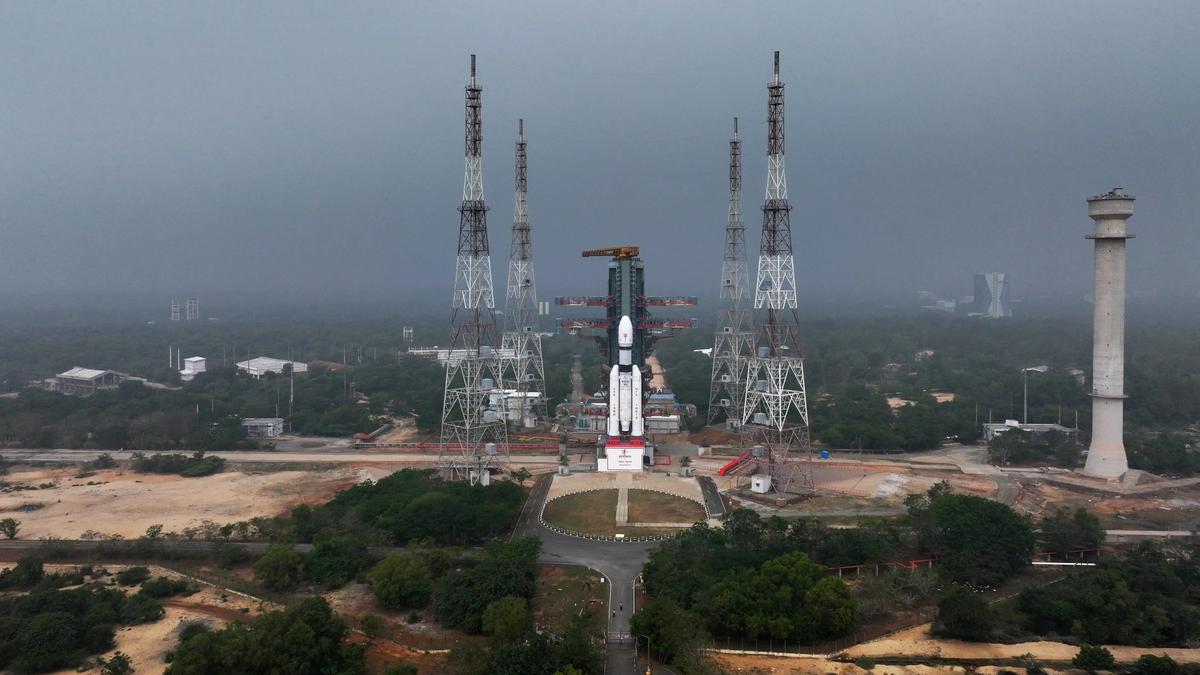
The record of the Indian Space Research Organisation (ISRO) over the last decade has been remarkably broad for an agency of its size and budget.
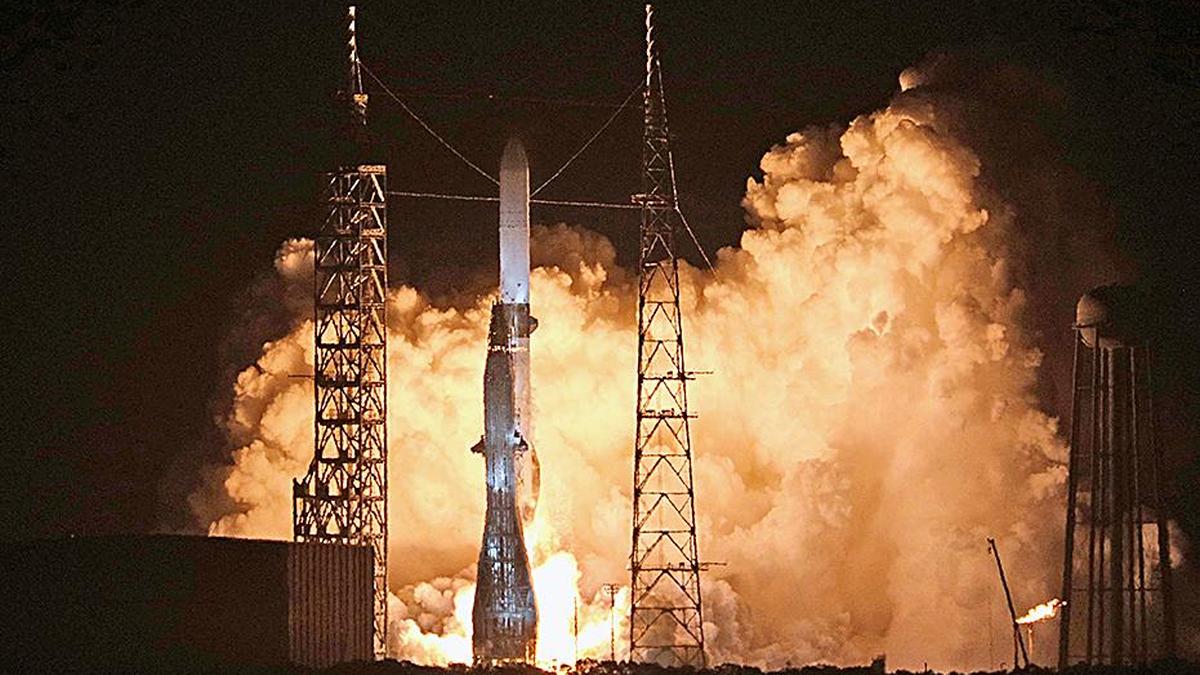
Its rockets, especially the Polar Satellite Launch Vehicle (PSLV), have sustained reliable access to orbit, rendering operations with multiple satellite classes almost a matter of routine today. And ISRO is attempting even more technically demanding missions. The soft landing of the Chandrayaan-3 lander on the moon on August 23, 2023, placed India in a coterie of countries with demonstrated lunar-landing capability.
The Aditya-L1 probe reached its intended halo orbit around the first sun-earth Lagrange point on January 6, 2024, adding a dedicated solar observatory mission to ISRO’s portfolio. In July 2025, ISRO executed a prominent international collaboration by launching the billion-dollar NASA-ISRO Synthetic Aperture Radar (NISAR) mission, an earth-observation platform for climate and hazard monitoring.
Preparing in parallel
The thing about succeeding in such a consistent way is that it also raises the bar for future accomplishments. It no longer matters that ISRO had humble beginnings or that it transported parts of its first rocket on a bullock cart. Even launching the PSLV or the GSLV flawlessly the first dozen or so times is awesome, but being able to do that also changes what comes next. And it will be good for ISRO to be able to access that new opportunity space, and without taking too long to do so. Otherwise it will have some difficult questions to answer.
Today, on the cusp of Gaganyaan, Chandrayaan-4, and the Next-Generation Launch Vehicle (NGLV), among others, ISRO’s major challenges can be distilled to three: (i) its capacity to execute more complex missions; (ii) questions about how clearly the space programme is and can be governed in a newly liberalised sector; and (iii) constraints on ISRO’s competitiveness that are as industrial and financial as they’re technological.
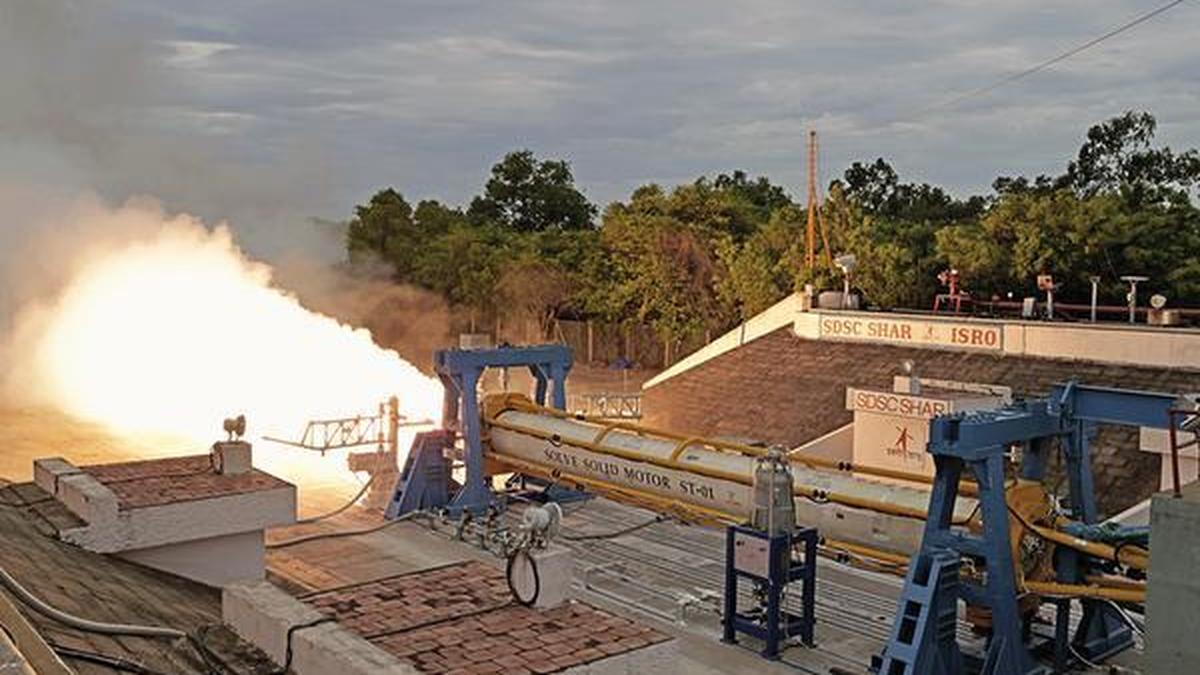
First, ISRO currently confronts a deceptively structural prioritisation problem. Specifically as the organisation prepares in parallel for the human spaceflight mission, complex science missions, satellite replenishment, and the development of NGLV, a more powerful launch vehicle (GSLV may be ‘Bahubali’ but it’s still only in the medium-lift category), its annual launch cadence and project timelines have become an increasingly obvious bottleneck. Experts have linked its low number of launches in 2025 — only five against the then ISRO chairman V. Somanath’s projection of an also-low eight — to project delays and to the organisation shifting towards big-ticket programmes. At the same time private launch providers still depend heavily on ISRO facilities and infrastructure, meaning the system can’t yet offload work at scale. The implication is that when a mission suffers an anomaly, it has cascading effects.
To prevent this ISRO needs more integration capacity, better access to test stands, industrial supply chains for structures and avionics, and a workflow that can absorb setbacks without freezing unrelated programmes or cramping their timelines. Perhaps the first step could be an internal scheme to help scientists and engineers determine which mission’s timelines are allowed to slip and for what particular reasons, together with separate resource allocations for R&D vehicles and operational vehicles and creating new capacity in the industrial base. The ultimate aim should be for ISRO to not simultaneously be the designer, the integrator, and the bottleneck for all missions.

ISRO pulled in
Second, ISRO’s role in India’s liberalised space and spaceflight ecosystem — since the national government’s 2020 reforms — is conceptually clear only on paper. The principal issue here is that India still lacks a comprehensive national space law. The Indian Space Policy framework, the Indian National Space Promotion and Authorisation Centre (IN-SPACe) and New Space India, Ltd. (NSIL), created in 2019-2020, were meant to separate functions. Research and advanced capability development would lie with ISRO, authorisation and promotion with IN-SPACe, and commercialisation with NSIL.
But for all of them to execute those functions efficiently, they need statutory authority and clearer legal allocations of obligations, especially those pertaining to authorisation, liability, insurance, and resolving disputes.
A national space law wouldn’t merely help startups: it would also protect ISRO by reducing the ad hoc demands placed on it because it’s still perceived as a fallback regulator and technical certifier for everything. If IN-SPACe is to be the authorising body, it needs to have legal authority. If NSIL is to be the commercial arm, it shouldn’t be in a situation where, if a commercial mission fails, creates third-party liabilities or whatever, nobody can say in advance who is responsible for what, leaving ISRO to be pulled in by ‘default’ because it’s the most capable state actor. And if ISRO is to focus on frontier capabilities, it needs to be insulated from routine tasks, like booking and operating test stands or coordinating spectrum allocation, that actually should be performed by an industrial and regulatory ecosystem.
Finally, like most laws, a space law — and thus the activities it supports — would also survive political and administrative changes.
Sustained performance
Third, ISRO’s competitiveness increasingly resembles an ecosystem problem. The world is moving towards more frequent launches by providers, partially reusable launch vehicles, and rapid satellite manufacturing, and India needs to respond with more than by expanding its engineering ambitions. The Indian government’s own framing of the NGLV, linking the space programme’s future goals to its “high payload capability” and “reusability”, including a reusable first stage and the ability to lift up to 30 tonnes to low-earth orbit, acknowledges that economic launches and agility are now central, rather than optional, features of enterprises that operate launch vehicles. And building such systems and operating them in turn requires more production depth, advanced manufacturing capabilities, higher qualification capacity, and much more capital.
Investment in India’s space sector fell sharply in 2024, reflecting both global headwinds and the specific difficulties of financing hardware that’s developed and deployed on long horizons. IN-SPACe has in response launched a technology adoption fund aimed at helping firms bridge prototypes with scalable products and at reducing import dependence, among other funding instruments.
ISRO’s past accomplishments have earned it political capital and public trust but the next phase depends less on individual feats and more on sustained institutional performance. The capacity to execute will determine whether the Indian space programme will also be able to deliver ambitious missions in a routine way. And within this context, governance and law will say whether the government’s efforts to liberalise the sector will reduce ISRO’s burden or, counterintuitively, expand it. Similarly ISRO’s ability to compete will depend on whether the programme can transition from executing a series of individually laudable missions to being an industrial system, and for this engineering, regulation, manufacturing, and finance will have to mature together.
Published – January 06, 2026 12:24 pm IST