


Skip to content
  • Facebook
  • X
  • Linkedin
  • WhatsApp
  • YouTube
  • Associate Journalism
  • About Us
  • Privacy Policy
  • 033-46046046
  • editor@artifex.news
Artifex.News

Artifex.News

Stay Connected. Stay Informed.

  • Breaking News
  • World
  • Nation
  • Sports
  • Business
  • Science
  • Entertainment
  • Lifestyle
  • Toggle search form
  • Destroying Sanatana does not mean people should not go to temples, says Udhayanidhi Stalin
    Destroying Sanatana does not mean people should not go to temples, says Udhayanidhi Stalin Nation
  • Access Denied
    Access Denied Nation
  • Apple lays off more than 600 workers in California in its first major round of post-pandemic cuts
    Apple lays off more than 600 workers in California in its first major round of post-pandemic cuts Business
  • Rohit Sharma To Join LSG? South Africa Great Gives Big Verdict, Weighs In On KL Rahul Situation
    Rohit Sharma To Join LSG? South Africa Great Gives Big Verdict, Weighs In On KL Rahul Situation Sports
  • Madras High Court refuses to reject suit against continuance of Nadigar Sangam office-bearers after expiry of term
    Madras High Court refuses to reject suit against continuance of Nadigar Sangam office-bearers after expiry of term Nation
  • Artemis crew reaches the moon, approaches record-breaking distance from Earth
    Artemis crew reaches the moon, approaches record-breaking distance from Earth Science
  • New technology, innovation conclave to ‘replace’ Science Congress to be held in November
    New technology, innovation conclave to ‘replace’ Science Congress to be held in November Science
  • Access Denied World
Crosstalk: waning immunity against Japanese encephalitis worsens dengue

Crosstalk: waning immunity against Japanese encephalitis worsens dengue

Posted on September 18, 2025 By admin


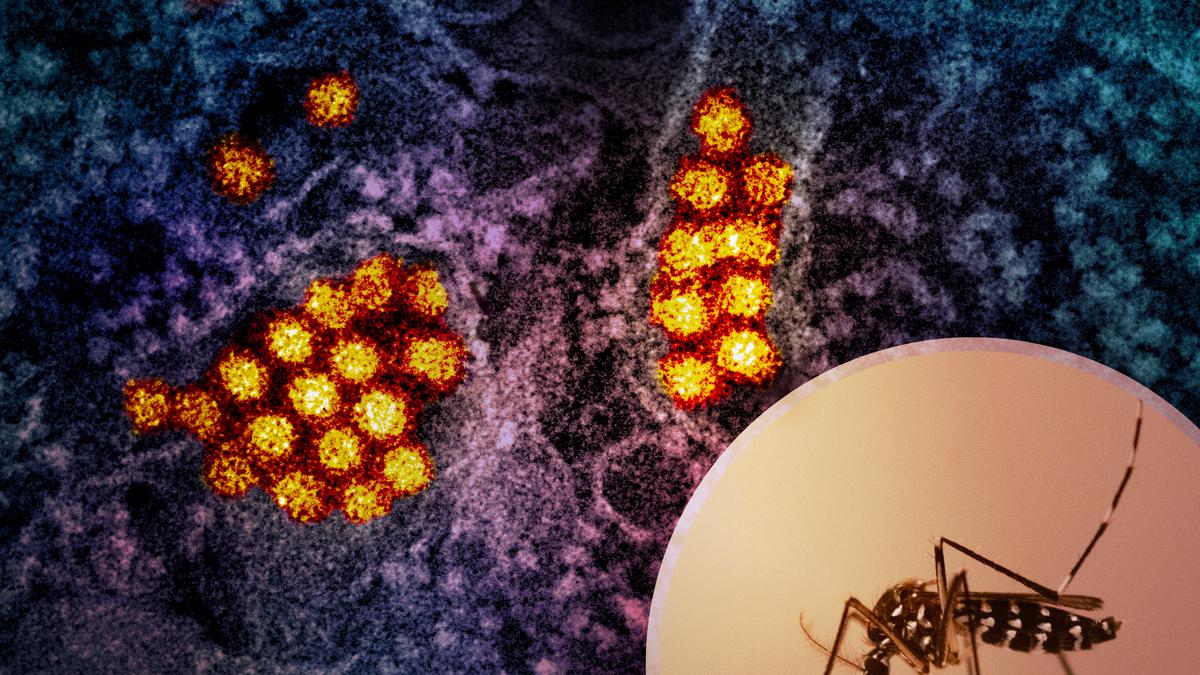
Mosquito-borne diseases such as dengue fever are an increasing threat to global health. Rapid urbanisation and climate change have created ideal conditions for mosquitoes to breed — while expanding global travel has accelerated the spread of these infections to new regions and populations.

A new study published last week has now added an unexpected twist to this story. Researchers have found that waning immunity against infections of the Japanese encephalitis virus (JEV) can predispose individuals to more severe dengue. The finding highlights the complex interplay between related viruses and suggests a potential strategy to beat severe dengue through timely booster doses of the JE vaccine.

Both Japanese encephalitis virus and dengue virus belong to the same genus, Orthoflavivirus. Previous research had hinted at interactions between JEV immunity and dengue outcomes. To understand more, the present study, involving researchers from Singapore, Nepal, and the US, examined three large dengue outbreaks in Dharan in Nepal between 2019 and 2023.

Nepal provided a unique setting: the country has high population immunity against JE due to a successful vaccination program launched in 2006 — yet until recently, it had very limited exposure to dengue. This made it possible to study how JEV immunity alone might influence dengue outcomes. Prior exposure to dengue itself is known to increase the risk of severe disease through antibody-dependent enhancement: where antibodies from a first infection facilitate viral entry during subsequent infections.

But in Nepal’s largely dengue-naïve population, the impact of JEV immunity could be specifically isolated.

Striking results

For the study, the research team recruited dengue patients aged 15 to 65 years early in their illness, i.e. within three days of fever onset, confirmed by rapid diagnostic tests (NS1 or DENV IgM). The study spanned five years and included three major dengue outbreaks, in 2019, 2022, and 2023. In total, 546 patients were enrolled and their blood samples were tested for viral serotypes, immune markers, and a biomarker called chymase. Chymase is an enzyme released by mast cells during inflammation, and it has been consistently validated in earlier studies as a marker of severe dengue. Its levels have been found to be elevated during both the acute and defervescence phases of the illness.

The findings, published in Science Translational Medicine on September 3, were striking.

Approximately 61% of patients had pre-existing antibodies that neutralised JEV, reflecting Nepal’s relatively high level of immunity against JEV. Individuals with confirmed JEV immunity showed significantly higher concentrations of chymase compared to JEV-naïve patients.

Further analysis revealed that this effect was primarily associated with mid-range — not too low, not too high — anti-JEV antibody titres of 1:160. Patients with these titres had significantly higher chymase levels compared to those with titres of 1:10 or 1:40. Notably, this correlation was not observed when anti-JEV ELISA titres were used, possibly reflecting cross-reactivity between DENV-specific antibodies and JEV in ELISA-based assays.

The association between mid-range JEV neutralising antibody titres and severe dengue was also reflected in clinical outcomes. The fraction of patients diagnosed with either dengue fever with warning signs or severe dengue, according to the WHO classification, was significantly higher among those with titres of 1:160 compared to patients without JEV immunity.

These individuals had a 3x higher risk of developing dengue fever with warning signs. Importantly, most participants were experiencing primary dengue infections, with only 7-10% showing evidence of prior exposure.

These findings isolated the role of JEV immunity in shaping disease outcomes. Even after excluding cases of secondary dengue, the results remained unchanged, strongly supporting the conclusion that JEV immunity alone is sufficient to modulate dengue severity, independent of prior DENV exposure.

Echoes from other flaviviruses

These findings echo earlier observations in studies of Zika and dengue viruses, where moderate antibody levels sometimes enhanced the viral infection of immune cells and worsened disease — while very high titres were protective. This is to say, as antibody levels wane over time, populations may enter a vulnerable “middle zone” in which immunity is insufficient to protect but strong enough to enhance disease.

The implications are significant for Asia, where JEV vaccination is common and dengue is spreading, and for the complex and connected nature of public health in a globalised world.

Specifically, the study showed that rising temperature and extended monsoons have caused the epidemiology of dengue fever to change rapidly, with increasingly bigger outbreaks in areas where there used to be only sporadic cases. Such regions include India, which is also facing similar kinds and levels of climate change. Thus, the authors suggest, the country needs to be ready with appropriate strategies to deal with the new challenges that will sprout as a result.

Second, while the study clearly showed that moderate titres of neutralising antibodies against JEV can worsen outcomes with dengue fever, it doesn’t undermine the importance of JE vaccination per se. Such vaccination has successfully lowered the incidence of JE in the population.

The findings of previous studies have shown that the titres of neutralising antibodies against JEV wane after a few years of vaccination. After five years, for example, only around 63% of vaccinated individuals still have neutralising antibodies against JEV. Thus, the new study strongly suggests the need for suitably timed JE vaccine boosters, which could serve the dual purpose of maintaining durable immunity against JE for longer periods and protecting the population against the risk of dengue fever with warning signs and severe dengue (due to waning titres of anti-JEV antibodies).

Third, the study reinforces the importance of chymase as a biomarker of dengue fever with warning signs and severe dengue, making it a convenient tool for physicians handling the uncertain trajectories of dengue fever.

Viruses respect no borders. The new study provides critical insights into how waning immunity against one flavivirus can worsen outcomes of another. Strategically timed JE boosters could be a valuable tool not just in sustaining protection against encephalitis but also in mitigating the severity of dengue — a disease whose burden is rising sharply across Asia.

Such remarkable work ultimately underscores the importance of integrated, forward-looking approaches in infectious disease control, with insights that could save countless lives.

Puneet Kumar is a clinician, Kumar Child Clinic, New Delhi. Vipin M. Vashishtha is director and paediatrician, Mangla Hospital and Research Center, Bijnor.

Published – September 18, 2025 05:30 am IST



Source link

Science

Post navigation

Previous Post: Three police officers shot dead, two wounded in Pennsylvania; suspect killed
Next Post: Access Denied

Related Posts

  • Post-surgical infections more likely due to skin bacteria than hospital bugs, study finds
    Post-surgical infections more likely due to skin bacteria than hospital bugs, study finds Science
  • Blue Origin achieves first landing of reused New Glenn rocket booster
    Blue Origin achieves first landing of reused New Glenn rocket booster Science
  • China launches 3-member crew to its space station as it seeks to put astronauts on the moon by 2030
    China launches 3-member crew to its space station as it seeks to put astronauts on the moon by 2030 Science
  • El Nino is here and scientists fear it’ll be big, bad and costly with heat, floods, droughts, fires
    El Nino is here and scientists fear it’ll be big, bad and costly with heat, floods, droughts, fires Science
  • Science quiz: Most powerful non-nuclear bombs
    Science quiz: Most powerful non-nuclear bombs Science
  • IAU approves ‘Statio Shiv Shakti’ as name for Chandrayaan-3 landing site
    IAU approves ‘Statio Shiv Shakti’ as name for Chandrayaan-3 landing site Science

More Related Articles

NASA astronaut Sunita Williams retires NASA astronaut Sunita Williams retires Science
Fast-moving cornstarch acts like a liquid before hardening Fast-moving cornstarch acts like a liquid before hardening Science
Science and technology key to raising India’s profile in the world, says CSIR chief Science and technology key to raising India’s profile in the world, says CSIR chief Science
New species of finless snake eel named after Kanniyakumari New species of finless snake eel named after Kanniyakumari Science
Not just nothing, dark matter quests close in on dire ‘neutrino fog’ Not just nothing, dark matter quests close in on dire ‘neutrino fog’ Science
Karman Line: Where space begins Karman Line: Where space begins Science
SiteLock

Archives

  • September 2026
  • August 2026
  • July 2026
  • June 2026
  • May 2026
  • April 2026
  • March 2026
  • February 2026
  • January 2026
  • December 2025
  • November 2025
  • October 2025
  • September 2025
  • August 2025
  • July 2025
  • June 2025
  • May 2025
  • April 2025
  • March 2025
  • February 2025
  • January 2025
  • December 2024
  • November 2024
  • October 2024
  • September 2024
  • August 2024
  • July 2024
  • June 2024
  • May 2024
  • April 2024
  • March 2024
  • February 2024
  • January 2024
  • December 2023
  • November 2023
  • October 2023
  • September 2023
  • August 2023
  • July 2023
  • June 2023
  • May 2023
  • April 2023
  • March 2023
  • February 2023
  • January 2023
  • December 2022
  • November 2022
  • October 2022
  • September 2022
  • August 2022
  • July 2022
  • June 2022
  • May 2022

Categories

  • Business
  • Nation
  • Science
  • Sports
  • World

Recent Posts

  • Asian Games 2026 opens in Japan with 11,000 athletes competing | LIVE updates
  • Raphinha hat-trick maintains Barcelona’s perfect LaLiga start
  • Saudi Arabia confirms Yemen’s Houthi rebels tried to attack its capital with ballistic missile
  • Martin recovers from early setback to win Austrian sprint and retake championship lead
  • Arsenal thrashed by Brighton, sorry Spurs lose again

Recent Comments

  1. AlvinNet on UP Teacher Who Asked Students To Slap Muslim Classmate
  2. AlvinNet on UP Teacher Who Asked Students To Slap Muslim Classmate
  3. Jamesslits on UP Teacher Who Asked Students To Slap Muslim Classmate
  4. MichaelClear on UP Teacher Who Asked Students To Slap Muslim Classmate
  5. Jamesslits on UP Teacher Who Asked Students To Slap Muslim Classmate
  • AI simulation of Mount Fuji eruption being used to prepare Tokyo
    AI simulation of Mount Fuji eruption being used to prepare Tokyo Science
  • India vs England, Cricket World Cup 2023: India Continue Unbeaten Run, Crush England By 100 Runs
    India vs England, Cricket World Cup 2023: India Continue Unbeaten Run, Crush England By 100 Runs Sports
  • Access Denied
    Access Denied Nation
  • Government approves extension of subsidy scheme on sugar supplied to AAY families by 2 years till March 2026
    Government approves extension of subsidy scheme on sugar supplied to AAY families by 2 years till March 2026 Business
  • Benjamin Netanyahu Says Israel’s Gaza Offensive “Just The Beginning”
    Benjamin Netanyahu Says Israel’s Gaza Offensive “Just The Beginning” World
  • Access Denied Business
  • Case lodged against Hindu monk Chinmoy Krishna Das, his followers in Bangladesh’s Chittagong
    Case lodged against Hindu monk Chinmoy Krishna Das, his followers in Bangladesh’s Chittagong World
  • Is NCP Reunion Around The Corner?
    Is NCP Reunion Around The Corner? Nation

Editor-in-Chief:
Mohammad Ariff,
MSW, MAJMC, BSW, DTL, CTS, CNM, CCR, CAL, RSL, ASOC.
editor@artifex.news

Associate Editors:
1. Zenellis R. Tuba,
zenelis@artifex.news
2. Haris Daniyel
daniyel@artifex.news

Photograher:
Rohan Das
rohan@artifex.news

Artifex.News offers Online Paid Internships to college students from India and Abroad. Interns will get a PRESS CARD and other online offers.
Send your CV (Subjectline: Paid Internship) to internship@artifex.news

Links:
Associate Journalism
About Us
Privacy Policy

News Links:
Breaking News
World
Nation
Sports
Business
Entertainment
Lifestyle

Registered Office:
72/A, Elliot Road, Kolkata - 700016
Tel: 033-22277777, 033-22172217
Email: office@artifex.news

Editorial Office / News Desk:
No. 13, Mezzanine Floor, Esplanade Metro Rail Station,
12 J. L. Nehru Road, Kolkata - 700069.
(Entry from Gate No. 5)
Tel: 033-46011099, 033-46046046
Email: editor@artifex.news

Copyright © 2023 Artifex.News Newsportal designed by Artifex Infotech.