




Scientists recently proposed to formalise an ‘Anthropocene Epoch’ on the geologic time scale, triggering several debates.
The earth’s geological history is divided into multiple epochs depending on their natural character. We are officially currently in the Holocene Epoch, which started around 11,700 years ago. But many scientists believe the Holocene Epoch has ended and the Anthropocene Epoch has started – a period of time characterised by humankind’s large-scale effects on the earth, including climate change and pollution.
The proposal – to make the Anthropocene Epoch official – came from the Anthropocene Working Group of the Sub-commission of Quaternary Stratigraphy (SQS-AWG). In the proposal, the group has said the start date of the Epoch can be linked to the formation of a particular layer of the ground. As the earth’s surface evolves, new layers of rock, soil, and other materials are deposited on old ones. Each layer, or stratum, is thus a marker of a previous era.
The SQS-AWG is a commission responsible for recognising time units within our most recent period of geologic time. Its members have been looking into the question of formalising the Anthropocene Epoch as the youngest epoch, superposing the Holocene. On March 4, 2024, the commission, which consists of topical experts, rejected the proposal with a majority voting against it. They believed that adding a new Anthropocene Epoch and ending the Holocene Epoch was not supported by the scientific standards geologists follow to define geological time intervals. But the rejection did not settle the issue.
For how long has it been considered?
The Dutch atmospheric chemist Paul Crutzen coined the term ‘Anthropocene’. Dr. Crutzen had won a Nobel Prize in 1995 for his discovery of the ozone hole in the earth’s atmosphere and its cause. Five years later, at a meeting during the 15th Scientific Committee meeting of the International Geosphere–Biosphere Programme (IGBP) in Cuernavaca, Mexico, he co-authored an article with marine biologist Eugene Stoermer in a newsletter. Here, he defined a putative geological epoch to mark the start of human’s transformation of the planet. Later, thanks to an article in Nature in 2002, Dr. Crutzen was able to garner wider acceptance for his neologism. He also suggested the onset of the Anthropocene Epoch coincide with the Industrial Revolution from the late 18th century.
There are conceptual antecedents of the term ‘Anthropocene’ in older literature. In Man and Nature (1864), the American polymath George Pekins Marsh presented perhaps the first major, and prescient, discussion of the anthropogenic changes wrought by human activities. The Italian geologist and priest Antonio Stoppani, in a book published between 1865 and 1870, referred to an “Anthropozoic” era in stratigraphic terms.
At the close of the nineteenth century, Svante Arrhenius and Thomas Chamberlain were exploring the relationship between carbon dioxide concentration in the atmosphere and global warming. In an article published posthumously by the journal American Scientist in January 1945, Vladimir I. Vernadsky, the Russian-Ukrainian geoscientist defined the “Anthropogenic Era’” in rather optimistic terms. In those heady days of Soviet communism, man/woman was expected to always be able to triumph over nature.
When was the Epoch to commence?
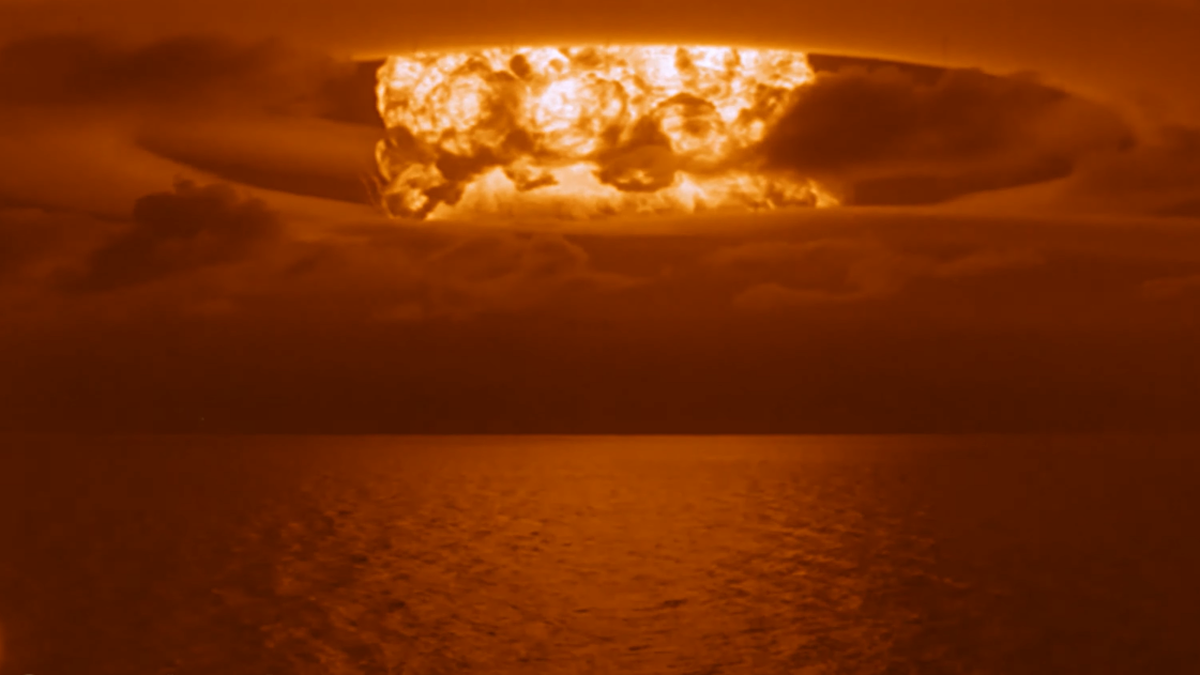
The rejected proposal, which has been in discussion for many years, suggested commencing the Anthropocene Epoch in 1952, when the first layer containing radioactive fallout from Cold-War hydrogen bomb tests formed. Those opposed to the proposal have argued that large-scale, anthropogenic changes have been in the making for millennia and can’t be ascribed to singular events.
The proposal also risked sowing confusion about the deep history of how humans are transforming the planet. The human impact was evident when the sabre-toothed cats began to disappear from North America and the woolly mammoths from Siberia about 10,000 years ago. Human activities also became more visible in the ‘fertile crescent’ of West Asia midway through the Holocene Epoch, about 6,000 years ago, with the rise of agriculture and deforestation to make way for farmland.
Since then, humans have developed many technologies capable of manipulating the environment, including mechanisation, irrigation, groundwater extraction, damming, and the industrial production of nitrogen-rich fertilisers. Even around 1850, the concentrations of two major greenhouse gases, carbon dioxide and methane, were rising at an accelerated rate. These compounds can modify the environment such that it becomes unfriendly to many forms of life.
Significance of the post-Industrial era?
However, a closer examination of the archaeological and historical antecedents of human impacts reveals that while humans have left an indelible mark on the natural environment over the ages, they reached a state of heightened activity only since the beginning of the Industrial Revolution. For example, consider four important markers of the Anthropocene Epoch.
The first is temperature – specifically, the predicted increase in the global average surface temperature, at least by 1.1 degrees but possibly by as much as 6.4 degrees C by the end of this century (which would be an all-time high since the last thermal maximum 40 million years ago). Second, the quickening extinction of various species at a scale similar in magnitude to a major extinction event that occurred 80 million years ago.
Third, a dramatic increase in the erosion and the denudation of continents, at a pace an order of magnitude greater than what one would expect from purely natural processes. Finally, both accelerating urbanisation, land-use changes, and pro-urban migration have been accompanied by perennial water depletion and shortage. Over the last century or so, many major rivers that have been dammed and diverted have lost their water-carrying capacity.
While the SQS-AWG rejected the proposal to use the stratigraphic marker corresponding to the radioactive fallout, it need not reject the possibility of an Anthropocene Epoch or a representative stratigraphic period altogether. The Epoch may well have begun with the Industrial Revolution, around 1760. The resulting evidence of human impact is now preserved in geological material in the form of fallout from nuclear bomb tests as well as microplastics, pesticides, the bodies of invasive species, and more.
In fact, the argument that the rejection of the Anthropocene Epoch proposal is because of the fairly recent date of commencement and its shallow depth misses the larger picture. When Dr. Crutzen proposed the term ‘Anthropocene’, it was an accepted fact that humans had been altering the functioning and geological record of the earth, but it wasn’t until the 18th century that the whole earth system began to rapidly destabilise, posing an existential threat to all biological entities in less than a century.
The information drilled from glaciers and ice-sheets adds to this picture: the atmospheric concentrations of greenhouse gases and a sharp and unprecedented surge in global temperature for the first time in the post-Industrial era as well as in 30,000 years. Even if the human-induced increase began millennia ago, it entered a new phase in this century – a phase that has also brought to bear consequences that are unique to this century.
(C.P. Rajendran is an adjunct professor at the National Institute of Advanced Studies, Bengaluru, and director of the Consortium for Sustainable Development, Inc., Connecticut.)