





Inflammatory Bowel Disease (IBD) describes disorders where the lining of the digestive tract is inflamed. There are two types of IBD disorders: ulcerative colitis, where the large intestine and the rectum are prone to inflammation and sores, and Crohn’s disease, which usually affects the small intestine.
Researchers have reported diet, age, family history, cigarette smoking, and certain medications, among other factors, as being responsible for causing or worsening IBD.
They have also said changing diet patterns can help explain changing patterns of the prevalence of IBD. For example, a 2023 study in The Lancet attributed a higher incidence of IBD in rural Telangana to the greater availability and consumption of processed foods.
A diet that predicts IBD
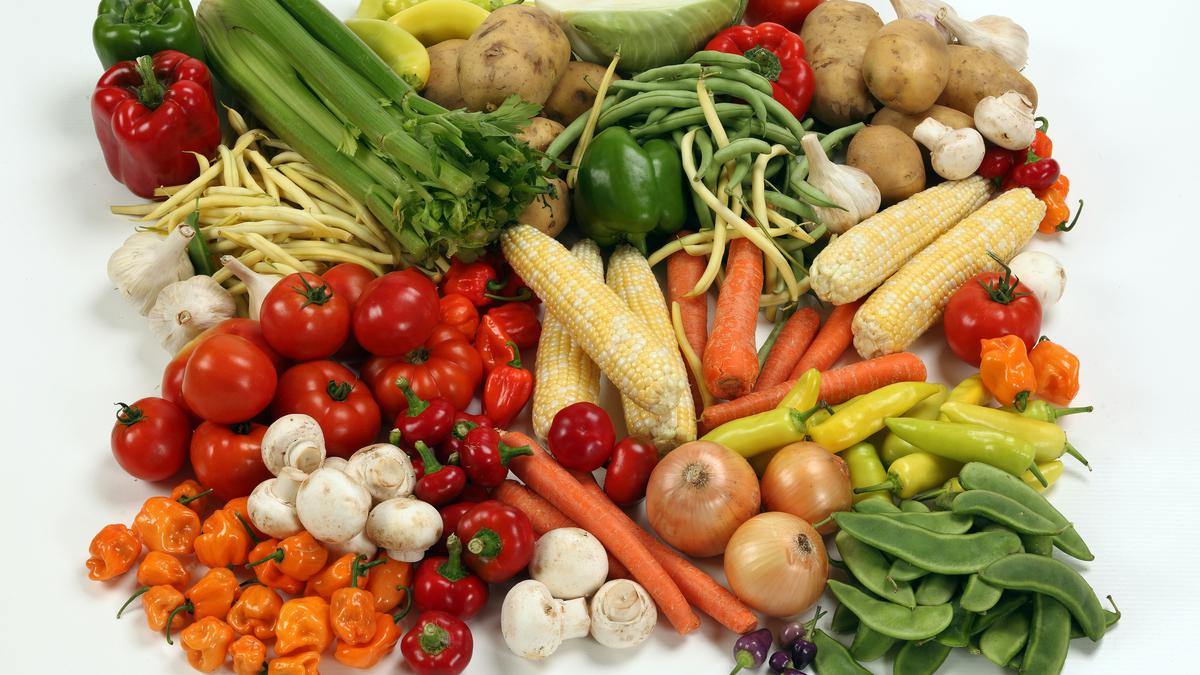
More recently, a study published in the journal Gut in January reported that the diet of infants as young as a year old could affect their chances of developing IBD in future. Researchers behind the study followed the dietary habits of more than 80,000 children through adolescence in Norway and Sweden as they consumed plenty of vegetables and fish in the first year of life, and were associated with a lower future risk of developing IBD.
Consuming sugar-sweetened beverages in this time was associated with a higher risk of IBD, they reported. According to their analysis, at three years of age, no dietary factor other than fish intake was associated with IBD risk. The researchers suspect the developing gut microbiome may be at the heart of the apparent age-dependent relationship of dietary intake and IBD.
The gut microbiome comprises a vast number and types of microorganisms that live in the human gut. According to the authors of the Gut paper, it changes significantly through the first year and stabilises by the time the infant is two to three years old.
ABIS and MoBa databases
Ashwin Ananthakrishnan, a gastroenterologist at the Massachusetts General Hospital, Boston, suggested in an article accompanying the paper that infants may benefit from a “preventive” diet that includes “adequate dietary fibre, particularly from fruit and vegetables”, “intake of fish”, a minimal amount of sugar-sweetened beverages, and a preference of “fresh over processed and ultra-processed foods and snacks”.
The authors of the Gut paper, led by doctoral student Annie Guo from the University of Gothenburg, Sweden, tracked participants from two large-scale databases: All Babies in Southeast Sweden (ABIS) and Norwegian Mother, Father and Child Cohort (MoBa).
Both databases use questionnaires to document a child’s upbringing and lifestyle, including diets. ABIS records data from children born in southeast Sweden from October 1997 to October 1999. MoBa recruited pregnant women throughout Norway from 1999 to 2008.
Together, the researchers had a cohort of 81,280 children, of which roughly half were female. They found an IBD incidence rate of 32 per 100,000 person-years in the ABIS database and 22 per 100,000 person years in the MoBa database. (If 1,000 people participated in a study for one year, the study is said to have 1,000 person-years of data.)
Statistical prediction of IBD risk
To test whether an early-life diet correlated with later incidence of IBD, the authors collated data of the children’s dietary habits at 1-1.5 years and 2.5-3 years of age from the two databases. They assigned a score to the diet quality, and recorded the frequency of intake of nine food categories: dairy, fish, fruits, grains, meat, sugar-dense and fat-dense food, sugar-sweetened beverages, and vegetables.
A diet rich in fruits, vegetables, fish, and eggs was seen to comprise “healthy food groups”. A diet had “unhealthy foods” if it was rich in “salty snacks and sweet snacks”.
In their analyses, the researchers used a statistical test to check whether a child’s early-life dietary intake could also predict later IBD risk. The analysis was adjusted to account for several factors implicated in the past as causes of IBD, including parental history of IBD, early-life antibiotic exposure, and intake of formula food in the first year.
The effect of fish
The researchers also excluded from their final analysis data from children who were diagnosed with IBD at less than six years of age because such a case “often constitutes a highly genetically determined subtype of IBD”, they wrote in their paper.
The authors found that children who had a high intake of fish and vegetables at one year of age were at lower risk of developing IBD while those who had a higher intake of sugar-sweetened beverages at the same age were at higher risk.
At three years, fish intake was the only dietary predictor of IBD: a high intake correlated with a lower risk. The authors speculate, “The content of poly-unsaturated fatty acids or vitamin D in fish may be of special importance for IBD.”
This is because, they add, previous studies on adults have observed that higher intake of PUFAs and Vitamin D are associated with lower risk of ulcerative colitis and Crohn’s disease respectively.
According to the authors, the study’s strength lies in being the first to “prospectively investigate the association between early-life diet quality and intake frequency of specific food groups and later IBD risk”.
Not readily generalisable
That said, Ms. Guo, the lead author, told this reporter that “since diet and other lifestyle habits may be strongly influenced by factors such as country of living and cultural differences, our findings should be replicated in other settings before we can generalise the results to other parts of the world.” In their paper, the team added that since the study’s sample came from two high-income countries, the results may not be readily generalisable to low- and middle-income countries.
Researchers know the composition of the gut microbiome composition – an imbalance of which is implicated in IBD – varies between different geographical locations and between different ethnic groups in the same area.
However, Sylvia Karpagam, a public health doctor and researcher, told this reporter that instead of exactly replicating Guo et al.’s study as is, such studies in India must also account for nutritional deficiencies and dormant infections that participants aren’t regularly screened for.
For example, activist groups have raised concerns about the Indian government’s distribution of iron-fortified rice that has allegedly exacerbated complications from undiagnosed sickle-cell anaemia, thalassaemia, and dormant tuberculosis in tribal populations in Chhattisgarh and Jharkhand.
Dr. Karpagam also suggested studies on IBD focus not on diet alone but on “multiple factors that interplay with and aggravate each other”. For example, she mentioned that the probability of a child developing IBD later in their life may be the result of their dietary intake and of their socioeconomic status, which could affect their diet and exposure to toxins, duration of breastfeeding, and their likelihood of consuming junk foods.
“These confounding variables are not taken into account and one variable gets highlighted,” she said.
A ‘preventive’ diet for infants?
Dr. Ananthakrishnan also wrote in his editorial that the study didn’t account for additives and emulsifiers common in baby foods. These compounds have been implicated in accelerating IBD by changing the composition of the gut microbiome.
Dr. Karpagam said “individual foods cannot be blanket-classified as ‘detrimental’ or ‘beneficial’ in the context of IBD.” For example, she said, “some people with IBD show improvement with whole milk” while others deteriorate.
Fruits and vegetables are high in dietary fibre and a high-fibre diet is implicated in IBD development and aggravation, she added. A 2021 review found that while several studies demonstrate the benefit of high-fibre diets for people with IBD, other studies show “fibre intake prior to developing IBD [to be] linked to risk of disease”.
Dr. Karpagam also advised against a “preventive” diet like what Dr. Ananthakrishnan proposed. One reason is the Gut study’s use of secondary data – i.e. data collected by a different researcher and not specifically for the purpose of studying the relationship between early-life diet and later development of IBD. Such data may be less qualitatively suited for a specific analysis than that collected for the purpose.
Instead, she suggested a clinical trial that could systematically follow a group of pregnant women and their infants over a period of time to study “what variables are associated with the development of IBD”.
“Especially with conditions like IBD, which have been shown to be aggravated by multiple triggers and their interactions with each other, interventions that provide one or the other foods or eliminate one or the other would not be advisable,” she added.
Sayantan Datta is a science journalist and a faculty member at Krea University. They tweet at @queersprings.