



Skip to content
  • Facebook
  • X
  • Linkedin
  • WhatsApp
  • YouTube
  • Associate Journalism
  • About Us
  • Privacy Policy
  • 033-46046046
  • editor@artifex.news
Artifex.News

Artifex.News

Stay Connected. Stay Informed.

  • Breaking News
  • World
  • Nation
  • Sports
  • Business
  • Science
  • Entertainment
  • Lifestyle
  • Toggle search form
  • Indian Air Force Pauses Flying Operations In Exercise Trishul, Rafales To Secure Delhi Airspace For G20 Summit
    Indian Air Force Pauses Flying Operations In Exercise Trishul, Rafales To Secure Delhi Airspace For G20 Summit Nation
  • Leafy chemistry: What happens when a leaf changes colour in autumn?
    Leafy chemistry: What happens when a leaf changes colour in autumn? Science
  • Access Denied Sports
  • Big Concern For India? Shubman Gill Misses 2nd T20I Against Sri Lanka – Here’s Why
    Big Concern For India? Shubman Gill Misses 2nd T20I Against Sri Lanka – Here’s Why Sports
  • Access Denied Business
  • Access Denied
    Access Denied Nation
  • ‘Nuke India’ found scribbled on Minneapolis school shooter’s gun
    ‘Nuke India’ found scribbled on Minneapolis school shooter’s gun World
  • Access Denied Sports
New physics-based model shows healthy guts resist microbial chaos

New physics-based model shows healthy guts resist microbial chaos

Posted on November 5, 2025 By admin


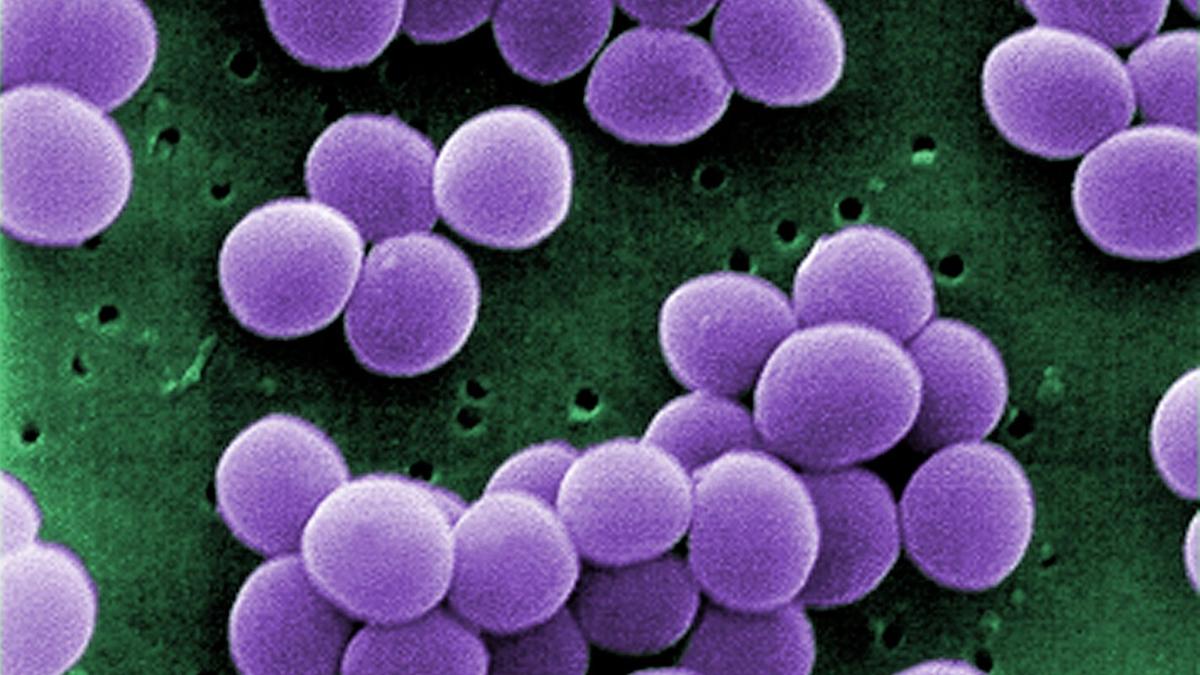
A scanning electron micrograph image of Staphylococcus aureus bacteria, typically found in the upper respiratory tract.
| Photo Credit: US CDC

The human gut is a vast ecosystem of microbes whose balance is central to health. When this balance, known as eubiosis, is disturbed, the result is dysbiosis, and is linked to conditions such as inflammatory bowel disease. Traditional models of microbial communities tend to focus on how many species are present and how abundant they are, but they rarely capture how these species interact. Yet the web of microbial interactions defines whether a community is stable or prone to collapse.

In a new study in eLife, researchers from the University of Padova in Italy, ETH Zurich in Switzerland, and Paris Cité University in France sought to fill this gap by using the tools of statistical physics to study microbial ecosystems. Specifically, they borrowed ideas from the theory of disordered systems, which was originally developed to understand complex materials like spin glasses. Their goal was to connect measurable data from metagenomic sequencing to theoretical models that describe how thousands of species interact. By doing so, they hoped to identify mathematical fingerprints that could distinguish healthy from unhealthy gut microbiomes.

The researchers used the disordered generalised Lotka-Volterra model (dgLV) — a framework that describes how populations of species change over time based on random interactions. Each microbial species’ growth rate depends on its own capacity to thrive and on the positive or negative effects of other species. The interaction strengths, which are impossible to measure directly, were treated as random variables.

Using cross-sectional gut microbiome data from 91 healthy and 202 diseased samples, they extracted a set of numbers that they used to summarise each community’s behaviour. Then, an algorithm adjusted the dgLV parameters so that the model’s predictions matched the empirical data. This allowed the researchers to infer the statistical structure of inter-species interactions and to quantify how ecological stability differed between the healthy and diseased samples.

The analysis revealed that healthy and diseased microbiomes occupy distinct zones in the model’s parameter space. That is to say, healthy communities had stronger but more heterogenous interactions, reflecting a balanced network where fluctuations are absorbed without destabilising the system. Diseased microbiomes had lower interaction diversity and higher randomness, indicating instability and loss of resilience.

Mathematically, the diseased systems were found to lie closer to a critical line that marks the transition to chaotic or unstable dynamics. This suggests that while healthy microbiomes operate in a stable equilibrium, diseased ones hover near disorder.

The new framework reframes gut health as a problem of statistical structure rather than a matter of simple composition. It implies that dysbiosis is less about which microbes are missing and more about how their interactions have weakened or become erratic. As a result, the study suggests that by examining collective behaviour, one might predict or even correct unstable microbial states.

The authors also acknowledged some limitations in their effort. For one, their model assumes a static set of interactions while real microbes evolve and respond to changing environments in different ways. They suggest future studies might allow interactions to fluctuate, capturing their dynamics more realistically.

Published – November 05, 2025 02:49 pm IST


Source link

Science

Post navigation

Previous Post: Access Denied
Next Post: Access Denied

Related Posts

  • India successfully test-fires long range hypersonic missile
    India successfully test-fires long range hypersonic missile Science
  • Chemistry Nobel Prize for trio that made ‘artificial atoms’
    Chemistry Nobel Prize for trio that made ‘artificial atoms’ Science
  • That’s one small step for man…
    That’s one small step for man… Science
  • Science for all newsletter 2024 Nobel Prize winners in science
    Science for all newsletter 2024 Nobel Prize winners in science Science
  • International Space Summit gets underway in Paris
    International Space Summit gets underway in Paris Science
  • Are ‘colour molecules’ the key to a room-temperature quantum computer?
    Are ‘colour molecules’ the key to a room-temperature quantum computer? Science

More Related Articles

Rubies and emeralds get their colours from a common metal Rubies and emeralds get their colours from a common metal Science
Science quiz: Applications of lasers Science quiz: Applications of lasers Science
The animal that senses electrical boxes, tolerates snow, and has ‘mating trains’ The animal that senses electrical boxes, tolerates snow, and has ‘mating trains’ Science
A colossus who helped shape Kerala’s scientific establishment A colossus who helped shape Kerala’s scientific establishment Science
Google celebrates India’s Chandrayaan-3 feat with special doodle Google celebrates India’s Chandrayaan-3 feat with special doodle Science
Balancing two forms of SNCA protein could help manage Parkinson’s, study finds Balancing two forms of SNCA protein could help manage Parkinson’s, study finds Science
SiteLock

Archives

  • September 2026
  • August 2026
  • July 2026
  • June 2026
  • May 2026
  • April 2026
  • March 2026
  • February 2026
  • January 2026
  • December 2025
  • November 2025
  • October 2025
  • September 2025
  • August 2025
  • July 2025
  • June 2025
  • May 2025
  • April 2025
  • March 2025
  • February 2025
  • January 2025
  • December 2024
  • November 2024
  • October 2024
  • September 2024
  • August 2024
  • July 2024
  • June 2024
  • May 2024
  • April 2024
  • March 2024
  • February 2024
  • January 2024
  • December 2023
  • November 2023
  • October 2023
  • September 2023
  • August 2023
  • July 2023
  • June 2023
  • May 2023
  • April 2023
  • March 2023
  • February 2023
  • January 2023
  • December 2022
  • November 2022
  • October 2022
  • September 2022
  • August 2022
  • July 2022
  • June 2022
  • May 2022

Categories

  • Business
  • Nation
  • Science
  • Sports
  • World

Recent Posts

  • Bombay High Court permits BMC to cut over 1,200 mangroves for Versova-Madh Island bridge
  • U.S. appeals court rejects Trump policy allowing swift deportations to third countries
  • Trump to meet with Venezuela’s interim President Rodriguez in New York on Sept. 22
  • U.S. troop deaths during Iran war exceed Pentagon count by at least four: report
  • Waste of public money amid economic crisis: U.P. Congress on PM’s birthday celebrations

Recent Comments

  1. Jamesslits on UP Teacher Who Asked Students To Slap Muslim Classmate
  2. MichaelClear on UP Teacher Who Asked Students To Slap Muslim Classmate
  3. Jamesslits on UP Teacher Who Asked Students To Slap Muslim Classmate
  4. Jamesslits on UP Teacher Who Asked Students To Slap Muslim Classmate
  5. MichaelClear on UP Teacher Who Asked Students To Slap Muslim Classmate
  • Domestic passenger vehicle volumes to grow by 5% this fiscal: Tata Motors PV CEO
    Domestic passenger vehicle volumes to grow by 5% this fiscal: Tata Motors PV CEO Business
  • Shahidi to lead Afghanistan in Test and ODI series against India
    Shahidi to lead Afghanistan in Test and ODI series against India Sports
  • Trump says ‘open’ to engaging with Iran
    Trump says ‘open’ to engaging with Iran World
  • 2 Minor Brothers Drown While Playing In River In Madhya Pradesh
    2 Minor Brothers Drown While Playing In River In Madhya Pradesh Nation
  • The Hindu Morning Digest: July 24, 2024
    The Hindu Morning Digest: July 24, 2024 Business
  • Jasprit Bumrah Stumps Everyone With Big Playing XI Call. No R Ashwin Or Ravindra Jadeja
    Jasprit Bumrah Stumps Everyone With Big Playing XI Call. No R Ashwin Or Ravindra Jadeja Sports
  • Access Denied Sports
  • How Lack Of ‘Halal Meat’ Turned Afghanistan Cricketers Into Chefs In Bridgetown
    How Lack Of ‘Halal Meat’ Turned Afghanistan Cricketers Into Chefs In Bridgetown Sports

Editor-in-Chief:
Mohammad Ariff,
MSW, MAJMC, BSW, DTL, CTS, CNM, CCR, CAL, RSL, ASOC.
editor@artifex.news

Associate Editors:
1. Zenellis R. Tuba,
zenelis@artifex.news
2. Haris Daniyel
daniyel@artifex.news

Photograher:
Rohan Das
rohan@artifex.news

Artifex.News offers Online Paid Internships to college students from India and Abroad. Interns will get a PRESS CARD and other online offers.
Send your CV (Subjectline: Paid Internship) to internship@artifex.news

Links:
Associate Journalism
About Us
Privacy Policy

News Links:
Breaking News
World
Nation
Sports
Business
Entertainment
Lifestyle

Registered Office:
72/A, Elliot Road, Kolkata - 700016
Tel: 033-22277777, 033-22172217
Email: office@artifex.news

Editorial Office / News Desk:
No. 13, Mezzanine Floor, Esplanade Metro Rail Station,
12 J. L. Nehru Road, Kolkata - 700069.
(Entry from Gate No. 5)
Tel: 033-46011099, 033-46046046
Email: editor@artifex.news

Copyright © 2023 Artifex.News Newsportal designed by Artifex Infotech.