





In the industrial town of Morbi in Gujarat, the air usually hums with the roar of gas-fired kilns producing millions of square metres of ceramic tiles. Today, however, nearly a quarter of the town’s ceramic units have gone silent. Nearly a thousand kilometres away in Ludhiana, Punjab, one of India’s largest hosiery and knitwear clusters is facing a similar silence. The reason is geopolitical.
As the conflict between the U.S. and Iran intensifies, the Strait of Hormuz, the world’s most vital oil and gas artery, has turned into a gauntlet. India imports nearly half of its natural gas and immediately felt the pinch — rendered more painful by the Ministry of Petroleum and Natural Gas slashing gas allocations to non-priority industrial sectors to just 65-80% of their contracted volumes.
For manufacturers in clusters like Morbi and Ludhiana, where firms have begun exploring alternatives to gas and other fossil fuels, the present crisis must be a moment of validation as they move towards the large-scale electrification of heat. For others, however, it can seem like an ultimatum to fast-track decarbonisation and, for India overall, a reminder that it needs thermal independence, i.e. a ‘sovereign’ source of heat, rather than just energy independence.
For decades, industrial heat has been synonymous with burning hydrocarbons like coal or gas. In Ludhiana’s textile mills, for instance, large boilers burn gas to create steam used in dyeing and finishing. In Morbi, gas flames bake tiles at temperatures exceeding 1,000 °C.
Rooftop solar photovoltaic panels have become common but they are designed to produce electricity, not the raw, intense heat that industries demand, so this is where technologies such as concentrated solar thermal (CST) could become relevant. Whereas photovoltaics use semiconductors to convert renewable sunlight into a stream of electrons, CST uses precisely controlled mirrors to concentrate sunlight onto a receiver, where it heats a fluid like water or molten salt to up to 400 °C.
Most textile processes, including scouring and bleaching, require a temperature between 100 °C and 180 °C. In principle, mills could install parabolic troughs on factory grounds or nearby land to generate pressurised steam directly from sunlight. According to data from the Ministry of New and Renewable Energy, India has a CST potential of 6.4 GW. Adoption, however, remains low — but as gas prices have already tripled due to the war in West Asia, the payback period for a CST installation could also shrink from the current seven years.
For more than a century, in a highly inefficient process, people at homes, engineers in laboratories, and industrial operators have burnt fuel to create hot air, then transferred that heat to a product. A gas boiler loses 20-30% of its energy just in the exhaust. One proposed route to decarbonising industrial heat replaces the flame with electromagnetic heating methods such as induction or plasma. For example, an induction stove passes an electric current through a coil, creating a magnetic field that generates heat directly inside the metal or in the material being processed. There is no intermediary substance like air or steam that takes away a part of the heat, so the efficiency rates of such heaters have been known to exceed 90%.
High-temperature industries in India, such as ceramics, and around the world are also exploring technologies such as plasma torches for high-temperature industrial processes.. Here, gas is ionised to a state called plasma — colloquially called the fourth state of matter — which can reach temperatures greater than those on the surface of the sun. Plasma torches also allow users to closely control their temperature, thus preventing under- or over-heating for different processes.
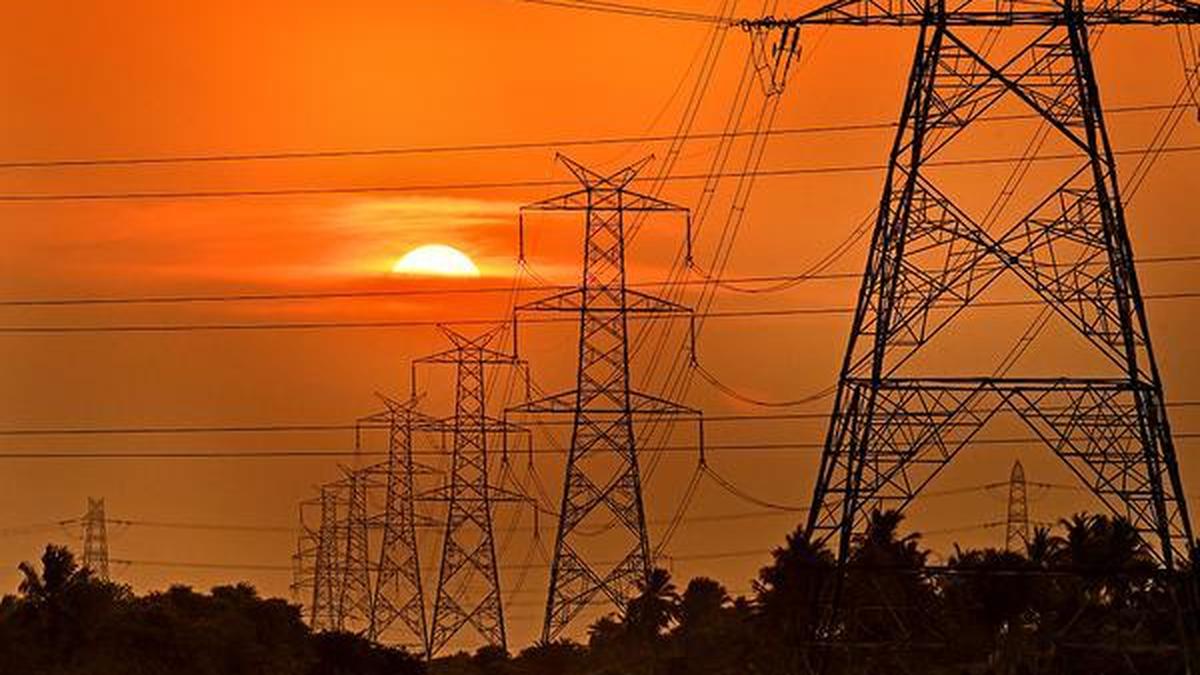
The bigger question, however, is whether India’s grid is ready. If large industrial clusters such as Ludhiana and Morbi rapidly switched to electric heating technologies, the additional load would pose a significant challenge for the power grid. This is because industrial heat currently accounts for around 25% of India’s total energy consumption and shifting that load from gas pipes to electric wires would be a profound engineering challenge.
Most factories operate on a 24/7 cycle whereas solar and wind energy are intermitted, so in order to electrify heat for industry, India needs round-the-clock renewable power, which entails a large rollout of battery energy storage systems and pumped hydro storage. At present, India’s storage capacity is in its infancy and without it the grid is not in a position to sustain the large ‘spikes’ of energy that heavy industrial induction furnaces demand.
Second, local power grids in industrial clusters like Ludhiana are often ageing. High-capacity induction heating requires high-voltage substations and reinforced cabling for last mile supply. Asset-loading reports from DISCOMs in industrial clusters suggest that roughly a quarter to a third of distribution transformers can be critically loaded during peak hours, with scant headroom for additional demand like for electrified heat. So adding industrial loads would require substantially more transformer capacity.
These constraints accentuate CST’s advantage, especially as a source of heat that does not depend on the grid. By generating thermal energy on-site and storing it in insulated tanks, a factory can continue operating even at night without drawing a single watt from the national grid. Thermal storage is also an order of magnitude cheaper than lithium-ion battery storage.
To survive the LPG crisis and complete the transition to electrified heat, India needs a ‘National Thermal Policy’. Its current subsidies focus heavily on electricity (photovoltaics in particular) whereas there are few incentives for direct-heat technologies like CST. The government should consider providing the same accelerated depreciation and production-linked incentives to CST mirror manufacturers that it gave to solar cell manufacturers. India also needs to reform the carbon market to allow factories in Morbi, say, to sell their ‘avoided emissions’ through the nascent Carbon Credit Trading Scheme and use the revenue to offset the high capital cost of electric kilns.
Industries can also benefit from hybrid solutions given the inherent advantages of being able to modernise without junking their existing infrastructure first. For example, a CST system can operate at day, a small gas-based backup system can support peak loads, and induction coils can provide heat for precision processes. The ‘Miraah’ project in Oman offers a useful example: engineers integrated one of the world’s largest concentrated solar thermal plants with an existing gas-fired industrial operation. Thus, solar energy generates steam in daytime, reducing gas consumption by nearly 80%, while the gas boilers were on standby and for nighttime use.
The ‘Solar Heat for Industrial Processes’ initiatives in Spain have allowed the company Solatom to develop plug-and-play solar thermal units: pre-assembled, containerised mirror arrays that a factory can install on a roof or a small parking lot and connect directly to its existing steam network. Denmark reformed its energy market to support heat purchase agreements, whereby an external provider installs and maintains a CST or induction system and the factory simply buys the heat at a fixed rate, typically cheaper than gas; the government also supported the initiative by investing in large-scale thermal storage that can hold ‘excess’ heat for days. Such solutions substantially lower the engineering costs for new adopters.
Published – March 13, 2026 12:01 am IST