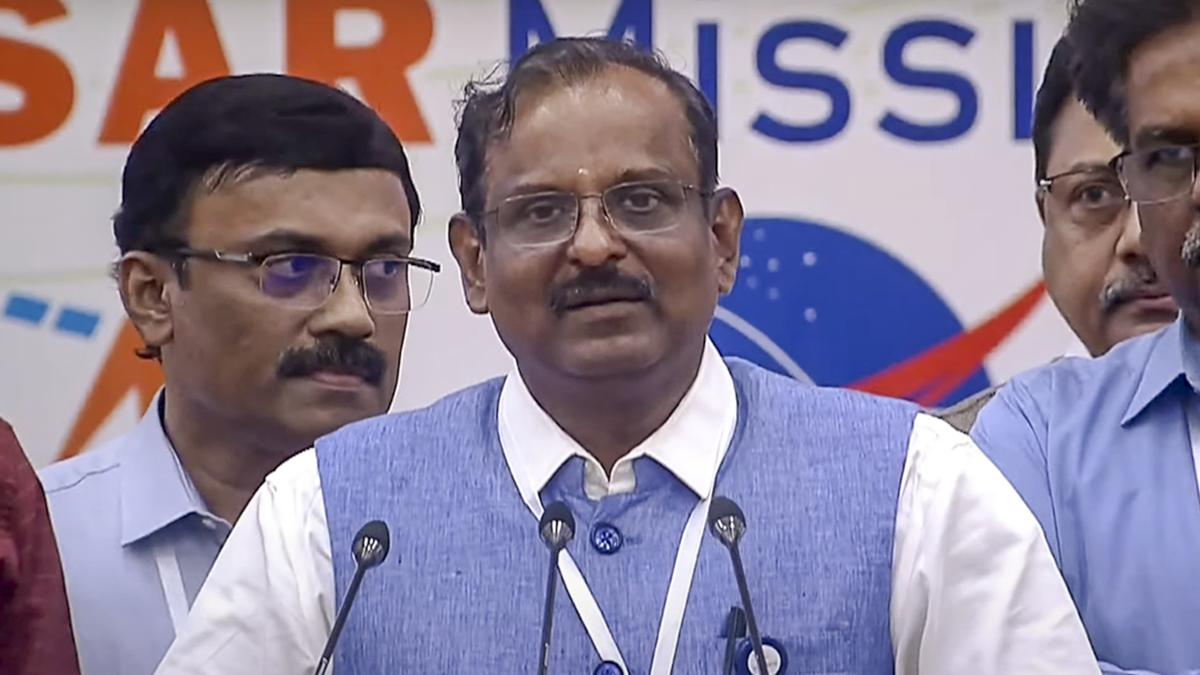





Dr Nishant Kumar, co-founder and chief scientist of the Thinkpaws Sustainability Research Foundation, a Delhi-based trans-disciplinary think tank, believes that too many decisions around the ongoing stray dog crisis are being shaped by “emotionally-charged knee-jerk reactions.” In his opinion, there is an urgent need to create policy benchmarks informed by dog behaviour and science, not human emotions.
Despite being such a diverse society, India “has not invested in extending the ambit of research that matches new environmental and social challenges inevitably tied with coexistence with non-humans,” according to Nishant, a DBT/Wellcome Trust Fellow at NCBS, Bengaluru (Host) and Oxford (Overseas Host).
This, in turn, means decision-makers are implementing solutions without understanding spatial distribution, behavioural patterns, or ecological drivers, he adds. “They’re operating on assumptions, not data. You can’t solve complex coexistence problems without understanding underlying social-ecological systems.”
Dogs being fed at Kengeri in Bengaluru
| Photo Credit:
SUDHAKARA JAIN
It is this gap that the Thinkpaws Foundation, established two years ago, aims to address through its research initiatives. In 2023, for instance, their team conducted a scientific survey across 14 strategically selected sites in Delhi to better understand the scale of the problem.
“Our systematic survey revealed a dog density of 550±87 dogs/km². We censused 1,484 individual dogs across 14 sampling units,” states a recent report published on their website. “When extrapolated across Delhi’s 1,500 km², this yields 825,313 street dogs (range: 694,568 to 956,059).”

Dr Nishant Kumar, co-founder and chief scientist of the Thinkpaws Sustainability Research Foundation
| Photo Credit:
Special Arrangement
In an interview, Nishant reflects on the recent Supreme Court ruling that all stray dogs from the nation’s capital should be removed (a few days later, another bench of the top court amended the order and asked the municipal authorities to return the animals from where they were picked up after sterilisation and vaccination), his organisation’s research findings on the issue, and its implications.
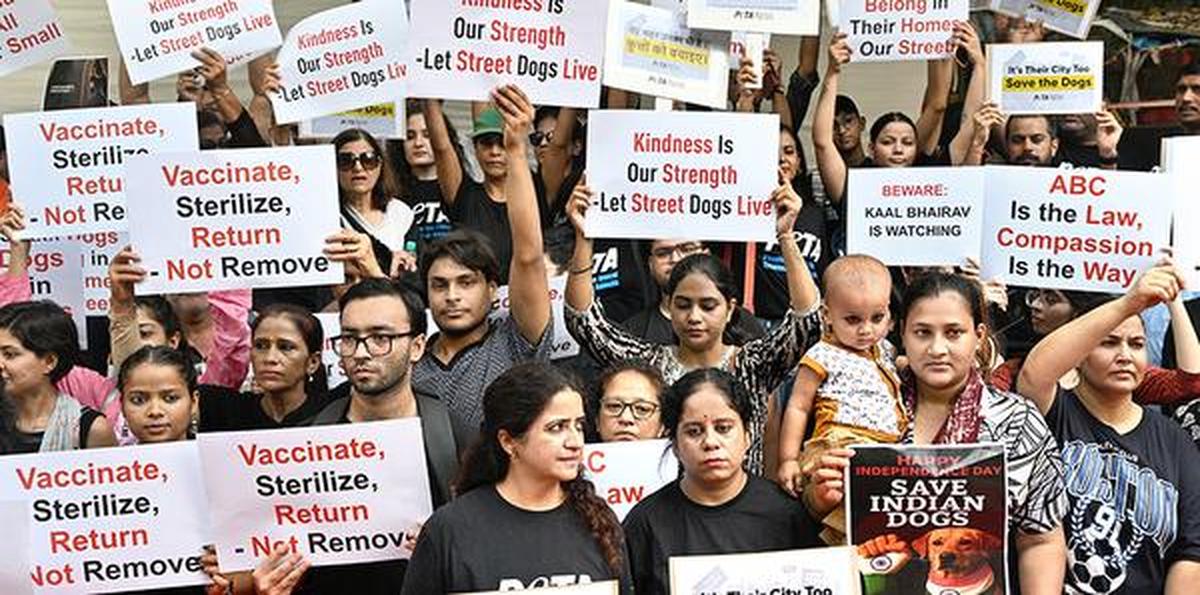
Animal rights activists protesting against the apex court order on stray dogs at Jantar Mantar
| Photo Credit:
SHASHI SHEKHAR KASHYAP

What do you think about the recent Supreme Court directive on stray dogs?

As a citizen, I would not expect the Supreme Court to intervene in such situations;principally, it needs robust scientific management that informs and facilitates better coexistence.
Historically, animals have been viewed from utilitarian benchmarks and/or as passive, something to be handled or managed – perspectives that could give way to new ethical and jurisprudential benchmarks.
I believe this swift action from the Supreme Court is based on valid sets of public or individual concerns/litigations. But coexistence conundrums are not new. The Delhi High Court has issued multiple legislative directions since 2008 regarding the creation of feeding platforms, mostly ineffective, because of their basis on human emotions. Animals don’t follow the idea of feeding platforms or langar.
As human beings, we have historically had a complex relationship with various animals; many are now considered “pests”, including the rock pigeon and macaques. They have coexisted with us and there is a strong cultural connection associated with feeding. How do we address India’s stray dogs, considering this aspect?
There is a famous line in jurisprudence saying that you have the right to (freely) swing your fist, but that right stops where my nose starts. Perhaps this may address the debate on how we should treat animals, considering the implications it might have on human/nonhuman well-being. In this case, the idea of “a nose” or discomfort with respect to what/where you are feeding, which creates issues, requires predictive scientific and technological interference.
Furthermore, human and nonhuman populations, as well as waste piles, have skyrocketed. Rich habitat/food resource pool of this kind in a limited space affects and regulates interfaces and mutual behaviour, shaping dog populations, as driven by local environments.
Scientists know animals better than we did 100 years ago, which informs how our health requirements are invariably tied with nonhumans and the environment (remember COVID-19). Modern perspectives need to evaluate/guide the concept of whether, where, and whom to feed, collectively shaped by the government, civil society researchers, and administrators. We surely have the means to channel the concerns and emotions people have for animals differently. This, for example, is visible in zoos that encourage people to adopt animals via donations. In the same way, if we have a better way of extending a similar kind of relationship to dogs, with evidence-based use of donation for well-being and interactions, shaping actual benefit for urban animals is not far off.
Could you talk about some of the key findings in your research?
Our research has allowed us to understand that each set of these breeding social units (dogs are social animals) is tuned to its local environment. Like people in X part of Delhi or Y part of Mumbai, dogs are also tuned to their local environment and make localised adjustments. When you have animals that are localised within their social and breeding units, (futile) attempts to manage by random relocations and cross-pairings have implications on conflicts within or across species, causing injuries/diseases.
Clearly, until we develop and achieve sanitary waste disposal practices that justify the absence of animals from the streets, their long-standing scavenging services are helpful. Meanwhile, we could use science to “engineer” where we want these services and avoid situations where it begets conflicts/diseases. And that can only happen through long-term research, which triangulates behaviour, demography and cognition — in other words, how animals respond by processing site-specific information.
Do we have a workable solution that considers both animal rights and human safety?
We are incorrectly conceptualising solutioning as a monolith, while dealing with animals that are conscious living beings, maintaining social systems tied to humans. The best way forward will require collaboration among stakeholders representing diverse ethical and scientific perspectives; this will shape a conversational language that fosters mutual tolerance for disagreements, while devising effective management interventions.
Dialogues shall enable understanding of complex human-animal interfaces, complemented by multiple human/nonhuman stakeholders. Unless such practices regularly guide day-to-day discourse, we will continue to argue and enact reactive measures from individuals/organisations. These dogged situations represent the diversity of emotions people exhibit towards animals, which can’t be fathomed under right vs. wrong or other dichotomies (absolute removal vs. coexistence in streets).
Transdisciplinary science can effectively help us develop a common language, with its ability to incorporate constant course correction, informed by objective assessments of dynamic challenges like coexistence in a changing world.
Indians possibly have the best bandwagon of cultural emotions and tolerance towards animals, but we need to board the bandwagon of science soon. This will guide better solutions, supported by inclusive discussions.