




Skip to content
  • Facebook
  • X
  • Linkedin
  • WhatsApp
  • YouTube
  • Associate Journalism
  • About Us
  • Privacy Policy
  • 033-46046046
  • editor@artifex.news
Artifex.News

Artifex.News

Stay Connected. Stay Informed.

  • Breaking News
  • World
  • Nation
  • Sports
  • Business
  • Science
  • Entertainment
  • Lifestyle
  • Toggle search form
  • Windfall tax on crude oil, diesel hiked
    Windfall tax on crude oil, diesel hiked Business
  • Congress Gets A Win, Trinamool Ahead In Key Polls Where INDIA Fights INDIA
    Congress Gets A Win, Trinamool Ahead In Key Polls Where INDIA Fights INDIA Nation
  • Government clears 23 institutions to set up ‘quantum labs’
    Government clears 23 institutions to set up ‘quantum labs’ Science
  • Donald Trump And Vladimir Putin Set To Meet For Ukraine Peace Talks
    Donald Trump And Vladimir Putin Set To Meet For Ukraine Peace Talks World
  • Access Denied
    Access Denied Nation
  • Access Denied
    Access Denied Nation
  • England’s Mark Wood out of last two Tests against Sri Lanka
    England’s Mark Wood out of last two Tests against Sri Lanka Sports
  • Access Denied
    Access Denied Nation
Scientists in Chile question if Antarctica has hit a point of no return

Scientists in Chile question if Antarctica has hit a point of no return

Posted on August 29, 2024 By admin


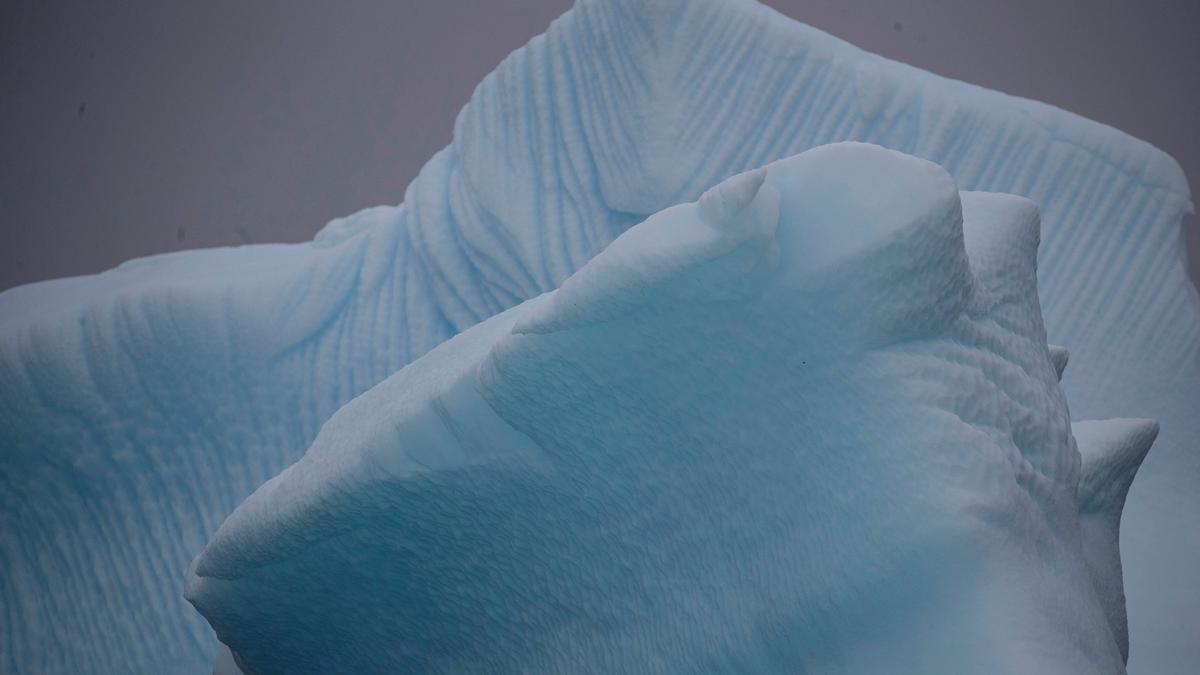
An iceberg floats near Two Hummock Island, Antarctica, February 2, 2020. Picture taken February 2, 2020.
| Photo Credit: Reuters

Nearly 1,500 academics, researchers and scientists specialising in Antarctica gathered in southern Chile for the 11th Scientific Committee on Antarctic Research conference this week to share the most cutting-edge research from the vast white continent.

Nearly every aspect of science, from geology to biology and glaciology to arts, was covered but a major undercurrent ran through the conference. Antarctica is changing, faster than expected.

Extreme weather events in the ice-covered continent were no longer hypothetical presentations, but first-hand accounts from researchers about heavy rainfall, intense heat waves and sudden Foehn (strong dry winds) events at research stations that led to mass melting, giant glacier break-offs and dangerous weather conditions with global implications.

With detailed weather station and satellite data dating back only about 40 years, scientists wondered whether these events meant Antarctica had reached a tipping point, or a point of accelerated and irreversible sea ice loss from the West Antarctic ice sheet.

“There’s uncertainty about whether the current observations indicate a temporary dip or a downward plunge (of sea ice),” said Liz Keller, a paleoclimate specialist from the Victoria University of Wellington in New Zealand that led a session about predicting and detecting tipping points in Antarctica.

NASA estimates show the Antarctic ice sheet has enough ice to raise the global mean sea level by up to 58 meters. Studies have shown that about a third of the world’s population lives below 100 vertical meters of sea level.

While it’s tough to determine whether we’ve hit a “point of no return,” Keller says that it’s clear the rate of change is unprecedented.

“You might see the same rise in CO2 over thousands of years, and now it’s happened in 100 years,” Keller said.

Mike Weber, a paleooceanographer from Germany’s University of Bonn, who specialises in Antarctic ice sheet stability, says sediment records dating back 21,000 years show similar periods of accelerated ice melt.

The ice sheet has experienced similar accelerated ice mass loss at least eight times, Weber said, with acceleration beginning over a few decades that kick off a phase of ice loss that can last centuries, leading to dramatically higher sea levels around the world.

Weber says ice loss has picked up over the last decade, and the question is whether it’s already kicked off a centuries-long phase or not.

“Maybe we’re entering such a phase right now,” Weber said. “If we are, at least for now, there will be no stopping it.”

Keeping emissions low

While some say the climate changes are already locked in, scientists agreed that the worst case scenarios can still be avoided by dramatically reducing fossil fuel emissions.

Weber says the earth’s crust rebounds in response to retreating glaciers and their diminishing weight could balance out sea level rise, and new research published weeks ago shows that a balance is still possible if the rate of change is slow enough. “If we keep emissions low, we can stop this eventually,” said Weber. “If we keep them high, we have a runaway situation and we cannot do anything.”

Mathieu Casado, a paleoclimate and polar meteorologist at France’s Climate and Environment Sciences Laboratory, specialises in studying water isotopes to reconstruct historical temperatures.

Casado said data from dozens of ice cores collected throughout the ice sheet has allowed him to reconstruct temperature patterns in Antarctica dating back 800,000 years.

Casado’s research showed that the current temperature rise in the last fifty years was clearly outside natural variability, highlighting the role of industry in producing carbon emissions that drive climate change.

He added that the last time the Earth was this warm was 125,000 years ago and sea levels were 6 to 9 meters higher “with quite a bit of contribution for West Antarctica.”

Temperature and carbon dioxide were historically at equilibrium and balanced each other out, Casado said, but we currently have much higher levels of CO2 and are far from equilibrium.

Casado and other scientists noted the speed and quantity at which carbon is being pumped into the atmosphere is unprecedented.

Gino Casassa, a glaciologist and head of Chilean Antarctic Institute, said that current estimates show sea levels rising by 4 meters by 2100 and more if emissions continue to grow.

“What happens in Antarctica doesn’t stay in Antarctica,” said Casassa, adding that global atmospheric, ocean and weather patterns are linked to the continent.

“Antarctica isn’t just an ice refrigerator isolated from the rest of the planet that has no impact.”


Source link

Science Tags:antractica, Climate change, climate crisis, climate news, melting of antarctica

Post navigation

Previous Post: Why US Political Culture Is Marked By Good Speeches But Bad Debates
Next Post: Three Pakistan Hockey Players Banned For Life After Seeking Asylum In Europe

Related Posts

  • The ingredients of India’s biopharma ambitions
    The ingredients of India’s biopharma ambitions Science
  • Does frequently updating COVID-19 vaccines have any benefits? | Explained
    Does frequently updating COVID-19 vaccines have any benefits? | Explained Science
  • Gaganyaan mission symbol of new chapter in journey of Atmanirbhar Bharat, says Rajnath Singh
    Gaganyaan mission symbol of new chapter in journey of Atmanirbhar Bharat, says Rajnath Singh Science
  • The afterglow of an explosive collision between giant planets may have been detected in a far-off star system
    The afterglow of an explosive collision between giant planets may have been detected in a far-off star system Science
  • Science for all Why did scientists create a new type of nanopasta which is thinner than spaghetti
    Science for all Why did scientists create a new type of nanopasta which is thinner than spaghetti Science
  • AI-fit cameras in Similipal Tiger Reserve send poaching plummeting
    AI-fit cameras in Similipal Tiger Reserve send poaching plummeting Science

More Related Articles

Science Snapshots: February 22, 2026 Science Snapshots: February 22, 2026 Science
150% customs duty on lab chemicals alarms scientists 150% customs duty on lab chemicals alarms scientists Science
Cosmic ‘speed camera’ reveals staggering speed of neutron star jets Cosmic ‘speed camera’ reveals staggering speed of neutron star jets Science
Chandrayaan vs. Chang’e: How different are India’s and China’s lunar missions? Chandrayaan vs. Chang’e: How different are India’s and China’s lunar missions? Science
Can nations save the shorebird that flies 30,000 km a year? Can nations save the shorebird that flies 30,000 km a year? Science
Union Minister Hardeep Singh Puri inaugurates India Energy Week 2025  Union Minister Hardeep Singh Puri inaugurates India Energy Week 2025  Science
SiteLock

Archives

  • May 2026
  • April 2026
  • March 2026
  • February 2026
  • January 2026
  • December 2025
  • November 2025
  • October 2025
  • September 2025
  • August 2025
  • July 2025
  • June 2025
  • May 2025
  • April 2025
  • March 2025
  • February 2025
  • January 2025
  • December 2024
  • November 2024
  • October 2024
  • September 2024
  • August 2024
  • July 2024
  • June 2024
  • May 2024
  • April 2024
  • March 2024
  • February 2024
  • January 2024
  • December 2023
  • November 2023
  • October 2023
  • September 2023
  • August 2023
  • July 2023
  • June 2023
  • May 2023
  • April 2023
  • March 2023
  • February 2023
  • January 2023
  • December 2022
  • November 2022
  • October 2022
  • September 2022
  • August 2022
  • July 2022
  • June 2022
  • May 2022

Categories

  • Business
  • Nation
  • Science
  • Sports
  • World

Recent Posts

  • Nicobarese oppose proposal for three wildlife sanctuaries
  • Visakhapatnam Collector calls for inter-departmental synergy to boost investments
  • Kohli’s masterful knock powers Royal Challengers to the top
  • Senior IPS officer Asra Garg posted IGP Intelligence
  • Vijay Narayan earns rare distinction of being Advocate General under two different governments

Recent Comments

  1. StevenLek on UP Teacher Who Asked Students To Slap Muslim Classmate
  2. Leonardren on UP Teacher Who Asked Students To Slap Muslim Classmate
  3. NathanQuins on UP Teacher Who Asked Students To Slap Muslim Classmate
  4. Davidgof on UP Teacher Who Asked Students To Slap Muslim Classmate
  5. NathanJobre on UP Teacher Who Asked Students To Slap Muslim Classmate
  • India’s retail inflation surges to 6.2% in October
    India’s retail inflation surges to 6.2% in October Business
  • US After Israel Delegation Cancels Visit Over UN Vote On Gaza Ceasefire
    US After Israel Delegation Cancels Visit Over UN Vote On Gaza Ceasefire World
  • Bus Driver In Bengaluru Suffers Heart Attack, Dies While Driving
    Bus Driver In Bengaluru Suffers Heart Attack, Dies While Driving Nation
  • China reaffirms boundaries of sea near flashpoint reef
    China reaffirms boundaries of sea near flashpoint reef World
  • “Sri Lanka Are Peaking At Right Time”: Dasun Shanaka Ahead Of Asia Cup Final Against India
    “Sri Lanka Are Peaking At Right Time”: Dasun Shanaka Ahead Of Asia Cup Final Against India Sports
  • “Development, Good Governance Wins” PM Modi On NDA’s Landslide Maharashtra Win
    “Development, Good Governance Wins” PM Modi On NDA’s Landslide Maharashtra Win Nation
  • What to know about Iran’s nuclear programme as U.N. reimposes ‘snapback’ sanctions
    What to know about Iran’s nuclear programme as U.N. reimposes ‘snapback’ sanctions World
  • Four people dead in Kenya as security disperses crowd viewing Odinga body
    Four people dead in Kenya as security disperses crowd viewing Odinga body World

Editor-in-Chief:
Mohammad Ariff,
MSW, MAJMC, BSW, DTL, CTS, CNM, CCR, CAL, RSL, ASOC.
editor@artifex.news

Associate Editors:
1. Zenellis R. Tuba,
zenelis@artifex.news
2. Haris Daniyel
daniyel@artifex.news

Photograher:
Rohan Das
rohan@artifex.news

Artifex.News offers Online Paid Internships to college students from India and Abroad. Interns will get a PRESS CARD and other online offers.
Send your CV (Subjectline: Paid Internship) to internship@artifex.news

Links:
Associate Journalism
About Us
Privacy Policy

News Links:
Breaking News
World
Nation
Sports
Business
Entertainment
Lifestyle

Registered Office:
72/A, Elliot Road, Kolkata - 700016
Tel: 033-22277777, 033-22172217
Email: office@artifex.news

Editorial Office / News Desk:
No. 13, Mezzanine Floor, Esplanade Metro Rail Station,
12 J. L. Nehru Road, Kolkata - 700069.
(Entry from Gate No. 5)
Tel: 033-46011099, 033-46046046
Email: editor@artifex.news

Copyright © 2023 Artifex.News Newsportal designed by Artifex Infotech.