


Skip to content
  • Facebook
  • X
  • Linkedin
  • WhatsApp
  • YouTube
  • Associate Journalism
  • About Us
  • Privacy Policy
  • 033-46046046
  • editor@artifex.news
Artifex.News

Artifex.News

Stay Connected. Stay Informed.

  • Breaking News
  • World
  • Nation
  • Sports
  • Business
  • Science
  • Entertainment
  • Lifestyle
  • Toggle search form
  • Paralympic Star Nitesh Kumar Cites BAI Apathy, Wants Badminton To Be Placed Under PCI
    Paralympic Star Nitesh Kumar Cites BAI Apathy, Wants Badminton To Be Placed Under PCI Sports
  • With Shivraj Chouhan’s Move To Delhi, Spotlight On Son Kartikey Chouhan
    With Shivraj Chouhan’s Move To Delhi, Spotlight On Son Kartikey Chouhan Nation
  • Mats Hummels Stuns Kylian Mbappe And PSG To Take Borussia Dortmund To Champions League Final
    Mats Hummels Stuns Kylian Mbappe And PSG To Take Borussia Dortmund To Champions League Final Sports
  • By 2100, India’s Population To Decline, But Still Be 2.5 Times That Of China
    By 2100, India’s Population To Decline, But Still Be 2.5 Times That Of China World
  • 147 Candidates In Fray For 32 Seats In Sikkim Assembly Polls
    147 Candidates In Fray For 32 Seats In Sikkim Assembly Polls Nation
  • Indian Sports In 2024: Year Of Monumental Victories, Breakthroughs, And Near Misses
    Indian Sports In 2024: Year Of Monumental Victories, Breakthroughs, And Near Misses Sports
  • AAP Minister On BJP MPs’ Ayushman Bharat Petition
    AAP Minister On BJP MPs’ Ayushman Bharat Petition Nation
  • Access Denied Sports
Connexin proteins rally arteries to nourish brain on demand

Connexin proteins rally arteries to nourish brain on demand

Posted on August 17, 2025 By admin


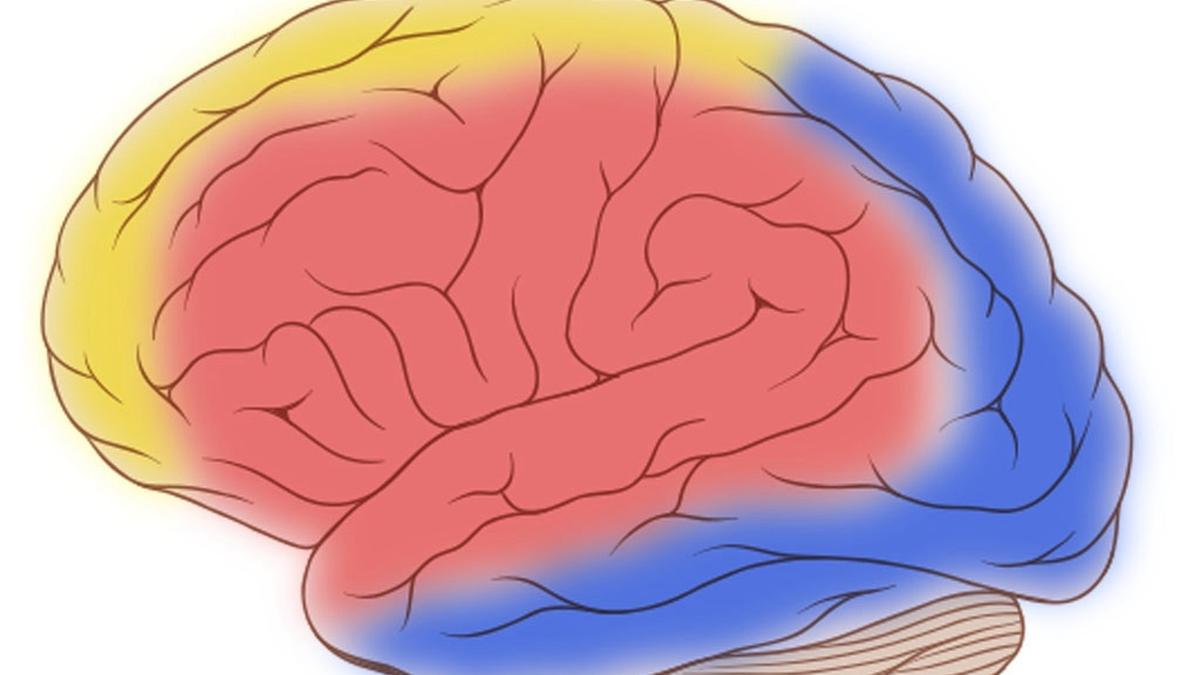
The anterior, middle, and posterior cerebral arteries respectively supply the yellow, red, and blue parts of the brain.
| Photo Credit: Frank Gaillard, Patrick J. Lynch

The brain is a guzzler, burning through about a fifth of our resting energy and keeping almost nothing in reserve. When a few thousand neurons suddenly burst into activity — e.g. when you spot a familiar face in the crowd — the fuel has to arrive immediately. Blood vessels open wide to let it in but they can’t rob neighbouring regions to pay for the rush. The whole supply network must pitch in, and here lies the mystery: even the most distant arteries seem to respond almost instantly.

Scientists call this process neurovascular coupling. Neurons fire, nearby capillaries widen, and blood flow rises as arteries join in, pushing more fuel into the pipeline. Researchers have seen messages travelling ‘upstream’ from smaller vessels to bigger ones but the known chemical messengers moved too slowly to explain the brain’s split-second feats. Something else was clearly at work that passed the call to action almost instantaneously.

Cells lining the brain’s blood vessels are linked by gap junctions, narrow portals that let neighbouring cells exchange ions and small molecules. When Chengua Gu’s lab at Harvard University introduced serotonin into one cell, it slipped through the junctions to its neighbours. A later test revealed a web of connections that were strongest in the arteries and weaker in the veins. The team found that two connexin proteins, Cx37 and Cx40, were especially abundant in the arteries and inferred they may be responsible for the rapid call to action.

The findings were published in Cell in July.

University College London neuroscientist David Attwell said this arrangement lets signals travel along vessel walls to widen upstream arteries, boosting blood flow to active brain areas. Brant Isakson, a vascular physiologist at the University of Virginia, added that different vessels use different connexins to pass certain signals better, “like specific pipes for specific fluids”.

To prove the link, the Harvard team bred mice that lacked Cx37 and Cx40 in their artery walls. In healthy mice, a burst of brain activity sent a widening signal along the arteries that reached more than a millimetre in a quarter of a second. In the modified mice, the signal moved at a third of the speed.

The gap became most obvious when large swaths of the brain lit up. In healthy mice, the widening action spread rapidly and in sync across the arterial network. In the modified mice, it was slower, weaker, and stuck near the source. The results suggested that gap junctions acted as a “scaling mechanism” that let blood delivery grow to match bursts of brain activity.

Anna Devor, a neuroscientist at Boston University who studies how blood flow shapes fMRI signals, said the study nailed down the mechanism that lets vessel-widening signals travel along the vessel walls and measured how fast that happens.

“Knowing both the mechanism and the speed is priceless for computer models linking brain activity to blood flow,” she said. Such models, according to her, could help detect vascular problems, test drugs virtually, and guide therapies, especially when paired with artificial intelligence models.

The results could also help explain mismatches between brain activity and blood flow. Devor recalled the late imaging pioneer Amiram Grinvald likening the brain’s oxygen supply to “watering the entire garden for one thirsty flower”. Signals to widen vessels often travel upstream, adding delays: hundreds of milliseconds in small arteries and over a second in larger ones. This study shows that gap junctions account for much of that lag, with the rest due to slower chemical messengers reaching their target vessels.

The work may also raise questions about disease. Attwell noted that it’s possible, but unproven, that losing gap junction connections in aging or small vessel diseases could lower brain blood flow. Testing that idea, he said, would mean boosting the proteins in lab animals and seeing if that improved brain function.

According to Isakson, the findings could help develop drugs to activate connexins  as well as discover how the brain’s 20-plus connexin protein types combine into mosaic junctions that fine-tune messages from cell to cell.

The brain’s energy efficiency depends on more than just responsive neurons: it requires a hidden vascular network. Here, the arteries exchange rapid messages through the gap junctions, coordinating supply lines across millimetres in the blink of an eye. This chatter is a reminder that the brain’s lifeblood is as much in its wiring as in its firing.

Anirban Mukhopadhyay is a geneticist by training and science communicator from Delhi.

Published – August 17, 2025 05:30 am IST


Source link

Science

Post navigation

Previous Post: Israel prepares to move Palestinians to southern Gaza as Israelis urge mass protest over war
Next Post: Scientists turn E. coli bacteria into a mercury sensor

Related Posts

  • New portable atomic clock offers very accurate timekeeping at sea
    New portable atomic clock offers very accurate timekeeping at sea Science
  • Sci-Five | The Hindu Science Quiz: On Electroreception
    Sci-Five | The Hindu Science Quiz: On Electroreception Science
  • Using AI to classify neem fruits based on azadirachtin content
    Using AI to classify neem fruits based on azadirachtin content Science
  • Microbe might spark first stages of ulcerative colitis: new study
    Microbe might spark first stages of ulcerative colitis: new study Science
  • Silent killer: The Hindu editorial on hypertension and the first WHO report on the subject
    Silent killer: The Hindu editorial on hypertension and the first WHO report on the subject Science
  • Model by Chennai, Pune team predicts birth weight from routine scans
    Model by Chennai, Pune team predicts birth weight from routine scans Science

More Related Articles

Guntur, spectral lines, and the discovery of helium Guntur, spectral lines, and the discovery of helium Science
Sci-Five | The Hindu Science Quiz: On Autism Sci-Five | The Hindu Science Quiz: On Autism Science
Ian Wilmut, a British scientist who led the team that cloned Dolly the Sheep, dies at age 79 Ian Wilmut, a British scientist who led the team that cloned Dolly the Sheep, dies at age 79 Science
Cracking the mystery of how the chemical origins of life formed Cracking the mystery of how the chemical origins of life formed Science
What is India’s first orbital data centre satellite? What is India’s first orbital data centre satellite? Science
Why Nipah virus outbreaks are occurring only in Kerala Why Nipah virus outbreaks are occurring only in Kerala Science
SiteLock

Archives

  • May 2026
  • April 2026
  • March 2026
  • February 2026
  • January 2026
  • December 2025
  • November 2025
  • October 2025
  • September 2025
  • August 2025
  • July 2025
  • June 2025
  • May 2025
  • April 2025
  • March 2025
  • February 2025
  • January 2025
  • December 2024
  • November 2024
  • October 2024
  • September 2024
  • August 2024
  • July 2024
  • June 2024
  • May 2024
  • April 2024
  • March 2024
  • February 2024
  • January 2024
  • December 2023
  • November 2023
  • October 2023
  • September 2023
  • August 2023
  • July 2023
  • June 2023
  • May 2023
  • April 2023
  • March 2023
  • February 2023
  • January 2023
  • December 2022
  • November 2022
  • October 2022
  • September 2022
  • August 2022
  • July 2022
  • June 2022
  • May 2022

Categories

  • Business
  • Nation
  • Science
  • Sports
  • World

Recent Posts

  • ATS questions 57 in Maharashtra over alleged gangster network links
  • Nicobarese oppose proposal for three wildlife sanctuaries
  • Visakhapatnam Collector calls for inter-departmental synergy to boost investments
  • Kohli’s masterful knock powers Royal Challengers to the top
  • Senior IPS officer Asra Garg posted IGP Intelligence

Recent Comments

  1. RichardClage on UP Teacher Who Asked Students To Slap Muslim Classmate
  2. StevenLek on UP Teacher Who Asked Students To Slap Muslim Classmate
  3. Leonardren on UP Teacher Who Asked Students To Slap Muslim Classmate
  4. NathanQuins on UP Teacher Who Asked Students To Slap Muslim Classmate
  5. Davidgof on UP Teacher Who Asked Students To Slap Muslim Classmate
  • Access Denied World
  • Joe Bidens Son Hunter Biden Sues US Revenue Service Alleges Unlawful Disclosure Of Taxes
    Joe Bidens Son Hunter Biden Sues US Revenue Service Alleges Unlawful Disclosure Of Taxes World
  • Scientists are working on a way to detect cancer with ultrasound waves
    Scientists are working on a way to detect cancer with ultrasound waves Science
  • Access Denied
    Access Denied Nation
  • Gym Owner Charged For Raping Woman On Pretext Of Giving Job In Mumbai
    Gym Owner Charged For Raping Woman On Pretext Of Giving Job In Mumbai Nation
  • Access Denied Sports
  • Rupee rises 3 paise to close at 83.86 against U.S. dollar
    Rupee rises 3 paise to close at 83.86 against U.S. dollar Business
  • Access Denied Sports

Editor-in-Chief:
Mohammad Ariff,
MSW, MAJMC, BSW, DTL, CTS, CNM, CCR, CAL, RSL, ASOC.
editor@artifex.news

Associate Editors:
1. Zenellis R. Tuba,
zenelis@artifex.news
2. Haris Daniyel
daniyel@artifex.news

Photograher:
Rohan Das
rohan@artifex.news

Artifex.News offers Online Paid Internships to college students from India and Abroad. Interns will get a PRESS CARD and other online offers.
Send your CV (Subjectline: Paid Internship) to internship@artifex.news

Links:
Associate Journalism
About Us
Privacy Policy

News Links:
Breaking News
World
Nation
Sports
Business
Entertainment
Lifestyle

Registered Office:
72/A, Elliot Road, Kolkata - 700016
Tel: 033-22277777, 033-22172217
Email: office@artifex.news

Editorial Office / News Desk:
No. 13, Mezzanine Floor, Esplanade Metro Rail Station,
12 J. L. Nehru Road, Kolkata - 700069.
(Entry from Gate No. 5)
Tel: 033-46011099, 033-46046046
Email: editor@artifex.news

Copyright © 2023 Artifex.News Newsportal designed by Artifex Infotech.