




Skip to content
  • Facebook
  • X
  • Linkedin
  • WhatsApp
  • YouTube
  • Associate Journalism
  • About Us
  • Privacy Policy
  • 033-46046046
  • editor@artifex.news
Artifex.News

Artifex.News

Stay Connected. Stay Informed.

  • Breaking News
  • World
  • Nation
  • Sports
  • Business
  • Science
  • Entertainment
  • Lifestyle
  • Toggle search form
  • ‘Tinder Swindler’ Simon Leviev arrested in Georgia
    ‘Tinder Swindler’ Simon Leviev arrested in Georgia World
  • UK Scientists Plan Seabed Explosions To Solve Mystery Of Missing Flight MH370
    UK Scientists Plan Seabed Explosions To Solve Mystery Of Missing Flight MH370 World
  • Why can’t we see well right after entering a darker room?
    Why can’t we see well right after entering a darker room? Science
  • 2 Killed In Police Firing, 30 Injured In Assam Anti-Encroachment Drive, Say Sources
    2 Killed In Police Firing, 30 Injured In Assam Anti-Encroachment Drive, Say Sources Nation
  • “Don’t Play Like Westerners”: New Zealand Star Rachin Ravindra Talks About ‘Indian Heritage’ In Batting Approach
    “Don’t Play Like Westerners”: New Zealand Star Rachin Ravindra Talks About ‘Indian Heritage’ In Batting Approach Sports
  • Access Denied
    Access Denied Nation
  • Shaheen Afridi Returns To 15-Member Pakistan Squad For First Test Against England
    Shaheen Afridi Returns To 15-Member Pakistan Squad For First Test Against England Sports
  • Access Denied Sports
Why better prediction of cyclone intensity, heavy rainfall is needed

Why better prediction of cyclone intensity, heavy rainfall is needed

Posted on December 28, 2024 By admin


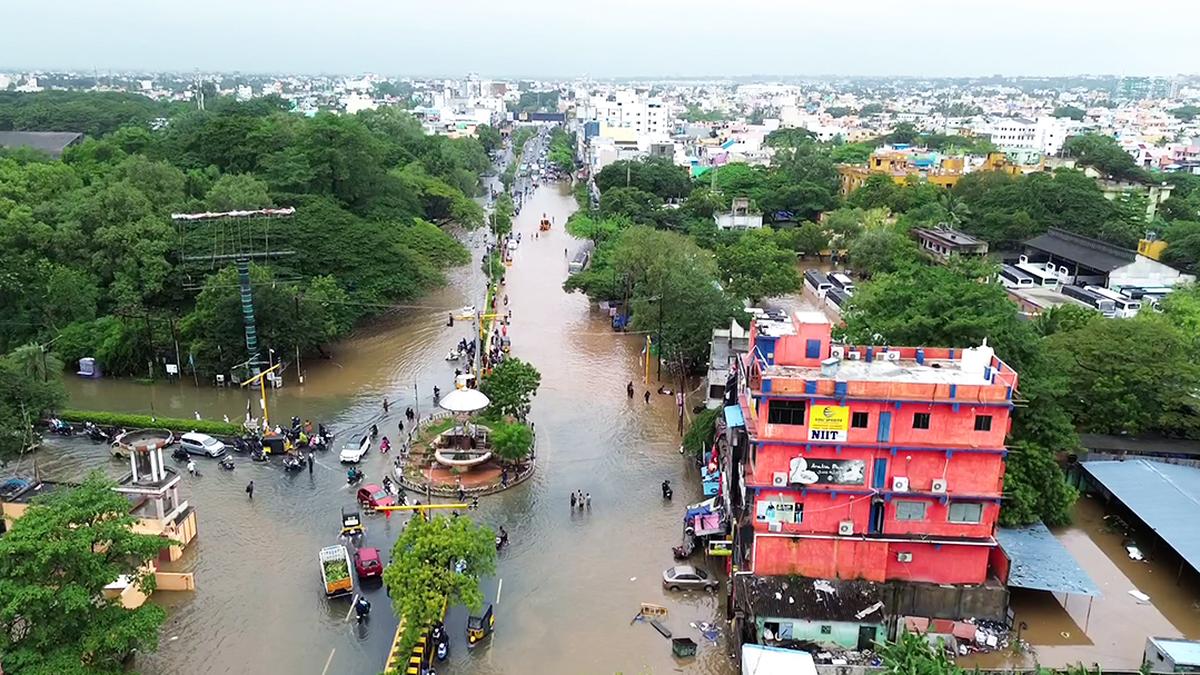
Heavy downpour: In Puducherry, Cyclone Fengal dumped 48.4 cm of rainfall in 24 hours.
| Photo Credit: ANI

Tropical cyclones rank among the most devastating natural phenomena, with the potential to inflict significant destruction and loss of life. While the North Indian Ocean basin experiences fewer cyclones compared to other regions, it remains highly susceptible to their impacts due to densely populated coastal areas. This vulnerability was tragically highlighted by the Bhola cyclone of 1970, the deadliest tropical cyclone on record. Observational evidence indicates shifts in the patterns, intensity, and frequency of tropical cyclones, underscoring the need for adaptive measures in vulnerable regions.

Climatologically, the Bay of Bengal experiences a higher frequency of tropical cyclones compared with the Arabian Sea. In recent years, there has been a 52% increase in the frequency of cyclonic storms in the Arabian Sea, alongside a threefold rise in the duration of very severe cyclonic storms. There is a greater likelihood of cyclonic storms intensifying into severe cyclonic storms. In the satellite era, the accumulated cyclone energy over the North Indian Ocean has shown an increasing trend. These trends are driven by environmental factors such as rising ocean heat content and decreasing vertical wind shear.

In future climate change scenarios, anthropogenic climate change is likely to fuel more powerful tropical cyclones. Additionally, the tropical cyclone precipitation rates are projected to rise, driven by increased atmospheric moisture associated with global warming. Ocean basins may also experience a higher frequency of rapid intensification events, a poleward migration of the latitude of maximum intensity, and a slowing of the forward motion of tropical cyclones.

The post-monsoon season of 2024 (October-December) was notably active, with as many as eight low-pressure systems forming over the North Indian Ocean. Among these, four intensified into depressions, and two further developed into cyclonic storms: Dana in October and Fengal in November. This heightened activity was attributed to above-normal sea surface temperatures and favourable atmospheric circulation including low vertical wind shear. Cyclone Dana significantly impacted Odisha and West Bengal, causing extensive damage. However, precise forecasts and effective disaster mitigation measures minimised the loss of human lives.

Cyclone Fengal created its place in history with its unusual trajectory and devastating impact on Tamil Nadu’s coastline. Emerging as a low-pressure area over the southeast Bay of Bengal on November 23, it made landfall near Puducherry on the night of November 30. Uniquely, the system stalled upon reaching the coast due to a rare balanced steering flow, allowing it to maintain its intensity even after landfall until the evening of December 1. This persistence was fuelled by abundant moisture from saturated coastal soils, already soaked by preceding rains. The stalling cyclone unleashed unprecedented rainfall, with several locations across Puducherry and Villupuram districts recording 40-50 cm in a single day. Neighbouring districts, including Cuddalore and Tiruvannamalai, also experienced torrential downpours exceeding 20 cm within 24 hours. The deluge submerged vast stretches of farmland, resulting in catastrophic losses for farmers and severely impacting local livelihoods.

The India Meteorological Department (IMD) has established an impressive track record for accurately predicting the track and landfall of tropical cyclones over the last decade. Despite this, Fengal presented significant forecasting challenges due to its unconventional track, variable speed, and intense rainfall during landfall. While IMD successfully predicted the landfall near Puducherry nearly three days in advance, certain aspects of the cyclone’s behaviour were difficult to forecast. For instance, its north-eastward movement on November 27 was not accurately predicted, and the slow progression or stalling near the coast also posed challenges.

More broadly, weather prediction models often struggle with forecasting the heavy rainfall associated with tropical cyclone landfalls, a limitation that was particularly evident in Fengal’s case. None of the prediction models accurately predicted the exceptional 24-hour rainfall totals exceeding 40 cm recorded in some areas. Limitations in observational data over oceans, and the complex cloud dynamics within the cyclone contribute to forecasting difficulties, necessitating continuous advancements in modeling techniques and real-time data assimilation. Two critical areas requiring further research are the prediction of tropical cyclone intensity, especially rapid intensification and forecasting of heavy rainfall associated with landfall. These challenges are becoming increasingly urgent as IPCC climate models project more intense cyclones, accompanied by heavier precipitation and slower translation speeds.

The post-monsoon cyclone activity of 2024 highlights the critical need for sustained investments in advanced forecasting technologies and research to address existing knowledge gaps. Despite significant progress, achieving precise tropical cyclone predictions remains a great challenge. It is imperative to prioritise measures that safeguard lives, livelihoods, and ecosystems from the devastating impacts of tropical cyclones.

(Madhavan Nair Rajeevan was former Secretary to the Government of India and presently the Vice Chancellor, Atria University, Bengaluru. Email: vc@atriauniveristy.edu.in)

Published – December 28, 2024 09:30 pm IST


Source link

Science

Post navigation

Previous Post: What triggers the flowering of durians?
Next Post: Marine heatwave killed four million Alaska seabirds

Related Posts

  • Cloudy weather delays SpaceX Starship’s latest launch to overcome testing troubles
    Cloudy weather delays SpaceX Starship’s latest launch to overcome testing troubles Science
  • Global coral bleaching event expands, now the largest on record
    Global coral bleaching event expands, now the largest on record Science
  • When did an uptick in dental cavities in humans begin?
    When did an uptick in dental cavities in humans begin? Science
  • Babies in Nigeria being born with antibiotic resistant bacteria
    Babies in Nigeria being born with antibiotic resistant bacteria Science
  • How big fossil-fuel-producing countries export emissions abroad | Explained
    How big fossil-fuel-producing countries export emissions abroad | Explained Science
  • Who are the winners of the 2025 Nobel Prize in Physiology or Medicine?
    Who are the winners of the 2025 Nobel Prize in Physiology or Medicine? Science

More Related Articles

Sci-Five | The Hindu Science Quiz: On Sci-fi writers Sci-Five | The Hindu Science Quiz: On Sci-fi writers Science
The two vaccines that brought us to the brink of eradicating polio | Explained The two vaccines that brought us to the brink of eradicating polio | Explained Science
‘Green-beard’ genes could explain how altruism arose in nature ‘Green-beard’ genes could explain how altruism arose in nature Science
Why are space agencies racing to the moon’s south pole? Why are space agencies racing to the moon’s south pole? Science
Daily Quiz: On Lunokhod 1 Daily Quiz: On Lunokhod 1 Science
How does Gaganyaan’s vital crew escape system work? | Explained How does Gaganyaan’s vital crew escape system work? | Explained Science
SiteLock

Archives

  • May 2026
  • April 2026
  • March 2026
  • February 2026
  • January 2026
  • December 2025
  • November 2025
  • October 2025
  • September 2025
  • August 2025
  • July 2025
  • June 2025
  • May 2025
  • April 2025
  • March 2025
  • February 2025
  • January 2025
  • December 2024
  • November 2024
  • October 2024
  • September 2024
  • August 2024
  • July 2024
  • June 2024
  • May 2024
  • April 2024
  • March 2024
  • February 2024
  • January 2024
  • December 2023
  • November 2023
  • October 2023
  • September 2023
  • August 2023
  • July 2023
  • June 2023
  • May 2023
  • April 2023
  • March 2023
  • February 2023
  • January 2023
  • December 2022
  • November 2022
  • October 2022
  • September 2022
  • August 2022
  • July 2022
  • June 2022
  • May 2022

Categories

  • Business
  • Nation
  • Science
  • Sports
  • World

Recent Posts

  • ‘Jhalmuri’ turns victory flavour at BJP government’s maiden oath ceremony in West Bengal
  • Labour loses power in Wales for first time since 1999 devolution
  • RBI officers seek Governor’s intervention to correct promotion policy
  • EC publishes Index Cards for Assembly polls
  • NCRB data testifies to UP’s strong law and order: DGP

Recent Comments

  1. Jamesnep on UP Teacher Who Asked Students To Slap Muslim Classmate
  2. CalebKar on UP Teacher Who Asked Students To Slap Muslim Classmate
  3. Alvinadubs on UP Teacher Who Asked Students To Slap Muslim Classmate
  4. CharlesVOX on UP Teacher Who Asked Students To Slap Muslim Classmate
  5. Robertgop on UP Teacher Who Asked Students To Slap Muslim Classmate
  • Will Artificial Intelligence Save Humanity? US Tech Fest Offers Reality Check
    Will Artificial Intelligence Save Humanity? US Tech Fest Offers Reality Check World
  • Access Denied World
  • What is a superkilonova?
    What is a superkilonova? Science
  • India’s first-ever ‘hybrid pitch’ unveiled in Dharamsala
    India’s first-ever ‘hybrid pitch’ unveiled in Dharamsala Sports
  • An open letter to Joseph Vijay
    An open letter to Joseph Vijay Nation
  • ‘Do you see BJP protest when a Hindu is killed by a Hindu?‘
    ‘Do you see BJP protest when a Hindu is killed by a Hindu?‘ Nation
  • Chinese navy ships visit Bangladesh, becomes first foreign fleet to visit after takeover by interim government
    Chinese navy ships visit Bangladesh, becomes first foreign fleet to visit after takeover by interim government World
  • Jyotiraditya Scindia’s Son Mahanaryaman Scindia
    Jyotiraditya Scindia’s Son Mahanaryaman Scindia Nation

Editor-in-Chief:
Mohammad Ariff,
MSW, MAJMC, BSW, DTL, CTS, CNM, CCR, CAL, RSL, ASOC.
editor@artifex.news

Associate Editors:
1. Zenellis R. Tuba,
zenelis@artifex.news
2. Haris Daniyel
daniyel@artifex.news

Photograher:
Rohan Das
rohan@artifex.news

Artifex.News offers Online Paid Internships to college students from India and Abroad. Interns will get a PRESS CARD and other online offers.
Send your CV (Subjectline: Paid Internship) to internship@artifex.news

Links:
Associate Journalism
About Us
Privacy Policy

News Links:
Breaking News
World
Nation
Sports
Business
Entertainment
Lifestyle

Registered Office:
72/A, Elliot Road, Kolkata - 700016
Tel: 033-22277777, 033-22172217
Email: office@artifex.news

Editorial Office / News Desk:
No. 13, Mezzanine Floor, Esplanade Metro Rail Station,
12 J. L. Nehru Road, Kolkata - 700069.
(Entry from Gate No. 5)
Tel: 033-46011099, 033-46046046
Email: editor@artifex.news

Copyright © 2023 Artifex.News Newsportal designed by Artifex Infotech.