
Skip to content
  • Facebook
  • X
  • Linkedin
  • WhatsApp
  • YouTube
  • Associate Journalism
  • About Us
  • Privacy Policy
  • 033-46046046
  • editor@artifex.news
Artifex.News

Artifex.News

Stay Connected. Stay Informed.

  • Breaking News
  • World
  • Nation
  • Sports
  • Business
  • Science
  • Entertainment
  • Lifestyle
  • Toggle search form
  • Access Denied Sports
  • Lionel Messi-less Inter Miami Extend MLS Lead With 2-1 Win Over Chicago Fire
    Lionel Messi-less Inter Miami Extend MLS Lead With 2-1 Win Over Chicago Fire Sports
  • Access Denied World
  • Jailed Maoist Leader in Bengal Appears For PhD Interview
    Jailed Maoist Leader in Bengal Appears For PhD Interview Nation
  • 3 killed and 2 injured in shooting near University of Cincinnati campus, police say
    3 killed and 2 injured in shooting near University of Cincinnati campus, police say World
  • India vs England third Twenty20 International in Rajkot: Indian batting coach Sitanshu Kotak talks about pacer Mohammed Shami’s fitness
    India vs England third Twenty20 International in Rajkot: Indian batting coach Sitanshu Kotak talks about pacer Mohammed Shami’s fitness Sports
  • World Hindi Day celebrated in Shanghai with participation of Chinese teachers, students
    World Hindi Day celebrated in Shanghai with participation of Chinese teachers, students World
  • Key infra sectors’ growth contracts 1.8% in August
    Key infra sectors’ growth contracts 1.8% in August Business
The two vaccines that brought us to the brink of eradicating polio | Explained

The two vaccines that brought us to the brink of eradicating polio | Explained

Posted on July 3, 2024 By admin


In 1948, microbiologists John F. Enders, Thomas Weller, and Frederick Robbins were trying to find a method to grow different viruses in cell cultures. In a routine experiment involving human muscle and skin cells, they decided to test one more virus along with the ones they were already testing, since a vial containing that virus was in their freezer. To their surprise, the virus proliferated and grew well with their method. Their work eventually solved one of the most important scientific problems of the time.

They had just managed to find a way to grow the poliovirus in non-nerve cells.

A major roadblock

In the mid-20th century, researchers widely believed the poliovirus could only be grown in cultures of nerve cells. This misconception was propagated by their inability to infect rhesus macaques by the oral route, and only by directly injecting the virus into the nervous system. At the time, they didn’t know the problem was with the poliovirus strains they were using.

The poliovirus has only one natural host — humans — and many of the early strains of the virus were isolated from humans and wouldn’t infect non-human primates. Since scientists kept passing the virus through the brain tissues of macaques, it adapted to that mode of infection.

The inability to culture polio in non-nerve cells was a major roadblock to developing a polio vaccine. But thanks to Enders and his team, the poliovirus could now be mass-produced for vaccine research.

Eradication target missed

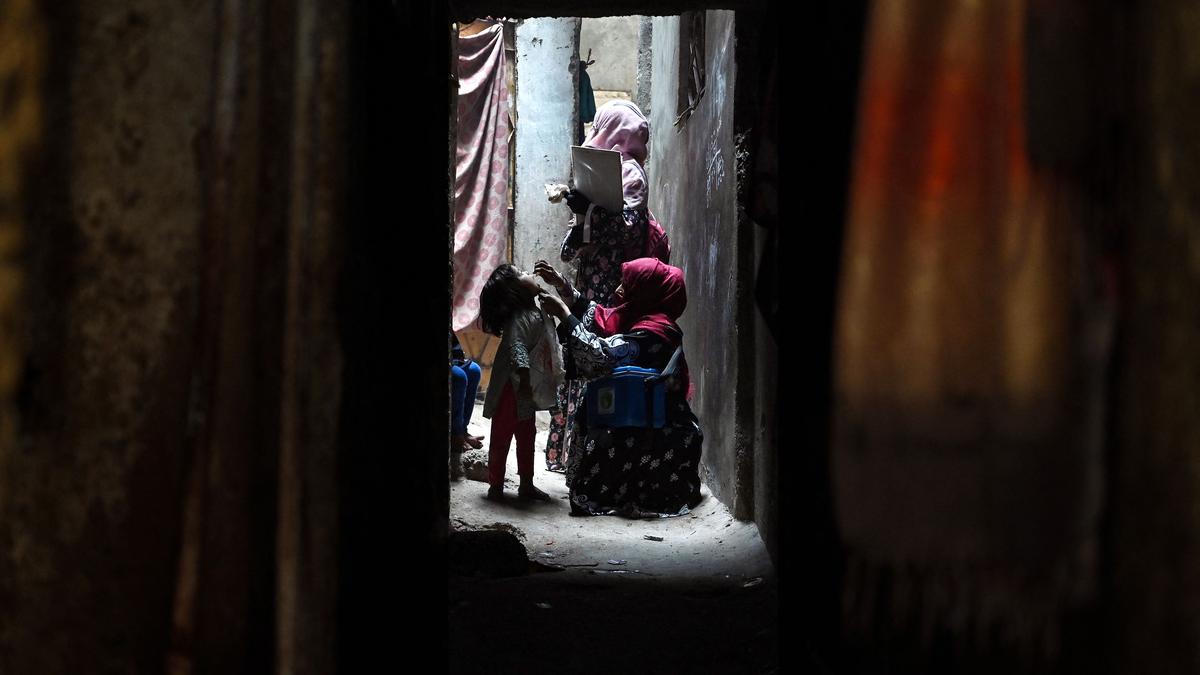
Polio eradication is one of the top priorities of the World Health Organisation (WHO). Since Africa was declared polio-free in August 2020, the wild poliovirus has been restricted to rural pockets in Afghanistan and Pakistan. But from here, according to a recent report in Science, the virus is beginning to reappear in big cities in these two countries.

This reemergence is a result of vaccine hesitancy due to misinformation, conflict, poverty, and limited access to these isolated regions. The WHO’s Global Polio Eradication Initiative is thus set to miss its deadline of eradicating polio by the end of 2024.

The Initiative’s failure in Afghanistan and Pakistan casts a long shadow on an otherwise remarkable achievement: of polio having been eradicated everywhere else. This feat was driven by two vaccines, both invented within a year of each other. They are administered differently, provide distinct levels of protection, contain different components, and target different compartments of the immune system. Yet they both played equally invaluable roles in the global fight against polio.

The systemic and the mucosal

In late 1949, Enders received a letter requesting the starting material and the procedure his team had perfected to grow the poliovirus in culture. At the time, Enders & co. were discussing their own future work. While his younger colleagues Weller and Robbins wanted to use the method to foray into vaccine research, Enders said such a job was ill-suited for basic science researchers like themselves. They handed over the sample and the procedure to the letter’s author of the letter, the director of the Virus Research Laboratory at the University of Pittsburgh, Jonas Salk.

Salk made the first successful vaccine for polio. He grew the virus using the method Enders and his team had developed, inactivated it by treating it with formaldehyde, and injected it into his test subjects. The fragments of the inactivated virus were able to induce immunity in their bodies. Importantly, since the vaccine was introduced into the muscle, it generated systemic immunity.

The immune system has two main parts: the systemic and the mucosal. The systemic component includes the blood, the brain, and all other organ systems. The mucosal component includes the inner linings of the digestive and respiratory systems, the urogenital tract, and the eyes. These regions are lined with mucous membranes that provide an additional layer of protection, as they frequently come into contact with the external environment.

Striking at ground zero

Soon after Salk made his inactivated polio vaccine (IPV), Albert Sabin developed another vaccine that contained live polio strains weakened by growing them serially in macaque cells, making them unfit for human infection. Since Sabin’s vaccine contained live virus particles, it had to rely on its natural mode of infection and was therefore administered orally. This was the oral polio vaccine (OPV).

Since the OPV went into the stomach, it induced a powerful protective mucosal immune response right where the virus would have to begin its infection.

The OPV had multiple advantages over the IPV. First, the vaccine induced a protective response at the viral entry site — the gut — allowing it to provide a much greater degree of protection relative to the IPV. Second, the OPV was administered orally and didn’t require syringes or trained personnel for its administration.

A one-two punch

But there was a catch. Occasionally, the weakened virus in the OPV would revert, and would do the very job it was designed to prevent: cause polio. On the other hand, the IPV, while being a less potent vaccine, contained inactivated virus particles and carried no risk of causing vaccine-induced polio.

The world has used both vaccines in the fight against polio. While some countries, such as Norway, Sweden, Finland, and Iceland, relied exclusively on the IPV, most countries have used a combination of the two. The latter countries prefer the OPV for its superior protection and ease of administration. When the number of natural polio cases drops to zero, they switch to IPV for its enhanced safety.

Despite the many differences between the Salk and Sabin vaccines, they share one crucial feature that armed the WHO in its fight against polio: both Jonas Salk and Albert Sabin chose not to patent their vaccines. When asked who owned the patent on his vaccine, Salk famously replied: “Well, the people, I would say. There is no patent. Could you patent the sun?”

Arun Panchapakesan is an assistant professor at the Y.R. Gaithonde Centre for AIDS Research and Education, Chennai.
Source link

Science

Post navigation

Previous Post: Man Who Lost Wife, Mother, Daughter In UP Stampede
Next Post: White House Fights Anxiety Over Joe Biden’s Health

Related Posts

  • Insulin’s new upgrade: Can it truly prevent blood sugar lows?
    Insulin’s new upgrade: Can it truly prevent blood sugar lows? Science
  •  Global project ‘paints’ evidence of air pollution in India
     Global project ‘paints’ evidence of air pollution in India Science
  • What is India’s first orbital data centre satellite?
    What is India’s first orbital data centre satellite? Science
  • Sex work drives clade Ib mpox outbreak in DR Congo
    Sex work drives clade Ib mpox outbreak in DR Congo Science
  • Titan submersible’s scientific director says the submarine malfunctioned just prior to the Titanic dive
    Titan submersible’s scientific director says the submarine malfunctioned just prior to the Titanic dive Science
  • Science Quiz on rivers and cities
    Science Quiz on rivers and cities Science

More Related Articles

IIT-Kanpur team develops new way to predict solar cycles IIT-Kanpur team develops new way to predict solar cycles Science
Is there any blue pigment with enhanced colour properties, reduced cost and lower cobalt content than cobalt blue? Is there any blue pigment with enhanced colour properties, reduced cost and lower cobalt content than cobalt blue? Science
Nearly 900 million poor people exposed to climate shocks, UN warns Nearly 900 million poor people exposed to climate shocks, UN warns Science
Science quiz: on palaeoclimatology – The Hindu Science quiz: on palaeoclimatology – The Hindu Science
Why do rain clouds appear grey? Why do rain clouds appear grey? Science
Conclave in November to showcase ‘evolution’ of Indian science Conclave in November to showcase ‘evolution’ of Indian science Science
SiteLock

Archives

  • May 2026
  • April 2026
  • March 2026
  • February 2026
  • January 2026
  • December 2025
  • November 2025
  • October 2025
  • September 2025
  • August 2025
  • July 2025
  • June 2025
  • May 2025
  • April 2025
  • March 2025
  • February 2025
  • January 2025
  • December 2024
  • November 2024
  • October 2024
  • September 2024
  • August 2024
  • July 2024
  • June 2024
  • May 2024
  • April 2024
  • March 2024
  • February 2024
  • January 2024
  • December 2023
  • November 2023
  • October 2023
  • September 2023
  • August 2023
  • July 2023
  • June 2023
  • May 2023
  • April 2023
  • March 2023
  • February 2023
  • January 2023
  • December 2022
  • November 2022
  • October 2022
  • September 2022
  • August 2022
  • July 2022
  • June 2022
  • May 2022

Categories

  • Business
  • Nation
  • Science
  • Sports
  • World

Recent Posts

  • Assam swearing-in LIVE: Himanta Biswa Sarma to take oath as Chief Minister
  • Rupee falls to record low of 95.63 against U.S. dollar in early trade
  • PM Modi welcomes move to implement Ayushman Bharat scheme in West Bengal
  • Israeli lawmakers set up special tribunal, allow for death penalty for Hamas-led 2023 attackers
  • Union Minister Pemmasani urges Nitin Gadkari to resolve traffic woes at Guntur bypass

Recent Comments

  1. MatthewUsalf on UP Teacher Who Asked Students To Slap Muslim Classmate
  2. Brucetrura on UP Teacher Who Asked Students To Slap Muslim Classmate
  3. Jeffreyroure on UP Teacher Who Asked Students To Slap Muslim Classmate
  4. Edwinloyaf on UP Teacher Who Asked Students To Slap Muslim Classmate
  5. RonaldLam on UP Teacher Who Asked Students To Slap Muslim Classmate
  • Accused Teen’s Father, Grandfather Get Bail In Kidnapping Case
    Accused Teen’s Father, Grandfather Get Bail In Kidnapping Case Nation
  • Oscar statuette for ‘Mr. Nobody Against Putin’ goes missing on flight
    Oscar statuette for ‘Mr. Nobody Against Putin’ goes missing on flight World
  • China Premier agrees on cooperation with Seoul, Tokyo but issues veiled rebuke against their U.S. ties
    China Premier agrees on cooperation with Seoul, Tokyo but issues veiled rebuke against their U.S. ties World
  • India extends curbs on sugar exports by a year through October 2023
    India extends curbs on sugar exports by a year through October 2023 Business
  • PM Narendra Modi At UN
    PM Narendra Modi At UN Nation
  • Access Denied Business
  • Sundar Pichai Thanks PM Modi For Meeting On Google’s Commitment To India
    Sundar Pichai Thanks PM Modi For Meeting On Google’s Commitment To India Nation
  • No duty concessions by India on dairy sector for New Zealand under trade pact
    No duty concessions by India on dairy sector for New Zealand under trade pact Business

Editor-in-Chief:
Mohammad Ariff,
MSW, MAJMC, BSW, DTL, CTS, CNM, CCR, CAL, RSL, ASOC.
editor@artifex.news

Associate Editors:
1. Zenellis R. Tuba,
zenelis@artifex.news
2. Haris Daniyel
daniyel@artifex.news

Photograher:
Rohan Das
rohan@artifex.news

Artifex.News offers Online Paid Internships to college students from India and Abroad. Interns will get a PRESS CARD and other online offers.
Send your CV (Subjectline: Paid Internship) to internship@artifex.news

Links:
Associate Journalism
About Us
Privacy Policy

News Links:
Breaking News
World
Nation
Sports
Business
Entertainment
Lifestyle

Registered Office:
72/A, Elliot Road, Kolkata - 700016
Tel: 033-22277777, 033-22172217
Email: office@artifex.news

Editorial Office / News Desk:
No. 13, Mezzanine Floor, Esplanade Metro Rail Station,
12 J. L. Nehru Road, Kolkata - 700069.
(Entry from Gate No. 5)
Tel: 033-46011099, 033-46046046
Email: editor@artifex.news

Copyright © 2023 Artifex.News Newsportal designed by Artifex Infotech.