


Skip to content
  • Facebook
  • X
  • Linkedin
  • WhatsApp
  • YouTube
  • Associate Journalism
  • About Us
  • Privacy Policy
  • 033-46046046
  • editor@artifex.news
Artifex.News

Artifex.News

Stay Connected. Stay Informed.

  • Breaking News
  • World
  • Nation
  • Sports
  • Business
  • Science
  • Entertainment
  • Lifestyle
  • Toggle search form
  • Arvind Kejriwal Arrested, Supreme Court Likely To Take Up His Case Today
    Arvind Kejriwal Arrested, Supreme Court Likely To Take Up His Case Today Nation
  • 1st Time In 92 Years: Rishabh Pant Surpasses India Great MS Dhoni For Massive Feat
    1st Time In 92 Years: Rishabh Pant Surpasses India Great MS Dhoni For Massive Feat Sports
  • 5 Children Among 8 Killed After Car Falls Into Gorge In J&K’s Anantnag
    5 Children Among 8 Killed After Car Falls Into Gorge In J&K’s Anantnag Nation
  • Access Denied Sports
  • Four, Including 2 Children, Killed In Massive Fire At Delhi’s Shastri Nagar
    Four, Including 2 Children, Killed In Massive Fire At Delhi’s Shastri Nagar Nation
  • Man Wanted In 52 Cases For Preparing 500 ‘Fake’ Marksheets Arrested In Haryana
    Man Wanted In 52 Cases For Preparing 500 ‘Fake’ Marksheets Arrested In Haryana Nation
  • PM Modi Meets 101-Year-Old Ex-IFS Mangal Sain Handa In Kuwait, Wins Hearts
    PM Modi Meets 101-Year-Old Ex-IFS Mangal Sain Handa In Kuwait, Wins Hearts World
  • Access Denied
    Access Denied Nation
WHO’s database on polio cases hides more than it reveals

WHO’s database on polio cases hides more than it reveals

Posted on November 2, 2024 By admin


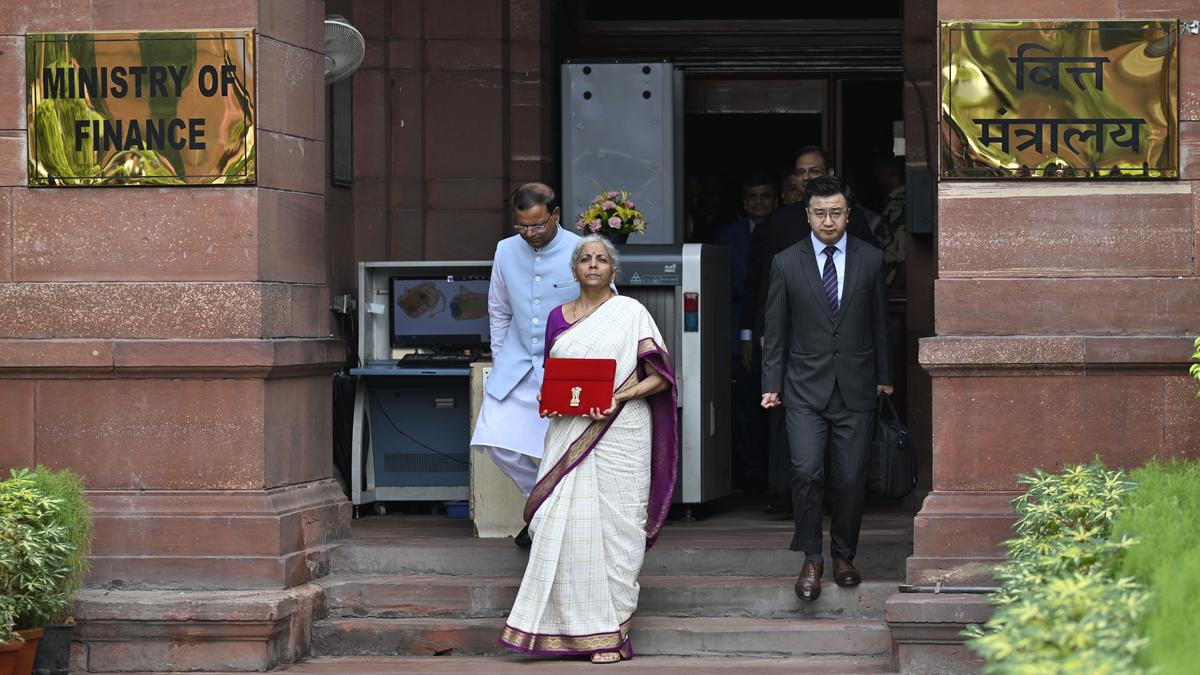
The WHO registry on polio — wild poliovirus and vaccine-derived poliovirus — is at best sketchy
| Photo Credit: VELANKANNI RAJ B

On June 17, 2022, WHO published a report of a VDPV type-1 case that was detected from an environmental sewage sample in Kolkata on April 25, 2022. The report said that genetic sequencing “established that it was not related to any of the previously identified VDPV1 viruses and was likely to be iVDPV (excreted from an immune-deficient individual)”. But nearly three months after the results of the Meghalaya polio case was shared with the WHO on August 12, and more than one-a-half-months after the follow-up results confirmed that the immunological profile of the child was normal and that there was no evidence that the virus was circulating in the community, WHO is yet to publish the details.

If the failure or delay by WHO in publishing the case details is puzzling, it has now come to light that besides not reporting vaccine-associated paralytic polio (VAPP) cases, the WHO registry does not report all categories of vaccine-derived poliovirus (VDPV) cases either. WHO classifies VDPV cases into: 1) circulating vaccine-derived polioviruses (cVDPVs), 2) immune-deficiency associated VDPV (iVDPV), and 3) ambiguous vaccine-derived polioviruses (aVDPVs). However, besides wild poliovirus cases, the WHO registry has data of only the circulating VDPV cases and not the cases that belong to the other two categories — iVDPV and aVDPV. In fact, the registry does not even list the other two VDPV categories, namely the iVDPV and ambiguous VDPV. Even in the case of the circulating VDPV cases, the WHO registry does not classify the cases based on poliovirus serotypes — type-1, type-2 or type-3. 

Like the WHO registry, the registry maintained by the Global Polio Eradication Initiative (GPEI), which is a public-private partnership led by national governments with six partners, including the WHO, also has data on only the circulating VDPVs and not the other two VDPV categories — immune-deficiency associated VDPV and ambiguous VDPV.

In the case of the wild poliovirus, the GPEI registry has data of confirmed human cases and environmental samples. In the case of the circulating VDPV cases too, in addition to circulating VDPV cases, the GPEI registry has data of environmental samples and other human sources that include contacts, healthy and community samples. Also, the GPEI database classifies the circulating VDPV cases as type-1, type-2 and type-3. However, while the WHO registry provides data of circulating VDPV cases globally and individual countries starting from 2000, the GPEI database has data of circulating VDPV cases and environmental samples of individual countries only for the last four years — 2021 to 2024. In the case of the wild poliovirus cases, the GEPI database has data only for the last seven years — 2018 to 2024.

As per a 2017 paper published in the journal Vaccine, the GPEI maintains a registry of iVDPV cases. However, the data of iVDPV cases in the GPEI registry is not made publicly available. Instead, the GPEI periodically publishes a list of iVDPV cases in the World Epidemiological Record (WER) and the U.S. CDC’s Morbidity and Mortality Weekly Report (MMWR). The last time GPEI shared the data of iVDPV cases was in July 2020 when 16 new iVDPV cases were reported from five countries — Argentina, Egypt, Iran, Philippines, and Tunisia — between July 2018 and December 2019. 

If GPEI has the data of all iVDPV cases, the WHO too should have the same data as all the WHO-accredited polio laboratories, which confirm both wild poliovirus and VDPV cases and classifies the VDPV cases into one of the three categories, report the results directly to the WHO. This raises important questions about WHO’s intent and its unwillingness to be transparent by sharing the data of immune-deficiency associated VDPV (iVDPV), and ambiguous VDPV cases on a real-time basis.

Unlike in the case of the inactivated polio vaccine (IPV), the oral polio vaccine (OPV) can sometimes cause polio. Instead of protecting the vaccinated children, OPV can sometimes cause polio —vaccine-associated paralytic poliomyelitis (VAPP) — in children who are vaccinated. This occurs when the live, weakened poliovirus used in OPV turns virulent within the body of the recently vaccinated child and causes polio. The live, weakened poliovirus used in OPV can also sometimes turn neurovirulent and cause polio in children who are not fully protected, and in children who are not immunocompetent. In the case of iVDPV, poliovirus can continue to replicate in an immunodeficient child and the iVDPV strain can be excreted for several months to years. In one case, an immunodeficient child was found excreting type-2 VDPV for 28 years.

“The risks posed by iVDPV strains and the prevalence of such cases globally are unknown so their relevance in the context of the GPEI endgame is not easy to assess,” says the 2015 PLOS Pathogens paper. WHO is well aware that iVDPV cases serve as potential reservoirs for neurovirulent VDPV strains and can pose a significant threat to the eradication campaign. This precisely is the reason why WHO does not share the data on iVDPV cases. 

Published – November 02, 2024 09:30 pm IST


Source link

Science

Post navigation

Previous Post: Study finds long-term dynamics of transplanted stem cells
Next Post: Odisha Medical College Expels 5 MBBS Students From Hostel For Ragging Juniors

Related Posts

  • Race for Sun heats up: These are various solar missions
    Race for Sun heats up: These are various solar missions Science
  • How an Indian can go to space for just .50
    How an Indian can go to space for just $2.50 Science
  • Airline pilots’ body calls attention to lithium battery fire risk | Explained
    Airline pilots’ body calls attention to lithium battery fire risk | Explained Science
  • Why do students fear math? | National Mathematics Day
    Why do students fear math? | National Mathematics Day Science
  • Leprosy spread between red squirrels and people in medieval England: study
    Leprosy spread between red squirrels and people in medieval England: study Science
  • Blue: the colour that moved kings before poets
    Blue: the colour that moved kings before poets Science

More Related Articles

DRDO achieves breakthrough in hypersonic missile development with long-duration scramjet test DRDO achieves breakthrough in hypersonic missile development with long-duration scramjet test Science
Patagonia cave paintings are earliest found in South America Patagonia cave paintings are earliest found in South America Science
IISc team finds ancient proteins that hint at life’s leap in complexity IISc team finds ancient proteins that hint at life’s leap in complexity Science
UK regulators rush to assess risks of latest Anthropic AI model: Report UK regulators rush to assess risks of latest Anthropic AI model: Report Science
Government clears 23 institutions to set up ‘quantum labs’ Government clears 23 institutions to set up ‘quantum labs’ Science
With Sci-Hub gone, will the ‘One Nation, One Subscription’ scheme step up? With Sci-Hub gone, will the ‘One Nation, One Subscription’ scheme step up? Science
SiteLock

Archives

  • May 2026
  • April 2026
  • March 2026
  • February 2026
  • January 2026
  • December 2025
  • November 2025
  • October 2025
  • September 2025
  • August 2025
  • July 2025
  • June 2025
  • May 2025
  • April 2025
  • March 2025
  • February 2025
  • January 2025
  • December 2024
  • November 2024
  • October 2024
  • September 2024
  • August 2024
  • July 2024
  • June 2024
  • May 2024
  • April 2024
  • March 2024
  • February 2024
  • January 2024
  • December 2023
  • November 2023
  • October 2023
  • September 2023
  • August 2023
  • July 2023
  • June 2023
  • May 2023
  • April 2023
  • March 2023
  • February 2023
  • January 2023
  • December 2022
  • November 2022
  • October 2022
  • September 2022
  • August 2022
  • July 2022
  • June 2022
  • May 2022

Categories

  • Business
  • Nation
  • Science
  • Sports
  • World

Recent Posts

  • BJP MLA Tapas Roy sworn in as Pro-tem Speaker of West Bengal Assembly
  • IMD unveils weather model to provide ‘block level’ forecast of monsoon journey
  • AI cannot replace human touch in nursing: Vizag MP
  • Amid economic recovery fuelled by worker remittances, Sri Lanka remains wary of West Asian conflict
  • Kuwait accuses Iran of sending armed Revolutionary Guard team to attack an island in nation

Recent Comments

  1. AaronPrido on UP Teacher Who Asked Students To Slap Muslim Classmate
  2. AaronThymn on UP Teacher Who Asked Students To Slap Muslim Classmate
  3. Matthewerano on UP Teacher Who Asked Students To Slap Muslim Classmate
  4. JorgeBousa on UP Teacher Who Asked Students To Slap Muslim Classmate
  5. Jamesemifs on UP Teacher Who Asked Students To Slap Muslim Classmate
  • Two militants arrested in Manipur
    Two militants arrested in Manipur Nation
  • “Virat Kohli Went Through…”: PV Sindhu, Struggling For Form Ahead Of Asian Games, Talks About Comeback
    “Virat Kohli Went Through…”: PV Sindhu, Struggling For Form Ahead Of Asian Games, Talks About Comeback Sports
  • Access Denied World
  • Access Denied World
  • On zoos and magnets: the physics behind sounds
    On zoos and magnets: the physics behind sounds Science
  • Chinnaswamy Crowd Goes Berserk As Virat Kohli Speaks Kannada At RCB Unbox Event. Watch
    Chinnaswamy Crowd Goes Berserk As Virat Kohli Speaks Kannada At RCB Unbox Event. Watch Sports
  • Study reveals alarming economic burden of TB treatment
    Study reveals alarming economic burden of TB treatment Science
  • Access Denied Business

Editor-in-Chief:
Mohammad Ariff,
MSW, MAJMC, BSW, DTL, CTS, CNM, CCR, CAL, RSL, ASOC.
editor@artifex.news

Associate Editors:
1. Zenellis R. Tuba,
zenelis@artifex.news
2. Haris Daniyel
daniyel@artifex.news

Photograher:
Rohan Das
rohan@artifex.news

Artifex.News offers Online Paid Internships to college students from India and Abroad. Interns will get a PRESS CARD and other online offers.
Send your CV (Subjectline: Paid Internship) to internship@artifex.news

Links:
Associate Journalism
About Us
Privacy Policy

News Links:
Breaking News
World
Nation
Sports
Business
Entertainment
Lifestyle

Registered Office:
72/A, Elliot Road, Kolkata - 700016
Tel: 033-22277777, 033-22172217
Email: office@artifex.news

Editorial Office / News Desk:
No. 13, Mezzanine Floor, Esplanade Metro Rail Station,
12 J. L. Nehru Road, Kolkata - 700069.
(Entry from Gate No. 5)
Tel: 033-46011099, 033-46046046
Email: editor@artifex.news

Copyright © 2023 Artifex.News Newsportal designed by Artifex Infotech.