
Skip to content
  • Facebook
  • X
  • Linkedin
  • WhatsApp
  • YouTube
  • Associate Journalism
  • About Us
  • Privacy Policy
  • 033-46046046
  • editor@artifex.news
Artifex.News

Artifex.News

Stay Connected. Stay Informed.

  • Breaking News
  • World
  • Nation
  • Sports
  • Business
  • Science
  • Entertainment
  • Lifestyle
  • Toggle search form
  • Access Denied Sports
  • Indian envoy calls on Bangladesh FM, discusses strengthening multifaceted bilateral relations
    Indian envoy calls on Bangladesh FM, discusses strengthening multifaceted bilateral relations World
  • Children Starve As Millions Of Gaza Inhabitants Face Famine Threat
    Children Starve As Millions Of Gaza Inhabitants Face Famine Threat World
  • Le Pen divides France in death; Interior Minister calls celebrations ‘shameful’
    Le Pen divides France in death; Interior Minister calls celebrations ‘shameful’ World
  • Congress’ Adhir Ranjan On INDIA Olive Branch
    Congress’ Adhir Ranjan On INDIA Olive Branch Nation
  • 7.1 magnitude earthquake hits Kathmandu, epicentre at China
    7.1 magnitude earthquake hits Kathmandu, epicentre at China World
  • Gurugram records second lowest turnout in Haryana polls despite special measures
    Gurugram records second lowest turnout in Haryana polls despite special measures Nation
  • Sri Lanka and rain allow South Africa only 80-4 on Day 1 of 1st test
    Sri Lanka and rain allow South Africa only 80-4 on Day 1 of 1st test Sports
Polluting shipwrecks are a ticking time-bomb at the bottom of our oceans

Polluting shipwrecks are a ticking time-bomb at the bottom of our oceans

Posted on December 18, 2024 By admin


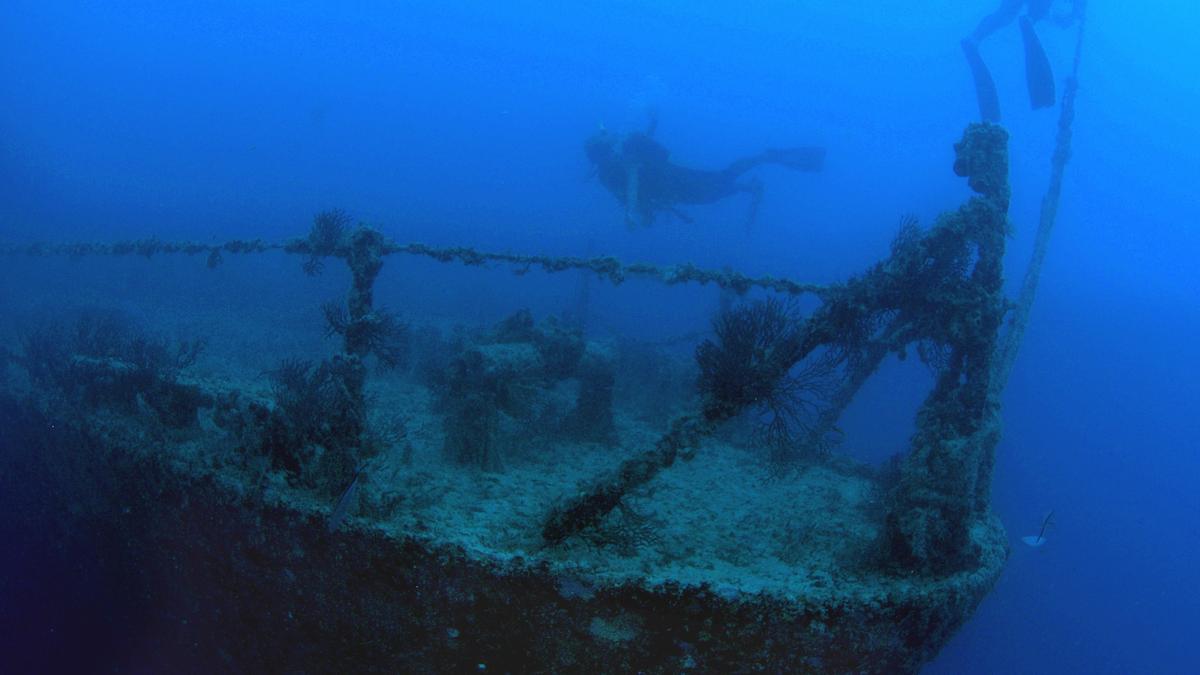
At the bottom of the oceans and seas lie more than 8,500 shipwrecks from two world wars. These wrecks have been estimated to contain as much as 6 billion gallons of oil, as well as munitions, toxic heavy metals and even chemical weapons.

For decades, these wrecks have largely lain out of sight and out of mind. But all this time, their structures have been degrading, inexorably increasing the chances of sudden releases of toxic substances into the marine environment.

In parts of the globe, climate change is exacerbating this risk. Rising ocean temperatures, acidification and increasing storminess accelerate the breakdown of these wrecks.

Of course, wrecks from the world wars are far from the only ones to be found at the bottom of the sea, with many others adding to the problem. The cost of addressing this global issue has been estimated at US$340 billion (£261 billion).

How many of these wrecks pose a threat to people’s safety, to coastal communities and to the environment? What can be done – and why haven’t we done it sooner?

Mapping the problem

The raw figures in dollars and the numbers of wrecks on the map rightly cause concern. Work by researchers such as Paul Heersink have drawn together different datasets to help visualise the scale of the challenge. Yet these figures, and the position of dots on maps, may also give a false sense of certainty.

It remains the case that the world’s oceans and seas are not as well mapped as we would like, with about 23% having been described and mapped in detail. Even that level of detail often falls short of what we need to positively identify a wreck, let alone determine the risk it might pose.

There is an ongoing global push to improve our mapping of ocean space under the auspices of the Seabed 2030 project, which is looking to reach a universal resolution of 100x100m. That means one “pixel” of information would be equivalent to about two football pitches. This will be transformative for our understanding of the ocean floor, but will not reveal the detail of all those things that you could hide within those two football pitches (which includes quite a few wrecks).

Many of the wrecks that may pose the greatest problems are found in shallower coastal waters, where government mapping initiatives and work by industry provide much higher resolutions, yet still the challenge of identification remains.

What about archival records? Historical records, such as those held by Lloyd’s Register Foundation in London, are fundamental to bringing greater certainty to the scale and nature of the challenge. They contain the details of ship structures, cargos carried and last known positions prior to loss.

The accuracy of those positions, however, is variable, meaning that knowing exactly where on the seabed a wreck might be, and so how to survey it and assess its risk, is not straightforward. This is placed in stark relief by the work of British maritime archaeologist Innes McCartney and oceanographer Mike Roberts, whose detailed geophysical and archival investigations in the Irish Sea demonstrated that historic wrecks have been frequently misattributed and mislocated. This means that the dots on the map are often in the wrong places, and up to 60% can be sitting in unknown locations on the sea floor.

A race against time

Most of the wrecks causing greatest concern are of metal, or metal and wood construction. The steel in these wrecks is slowly degrading, increasing the chance of cargos being spilt, and components breaking down. However, this is only part of the risk.

The sea is becoming an ever busier place, as we carry out more intensive fishing and ramp up the construction of offshore wind farms and other energy installations to meet net zero commitments. These all affect the seabed and can physically disturb or change the dynamics of wreck sites.

There is increasing global recognition of the need to address this problem. It has remained unresolved to date because of the complex international and interdisciplinary challenge it poses.

Many of the wrecks lie in waters off countries that have nothing to do with the original owner of the ship. How then, do we determine who is responsible? And who pays for the clean-up – especially when the original owner benefits from the legal loophole of sovereign immunity? Under this concept, the flag State (the country where the ship is registered) cannot be held responsible under international law and therefore is not legally obliged to pay up.

Beyond these fundamental questions of responsibility, there are technical challenges. It’s difficult to know exactly how many wrecks of concern there are, and how to locate them. So how do we assess their condition and determine if intervention is needed? And if so, how do we intervene?

Each of these questions is a complex challenge, and solving them requires the contributions of historians, archaeologists, engineers, biologists, geophysicists, geochemists, hydrographic surveyors, geospatial data analysts and engineers.

This has already been happening, with regional projects making critical headway and demonstrating what can be achieved. However, the immense scale of the problem outweighs the amount of work done to date.

New technologies are clearly critical, as are new attitudes. At the heart of the problem is an issue of knowledge and certainty – is this the wreck we think it is, does it pose a problem and if so, over what time scale?

Advances in subsea drones known as Autonomous Underwater Vehicles (AUVs), which are fitted with an array of sensors to measure the seabed and detect pollutants, could help enhance our knowledge about the locations of wrecks, what they’re carrying and their state of deterioration. AUVs can provide relatively cheap, high resolution data that produces fewer emissions than a comparable survey campaign conducted from a large research vessel.

But we also need to share that information, and compare it with data from archives to help generate knowledge and higher levels of certainty. Too often, underwater surveys and investigations occur in silos, with data held by individual agencies or companies, preventing a rapid and cumulative increase in understanding.

The severity of the environmental and safety risk posed by wrecks on the ocean floor, and how it changes over time, is not fully known. But this is a problem we can solve.

Action is needed now, driven by a robust regulatory and funding framework, and technical standards for remediation. A global partnership – codenamed Project Tangaroa – has been convened to stimulate that framework – but political will and financing is required to make it a reality.

Through targeted archival and survey work, and by sharing data and ideas, we can chart a course to a future where the sea is not a place where we ignore things today that will threaten us tomorrow.

This article is republished from The Conversation under a Creative Commons license. Read the original article here.

Published – December 18, 2024 04:34 pm IST


Source link

Science Tags:climate news, Marine environment, Marine news, Shipwrecks, Shipwrecks pollution

Post navigation

Previous Post: “Mereko Marwaoge…”: Rohit Sharma’s Reply After Cheteshwar Pujara, Ajinkya Rahane ‘Retirement Mistake’ Is Viral
Next Post: Australia Pacer Mitchell Starc Left Visibly Annoyed By Repeated Rain Delays, Pleads To Umpire. Watch

Related Posts

  • What is ‘lunarcrete’?
    What is ‘lunarcrete’? Science
  • Finally, physicists have a way to ‘see’ inside short-lived nuclei
    Finally, physicists have a way to ‘see’ inside short-lived nuclei Science
  • First LVM3 launch vehicle equipped with semi-cryogenic stage slated to fly in 2027
    First LVM3 launch vehicle equipped with semi-cryogenic stage slated to fly in 2027 Science
  • In Delhi study, ragas in the operation theatre cut anaesthesia use
    In Delhi study, ragas in the operation theatre cut anaesthesia use Science
  • Facts alone fall short in correcting science misinformation
    Facts alone fall short in correcting science misinformation Science
  • SpaceX took oxygen leak before Axiom-4 launch ‘lightly’: ISRO Chairman
    SpaceX took oxygen leak before Axiom-4 launch ‘lightly’: ISRO Chairman Science

More Related Articles

2024 physics Nobel for work on artificial neural networks | Explained 2024 physics Nobel for work on artificial neural networks | Explained Science
Astrophysicist Dipankar Banerjee takes charge as director of Indian Institute of Space Science and Technology Astrophysicist Dipankar Banerjee takes charge as director of Indian Institute of Space Science and Technology Science
Glacial lakes rise as glaciers retreat Glacial lakes rise as glaciers retreat Science
ISRO, AIIMS sign MoU for cooperation in space medicine and research ISRO, AIIMS sign MoU for cooperation in space medicine and research Science
Boeing’s empty capsule back to Earth soon; Sunita Williams, Butch Wilmore stay aboard Boeing’s empty capsule back to Earth soon; Sunita Williams, Butch Wilmore stay aboard Science
Science for all: Moss spores survive space exposure, challenging life’s bounds Science for all: Moss spores survive space exposure, challenging life’s bounds Science
SiteLock

Archives

  • May 2026
  • April 2026
  • March 2026
  • February 2026
  • January 2026
  • December 2025
  • November 2025
  • October 2025
  • September 2025
  • August 2025
  • July 2025
  • June 2025
  • May 2025
  • April 2025
  • March 2025
  • February 2025
  • January 2025
  • December 2024
  • November 2024
  • October 2024
  • September 2024
  • August 2024
  • July 2024
  • June 2024
  • May 2024
  • April 2024
  • March 2024
  • February 2024
  • January 2024
  • December 2023
  • November 2023
  • October 2023
  • September 2023
  • August 2023
  • July 2023
  • June 2023
  • May 2023
  • April 2023
  • March 2023
  • February 2023
  • January 2023
  • December 2022
  • November 2022
  • October 2022
  • September 2022
  • August 2022
  • July 2022
  • June 2022
  • May 2022

Categories

  • Business
  • Nation
  • Science
  • Sports
  • World

Recent Posts

  • Xi warns Trump Taiwan issue could lead to ‘conflict’ as U.S.-China summit starts
  • New pop-ups and menus to try in Bengaluru this May
  • Congress MLA-elects make a beeline for Indira Bhavan as AICC inches closer to announcing its Chief Minister pick for Kerala
  • Woman gang-raped in sleeper bus in New Delhi
  • Lebanon, Israel to hold new talks in U.S. as ceasefire nears end

Recent Comments

  1. Davidcag on UP Teacher Who Asked Students To Slap Muslim Classmate
  2. OrvalMaync on UP Teacher Who Asked Students To Slap Muslim Classmate
  3. Jeffreyroure on UP Teacher Who Asked Students To Slap Muslim Classmate
  4. Stevemonge on UP Teacher Who Asked Students To Slap Muslim Classmate
  5. RichardClage on UP Teacher Who Asked Students To Slap Muslim Classmate
  • Skydiving Student, Instructor Die In US After Hitting “Dust Devil” During Routine Jump
    Skydiving Student, Instructor Die In US After Hitting “Dust Devil” During Routine Jump World
  • Bank of America agrees to pay .5 million to settle Epstein accusers’ lawsuit
    Bank of America agrees to pay $72.5 million to settle Epstein accusers’ lawsuit Business
  • After New Zealand Humiliation, Virat Kohli And Rohit Sharma Given “Should Retire” Verdict If…
    After New Zealand Humiliation, Virat Kohli And Rohit Sharma Given “Should Retire” Verdict If… Sports
  • R Ashwin Surpasses Anil Kumble For Unique Record In Test Cricket
    R Ashwin Surpasses Anil Kumble For Unique Record In Test Cricket Sports
  • How does the Indian harmonium produce its lively music?
    How does the Indian harmonium produce its lively music? Science
  • Access Denied World
  • The first ship to use a new sea route approaches Gaza with 200 tons of aid
    The first ship to use a new sea route approaches Gaza with 200 tons of aid World
  • “It does not seem that this is the work of one person”: Former NCW chief Rekha Sharma on Kolkata doctor rape-murder case
    “It does not seem that this is the work of one person”: Former NCW chief Rekha Sharma on Kolkata doctor rape-murder case Nation

Editor-in-Chief:
Mohammad Ariff,
MSW, MAJMC, BSW, DTL, CTS, CNM, CCR, CAL, RSL, ASOC.
editor@artifex.news

Associate Editors:
1. Zenellis R. Tuba,
zenelis@artifex.news
2. Haris Daniyel
daniyel@artifex.news

Photograher:
Rohan Das
rohan@artifex.news

Artifex.News offers Online Paid Internships to college students from India and Abroad. Interns will get a PRESS CARD and other online offers.
Send your CV (Subjectline: Paid Internship) to internship@artifex.news

Links:
Associate Journalism
About Us
Privacy Policy

News Links:
Breaking News
World
Nation
Sports
Business
Entertainment
Lifestyle

Registered Office:
72/A, Elliot Road, Kolkata - 700016
Tel: 033-22277777, 033-22172217
Email: office@artifex.news

Editorial Office / News Desk:
No. 13, Mezzanine Floor, Esplanade Metro Rail Station,
12 J. L. Nehru Road, Kolkata - 700069.
(Entry from Gate No. 5)
Tel: 033-46011099, 033-46046046
Email: editor@artifex.news

Copyright © 2023 Artifex.News Newsportal designed by Artifex Infotech.