



Skip to content
  • Facebook
  • X
  • Linkedin
  • WhatsApp
  • YouTube
  • Associate Journalism
  • About Us
  • Privacy Policy
  • 033-46046046
  • editor@artifex.news
Artifex.News

Artifex.News

Stay Connected. Stay Informed.

  • Breaking News
  • World
  • Nation
  • Sports
  • Business
  • Science
  • Entertainment
  • Lifestyle
  • Toggle search form
  • Mamata Banerjee Questions Revised Poll Figures
    Mamata Banerjee Questions Revised Poll Figures Nation
  • Delhi Capitals unlikely to continue with Ricky Ponting as head coach
    Delhi Capitals unlikely to continue with Ricky Ponting as head coach Sports
  • Akali Dal Leader Surjit Singh Shot Dead In Punjab Hoshiarpur: Cops
    Akali Dal Leader Surjit Singh Shot Dead In Punjab Hoshiarpur: Cops Nation
  • Access Denied Sports
  • Huge T20 World Cup Betting Racket Busted In Madhya Pradesh, Gang Dealt In Dollars, Pounds, Dirhams
    Huge T20 World Cup Betting Racket Busted In Madhya Pradesh, Gang Dealt In Dollars, Pounds, Dirhams Nation
  • Access Denied
    Access Denied Nation
  • Access Denied Sports
  • Telangana Man Run Over By Truck After Being ‘Kicked’ By Government Officer, Dies
    Telangana Man Run Over By Truck After Being ‘Kicked’ By Government Officer, Dies Nation
New AI model ‘GenCast’ can beat the best traditional weather forecasts

New AI model ‘GenCast’ can beat the best traditional weather forecasts

Posted on December 12, 2024 By admin


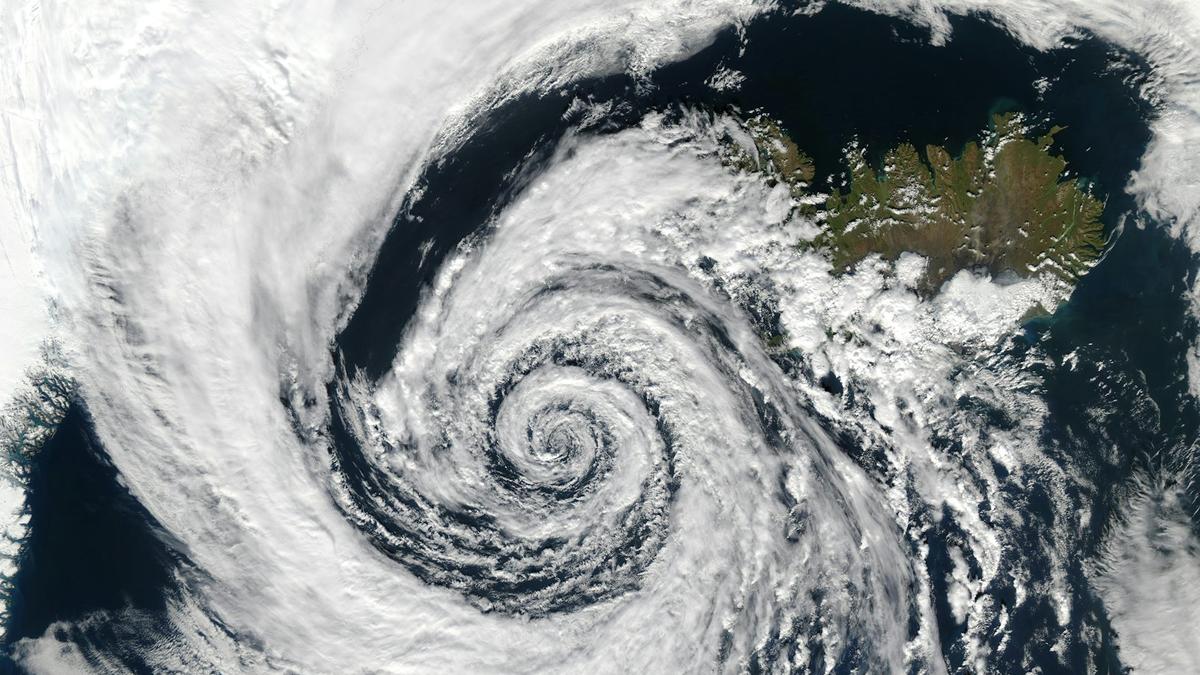
A new machine-learning weather prediction model called GenCast can outperform the best traditional forecasting systems in at least some situations, according to a new paper.
| Photo Credit: NASA/GSFC, MODIS Rapid Response Team, Jacques Descloitres

A new machine-learning weather prediction model called GenCast can outperform the best traditional forecasting systems in at least some situations, according to a paper by Google DeepMind researchers published today in Nature.

Using a diffusion model approach similar to artificial intelligence (AI) image generators, the system generates multiple forecasts to capture the complex behaviour of the atmosphere. It does so with a fraction of the time and computing resources required for traditional approaches.

How weather forecasts work

The weather predictions we use in practice are produced by running multiple numerical simulations of the atmosphere.

Each simulation starts from a slightly different estimate of the current weather. This is because we don’t know exactly what the weather is at this instant everywhere in the world. To know that, we would need sensor measurements everywhere.

These numerical simulations use a model of the world’s atmosphere divided into a grid of three-dimensional blocks. By solving equations describing the fundamental physical laws of nature, the simulations predict what will happen in the atmosphere.

Known as general circulation models, these simulations need a lot of computing power. They are usually run at high-performance supercomputing facilities.

Machine-learning the weather

The past few years have seen an explosion in efforts to produce weather prediction models using machine learning. Typically, these approaches don’t incorporate our knowledge of the laws of nature the way general circulation models do.

Most of these models use some form of neural network to learn patterns in historical data and produce a single future forecast. However, this approach produces predictions that lose detail as they progress into the future, gradually becoming “smoother”. This smoothness is not what we see in real weather systems.

Researchers at Google’s DeepMind AI research lab have just published a paper in Nature describing their latest machine-learning model, GenCast.

GenCast mitigates this smoothing effect by generating an ensemble of multiple forecasts. Each individual forecast is less smooth, and better resembles the complexity observed in nature.

The best estimate of the actual future then comes from averaging the different forecasts. The size of the differences between the individual forecasts indicates how much uncertainty there is.

According to the GenCast paper, this probabilistic approach creates more accurate forecasts than the best numerical weather prediction system in the world – the one at the European Centre for Medium-Range Weather Forecasts.

Generative AI – for weather

GenCast is trained on what is called reanalysis data from the years 1979 to 2018. This data is produced by the kind of general circulation models we talked about earlier, which are additionally corrected to resemble actual historical weather observations to produce a more consistent picture of the world’s weather.

The GenCast model makes predictions of several variables such as temperature, pressure, humidity and wind speed at the surface and at 13 different heights, on a grid that divides the world up into 0.25-degree regions of latitude and longitude.

GenCast is what is called a “diffusion model”, similar to AI image generators. However, instead of taking text and producing an image, it takes the current state of the atmosphere and produces an estimate of what it will be like in 12 hours.

This works by first setting the values of the atmospheric variables 12 hours into the future as random noise. GenCast then uses a neural network to find structures in the noise that are compatible with the current and previous weather variables. An ensemble of multiple forecasts can be generated by starting with different random noise.

Forecasts are run out to 15 days, taking 8 minutes on a single processor called a tensor processor unit (TPU). This is significantly faster than a general circulation model. The training of the model took five days using 32 TPUs.

Machine-learning forecasts could become more widespread in the coming years as they become more efficient and reliable.

However, classical numerical weather prediction and reanalysed data will still be required. Not only are they needed to provide the initial conditions for the machine learning weather forecasts, they also produce the input data to continually fine-tune the machine learning models.

What about the climate?

Current machine learning weather forecasting systems are not appropriate for climate projections, for three reasons.

Firstly, to make weather predictions weeks into the future, you can assume that the ocean, land and sea ice won’t change. This is not the case for climate predictions over multiple decades.

Secondly, weather prediction is highly dependent on the details of the current weather. However, climate projections are concerned with the statistics of the climate decades into the future, for which today’s weather is irrelevant. Future carbon emissions are the greater determinant of the future state of the climate.

Thirdly, weather prediction is a “big data” problem. There are vast amounts of relevant observational data, which is what you need to train a complex machine learning model.

Climate projection is a “small data” problem, with relatively little available data. This is because the relevant physical phenomena (such as sea levels or climate drivers such as the El Niño–Southern Oscillation) evolve much more slowly than the weather.

There are ways to address these problems. One approach is to use our knowledge of physics to simplify our models, meaning they require less data for machine learning.

Another approach is to use physics-informed neural networks to try to fit the data and also satisfy the laws of nature. A third is to use physics to set “ground rules” for a system, then use machine learning to determine the specific model parameters.

Machine learning has a role to play in the future of both weather forecasting and climate projections. However, fundamental physics – fluid mechanics and thermodynamics – will continue to play a crucial role.

This article is republished from The Conversation under a Creative Commons license. Read the original article here.

Published – December 12, 2024 03:19 pm IST


Source link

Science Tags:artificial intelligence, Environment news, GenCast, Machine learning, science news, using AI to predict weather

Post navigation

Previous Post: South Korean Opposition parties submit a new motion to impeach President Yoon over martial law
Next Post: Indian team prepares at The Gabba ahead of third Border-Gavaskar Trophy Test

Related Posts

  • How the Kosi’s shifting course exposes the perils of embankments
    How the Kosi’s shifting course exposes the perils of embankments Science
  • What causes landslides? Can we predict them to save lives?
    What causes landslides? Can we predict them to save lives? Science
  • Science Quiz: Kindness in the animal kingdom
    Science Quiz: Kindness in the animal kingdom Science
  • India and the second Space Age
    India and the second Space Age Science
  • Team at Kolkata institute engineers bacteria to solve maths problems
    Team at Kolkata institute engineers bacteria to solve maths problems Science
  • ICMR to develop evidence-based guidelines for antibiotic use in respiratory infections, pneumonia
    ICMR to develop evidence-based guidelines for antibiotic use in respiratory infections, pneumonia Science

More Related Articles

What is Siberian High? – The Hindu What is Siberian High? – The Hindu Science
Prevalence of NCDs tripled, infectious diseases doubled since 1995 Prevalence of NCDs tripled, infectious diseases doubled since 1995 Science
The Hindu Daily Quiz, April 8 2024 | On Superconductors The Hindu Daily Quiz, April 8 2024 | On Superconductors Science
What happened to ISRO’s PSLV-C62 mission? | Explained What happened to ISRO’s PSLV-C62 mission? | Explained Science
Is BSF’s idea to have reptiles in the water along Bangladesh border sound? Is BSF’s idea to have reptiles in the water along Bangladesh border sound? Science
ISRO demonstrates boot-strap mode start on CE20 cryogenic engine ISRO demonstrates boot-strap mode start on CE20 cryogenic engine Science
SiteLock

Archives

  • May 2026
  • April 2026
  • March 2026
  • February 2026
  • January 2026
  • December 2025
  • November 2025
  • October 2025
  • September 2025
  • August 2025
  • July 2025
  • June 2025
  • May 2025
  • April 2025
  • March 2025
  • February 2025
  • January 2025
  • December 2024
  • November 2024
  • October 2024
  • September 2024
  • August 2024
  • July 2024
  • June 2024
  • May 2024
  • April 2024
  • March 2024
  • February 2024
  • January 2024
  • December 2023
  • November 2023
  • October 2023
  • September 2023
  • August 2023
  • July 2023
  • June 2023
  • May 2023
  • April 2023
  • March 2023
  • February 2023
  • January 2023
  • December 2022
  • November 2022
  • October 2022
  • September 2022
  • August 2022
  • July 2022
  • June 2022
  • May 2022

Categories

  • Business
  • Nation
  • Science
  • Sports
  • World

Recent Posts

  • Israel-Iran war LIVE: Iran working on Hormuz ‘protocol’ to cover ‘costs’, says Dy FM Gharibabadi
  • Russia to fulfil all agreements on energy supply to India: FM Lavrov
  • Maruti Suzuki crosses 3 million vehicle dispatches through railways, eyes 35% share by rail
  • Delhi High Court rejects plea against tax exemption for agricultural income in Capital
  • Delhi High Court refuses to entertain PIL to prevent suicides

Recent Comments

  1. Jeffreyroure on UP Teacher Who Asked Students To Slap Muslim Classmate
  2. Stevemonge on UP Teacher Who Asked Students To Slap Muslim Classmate
  3. RichardClage on UP Teacher Who Asked Students To Slap Muslim Classmate
  4. StevenLek on UP Teacher Who Asked Students To Slap Muslim Classmate
  5. Leonardren on UP Teacher Who Asked Students To Slap Muslim Classmate
  • SBI Q2 net profit jumps 23% to ₹19,782 cr
    SBI Q2 net profit jumps 23% to ₹19,782 cr Business
  • Access Denied Sports
  • Webb telescope observes violence around Milky Way’s central black hole
    Webb telescope observes violence around Milky Way’s central black hole Science
  • T20 World Cup: Main theme is to be adaptable and ready for any situation, says Van Beek
    T20 World Cup: Main theme is to be adaptable and ready for any situation, says Van Beek Sports
  • China, Russia start joint naval drills, days after NATO allies called Beijing a Ukraine war enabler
    China, Russia start joint naval drills, days after NATO allies called Beijing a Ukraine war enabler World
  • Video Of Passenger’s Heated Argument With Lufthansa Staff In Delhi Goes Viral, Airline Reacts
    Video Of Passenger’s Heated Argument With Lufthansa Staff In Delhi Goes Viral, Airline Reacts Nation
  • Study traces the route of Ebola virus to the skin surface
    Study traces the route of Ebola virus to the skin surface Science
  • Russia says exchanged 75 captured servicemen with Ukraine
    Russia says exchanged 75 captured servicemen with Ukraine World

Editor-in-Chief:
Mohammad Ariff,
MSW, MAJMC, BSW, DTL, CTS, CNM, CCR, CAL, RSL, ASOC.
editor@artifex.news

Associate Editors:
1. Zenellis R. Tuba,
zenelis@artifex.news
2. Haris Daniyel
daniyel@artifex.news

Photograher:
Rohan Das
rohan@artifex.news

Artifex.News offers Online Paid Internships to college students from India and Abroad. Interns will get a PRESS CARD and other online offers.
Send your CV (Subjectline: Paid Internship) to internship@artifex.news

Links:
Associate Journalism
About Us
Privacy Policy

News Links:
Breaking News
World
Nation
Sports
Business
Entertainment
Lifestyle

Registered Office:
72/A, Elliot Road, Kolkata - 700016
Tel: 033-22277777, 033-22172217
Email: office@artifex.news

Editorial Office / News Desk:
No. 13, Mezzanine Floor, Esplanade Metro Rail Station,
12 J. L. Nehru Road, Kolkata - 700069.
(Entry from Gate No. 5)
Tel: 033-46011099, 033-46046046
Email: editor@artifex.news

Copyright © 2023 Artifex.News Newsportal designed by Artifex Infotech.