


Skip to content
  • Facebook
  • X
  • Linkedin
  • WhatsApp
  • YouTube
  • Associate Journalism
  • About Us
  • Privacy Policy
  • 033-46046046
  • editor@artifex.news
Artifex.News

Artifex.News

Stay Connected. Stay Informed.

  • Breaking News
  • World
  • Nation
  • Sports
  • Business
  • Science
  • Entertainment
  • Lifestyle
  • Toggle search form
  • Access Denied
    Access Denied Nation
  • “Disheartening”: India Blind Cricket Team Captain Breaks Silence On T20 World Cup Row
    “Disheartening”: India Blind Cricket Team Captain Breaks Silence On T20 World Cup Row Sports
  • Access Denied Business
  • Rupee rises 9 paise to close at 82.94 against U.S. dollar
    Rupee rises 9 paise to close at 82.94 against U.S. dollar Business
  • Sacked India Coach Igor Stimac Lashes Out At AIFF, Calls Indian Football ‘Imprisoned’
    Sacked India Coach Igor Stimac Lashes Out At AIFF, Calls Indian Football ‘Imprisoned’ Sports
  • Access Denied Sports
  • Access Denied Sports
  • Passport Seva Kendra To Be Opened In Each Lok Sabha Constituency: Scindia
    Passport Seva Kendra To Be Opened In Each Lok Sabha Constituency: Scindia Nation
Study ups oft-smuggled Indian star tortoise’s conservation prospects

Study ups oft-smuggled Indian star tortoise’s conservation prospects

Posted on December 9, 2024 By admin


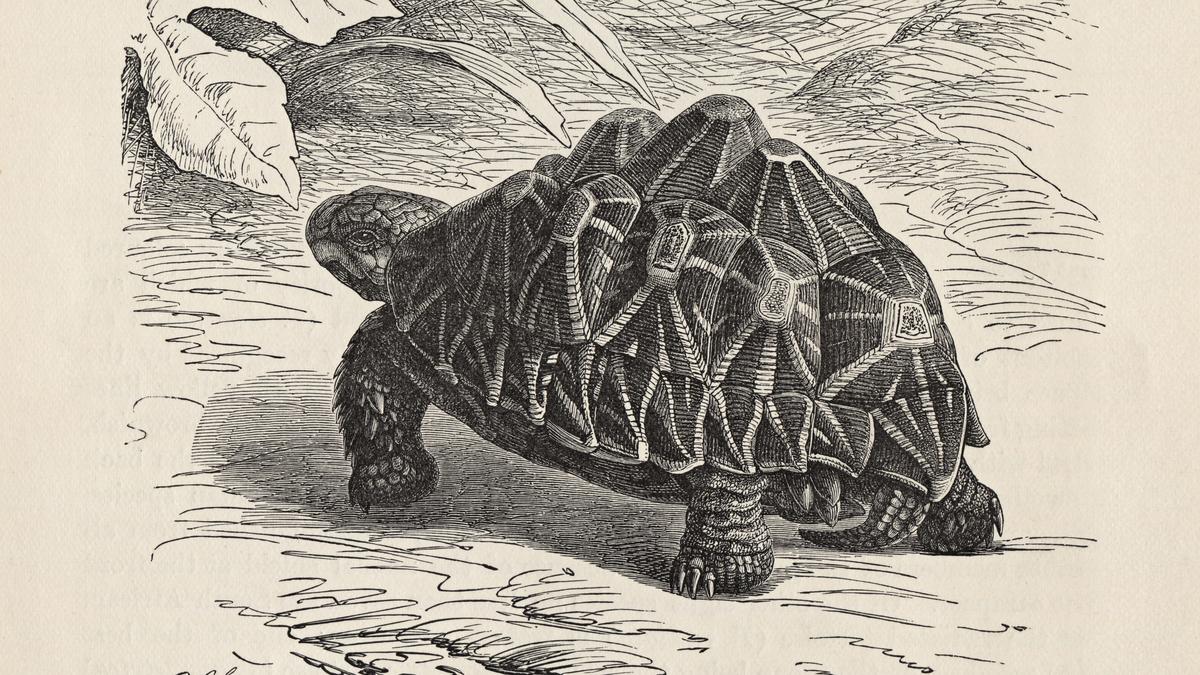
The Indian star tortoise (Geochelone elegans) is a sight to behold, with its obsidian shell and the striking Sun-yellow star patterns adorning it. These tortoises are hardy herbivores and are popular as exotic house pets — but they shouldn’t be. It’s illegal to own one in India but also unethical since they are vulnerable in the wild.

Endemic to the subcontinent, Indian star tortoises reside in arid pockets of northwest India (bordering Pakistan), South India, and Sri Lanka. However, members of the species have also been found in people’s homes as far afield as Canada and the U.S. The increasing demand for them as pets has entangled them in one of the largest global wildlife trafficking networks.

The Indian star tortoise is listed in Appendix I of the Convention on International Trade in Endangered Species of Wild Fauna and Flora (CITES) and in Schedule I of the Wildlife (Protection) Act 1972, which provides the highest level of protection to animals in Indian law. Despite this, officials have already seized hundreds of tortoises being smuggled through the Chennai and Singapore airports and across the India-Bangladesh border this year.

Wildlife biologist Sneha Dharwadkar, cofounder of an NGO called Freshwater Turtles and Tortoises of India, is worried unscientific releases of the seized tortoises could worsen their fate. “We can no longer simply take confiscated tortoises and release them in nearby forests,” Dharwadkar wrote in an email.

To find an alternative, researchers from the Wildlife Institute of India and Panjab University explored the diversity and natural distribution in India by sequencing the genomes of Indian star tortoise in zoos, wildlife reserves, and protected areas.

The study identified two genetically distinct groups of Indian star tortoises: northwestern and southern.

The genetic divergences showed up as differences in physical features that could inform strategies on where and how to release and conserve rescued tortoises, Subhasree Sahoo, a PhD student at the Wildlife Institute of India, Dehradun, and first author of the study, said.

Same but different

Millions of years ago, Geochelone, the group that includes the Indian star tortoise, spread across the Indian subcontinent after the latter split from the Gondwana supercontinent and collided with Eurasia.

Over time, parts of the subcontinent became arid and encouraged the growth of savannahs and open grasslands in northwestern and peninsular India, which are now the tortoises’ natural habitats.

But the creation and expansion of savannahs came at the expense of humid forests: the increasingly seasonal nature of the monsoons restricted them to parts of southwest India and Sri Lanka. This separation of humid and dry areas paralleled the splitting of the tortoises into northern and southern groups about 2 million years ago.

To find genetic evidence of this split, the researchers of the new study collected tortoise tissue samples from 14 locations.

“These tortoises are very rare to encounter, so I chose the rainy season because that’s the breeding season. They’re the most active. That’s also what poachers do,” Sahoo said. With the help of frontline forest staff and local communities living near the tortoises’ natural range, she was able to collect 38 samples from northwestern India and 44 from southern India.

Researchers prefer tortoises’ blood samples for genetic testing but even small mistakes when drawing blood can cause profuse bleeding. This is manageable in controlled environments like zoos or wildlife reserves, and less so in the wild.

“When I was in Kakatiya Zoo in Telangana, a zookeeper told me, ‘Madam, why do you want to take blood? You can take the scutes, right? They come off very easily’,” Sahoo said. Scutes are keratin layers found on the tortoises’ limbs, neck, and shell. “I peeled off some scute from the zoo in Kakatiya and tested [it] in the lab, and it worked just fine.”

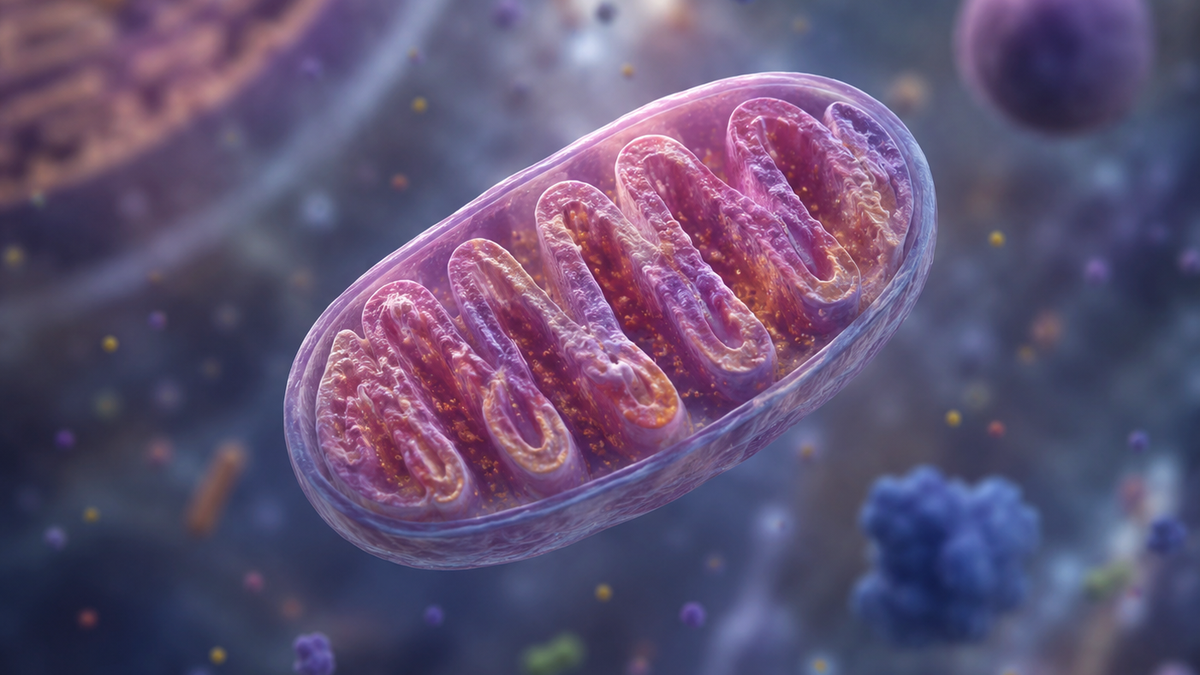
Once collected, the researchers extracted DNA from the tissue samples. Then they sequenced the mitochondrial genes cytochrome B and NADH dehydrogenase 4. The gene for cytochrome B is highly conserved and used to identify subspecies-level differentiation and later to detect smaller genetic variations between the samples.

The searchers also screened 10 microsatellite markers: short DNA sequences that repeat in a particular location in the genome. They serve as a genome’s fingerprint and are helpful to identify how individuals of the same species are related, how they mate, and recent changes in their population.

The results revealed that even after illegal poaching and unscientific releases, the northwestern group remains largely genetically unchanged whereas the southern group is highly diverse.

“For a long time, on-ground practitioners have suspected the presence of at least two evolutionarily significant units, or ESUs — populations of organisms considered distinct for conservation purposes,” Dharwadkar said. “This paper provides a reliable confirmation of that.”

Restoring natural order

Sandeep Kumar Gupta, nodal officer at the Wildlife Institute of India, Dehradun, and corresponding author of the study said that since different Indian star tortoises are found in different areas, it’s crucial to not mix the populations during release. Doing so might lower their genetic diversity and depress breeding rates.

Sahoo also raised the concern of shell-pyramiding in captive-bred star tortoises. These tortoises develop pyramid-shaped shells instead of the dome-like shells in the wild due to nutritional deficiencies, and can further complicate mating and breeding issues.

Gupta also emphasised greater public awareness of the legality of keeping certain species as pets and the importance of adhering to national laws on this front. Overall, the team expressed belief in its paper that the findings could benefit both national and international agencies with evidence-based conservation of the Indian star tortoise.

Sanjukta Mondal is a chemist-turned-science-writer with experience in writing popular science articles and scripts for STEM YouTube channels.

Published – December 09, 2024 05:30 am IST


Source link

Science

Post navigation

Previous Post: Study ups oft-smuggled Indian star tortoise’s conservation prospects
Next Post: Two held for job visa fraud

Related Posts

  • Upper stage of historic PSLV-37 mission re-enters atmosphere 8 years after launch: ISRO
    Upper stage of historic PSLV-37 mission re-enters atmosphere 8 years after launch: ISRO Science
  • SHAR expo at Andhra Loyola College on August 29
    SHAR expo at Andhra Loyola College on August 29 Science
  • Capturing sunlight in a bottle and using it when needed
    Capturing sunlight in a bottle and using it when needed Science
  • Science Snapshots: May 31, 2026
    Science Snapshots: May 31, 2026 Science
  • BITS Pilani Hyderabad scientists develop smart wound dressing to kill infection-causing bacteria
    BITS Pilani Hyderabad scientists develop smart wound dressing to kill infection-causing bacteria Science
  • What is a superkilonova?
    What is a superkilonova? Science

More Related Articles

The evolutionary history of flowering plants are threatened with extinction The evolutionary history of flowering plants are threatened with extinction Science
H5N1 outbreak: route of mammalian transmission among cattle unclear H5N1 outbreak: route of mammalian transmission among cattle unclear Science
Egypt is racing to eliminate hepatitis C Egypt is racing to eliminate hepatitis C Science
Explained | After Chandrayaan-3, what has ISRO planned? Explained | After Chandrayaan-3, what has ISRO planned? Science
How an altered protein and fussy neurons conspire to cause microcephaly How an altered protein and fussy neurons conspire to cause microcephaly Science
Watch: India’s renewables push is incomplete; here’s why: the storage challenge Watch: India’s renewables push is incomplete; here’s why: the storage challenge Science
SiteLock

Archives

  • September 2026
  • August 2026
  • July 2026
  • June 2026
  • May 2026
  • April 2026
  • March 2026
  • February 2026
  • January 2026
  • December 2025
  • November 2025
  • October 2025
  • September 2025
  • August 2025
  • July 2025
  • June 2025
  • May 2025
  • April 2025
  • March 2025
  • February 2025
  • January 2025
  • December 2024
  • November 2024
  • October 2024
  • September 2024
  • August 2024
  • July 2024
  • June 2024
  • May 2024
  • April 2024
  • March 2024
  • February 2024
  • January 2024
  • December 2023
  • November 2023
  • October 2023
  • September 2023
  • August 2023
  • July 2023
  • June 2023
  • May 2023
  • April 2023
  • March 2023
  • February 2023
  • January 2023
  • December 2022
  • November 2022
  • October 2022
  • September 2022
  • August 2022
  • July 2022
  • June 2022
  • May 2022

Categories

  • Business
  • Nation
  • Science
  • Sports
  • World

Recent Posts

  • Trump administration prepares sanctions against International Criminal Court, sources say
  • Getting away from gunshots – The Hindu
  • Mourinho fumes at referee, Simeone urges respect after fiery Madrid derby
  • Early returns in Russia’s parliamentary election show main Kremlin party leading
  • ICE agent shoots, wounds man in Austin

Recent Comments

  1. LarryKef on UP Teacher Who Asked Students To Slap Muslim Classmate
  2. Josephjab on UP Teacher Who Asked Students To Slap Muslim Classmate
  3. LarryKef on UP Teacher Who Asked Students To Slap Muslim Classmate
  4. Jasonnekly on UP Teacher Who Asked Students To Slap Muslim Classmate
  5. Jasonnekly on UP Teacher Who Asked Students To Slap Muslim Classmate
  • 50 Cows Thrown Into Madhya Pradesh River, 20 Dead, Police Registers Case
    50 Cows Thrown Into Madhya Pradesh River, 20 Dead, Police Registers Case Nation
  • Access Denied Business
  • Ahmedabad SG Pipers vs Dabang Delhi, Ultimate Table Tennis 2024: Live Score Updates
    Ahmedabad SG Pipers vs Dabang Delhi, Ultimate Table Tennis 2024: Live Score Updates Sports
  • Zohran Mamdani skips annual parade celebrating Israel
    Zohran Mamdani skips annual parade celebrating Israel World
  • KWA to conduct safety audit of all water storage tanks in Kochi
    KWA to conduct safety audit of all water storage tanks in Kochi Nation
  • Access Denied Sports
  • Four, including three juveniles, arrested for rape and murder of minor girl in Delhi’s Swaroop Nagar
    Four, including three juveniles, arrested for rape and murder of minor girl in Delhi’s Swaroop Nagar Nation
  • Access Denied
    Access Denied Nation

Editor-in-Chief:
Mohammad Ariff,
MSW, MAJMC, BSW, DTL, CTS, CNM, CCR, CAL, RSL, ASOC.
editor@artifex.news

Associate Editors:
1. Zenellis R. Tuba,
zenelis@artifex.news
2. Haris Daniyel
daniyel@artifex.news

Photograher:
Rohan Das
rohan@artifex.news

Artifex.News offers Online Paid Internships to college students from India and Abroad. Interns will get a PRESS CARD and other online offers.
Send your CV (Subjectline: Paid Internship) to internship@artifex.news

Links:
Associate Journalism
About Us
Privacy Policy

News Links:
Breaking News
World
Nation
Sports
Business
Entertainment
Lifestyle

Registered Office:
72/A, Elliot Road, Kolkata - 700016
Tel: 033-22277777, 033-22172217
Email: office@artifex.news

Editorial Office / News Desk:
No. 13, Mezzanine Floor, Esplanade Metro Rail Station,
12 J. L. Nehru Road, Kolkata - 700069.
(Entry from Gate No. 5)
Tel: 033-46011099, 033-46046046
Email: editor@artifex.news

Copyright © 2023 Artifex.News Newsportal designed by Artifex Infotech.