




A man with gears inside head illustration
From cherished family moments to critical academic concepts, memory shapes who we are and what we can become. At its core, memory is what enables us to truly live. As we grow, we’re like blank canvases, absorbing knowledge that shapes our future. Learning is a lifelong journey, but how do we effectively process and retain so much information, and keep it organized in our minds? This is where memory comes in—a fascinating dual-process system, as explained by a Harvard study.
Memory is a dual-process system
Memory is the cornerstone of learning, allowing us to retain and recall information over time. It plays a key role in how we learn and act, operating as a dual-process system:
- System 1 is automatic and unconscious, handling tasks like memorization and quick recall. For example, remembering multiplication tables or facts requires little conscious effort.
- System 2 is deliberate and analytical, used for critical thinking and problem-solving, such as applying a concept in new ways of solving complex problems.
Both systems work together. For instance, mastering foundational knowledge (System 1) is essential for effective analytical thinking (System 2).
Applying dual-process theory to teaching
By understanding these two systems, teachers can optimize learning strategies:
System 1: Building the foundation
-
Memorization and Recall: Use techniques like flashcards, mnemonic devices, and spaced repetition to strengthen memory.
-
Procedural Knowledge: Practice and repetition are key to automating skills like multiplication or playing a musical instrument.
System 2: Cultivating higher-order thinking
-
Problem-solving: Present challenging problems that require students to apply knowledge in new contexts.
-
Critical thinking: Encourage students to analyse information, evaluate arguments, and form their own opinions.
-
Creative thinking: Foster innovation and originality by providing opportunities for imaginative expression.
Balancing both systems
A balanced approach is crucial:
-
Strong foundation: A solid base of factual knowledge (System 1) is essential for complex thinking (System 2).
-
Active engagement: Encourage active learning strategies like discussions, debates, and projects to stimulate System 2 thinking.
-
Metacognitive skills: Teach students to monitor their own learning and adjust their strategies as needed.
How Memory Works: Three key processes
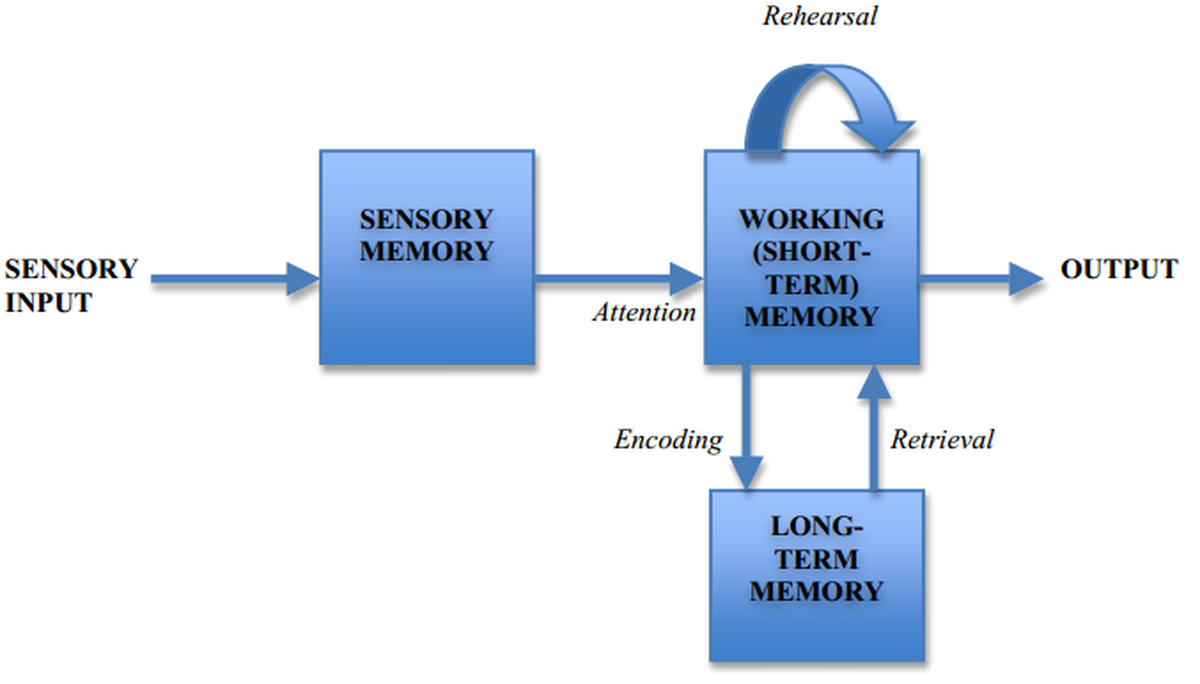
Memory is the process of retaining and recalling information over time, forming the foundation of how we understand the world and learn. It consists of three main processes:
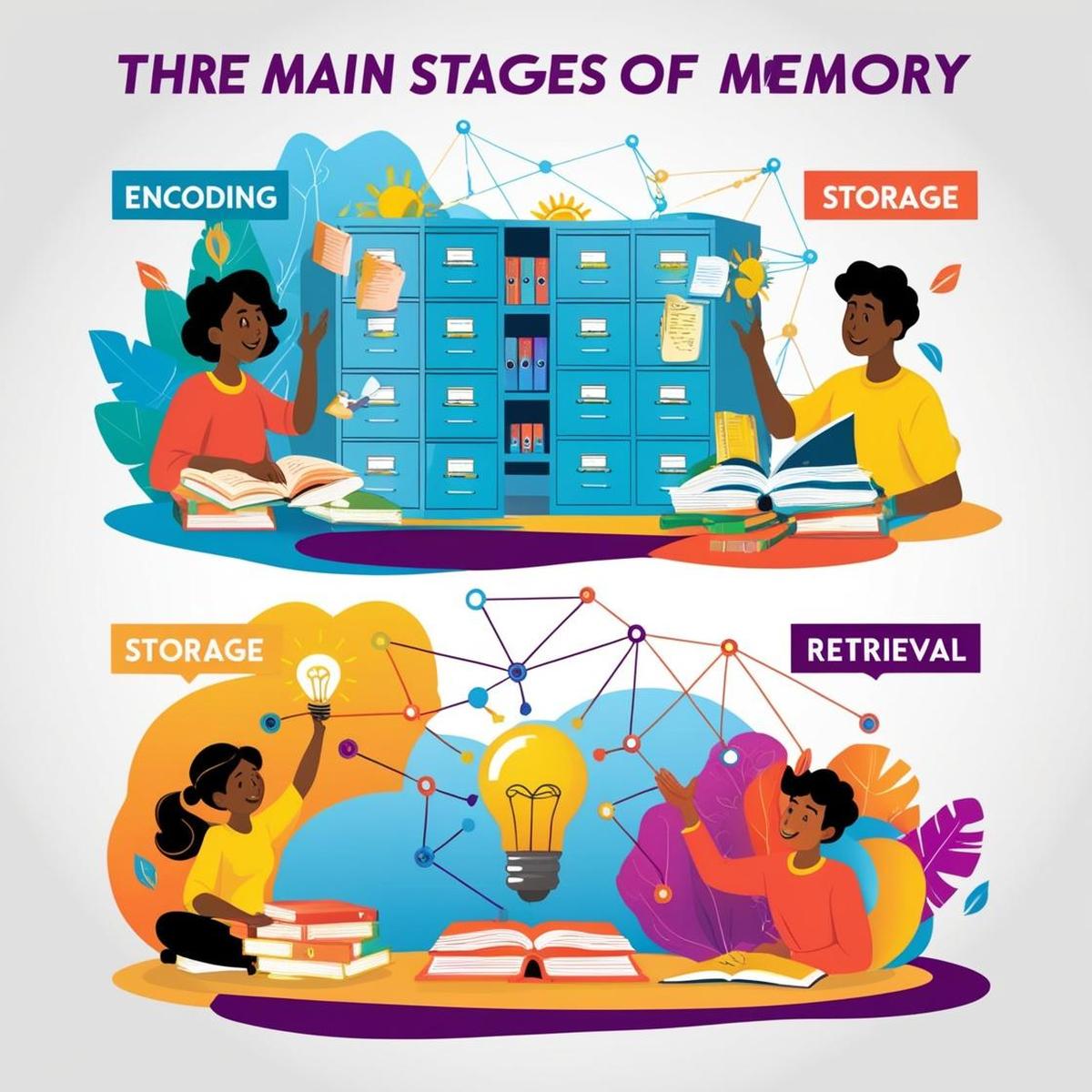
1. Encoding: This is how we take in and process information. It can happen through
-
Visual encoding (how something looks),
-
Acoustic encoding (how something sounds),
-
Semantic encoding (what something means), and
-
Tactile encoding (how something feels).
Encoding prepares information for storage.
2. Storage: This refers to retaining encoded information.
- Short-term memory (STM): Holds a limited amount of information (5–9 items) for about 15–30 seconds unless rehearsed.
- Long-term memory (LTM): Stores information indefinitely with vast capacity, often retaining semantic, visual, and acoustic details.
3. Retrieval: This is how we access stored information.
-
STM retrieval is sequential (e.g., recalling a list in order).
-
LTM retrieval relies on associations (e.g., recalling where you parked by retracing steps).
Memory recall challenges and strategies
The challenge of forgetting
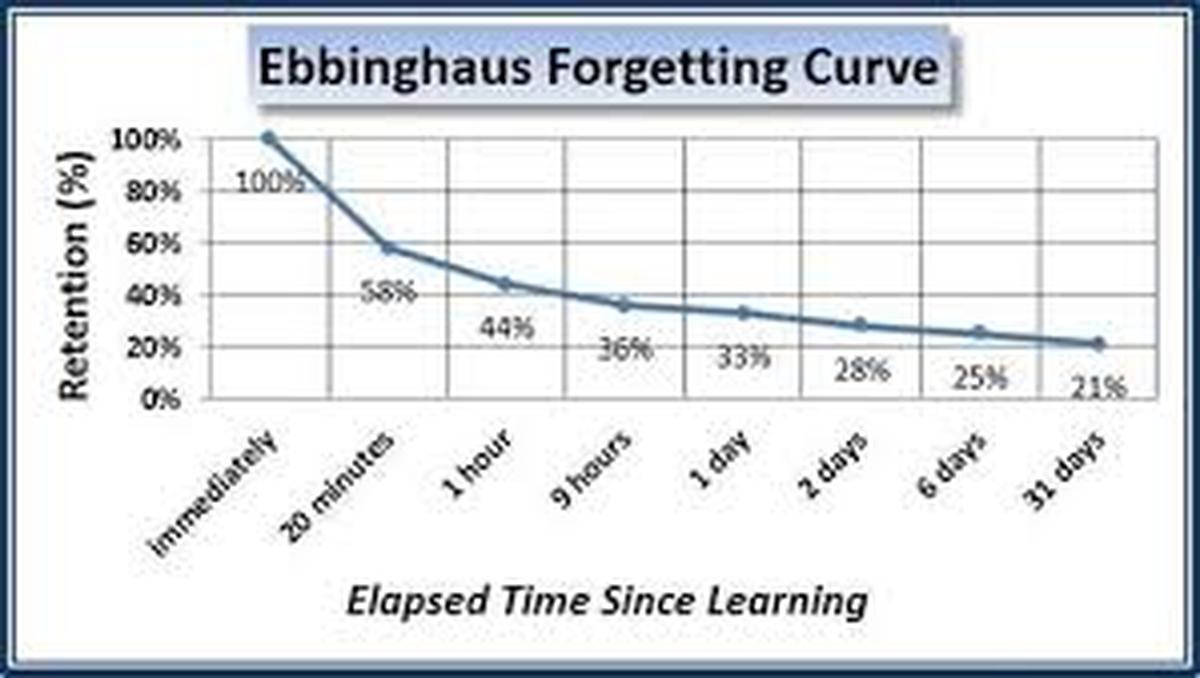
One of the biggest challenges in learning and memory is the natural tendency to forget information over time. This phenomenon is often illustrated by the Ebbinghaus Forgetting Curve, which shows a rapid decline in memory retention shortly after learning, followed by a more gradual decay.
Techniques to improve recall
1. The testing effect:
-
Frequent, low-stakes quizzes can significantly enhance memory retention.
-
Encourages regular recall, solidifying information in long-term memory.
-
Provides feedback for both students and teachers to identify gaps in understanding.
Example: Quick quizzes at the end of lessons to reinforce learning.
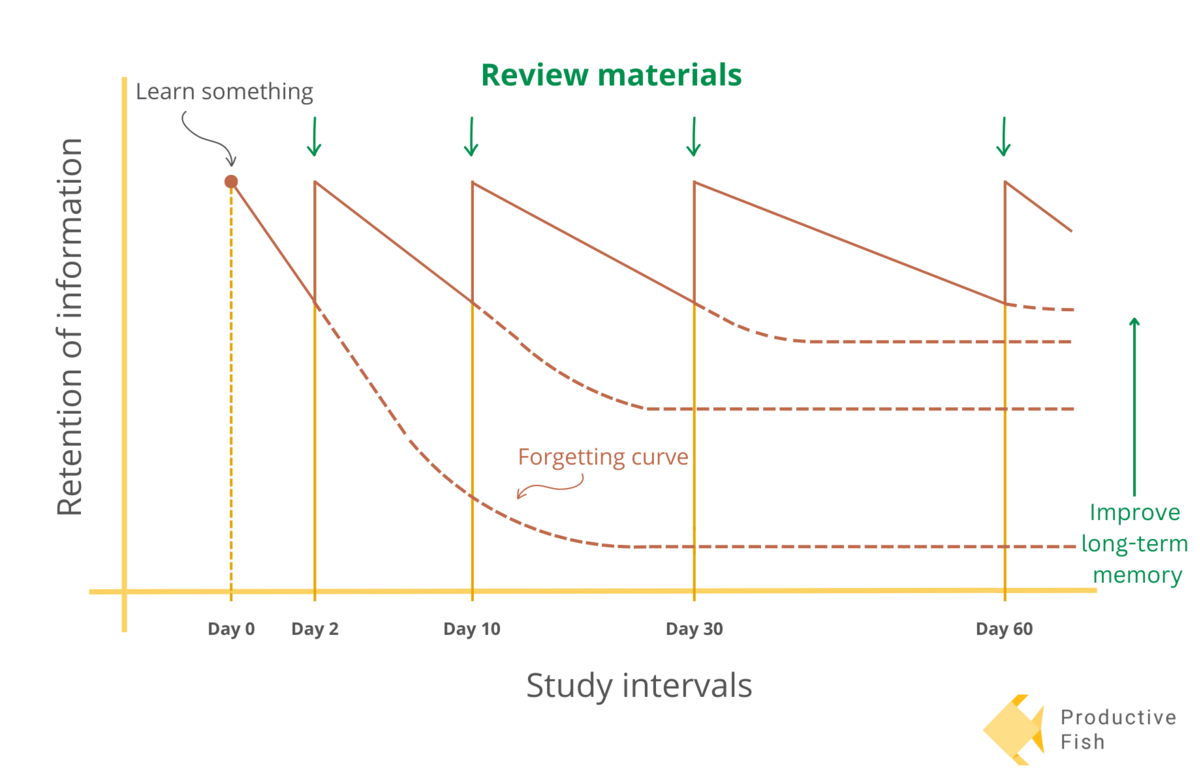
2. Spacing effect:
-
Spreading out learning over time improves retention compared to cramming.
-
Revisiting topics in intervals strengthens memory.
Example: Teaching a topic in segments across multiple lessons.
3. Interleaving technique:
-
Mixing related topics or skills during practice is more effective than focusing on one at a time (blocking).
-
Helps students see connections between concepts.
Example: Combining problems from different math topics in one session.
Memory techniques for students
Understanding and applying effective memory techniques can empower students to improve their recall and learning outcomes. Here are four proven strategies that students can use:
State-dependent memory
-
Learning and recalling information in similar environments or mental states enhances retention.
-
For example, if you study in a quiet room, try to replicate that setting during recall or exams.
-
This technique underscores the connection between external conditions and memory retrieval.
Schemas
-
Schemas are mental frameworks that help organize and interpret information.
-
They act as shortcuts for understanding but can sometimes limit learning by ignoring information outside their scope.
-
Students should regularly revisit and revise their schemas to incorporate new, relevant information.
Chunking
-
Grouping related information into “chunks” makes it easier to recall.
-
For instance, remembering a phone number as three smaller groups rather than a long sequence (e.g., 123-456-7890).
-
This method simplifies complex information into manageable units.
Deliberate Practice
-
Focused, intentional practice of skills enhances memory and performance.
-
For example, repeatedly writing essays or solving specific types of problems to improve mastery.
-
This approach emphasizes quality over quantity, aiming for gradual improvement through consistent effort.
By integrating these techniques into their study routines, students can enhance their ability to retain and retrieve information effectively.

Memory recall: Picture perfect
Observe Carefully: Study the image for 30 seconds.
After 30 seconds, hide the image and try answering the following.
Questions
What colour was the car in the foreground?
How many people were wearing hats?
Was there a dog in the picture? If so, what color was it?
What type of store was visible on the right side of the street?
What was the weather like?
Published – December 02, 2024 03:35 pm IST