


Skip to content
  • Facebook
  • X
  • Linkedin
  • WhatsApp
  • YouTube
  • Associate Journalism
  • About Us
  • Privacy Policy
  • 033-46046046
  • editor@artifex.news
Artifex.News

Artifex.News

Stay Connected. Stay Informed.

  • Breaking News
  • World
  • Nation
  • Sports
  • Business
  • Science
  • Entertainment
  • Lifestyle
  • Toggle search form
  • MS Dhoni To Play T10 Cricket? T Ten Global Chairman Says “We Can Expect…”
    MS Dhoni To Play T10 Cricket? T Ten Global Chairman Says “We Can Expect…” Sports
  • U.S. House rejects war powers resolution, backs Trump on Iran war
    U.S. House rejects war powers resolution, backs Trump on Iran war World
  • Access Denied Business
  • Access Denied Sports
  • Case Against Mahashivratri Event Organisers After 18 Suffer Electric Shock In Rajasthan’s Kota
    Case Against Mahashivratri Event Organisers After 18 Suffer Electric Shock In Rajasthan’s Kota Nation
  • Google’s GenCast AI turns spotlight on powerful new weather forecasters Explained
    Google’s GenCast AI turns spotlight on powerful new weather forecasters Explained Science
  • Top Iran security official to travel to Oman, site of talks with U.S., likely with nuclear message
    Top Iran security official to travel to Oman, site of talks with U.S., likely with nuclear message World
  • IPL 2024: Records Virat Kohli Can Break During Royal Challengers Bengaluru vs Chennai Super Kings Clash
    IPL 2024: Records Virat Kohli Can Break During Royal Challengers Bengaluru vs Chennai Super Kings Clash Sports
Dinosaur-killing asteroid impact fouled Earth’s atmosphere with dust

Dinosaur-killing asteroid impact fouled Earth’s atmosphere with dust

Posted on October 31, 2023 By admin


This artist’s reconstruction depicts North Dakota in the first months following the impact of an asteroid off Mexico’s coast 66 million years ago, showing a dark, dusty and cold world in which the last non-avian dinosaurs, illustrated by the species Dakotaraptor steini, were on the edge of extinction in this undated handout.
| Photo Credit: Reuters

It was, to put it mildly, a bad day on Earth when an asteroid smacked Mexico’s Yucatan Peninsula 66 million years ago, causing a global calamity that erased three-quarters of the world’s species and ended the age of dinosaurs.

The immediate effects included wildfires, quakes, a massive shockwave in the air and huge standing waves in the seas. But the coup de grâce for many species may have been the climate catastrophe that unfolded in the following years as the skies were darkened by clouds of debris and temperatures plunged.

Researchers on Monday revealed the potent role that dust from pulverized rock ejected into the atmosphere from the impact site may have played in driving extinctions, choking the atmosphere and blocking plants from harnessing sunlight for life-sustaining energy in a process called photosynthesis.

The total amount of dust, they calculated, was about 2,000 gigatonnes – exceeding 11 times the weight of Mt. Everest.

Also Read | How did the dinosaurs become birds? The nose knows 

The researchers ran paleoclimate simulations based on sediment unearthed at a North Dakota paleontological site called Tanis that preserved evidence of the post-impact conditions, including the prodigious dust fallout.

The simulations showed this fine-grained dust could have blocked photosynthesis for up to two years by rendering the atmosphere opaque to sunlight and remained in the atmosphere for 15 years, said planetary scientist Cem Berk Senel of the Royal Observatory of Belgium and Vrije Universiteit Brussel, lead author of the study published in the journal Nature Geoscience.

While prior research highlighted two other factors – sulfur released after the impact and soot from the wildfires – this study indicated dust played a larger role than previously known.

The dust – silicate particles measuring about 0.8-8.0 micrometers – that formed a global cloud layer were spawned from the granite and gneiss rock pulverized in the violent impact that gouged the Yucatan’s Chicxulub (pronounced CHIK-shu-loob) crater, 112 miles (180 km) wide and 12 miles (20 km) deep.

Also Read | Bizarre’ bird-like dinosaur has scientists enthralled 

In the aftermath, Earth experienced a drop in surface temperatures of about 27 degrees Fahrenheit (15 degrees Celsius).

“It was cold and dark for years,” Vrije Universiteit Brussel planetary scientist and study co-author Philippe Claeys said.

Earth descended into an “impact winter,” with global temperatures plummeting and primary productivity – the process land and aquatic plants and other organisms use to make food from inorganic sources – collapsing, causing a chain reaction of extinctions. As plants died, herbivores starved. Carnivores were left without prey and perished. In marine realms, the demise of tiny phytoplankton caused food webs to crash.

“While the sulfur stayed about eight to nine years, soot and silicate dust resided in the atmosphere for about 15 years after the impact. The complete recovery from the impact winter took even longer, with pre-impact temperature conditions returning only after about 20 years,” Royal Observatory of Belgium planetary scientist and study co-author Özgür Karatekin said.

The asteroid, estimated at 6-9 miles (10-15 km) wide, brought a cataclysmic end to the Cretaceous Period.

The dinosaurs, aside from their bird descendants, were lost, as were the marine reptiles that dominated the seas and many other groups. The big beneficiary were the mammals, who until then were bit players in the drama of life but were given the opportunity to become the main characters.

“Biotic groups that were not adapted to survive dark, cold and food-deprived conditions for almost two years would have experienced massive extinctions,” Karatekin said. “Fauna and flora that could enter a dormant phase – for example, through seeds, cysts or hibernation in burrows – and were able to adapt to a generalistic lifestyle – not dependent on one particular food source – generally survived better, like small mammals.”

Absent this disaster, dinosaurs might still dominate today.

“Dinos dominated Earth and were doing just fine when the meteorite hit,” Claeys said. “Without the impact, my guess is that mammals – including us – had little chance to become the dominant organisms on this planet.”


Source link

Science Tags:Asteroid impact that killed dinosaurs, dinosaur extinction, Earth’s major extinctions, science, science news

Post navigation

Previous Post: There Are Reports That Arvind Kejriwal Will Be Arrested On Nov 2: AAP Leader Atishi
Next Post: Global gold demand drops 6% in Q3; India, China demand up

Related Posts

  • New measurements reveal the enormous halos shrouding all galaxies
    New measurements reveal the enormous halos shrouding all galaxies Science
  • Scientists use ‘atomic stencils’ to make designer nanoparticles
    Scientists use ‘atomic stencils’ to make designer nanoparticles Science
  • Science Quiz: Unusual sources of energy
    Science Quiz: Unusual sources of energy Science
  • SpaceX loses contact with Starlink satellite after mishap
    SpaceX loses contact with Starlink satellite after mishap Science
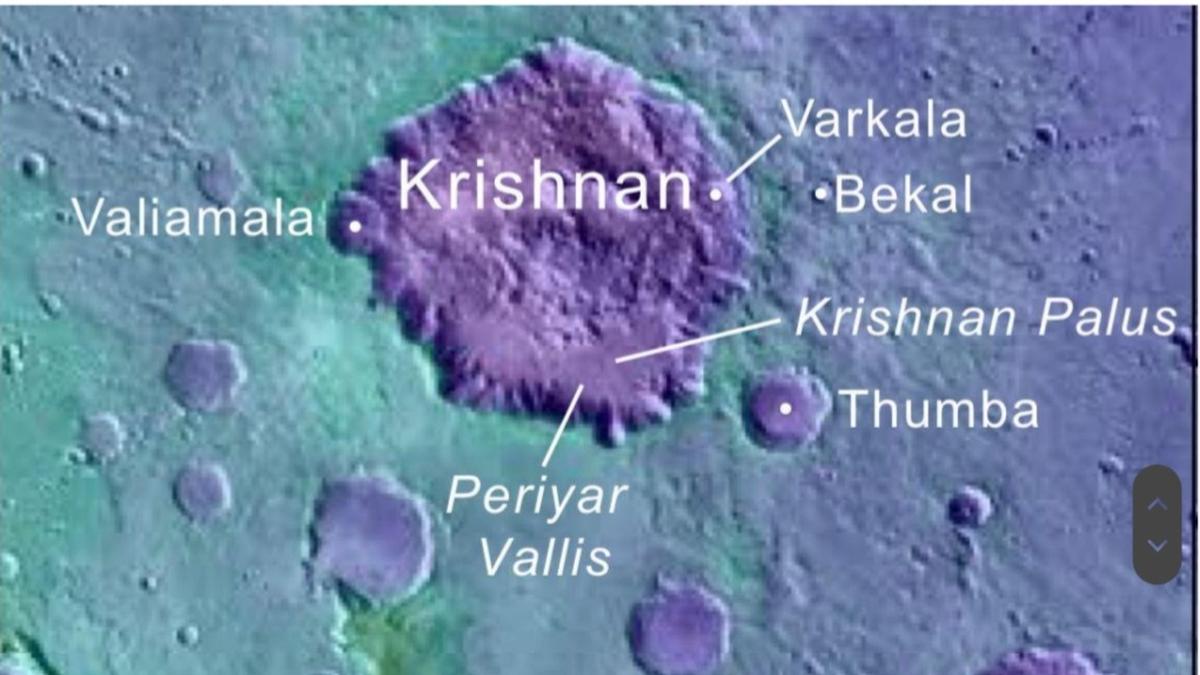
  • Names proposed by Kerala-based researchers approved for Martian landforms
    Names proposed by Kerala-based researchers approved for Martian landforms Science
  • ‘Global South scientists can tip red tape by thinking, working together’
    ‘Global South scientists can tip red tape by thinking, working together’ Science

More Related Articles

Is a heatwave really a wave of heat? Is a heatwave really a wave of heat? Science
Rare celestial object sighted over Bengaluru skies Rare celestial object sighted over Bengaluru skies Science
How does cutting onions make you cry? How does cutting onions make you cry? Science
China’s heatwaves threaten to dry up supply of yummy hairy crabs China’s heatwaves threaten to dry up supply of yummy hairy crabs Science
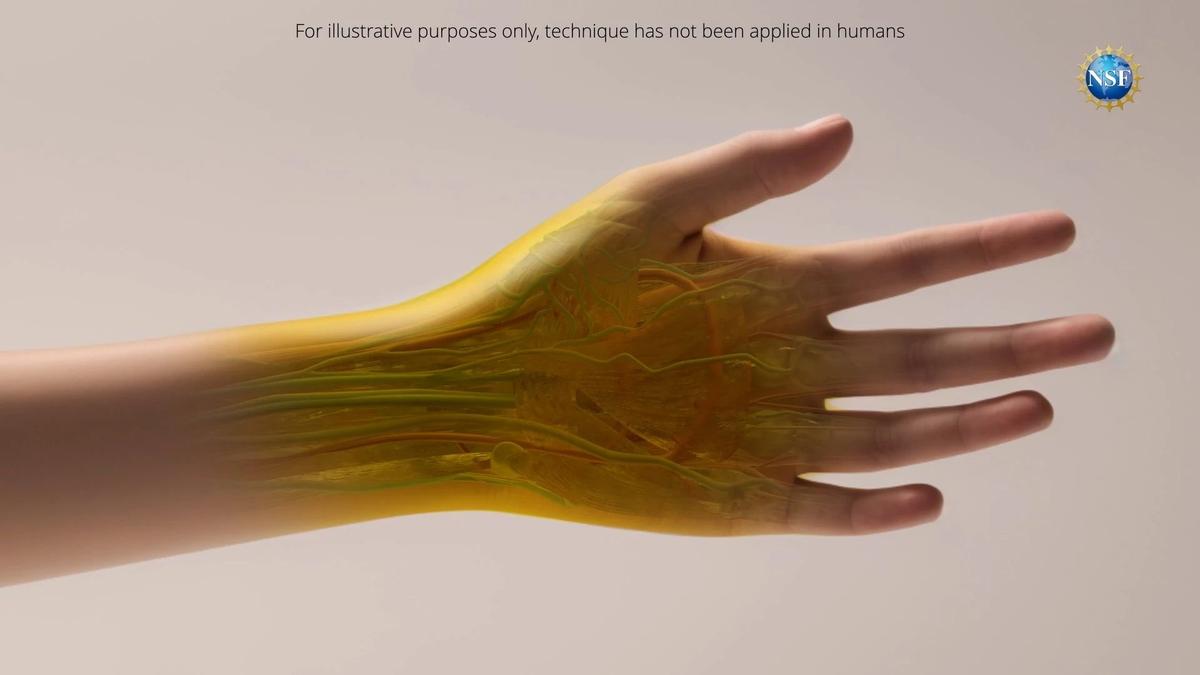
Yellow dye makes live mouse temporarily transparent Yellow dye makes live mouse temporarily transparent Science
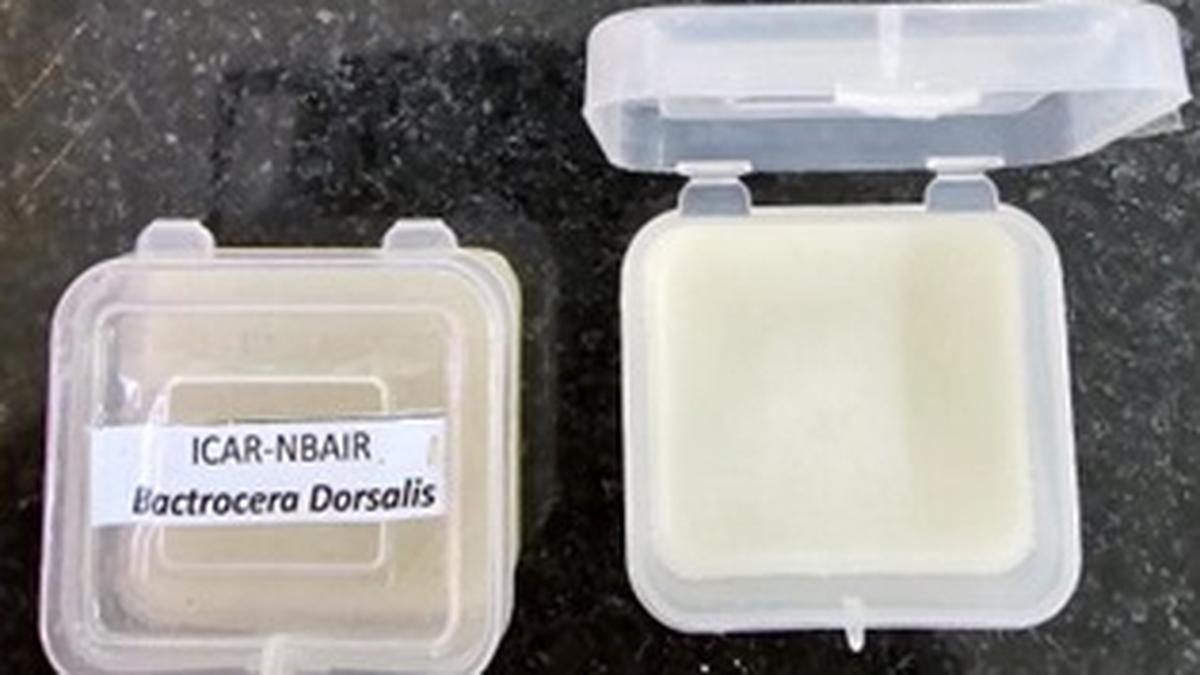
Bengaluru scientists develop affordable fruit fly trap; seek global patents Bengaluru scientists develop affordable fruit fly trap; seek global patents Science
SiteLock

Archives

  • October 2026
  • September 2026
  • August 2026
  • July 2026
  • June 2026
  • May 2026
  • April 2026
  • March 2026
  • February 2026
  • January 2026
  • December 2025
  • November 2025
  • October 2025
  • September 2025
  • August 2025
  • July 2025
  • June 2025
  • May 2025
  • April 2025
  • March 2025
  • February 2025
  • January 2025
  • December 2024
  • November 2024
  • October 2024
  • September 2024
  • August 2024
  • July 2024
  • June 2024
  • May 2024
  • April 2024
  • March 2024
  • February 2024
  • January 2024
  • December 2023
  • November 2023
  • October 2023
  • September 2023
  • August 2023
  • July 2023
  • June 2023
  • May 2023
  • April 2023
  • March 2023
  • February 2023
  • January 2023
  • December 2022
  • November 2022
  • October 2022
  • September 2022
  • August 2022
  • July 2022
  • June 2022
  • May 2022

Categories

  • Business
  • Nation
  • Science
  • Sports
  • World

Recent Posts

  • Union Minister meets start-up leaders over NCR pollution
  • Protests, match and festivals bring Bengaluru traffic to a standstill
  • Zelenskyy says Trump could lift more Russia sanctions
  • Pakistani opposition leader warns against concentration of power in military establishment
  • Minister inaugurates community baby shower for pregnant women, launches new infrastructures

Recent Comments

  1. RobertGat on UP Teacher Who Asked Students To Slap Muslim Classmate
  2. RobertGat on UP Teacher Who Asked Students To Slap Muslim Classmate
  3. RobertGat on UP Teacher Who Asked Students To Slap Muslim Classmate
  4. RobertGat on UP Teacher Who Asked Students To Slap Muslim Classmate
  5. Davidbrurf on UP Teacher Who Asked Students To Slap Muslim Classmate
  • India vs Bangladesh second Test | Akash Deep quietly making a mark with vital contributions
    India vs Bangladesh second Test | Akash Deep quietly making a mark with vital contributions Sports
  • Vijay Mallya On Banks Recovering Rs 14,131 Crore Assets
    Vijay Mallya On Banks Recovering Rs 14,131 Crore Assets Nation
  • Access Denied Business
  • Chandrayaan’s Pragyan rover offers evidence of magma ocean on young moon Science
  • Access Denied Sports
  • Access Denied Sports
  • Access Denied
    Access Denied Nation
  • IND vs AFG 3rd ODI: Afghanistan opts to bat in final ODI
    IND vs AFG 3rd ODI: Afghanistan opts to bat in final ODI Sports

Editor-in-Chief:
Mohammad Ariff,
MSW, MAJMC, BSW, DTL, CTS, CNM, CCR, CAL, RSL, ASOC.
editor@artifex.news

Associate Editors:
1. Zenellis R. Tuba,
zenelis@artifex.news
2. Haris Daniyel
daniyel@artifex.news

Photograher:
Rohan Das
rohan@artifex.news

Associate Journalists
1. Subrata Paul - AN/2020/01
2. Quamruz Zaman - AN/2021/22
3. Ahmed Sha - AN/2021/035
4. Ajay Kumar Shaw - AN/2021/39
5. Tahqiqul Hoda - AN/2021/21

Artifex.News offers Online Paid Internships to college students from India and Abroad. Interns will get a PRESS CARD and other online offers.
Send your CV (Subjectline: Paid Internship) to internship@artifex.news

Links:
Associate Journalism
About Us
Privacy Policy

News Links:
Breaking News
World
Nation
Sports
Business
Entertainment
Lifestyle

Registered Office:
72/A, Elliot Road, Kolkata - 700016
Tel: 033-22277777, 033-22172217
Email: office@artifex.news

Editorial Office / News Desk:
No. 13, Mezzanine Floor, Esplanade Metro Rail Station,
12 J. L. Nehru Road, Kolkata - 700069.
(Entry from Gate No. 5)
Tel: 033-46011099, 033-46046046
Email: editor@artifex.news

Copyright © 2023 Artifex.News Newsportal designed by Artifex Infotech.