



Skip to content
  • Facebook
  • X
  • Linkedin
  • WhatsApp
  • YouTube
  • Associate Journalism
  • About Us
  • Privacy Policy
  • 033-46046046
  • editor@artifex.news
Artifex.News

Artifex.News

Stay Connected. Stay Informed.

  • Breaking News
  • World
  • Nation
  • Sports
  • Business
  • Science
  • Entertainment
  • Lifestyle
  • Toggle search form
  • Have to work hard on slow turners: Jadeja
    Have to work hard on slow turners: Jadeja Sports
  • It’s hard to get over Kartik Kumar’s suspension due to doping, says Gulveer Singh
    It’s hard to get over Kartik Kumar’s suspension due to doping, says Gulveer Singh Sports
  • Access Denied Business
  • RCB vs CSK: IPL 2024 Match Preview, Weather And Pitch Reports, Likely XIs
    RCB vs CSK: IPL 2024 Match Preview, Weather And Pitch Reports, Likely XIs Sports
  • Access Denied
    Access Denied Nation
  • Apple names insider Kevan Parekh as finance chief in place of Maestri
    Apple names insider Kevan Parekh as finance chief in place of Maestri Business
  • Access Denied
    Access Denied Nation
  • U.S. to scrap legal cornerstone of climate regulations this week
    U.S. to scrap legal cornerstone of climate regulations this week World
Groundwater is heating up, threatening life below and above the surface

Groundwater is heating up, threatening life below and above the surface

Posted on June 11, 2024 By admin


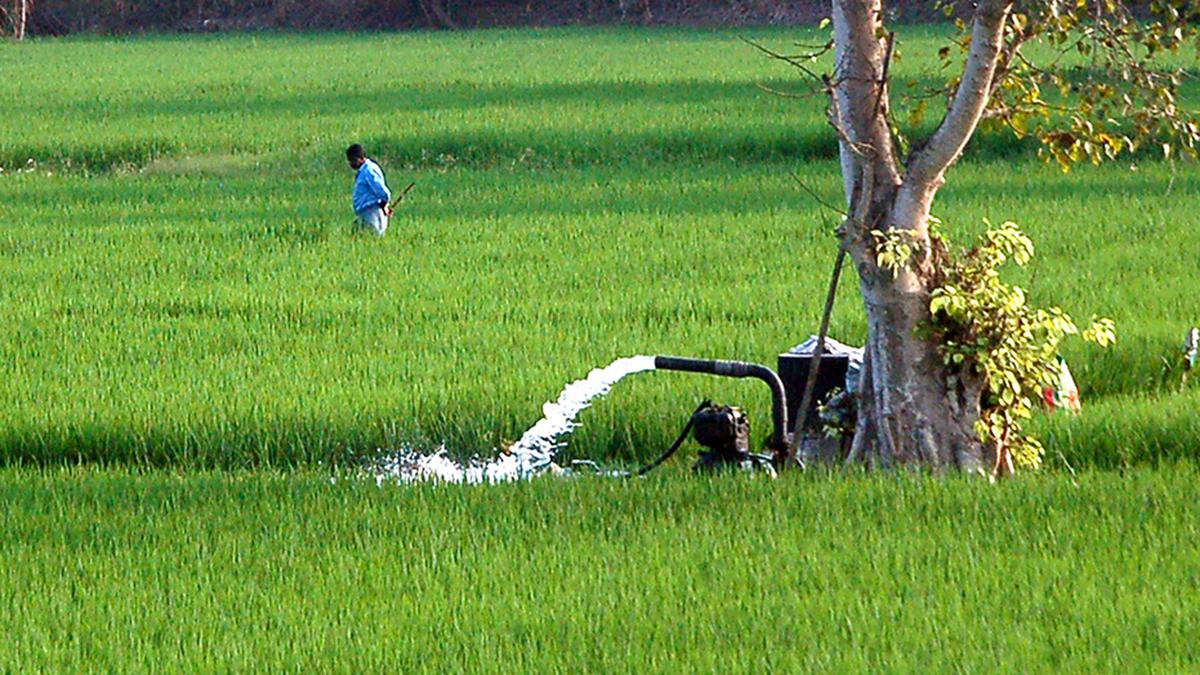
Groundwater makes up a whopping 97% of all usable freshwater. 
| Photo Credit: S Rambabu/The Hindu

Under your feet lies the world’s biggest reservoir. Groundwater makes up a whopping 97% of all usable freshwater. Where is it? In the voids between grains and cracks within rocks. We see it when it rises to the surface in springs, in caves, or when we pump it up for use.

While groundwater is often hidden, it underpins ecosystems around the world and is a vital resource for people.

You might think groundwater would be protected from climate change, given it’s underground. But this is no longer the case. As the atmosphere continues to heat up, more and more heat is penetrating underground. There is already considerable evidence that the subsurface is warming. The heat shows up in temperature measurements taken in boreholes around the world.

Our team of international scientists have combined our knowledge to model how groundwater will heat up in the future. Under a realistic middle of the road greenhouse gas emission scenario, with a projected mean global atmospheric temperature rise of 2.7°C, groundwater will warm by an average of 2.1°C by 2100, compared to 2000.

This warming varies by region and is delayed by decades compared to the surface, because it takes time to heat up the underground mass. Our results can be accessed by everyone globally.

Why does it matter?

You might wonder what the consequences of hotter groundwater will be.

First, the good news. Warming beneath the land’s surface is trapping 25 times less energy than the ocean, but it is still significant. This heat is stored in layers down to tens of metres deep, making it easier to access. We could use this extra heat to sustainably warm our homes by tapping into it just a few meters below the surface.

The heat can be extracted using heat pumps, powered by electricity from renewable energies. Geothermal heat pumps are surging in popularity for space heating across Europe.

Unfortunately, the bad news is likely to far outweigh the good. Warmer groundwater is harmful for the rich array of life found underground – and for the many plants and animals who depend on groundwater for their survival. Any changes in temperature can seriously disrupt the niche they have adapted to.

To date, the highest groundwater temperature increases are in parts of Russia, where surface temperatures have risen by more than 1.5°C since 2000. In Australia, significant variations in groundwater temperatures are expected within the shallowest layers.

Groundwater regularly flows out to feed lakes and rivers around the world, as well as the ocean, supporting a range of groundwater dependent ecosystems.

If warmer groundwater flows into your favourite river or lake, it will add to the extra heat from the sun. This could mean fish and other species will find it too warm to survive. Warm waters also hold less oxygen. Lack of oxygen in rivers and lakes have already become a major cause of mass fish deaths, as we’ve seen recently in Australia’s Murray-Darling Basin.

Cold water species such as Atlantic salmon have adapted to a water temperature window provided by continuous cool groundwater discharge. As these thermal refuges heat up, it will upend their breeding cycle.

Groundwater is vital

In many parts of the world, people rely on groundwater as their main source of drinking water. But groundwater warming can worsen the quality of the water we drink. Temperature influences everything from chemical reactions to microbial activity. Warmer water could, for instance, trigger more harmful reactions, where metals leach out into the water. This is especially concerning in areas where access to clean drinking water is already limited.

Industries such as farming, manufacturing and energy production often rely on groundwater for their operations. If the groundwater they depend on becomes too warm or more contaminated, it can disrupt their activities.

Our study is global, but we have to find out more about how groundwater is warming and what impact this could have locally. By studying how groundwater temperatures are changing over time and across different regions, we can better predict future trends and find strategies to adapt or reduce the effects.

Global groundwater warming is a hidden but very significant consequence of climate change. While the impacts will be delayed, they stretch far and wide. They will affect ecosystems, drinking water supplies and industries around the world.

This article is republished from The Conversation under a Creative Commons license. Read the original article.


Source link

Science Tags:Climate change, climate news, Groundwater, groundwater climate change, groundwater heating

Post navigation

Previous Post: IISc researchers develop sustainable method to remove heavy metal contaminants from groundwater
Next Post: Indian tyre exports register sharp recovery in second half of last fiscal

Related Posts

  • RRI researchers develop new algorithm which can produce better images to study ultracold atoms
    RRI researchers develop new algorithm which can produce better images to study ultracold atoms Science
  • Gopichand Thotakura, India’s first civilian space tourist, recieves warm welcome in Delhi
    Gopichand Thotakura, India’s first civilian space tourist, recieves warm welcome in Delhi Science
  • Cats are killing India’s birds. Are we paying attention?
    Cats are killing India’s birds. Are we paying attention? Science
  • ‘AI’s benefits to humanity are enormous, we need social mechanisms to deal with the problems it creates’
    ‘AI’s benefits to humanity are enormous, we need social mechanisms to deal with the problems it creates’ Science
  • Infosys Prize now only for researchers aged up to 40 years
    Infosys Prize now only for researchers aged up to 40 years Science
  • Before the toast: The wild story of avocado
    Before the toast: The wild story of avocado Science

More Related Articles

Altermagnet conducts with different charge carriers in different directions Altermagnet conducts with different charge carriers in different directions Science
Where shall the poor go for a kidney transplant in Kerala? Where shall the poor go for a kidney transplant in Kerala? Science
What two districts can teach India about dealing with rural waste What two districts can teach India about dealing with rural waste Science
Panel suggests booster shot of BCG vaccine to fight TB Panel suggests booster shot of BCG vaccine to fight TB Science
Bending ice could explain how lightning is born in thunderstorms Bending ice could explain how lightning is born in thunderstorms Science
China launches Shenzhou-19 spaceship with new crew to join its space station China launches Shenzhou-19 spaceship with new crew to join its space station Science
SiteLock

Archives

  • September 2026
  • August 2026
  • July 2026
  • June 2026
  • May 2026
  • April 2026
  • March 2026
  • February 2026
  • January 2026
  • December 2025
  • November 2025
  • October 2025
  • September 2025
  • August 2025
  • July 2025
  • June 2025
  • May 2025
  • April 2025
  • March 2025
  • February 2025
  • January 2025
  • December 2024
  • November 2024
  • October 2024
  • September 2024
  • August 2024
  • July 2024
  • June 2024
  • May 2024
  • April 2024
  • March 2024
  • February 2024
  • January 2024
  • December 2023
  • November 2023
  • October 2023
  • September 2023
  • August 2023
  • July 2023
  • June 2023
  • May 2023
  • April 2023
  • March 2023
  • February 2023
  • January 2023
  • December 2022
  • November 2022
  • October 2022
  • September 2022
  • August 2022
  • July 2022
  • June 2022
  • May 2022

Categories

  • Business
  • Nation
  • Science
  • Sports
  • World

Recent Posts

  • Arsenal thrashed by Brighton, sorry Spurs lose again
  • Shamli Police book six over alleged ‘misleading’ social media posts on Ayush Malik High Court proceedings
  • What is the India-Pakistan conflict at sea about? | Explained
  • Why has U.S. deployed ‘space weapons’? |Explained
  • How will the U.S.’s Sanctioning Act affect India? | Explained

Recent Comments

  1. AlvinNet on UP Teacher Who Asked Students To Slap Muslim Classmate
  2. AlvinNet on UP Teacher Who Asked Students To Slap Muslim Classmate
  3. Jamesslits on UP Teacher Who Asked Students To Slap Muslim Classmate
  4. MichaelClear on UP Teacher Who Asked Students To Slap Muslim Classmate
  5. Jamesslits on UP Teacher Who Asked Students To Slap Muslim Classmate
  • Haiti In Turmoil As Gang Boss ‘Barbecue’ His Men Seize Control Of Capital
    Haiti In Turmoil As Gang Boss ‘Barbecue’ His Men Seize Control Of Capital World
  • S. Africa scientists make rhino horns radioactive to curb poaching
    S. Africa scientists make rhino horns radioactive to curb poaching World
  • Former Ecuadorian President Lenin Moreno sentenced to 5 years for corruption
    Former Ecuadorian President Lenin Moreno sentenced to 5 years for corruption World
  • Access Denied Business
  • Share Of Rs 500 Note Jumps To 86.5% After Rs 2,000 Note Withdrawn: RBI
    Share Of Rs 500 Note Jumps To 86.5% After Rs 2,000 Note Withdrawn: RBI Nation
  • Access Denied
    Access Denied Nation
  • Kylian Mbappe Strikes On Debut As Real Madrid Beat Atalanta In UEFA Super Cup
    Kylian Mbappe Strikes On Debut As Real Madrid Beat Atalanta In UEFA Super Cup Sports
  • Hardik Pandya’s Post-Match Remarks On Skipper Suryakumar Yadav Sum Up Their Relationship
    Hardik Pandya’s Post-Match Remarks On Skipper Suryakumar Yadav Sum Up Their Relationship Sports

Editor-in-Chief:
Mohammad Ariff,
MSW, MAJMC, BSW, DTL, CTS, CNM, CCR, CAL, RSL, ASOC.
editor@artifex.news

Associate Editors:
1. Zenellis R. Tuba,
zenelis@artifex.news
2. Haris Daniyel
daniyel@artifex.news

Photograher:
Rohan Das
rohan@artifex.news

Artifex.News offers Online Paid Internships to college students from India and Abroad. Interns will get a PRESS CARD and other online offers.
Send your CV (Subjectline: Paid Internship) to internship@artifex.news

Links:
Associate Journalism
About Us
Privacy Policy

News Links:
Breaking News
World
Nation
Sports
Business
Entertainment
Lifestyle

Registered Office:
72/A, Elliot Road, Kolkata - 700016
Tel: 033-22277777, 033-22172217
Email: office@artifex.news

Editorial Office / News Desk:
No. 13, Mezzanine Floor, Esplanade Metro Rail Station,
12 J. L. Nehru Road, Kolkata - 700069.
(Entry from Gate No. 5)
Tel: 033-46011099, 033-46046046
Email: editor@artifex.news

Copyright © 2023 Artifex.News Newsportal designed by Artifex Infotech.