



Skip to content
  • Facebook
  • X
  • Linkedin
  • WhatsApp
  • YouTube
  • Associate Journalism
  • About Us
  • Privacy Policy
  • 033-46046046
  • editor@artifex.news
Artifex.News

Artifex.News

Stay Connected. Stay Informed.

  • Breaking News
  • World
  • Nation
  • Sports
  • Business
  • Science
  • Entertainment
  • Lifestyle
  • Toggle search form
  • GT Full Squad IPL 2025: Complete List Of Players Bought By Gujarat Titans
    GT Full Squad IPL 2025: Complete List Of Players Bought By Gujarat Titans Sports
  • Pranjali Dhumal Wins Bronze, India Reach 13 Medals At World Deaf Shooting Championship 2024
    Pranjali Dhumal Wins Bronze, India Reach 13 Medals At World Deaf Shooting Championship 2024 Sports
  • Access Denied Sports
  • IndiGo Announces Kolkata-Phuket Flight From Next Month
    IndiGo Announces Kolkata-Phuket Flight From Next Month Nation
  • Manish Sisodia’s Judicial Custody Extended Till April 18
    Manish Sisodia’s Judicial Custody Extended Till April 18 Nation
  • Supreme Court declines to interfere with forest clearances for Adani’s Madhya Pradesh coal block project
    Supreme Court declines to interfere with forest clearances for Adani’s Madhya Pradesh coal block project Nation
  • Is the Indian economy perfectly balanced?
    Is the Indian economy perfectly balanced? Business
  • Union Budget 2025: What’s in it for Defence sector
    Union Budget 2025: What’s in it for Defence sector Business
Unlocking the mind: Understanding memory to enhance learning

Unlocking the mind: Understanding memory to enhance learning

Posted on December 2, 2024 By admin


A man with gears inside head illustration

From cherished family moments to critical academic concepts, memory shapes who we are and what we can become. At its core, memory is what enables us to truly live.  As we grow, we’re like blank canvases, absorbing knowledge that shapes our future. Learning is a lifelong journey, but how do we effectively process and retain so much information, and keep it organized in our minds? This is where memory comes in—a fascinating dual-process system, as explained by a Harvard study.

Memory is a dual-process system

Memory is the cornerstone of learning, allowing us to retain and recall information over time. It plays a key role in how we learn and act, operating as a dual-process system:

  • System 1 is automatic and unconscious, handling tasks like memorization and quick recall. For example, remembering multiplication tables or facts requires little conscious effort.
  • System 2 is deliberate and analytical, used for critical thinking and problem-solving, such as applying a concept in new ways of solving complex problems.

Both systems work together. For instance, mastering foundational knowledge (System 1) is essential for effective analytical thinking (System 2). 

Applying dual-process theory to teaching

By understanding these two systems, teachers can optimize learning strategies:

System 1: Building the foundation

  • Memorization and Recall: Use techniques like flashcards, mnemonic devices, and spaced repetition to strengthen memory.

  • Procedural Knowledge: Practice and repetition are key to automating skills like multiplication or playing a musical instrument.

System 2: Cultivating higher-order thinking

  • Problem-solving: Present challenging problems that require students to apply knowledge in new contexts.

  • Critical thinking: Encourage students to analyse information, evaluate arguments, and form their own opinions.

  • Creative thinking: Foster innovation and originality by providing opportunities for imaginative expression.

Balancing both systems

A balanced approach is crucial:

  • Strong foundation: A solid base of factual knowledge (System 1) is essential for complex thinking (System 2).

  • Active engagement: Encourage active learning strategies like discussions, debates, and projects to stimulate System 2 thinking.

  • Metacognitive skills: Teach students to monitor their own learning and adjust their strategies as needed.

How Memory Works: Three key processes

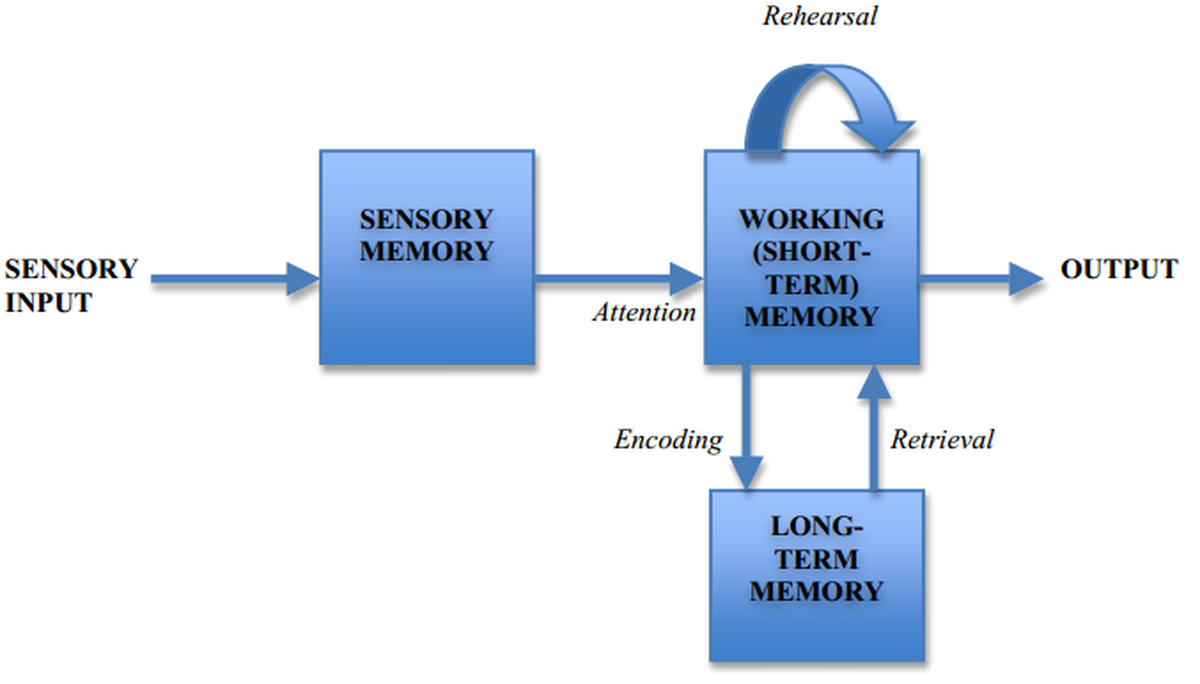
Memory is the process of retaining and recalling information over time, forming the foundation of how we understand the world and learn. It consists of three main processes:
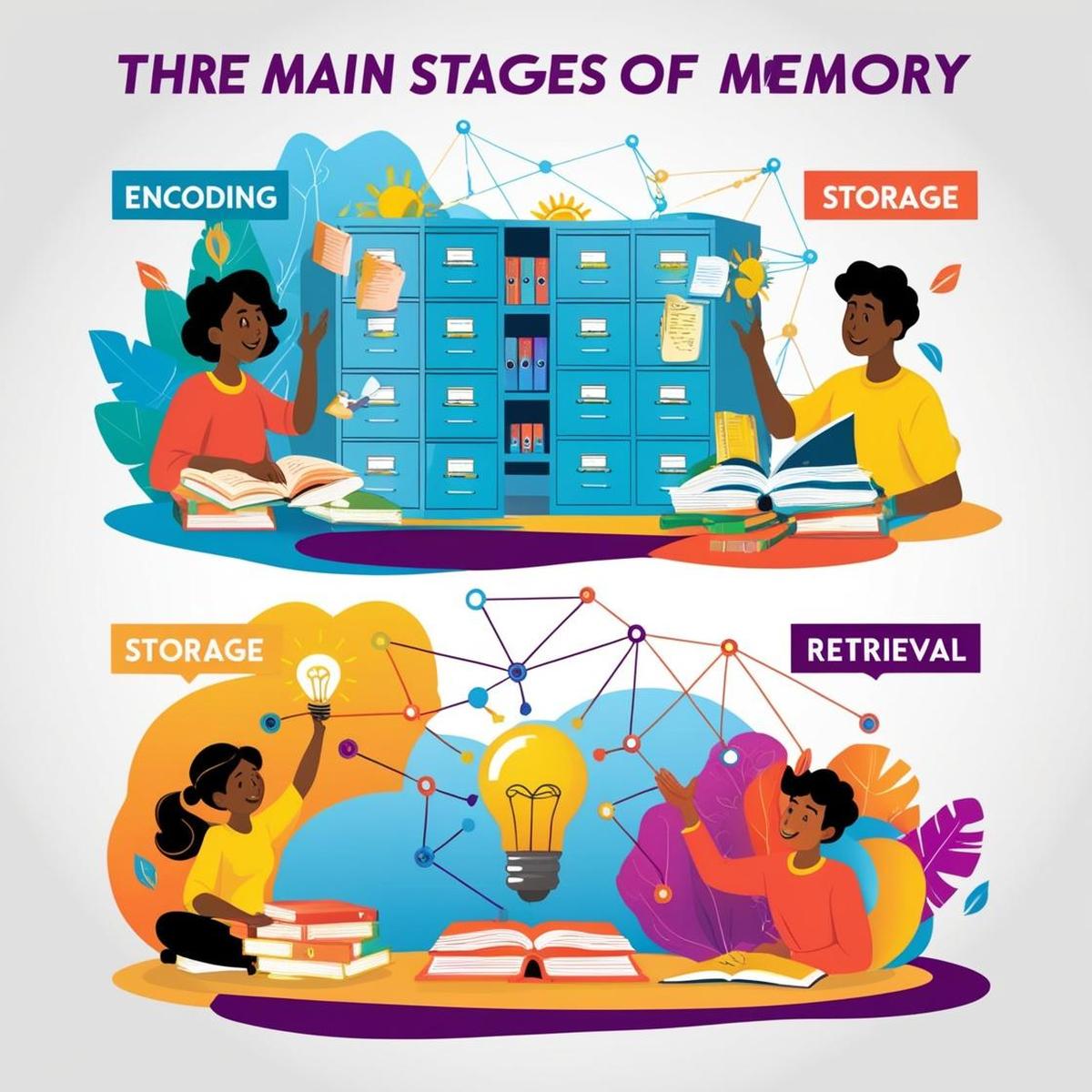
1. Encoding: This is how we take in and process information. It can happen through

  • Visual encoding (how something looks),

  • Acoustic encoding (how something sounds),

  • Semantic encoding (what something means), and

  • Tactile encoding (how something feels).

Encoding prepares information for storage.

2. Storage: This refers to retaining encoded information.

  • Short-term memory (STM): Holds a limited amount of information (5–9 items) for about 15–30 seconds unless rehearsed.
  • Long-term memory (LTM): Stores information indefinitely with vast capacity, often retaining semantic, visual, and acoustic details.

3. Retrieval: This is how we access stored information.

  • STM retrieval is sequential (e.g., recalling a list in order).

  • LTM retrieval relies on associations (e.g., recalling where you parked by retracing steps).
Memory recall challenges and strategies

The challenge of forgetting

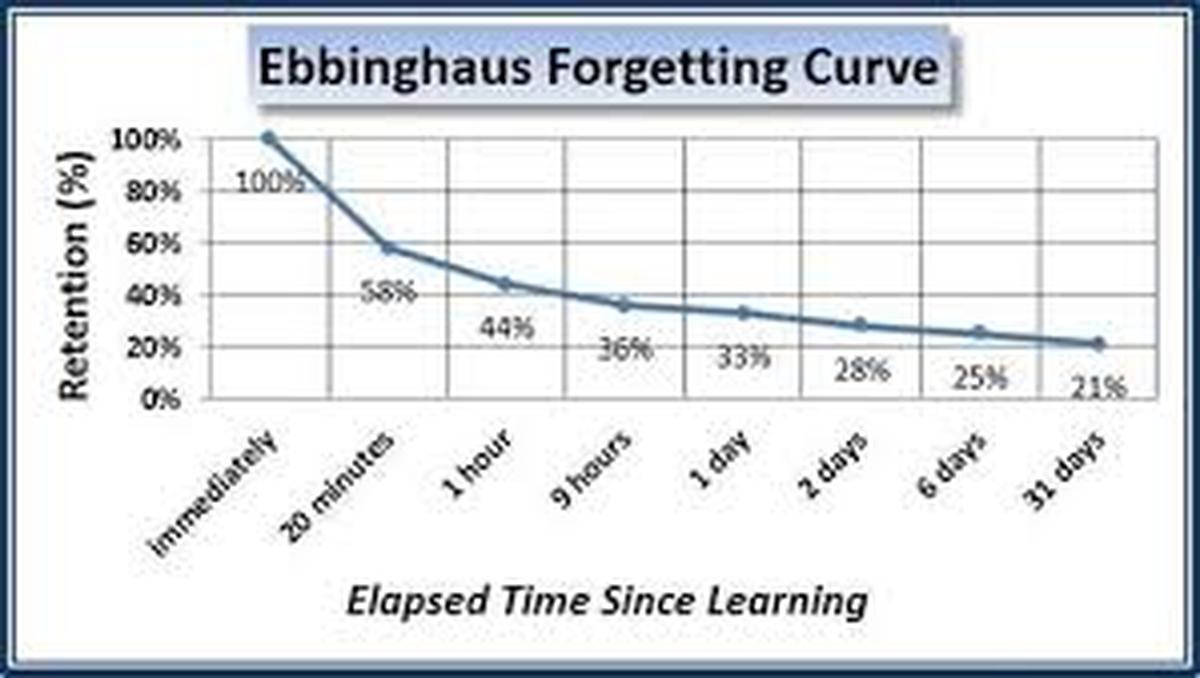
One of the biggest challenges in learning and memory is the natural tendency to forget information over time. This phenomenon is often illustrated by the Ebbinghaus Forgetting Curve, which shows a rapid decline in memory retention shortly after learning, followed by a more gradual decay.
Techniques to improve recall

1. The testing effect:

  • Frequent, low-stakes quizzes can significantly enhance memory retention.

  • Encourages regular recall, solidifying information in long-term memory.

  • Provides feedback for both students and teachers to identify gaps in understanding.

Example: Quick quizzes at the end of lessons to reinforce learning.

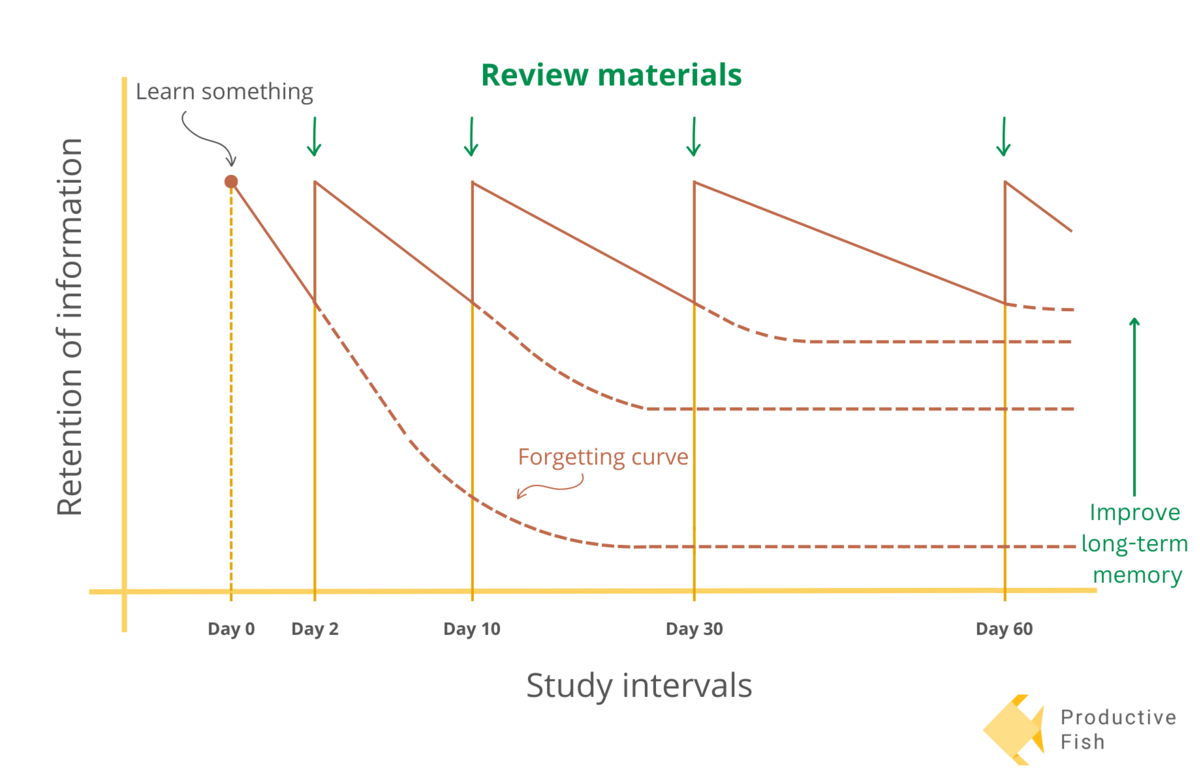
2. Spacing effect:

  • Spreading out learning over time improves retention compared to cramming.

  • Revisiting topics in intervals strengthens memory.

Example: Teaching a topic in segments across multiple lessons.

3. Interleaving technique:

  • Mixing related topics or skills during practice is more effective than focusing on one at a time (blocking).

  • Helps students see connections between concepts.

Example: Combining problems from different math topics in one session.
Memory techniques for students

Understanding and applying effective memory techniques can empower students to improve their recall and learning outcomes. Here are four proven strategies that students can use:

State-dependent memory

  • Learning and recalling information in similar environments or mental states enhances retention.

  • For example, if you study in a quiet room, try to replicate that setting during recall or exams.

  • This technique underscores the connection between external conditions and memory retrieval.

Schemas

  • Schemas are mental frameworks that help organize and interpret information.

  • They act as shortcuts for understanding but can sometimes limit learning by ignoring information outside their scope.

  • Students should regularly revisit and revise their schemas to incorporate new, relevant information.

Chunking

  • Grouping related information into “chunks” makes it easier to recall.

  • For instance, remembering a phone number as three smaller groups rather than a long sequence (e.g., 123-456-7890).

  • This method simplifies complex information into manageable units.

Deliberate Practice

  • Focused, intentional practice of skills enhances memory and performance.

  • For example, repeatedly writing essays or solving specific types of problems to improve mastery.

  • This approach emphasizes quality over quantity, aiming for gradual improvement through consistent effort.

By integrating these techniques into their study routines, students can enhance their ability to retain and retrieve information effectively.

Memory recall: Picture perfect

Observe Carefully: Study the image for 30 seconds.

After 30 seconds, hide the image and try answering the following.

Questions

What colour was the car in the foreground?

How many people were wearing hats?

Was there a dog in the picture? If so, what color was it?

What type of store was visible on the right side of the street?

What was the weather like?

Published – December 02, 2024 03:35 pm IST



Source link

Science

Post navigation

Previous Post: Impeachment complaint filed against Philippine Vice President Duterte following her threat to President
Next Post: 3 Dead, 32 Hospitalised After Eating Endangered Sea Turtle In Philippines

Related Posts

  • Brown, botany, and Brownian motion
    Brown, botany, and Brownian motion Science
  • Science of deception: Why our brain loves to lie
    Science of deception: Why our brain loves to lie Science
  • Africa study catches ‘high-flying’ mosquitoes spreading pathogens
    Africa study catches ‘high-flying’ mosquitoes spreading pathogens Science
  • Exceptional new fish fossil sparks rethink of how earth’s geology drives evolution
    Exceptional new fish fossil sparks rethink of how earth’s geology drives evolution Science
  • Lab-grown human ‘embryo’ created without eggs or sperm
    Lab-grown human ‘embryo’ created without eggs or sperm Science
  • Scientists propose warming up Mars using heat-trapping ‘glitter’
    Scientists propose warming up Mars using heat-trapping ‘glitter’ Science

More Related Articles

IISc researchers develop machine learning models for designing next generation nuclear reactor materials IISc researchers develop machine learning models for designing next generation nuclear reactor materials Science
Why are school buses yellow Why are school buses yellow Science
India space strategy: harness data, tiny satellites to capture market beyond SpaceX India space strategy: harness data, tiny satellites to capture market beyond SpaceX Science
Spaceflight is reckoning anew with new generation of ‘space planes’” Spaceflight is reckoning anew with new generation of ‘space planes’” Science
Why does smoke from a stove or hearth irritate the eyes? Why does smoke from a stove or hearth irritate the eyes? Science
India was a tree planting laboratory for 200 years – here are the results India was a tree planting laboratory for 200 years – here are the results Science
SiteLock

Archives

  • September 2026
  • August 2026
  • July 2026
  • June 2026
  • May 2026
  • April 2026
  • March 2026
  • February 2026
  • January 2026
  • December 2025
  • November 2025
  • October 2025
  • September 2025
  • August 2025
  • July 2025
  • June 2025
  • May 2025
  • April 2025
  • March 2025
  • February 2025
  • January 2025
  • December 2024
  • November 2024
  • October 2024
  • September 2024
  • August 2024
  • July 2024
  • June 2024
  • May 2024
  • April 2024
  • March 2024
  • February 2024
  • January 2024
  • December 2023
  • November 2023
  • October 2023
  • September 2023
  • August 2023
  • July 2023
  • June 2023
  • May 2023
  • April 2023
  • March 2023
  • February 2023
  • January 2023
  • December 2022
  • November 2022
  • October 2022
  • September 2022
  • August 2022
  • July 2022
  • June 2022
  • May 2022

Categories

  • Business
  • Nation
  • Science
  • Sports
  • World

Recent Posts

  • Bihar announces OTS scheme for brick kilns, waives ₹90 crore interest on outstanding dues
  • North Korea says nuclear status ‘irreversible’ after UN atomic agency rebuke
  • Bombay High Court permits BMC to cut over 1,200 mangroves for Versova-Madh Island bridge
  • U.S. appeals court rejects Trump policy allowing swift deportations to third countries
  • Trump to meet with Venezuela’s interim President Rodriguez in New York on Sept. 22

Recent Comments

  1. Jamesslits on UP Teacher Who Asked Students To Slap Muslim Classmate
  2. MichaelClear on UP Teacher Who Asked Students To Slap Muslim Classmate
  3. Jamesslits on UP Teacher Who Asked Students To Slap Muslim Classmate
  4. Jamesslits on UP Teacher Who Asked Students To Slap Muslim Classmate
  5. MichaelClear on UP Teacher Who Asked Students To Slap Muslim Classmate
  • Access Denied
    Access Denied Nation
  • Vietnam flood death toll rises to 35: disaster agency
    Vietnam flood death toll rises to 35: disaster agency World
  • Access Denied
    Access Denied Nation
  • Access Denied
    Access Denied Nation
  • Probe into 1985 Kanishka bombing is ‘active and ongoing’: Canadian police
    Probe into 1985 Kanishka bombing is ‘active and ongoing’: Canadian police World
  • Customs Department Imposes Fine On IndiGo, Airline To Take Legal Measures
    Customs Department Imposes Fine On IndiGo, Airline To Take Legal Measures Nation
  • Access Denied World
  • Maharashtra Man Bashes 18-Month-Old Daughter To Death Over Quarrel With Wife
    Maharashtra Man Bashes 18-Month-Old Daughter To Death Over Quarrel With Wife Nation

Editor-in-Chief:
Mohammad Ariff,
MSW, MAJMC, BSW, DTL, CTS, CNM, CCR, CAL, RSL, ASOC.
editor@artifex.news

Associate Editors:
1. Zenellis R. Tuba,
zenelis@artifex.news
2. Haris Daniyel
daniyel@artifex.news

Photograher:
Rohan Das
rohan@artifex.news

Artifex.News offers Online Paid Internships to college students from India and Abroad. Interns will get a PRESS CARD and other online offers.
Send your CV (Subjectline: Paid Internship) to internship@artifex.news

Links:
Associate Journalism
About Us
Privacy Policy

News Links:
Breaking News
World
Nation
Sports
Business
Entertainment
Lifestyle

Registered Office:
72/A, Elliot Road, Kolkata - 700016
Tel: 033-22277777, 033-22172217
Email: office@artifex.news

Editorial Office / News Desk:
No. 13, Mezzanine Floor, Esplanade Metro Rail Station,
12 J. L. Nehru Road, Kolkata - 700069.
(Entry from Gate No. 5)
Tel: 033-46011099, 033-46046046
Email: editor@artifex.news

Copyright © 2023 Artifex.News Newsportal designed by Artifex Infotech.