



Skip to content
  • Facebook
  • X
  • Linkedin
  • WhatsApp
  • YouTube
  • Associate Journalism
  • About Us
  • Privacy Policy
  • 033-46046046
  • editor@artifex.news
Artifex.News

Artifex.News

Stay Connected. Stay Informed.

  • Breaking News
  • World
  • Nation
  • Sports
  • Business
  • Science
  • Entertainment
  • Lifestyle
  • Toggle search form
  • PCB Retain Muhammad Yusuf, Asad Shafiq In Revamped Selection Panel
    PCB Retain Muhammad Yusuf, Asad Shafiq In Revamped Selection Panel Sports
  • Access Denied Sports
  • Access Denied
    Access Denied Nation
  • Access Denied World
  • Access Denied World
  • Access Denied World
  • Bvlgari starts digital boutique in India in tie up with Tata CLiQ Luxury
    Bvlgari starts digital boutique in India in tie up with Tata CLiQ Luxury Business
  • Access Denied Business
The darker side of human rights for great apes

The darker side of human rights for great apes

Posted on October 8, 2024 By admin


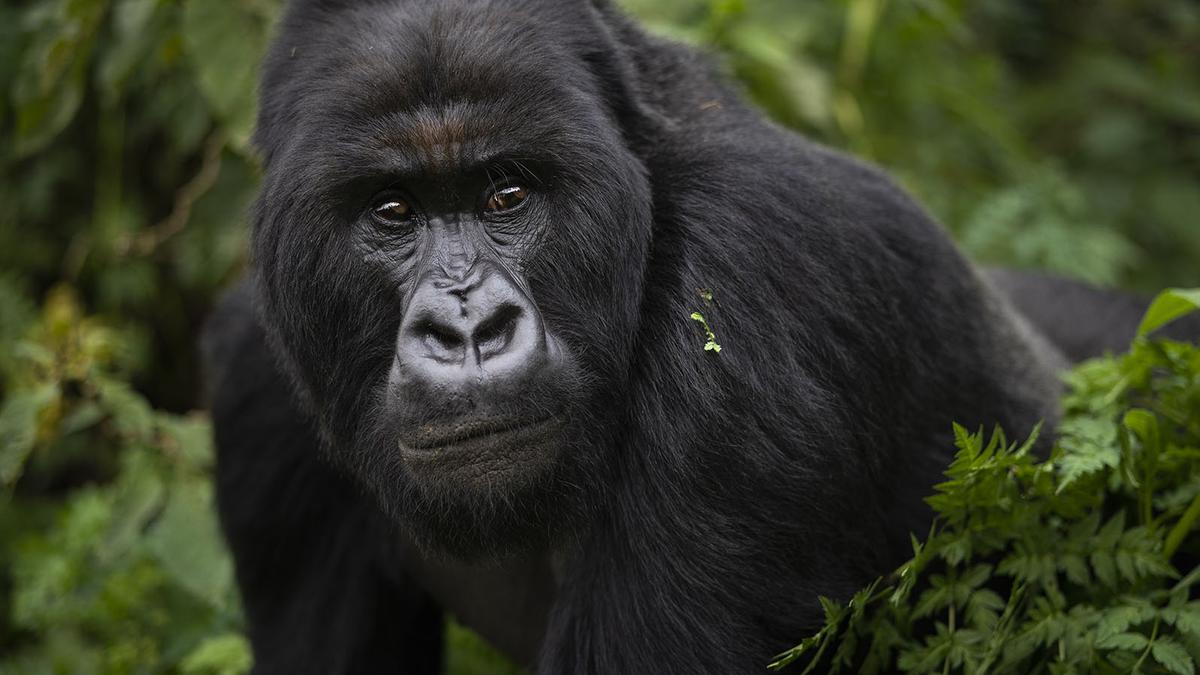
In this Sept. 2, 2019 photo, a silverback mountain gorilla named Segasira walks in the Volcanoes National Park, Rwanda. The Spanish government has announced plans to ban harmful experiments on great apes as part of a wider initiative to give them increased rights closer to the ones humans enjoy.
| Photo Credit: AP

The Spanish government has announced plans to ban harmful experiments on great apes as part of a wider initiative to give them increased rights closer to the ones humans enjoy.

These plans are forward thinking compared with most of the rest of the world but the move is a double edged one. Bestowing human rights on great apes because of their similarity to us creates a new criteria – other animals can only be free of pain and suffering if researchers can prove they are human-like.

Great apes are the subset of non-human primates which include orangutans, gorillas, bonobos and chimpanzees. Over 16 years ago Spain first tried to grant great apes personhood. The cross party resolution was discussed but was never brought into law.

Currently, “unnecessary” experimentation is banned on great apes in 29 countries including the UK, the EU and New Zealand. This includes vivisection (surgery on a live body) or torture, depending on your attitude to the moral rights of great apes).

This may sound progressive. The problem is that “necessary” is defined in different ways. It usually focuses on crisis situations such as pandemics and epidemics, and in brain related research (primarily Alzheimer’s and brain trauma research) where many scientists argue the similarity of the great ape brain to humans makes it the only equivalent model. In 1999, New Zealand proposed bestowing human rights on great apes, but stopped short of doing so, instead banning all invasive experimentation on great apes.

The Balearic islands followed in 2008, and Austria is the only country in the world to have banned all live surgery on non-human primates, great and lesser (also known as gibbons, which include marmosets and baboons).

The Great Ape Project founded by moral philosophers Peter Singer and Paola Cavalieri, campaigns for the end of great ape experimentation. On its homepage are reminders of chimpanzees still incarcerated in laboratories, many of whom have spent their entire lives undergoing experimental procedures, such as the Alamogordo 26 in New Mexico. These 26 chimpanzees are still held at a laboratory, despite not being used in medical research for over two decades.

The question of human rights for great apes raises a number of issues, especially the way humans understand the natural world in a hierarchical structure. Humans are at the apex of this structure, and control the other levels of the hierarchy. This is known as speciesism. Who decides what is ethical for other species? Humans are one species, yet it is our perception which legislates the fate of all nonhuman animals.

Many animal rights activists refer to 18th century English philosopher Jeremy Bentham’s quote: “The question is not, ‘can they reason? nor, can they talk? But, Can they suffer?‘”. But this isn’t the main paradox when it comes to modern animal experimentation. Instead, it is the belief that the more similar to humans a nonhuman animal is, the more useful they are to research that affects humans. This would also mean their pain and suffering is more similar.

Great apes are good enough to act as models for human physiology, but don’t seem to be good enough to count as sentient, suffering beings. This is just as applicable to less human-looking animals. For example, labs patent strains of mice with DNA that reflects human cancers. This also makes them more likely to suffer as if they were human. So do we accept that mice are so similar they can model us in experiments but not so similar that their pain matters?

The second issue is that great apes reflect in their faces and their actions an elicitation of empathy, but not always for lesser apes. In February 2024 charity Animal Aid published the results of a Freedom of Information request about the experiments carried out at the University of Cambridge on lesser apes. In 2022, 68 experiments at the university involved primates, for example drilling holes into marmosets’ skulls and injecting a substance into their brains.

The UK also hosts a large beagle breeding facility, in Cambridgeshire, where the dogs may be force fed toxic chemicals to study the effects. Beagles are often used for animal experimentation due to their placid nature.

The lesser ape is not the human-faced great ape, but many of their actions and responses are human-like. For instance, female gibbons dance to attract a mate.

The idea of a beagle, a potential family pet, being bred for experimentation highlights the speciesism inherent in how we decide what or whom to become incensed about.

Because make no mistake, every animal is a who, not a what.

It may sound outrageous to make such a statement. How can a mouse be a who, you might ask. Mice are the most common species used in experiments, and are bred with genetic illnesses and deformities especially for the purpose. Isn’t the squeak of the mouse or the shriek of the monkey their own form of expression? Some experiments on rodents have been designed to “recapitulate the human pain condition”. The problem comes from human perception of the natural world and different species as existing only in relation to ourselves.

Animal activists often say “if slaughterhouses had glass walls the world would be vegan”. How would we feel if vivisection labs had glass walls?

Some scientists argue animal testing harms humans because of unreliable results. With alternatives available, from stem cell modelling to using AI in experiments and trials, as well as charities and research centres focused on animal free studies, maybe the onus should be on humans.

We should be asking, if humans are so technologically adept and progressive, why are our scientific methods so archaic, unreliable and unethical?

This article is republished from The Conversation under a Creative Commons license. Read the original article.

Published – October 08, 2024 01:13 pm IST



Source link

Science Tags:animal news, experiments on animals, human rights for great apes, science news, spain bans harmful experiments on great apes

Post navigation

Previous Post: Russia, China conduct joint navy patrol in the Pacific
Next Post: Actress Madhura Naik Recalls Her Family’s Encounter With Hamas Group

Related Posts

  • Mpox clade Ia has evolved to jump from humans to humans: new study
    Mpox clade Ia has evolved to jump from humans to humans: new study Science
  • IISc researchers devise a new language for ML models
    IISc researchers devise a new language for ML models Science
  • ISRO to conduct first test flight of Gaganyaan mission on October 21
    ISRO to conduct first test flight of Gaganyaan mission on October 21 Science
  • Mexico City is sinking so quickly, it can be seen from space
    Mexico City is sinking so quickly, it can be seen from space Science
  • The Israel model, and Indian realities
    The Israel model, and Indian realities Science
  • Sex differences don’t disappear as a country’s equality develops: study
    Sex differences don’t disappear as a country’s equality develops: study Science

More Related Articles

Can Kerala’s policy to limit antibiotics misuse lead to reduced AMR? Can Kerala’s policy to limit antibiotics misuse lead to reduced AMR? Science
Is groundwater contamination high in India? | Explained Is groundwater contamination high in India? | Explained Science
Ancient genomes reveal legacies of human sacrifice and mediaeval epidemics Ancient genomes reveal legacies of human sacrifice and mediaeval epidemics Science
Small animals acquire genes from bacteria that can produce antibiotics Small animals acquire genes from bacteria that can produce antibiotics Science
First-ever phase-three clinical trial for dengue vaccine initiated in India First-ever phase-three clinical trial for dengue vaccine initiated in India Science
China launches 3-member crew to its space station as it seeks to put astronauts on the moon by 2030 China launches 3-member crew to its space station as it seeks to put astronauts on the moon by 2030 Science
SiteLock

Archives

  • May 2026
  • April 2026
  • March 2026
  • February 2026
  • January 2026
  • December 2025
  • November 2025
  • October 2025
  • September 2025
  • August 2025
  • July 2025
  • June 2025
  • May 2025
  • April 2025
  • March 2025
  • February 2025
  • January 2025
  • December 2024
  • November 2024
  • October 2024
  • September 2024
  • August 2024
  • July 2024
  • June 2024
  • May 2024
  • April 2024
  • March 2024
  • February 2024
  • January 2024
  • December 2023
  • November 2023
  • October 2023
  • September 2023
  • August 2023
  • July 2023
  • June 2023
  • May 2023
  • April 2023
  • March 2023
  • February 2023
  • January 2023
  • December 2022
  • November 2022
  • October 2022
  • September 2022
  • August 2022
  • July 2022
  • June 2022
  • May 2022

Categories

  • Business
  • Nation
  • Science
  • Sports
  • World

Recent Posts

  • ‘Pursue engineering from government colleges’
  • Israeli drone strikes near Beirut kill four; southern airstrikes claim at least 13 lives
  • Rahul Gandhi slams Bihar govt. over police lathi-charge on teacher aspirants
  • Growers seek status quo on import duty on natural rubber
  • Congress councillor in Thoothukudi resigns from party posts over TVK alliance

Recent Comments

  1. JasonCobby on UP Teacher Who Asked Students To Slap Muslim Classmate
  2. Andrewveift on UP Teacher Who Asked Students To Slap Muslim Classmate
  3. KennethCof on UP Teacher Who Asked Students To Slap Muslim Classmate
  4. WalterAston on UP Teacher Who Asked Students To Slap Muslim Classmate
  5. JosephSpupE on UP Teacher Who Asked Students To Slap Muslim Classmate
  • Access Denied
    Access Denied Nation
  • Netanyahu On US Ties After Biden’s Poll Exit
    Netanyahu On US Ties After Biden’s Poll Exit World
  • Trump says talks with Cuba ongoing, action possible after Iran
    Trump says talks with Cuba ongoing, action possible after Iran World
  • Barcelona vs Brest Live Streaming UEFA Champions League Live Telecast: When And Where To Watch
    Barcelona vs Brest Live Streaming UEFA Champions League Live Telecast: When And Where To Watch Sports
  • From Rishabh Pant To Mitchell Starc: List Of Players At Rs 2 Crore Base Price In IPL 2025 Auction
    From Rishabh Pant To Mitchell Starc: List Of Players At Rs 2 Crore Base Price In IPL 2025 Auction Sports
  • Access Denied
    Access Denied Nation
  • Access Denied World
  • UK Polls Set To Deliver More Diverse Parliament, Many British Indian MPs
    UK Polls Set To Deliver More Diverse Parliament, Many British Indian MPs World

Editor-in-Chief:
Mohammad Ariff,
MSW, MAJMC, BSW, DTL, CTS, CNM, CCR, CAL, RSL, ASOC.
editor@artifex.news

Associate Editors:
1. Zenellis R. Tuba,
zenelis@artifex.news
2. Haris Daniyel
daniyel@artifex.news

Photograher:
Rohan Das
rohan@artifex.news

Artifex.News offers Online Paid Internships to college students from India and Abroad. Interns will get a PRESS CARD and other online offers.
Send your CV (Subjectline: Paid Internship) to internship@artifex.news

Links:
Associate Journalism
About Us
Privacy Policy

News Links:
Breaking News
World
Nation
Sports
Business
Entertainment
Lifestyle

Registered Office:
72/A, Elliot Road, Kolkata - 700016
Tel: 033-22277777, 033-22172217
Email: office@artifex.news

Editorial Office / News Desk:
No. 13, Mezzanine Floor, Esplanade Metro Rail Station,
12 J. L. Nehru Road, Kolkata - 700069.
(Entry from Gate No. 5)
Tel: 033-46011099, 033-46046046
Email: editor@artifex.news

Copyright © 2023 Artifex.News Newsportal designed by Artifex Infotech.