



Skip to content
  • Facebook
  • X
  • Linkedin
  • WhatsApp
  • YouTube
  • Associate Journalism
  • About Us
  • Privacy Policy
  • 033-46046046
  • editor@artifex.news
Artifex.News

Artifex.News

Stay Connected. Stay Informed.

  • Breaking News
  • World
  • Nation
  • Sports
  • Business
  • Science
  • Entertainment
  • Lifestyle
  • Toggle search form
  • Sebi Bans 5 Companies From Stock Markets Over Alleged Financial Mismanagement
    Sebi Bans 5 Companies From Stock Markets Over Alleged Financial Mismanagement Nation
  • Prithvi Shaw shines as Kerala-Maharashtra Ranji match peters out to a draw
    Prithvi Shaw shines as Kerala-Maharashtra Ranji match peters out to a draw Sports
  • Access Denied World
  • Access Denied
    Access Denied Nation
  • Ruturaj roars, India-A wins first one-dayer – The Hindu
    Ruturaj roars, India-A wins first one-dayer – The Hindu Sports
  • Virat Kohli’s Baffling Shot Sees Him Bowled For 1, His Own Reaction Says It All. Watch
    Virat Kohli’s Baffling Shot Sees Him Bowled For 1, His Own Reaction Says It All. Watch Sports
  • Russian missile attack in eastern Ukraine kills a 10-year-old boy and his grandmother
    Russian missile attack in eastern Ukraine kills a 10-year-old boy and his grandmother World
  • Man gets 20 years jail for raping minor in Uttar Pradesh
    Man gets 20 years jail for raping minor in Uttar Pradesh Nation
City light pollution is shrinking spiders’ brains

City light pollution is shrinking spiders’ brains

Posted on September 10, 2024 By admin


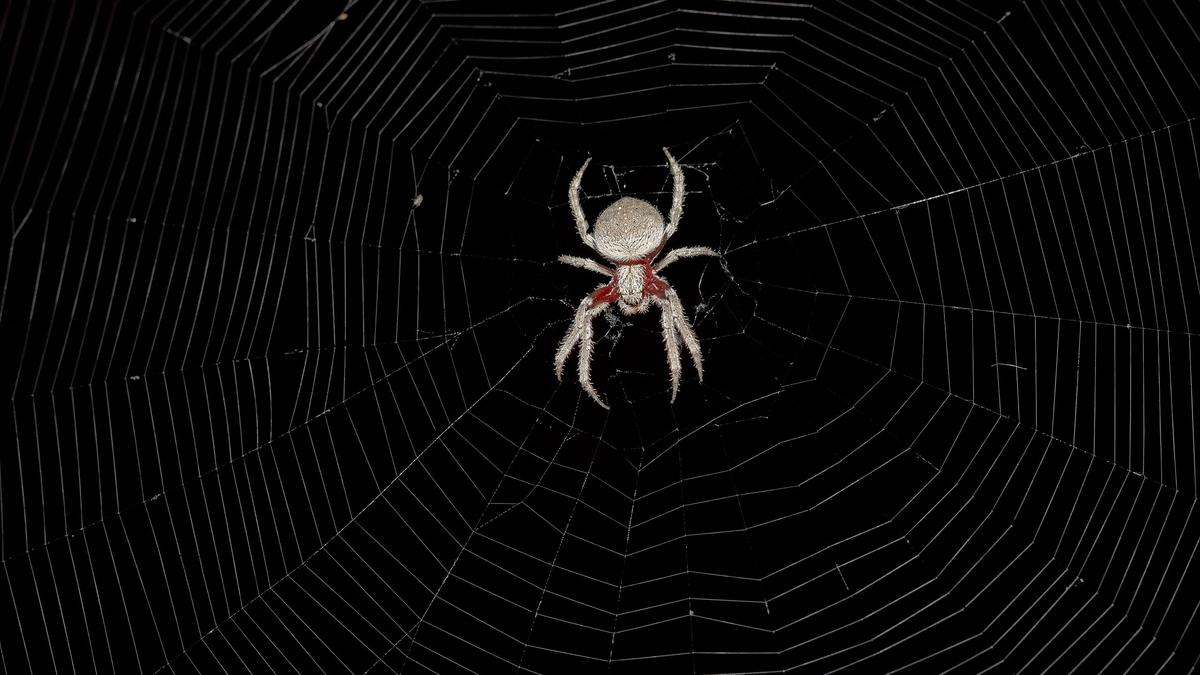
A female Australian garden orb weaver (Eriophora transmarina) in her web, January 21, 2016. These spiders only build their webs at night.
| Photo Credit: Thennicke (CC BY-SA 4.0)

As darkness falls, the nocturnal half of the animal kingdom starts its day. Nocturnal species are perfectly adapted to navigate and survive the dark of night that has existed for countless millions of years.

What happens to these creatures when the darkness they call home is transformed by streetlights and other artificial night lighting?

In new research published in Biology Letters, we studied how light pollution affects the development of Australian garden orb weaving spiders. We discovered it makes their brains smaller, particularly in the regions devoted to vision – with unknown effects on their behaviour.

What light pollution means for animals

Artificial light is one of the fastest-growing ways humans are polluting the world, and it has a huge range of effects on animals, plants and ecosystems. Recent evidence suggests the stress of living with light pollution may impair the growth and development of the brain in some birds and mammals.

This may be catastrophic. To survive in novel environments where light pollution is most common, such as cities, animals may actually need larger and more complex brains.

But what about insects and spiders and other, smaller creatures that inhabit the night? Could light pollution similarly affect the growth and development of their brains?

Our study on the nocturnal Australian garden orb weaving spider suggests it does.

More insects, fewer offspring

The Australian garden orb weaving spider is a perfect species to explore this question. It lives happily in cities and rural areas where it constructs its webs each night in wide open areas (even under streetlights).

In previous studies we found urban spiders that build webs under streetlights catch more insect prey. We also showed that light at night has a cost because it accelerates juvenile development resulting in smaller adults that produce fewer offspring.

In this current study we investigated whether developing under light at night also affects brain size in males and females.

To explore this question, we took late-juvenile spiders from relatively dark parks in Melbourne, Australia and reared them in the laboratory until they were adults.

During rearing we kept half the spiders under darkness at night and exposed the other half to nocturnal lighting equivalent to the brightness of a streetlight.

Smaller brains, but why?

A few weeks after the spiders were fully grown we assessed whether light at night had affected the development of their brains. As a spider brain is around the size of the nib of a ballpoint pen (less than a cubic millimetre) we used micro-CT imaging technology to visualise what was inside.

We found that short-term exposure to light at night resulted in overall smaller spider brain volumes. The strongest effects were seen in the area of the brain linked to vision in the spider’s primary eyes.

These results are a first for invertebrates (animals with no backbone, such as insects and spiders), but they mirror what has been described in vertebrates. We can only speculate how these differences came about.

It is possible that the presence of light at night created a stressful environment that disrupted hormonal processes related to growth and development. However, if this was the case we might expect to see all parts of the brain affected, which was not the case.

An alternative explanation is that spiders forced to develop under light at night changed their “investment” in different parts of the brain. Proper brain function is essential for an animal to navigate its environment, so under stressful conditions, limited resources may be directed to the more important parts of the brain. For spiders that don’t rely on vision, like orb-weavers, they may compensate by reducing investment in the visual parts of the brain, as we found here.

Other invertebrates such as desert ants (Cataglyphis fortis) show similar “neuroplastic shifts” in the visual centre of their brain when they move from subterranean nest-tending to above-ground, vision-based foraging.

Why spiders and their brains matter

All this is quite interesting, but you might be wondering why we should care about light pollution affecting the size of a spider’s brain.

Well, spiders are very important in an ecosystem. They eat other invertebrates, including many pest species such as flies and mosquitoes. Spiders are also important prey for other predators, such as birds and lizards.

If spiders’ brains get smaller, it may affect their cognitive function and ability to perform these vital roles. We know from other species of birds and mammals that larger brains can help individuals survive in novel city environments and it is likely the same may be true for spiders.

This research also shows that the effects of light pollution on brain development extend to invertebrates as well as birds and mammals. The full effects of humanity’s love of artificial lighting are likely much bigger than we yet understand.

Therésa Jones is a professor in evolution and behaviour and Nikolas Willmott is a PhD researcher in the Urban Light Lab, both at the University of Melbourne. This article is republished from The Conversation.

The Conversation

Published – September 10, 2024 01:21 pm IST



Source link

Science

Post navigation

Previous Post: Grass Patches Cut, Fans To Dry Outfield: Bizarre Scenes In Afghanistan vs New Zealand Noida Test
Next Post: Hours After Apple’s iPhone 16 Launch, Huawei Unveils Triple-Folding Phone

Related Posts

  • Crushed stones beneath our railway tracks? Why?
    Crushed stones beneath our railway tracks? Why? Science
  • New dragonfly species discovered in Kerala, named Lyriothemis keralensis
    New dragonfly species discovered in Kerala, named Lyriothemis keralensis Science
  • Mosquito species from Asia pose growing risk to Africa’s anti-malaria efforts
    Mosquito species from Asia pose growing risk to Africa’s anti-malaria efforts Science
  • bioAsia 2026: Hyderabad’s rise as AI innovation hub for global healthcare companies highlighted
    bioAsia 2026: Hyderabad’s rise as AI innovation hub for global healthcare companies highlighted Science
  • Sunflowers ‘dance’ to get more sunlight, scientists find
    Sunflowers ‘dance’ to get more sunlight, scientists find Science
  • What science is finding about the Shroud of Turin and the controversy around it
    What science is finding about the Shroud of Turin and the controversy around it Science

More Related Articles

Committee to probe ‘systemic issues’ behind repeated failure of PSLV rocket Committee to probe ‘systemic issues’ behind repeated failure of PSLV rocket Science
New study of supernovae calls dark energy’s existence into question New study of supernovae calls dark energy’s existence into question Science
NISAR satellite will be able to monitor tectonic movements accurately, says ISRO chief NISAR satellite will be able to monitor tectonic movements accurately, says ISRO chief Science
Solar Electric Vehicle Championship from March 27-31 in Manipal Solar Electric Vehicle Championship from March 27-31 in Manipal Science
Tropical birds show signs of mercury contamination, due to artisanal gold mining operations: Study Tropical birds show signs of mercury contamination, due to artisanal gold mining operations: Study Science
New NOvA data deepens mystery of subatomic particle’s mass New NOvA data deepens mystery of subatomic particle’s mass Science
SiteLock

Archives

  • May 2026
  • April 2026
  • March 2026
  • February 2026
  • January 2026
  • December 2025
  • November 2025
  • October 2025
  • September 2025
  • August 2025
  • July 2025
  • June 2025
  • May 2025
  • April 2025
  • March 2025
  • February 2025
  • January 2025
  • December 2024
  • November 2024
  • October 2024
  • September 2024
  • August 2024
  • July 2024
  • June 2024
  • May 2024
  • April 2024
  • March 2024
  • February 2024
  • January 2024
  • December 2023
  • November 2023
  • October 2023
  • September 2023
  • August 2023
  • July 2023
  • June 2023
  • May 2023
  • April 2023
  • March 2023
  • February 2023
  • January 2023
  • December 2022
  • November 2022
  • October 2022
  • September 2022
  • August 2022
  • July 2022
  • June 2022
  • May 2022

Categories

  • Business
  • Nation
  • Science
  • Sports
  • World

Recent Posts

  • Thoothukudi will see highest Tasmac closures of liquor shops near schools, places of worship
  • India bans sugar exports till September 30
  • What is the OpenAI criminal investigation about? | Explained
  • IPL 2026: Not getting runs eats me up, was nervous after successive ducks, says Virat Kohli
  • Xi warns Trump Taiwan issue could lead to ‘conflict’ as U.S.-China summit starts

Recent Comments

  1. Robertfloup on UP Teacher Who Asked Students To Slap Muslim Classmate
  2. Davidcag on UP Teacher Who Asked Students To Slap Muslim Classmate
  3. OrvalMaync on UP Teacher Who Asked Students To Slap Muslim Classmate
  4. Jeffreyroure on UP Teacher Who Asked Students To Slap Muslim Classmate
  5. Stevemonge on UP Teacher Who Asked Students To Slap Muslim Classmate
  • Global unemployment remains unchanged, ILO warns about decrease in jobs for youth, women
    Global unemployment remains unchanged, ILO warns about decrease in jobs for youth, women Business
  • Talks With Naveen Patnaik’s Party Stall, BJP Eyes Solo Contest In Odisha
    Talks With Naveen Patnaik’s Party Stall, BJP Eyes Solo Contest In Odisha Nation
  • Supreme Court Junks Domicile-Based Medical Quotas
    Supreme Court Junks Domicile-Based Medical Quotas Nation
  • Access Denied
    Access Denied Nation
  • Iran open to compromises to reach nuclear deal with U.S.: Minister
    Iran open to compromises to reach nuclear deal with U.S.: Minister World
  • Myanmar goes to polls amid civil war and humanitarian crisis
    Myanmar goes to polls amid civil war and humanitarian crisis World
  • Premier League Chief Fears Club World Cup’s Impact On Manchester City And Chelsea
    Premier League Chief Fears Club World Cup’s Impact On Manchester City And Chelsea Sports
  • Aiden Markram scripts history, becomes fielder with most catches in Test
    Aiden Markram scripts history, becomes fielder with most catches in Test Sports

Editor-in-Chief:
Mohammad Ariff,
MSW, MAJMC, BSW, DTL, CTS, CNM, CCR, CAL, RSL, ASOC.
editor@artifex.news

Associate Editors:
1. Zenellis R. Tuba,
zenelis@artifex.news
2. Haris Daniyel
daniyel@artifex.news

Photograher:
Rohan Das
rohan@artifex.news

Artifex.News offers Online Paid Internships to college students from India and Abroad. Interns will get a PRESS CARD and other online offers.
Send your CV (Subjectline: Paid Internship) to internship@artifex.news

Links:
Associate Journalism
About Us
Privacy Policy

News Links:
Breaking News
World
Nation
Sports
Business
Entertainment
Lifestyle

Registered Office:
72/A, Elliot Road, Kolkata - 700016
Tel: 033-22277777, 033-22172217
Email: office@artifex.news

Editorial Office / News Desk:
No. 13, Mezzanine Floor, Esplanade Metro Rail Station,
12 J. L. Nehru Road, Kolkata - 700069.
(Entry from Gate No. 5)
Tel: 033-46011099, 033-46046046
Email: editor@artifex.news

Copyright © 2023 Artifex.News Newsportal designed by Artifex Infotech.