

Skip to content
  • Facebook
  • X
  • Linkedin
  • WhatsApp
  • YouTube
  • Associate Journalism
  • About Us
  • Privacy Policy
  • 033-46046046
  • editor@artifex.news
Artifex.News

Artifex.News

Stay Connected. Stay Informed.

  • Breaking News
  • World
  • Nation
  • Sports
  • Business
  • Science
  • Entertainment
  • Lifestyle
  • Toggle search form
  • Hindu Population Fell 7.8% Between 1950-2015, Muslims Up 43.15%: Centre’s Report
    Hindu Population Fell 7.8% Between 1950-2015, Muslims Up 43.15%: Centre’s Report Nation
  • After ‘Only 900 Euros Left’ Shocker, India’s Top Tennis Star Sumit Nagal Gets Support
    After ‘Only 900 Euros Left’ Shocker, India’s Top Tennis Star Sumit Nagal Gets Support Sports
  • India Paralympics Medalists Return Home, Given Grand Welcome
    India Paralympics Medalists Return Home, Given Grand Welcome Sports
  • Increased demand for urea from farmers after good monsoons: FM elaborates on need for additional spending
    Increased demand for urea from farmers after good monsoons: FM elaborates on need for additional spending Business
  • “Will Hurt For A Long Time”: Harry Kane After England’s Loss In Euro 2024 Final vs Spain
    “Will Hurt For A Long Time”: Harry Kane After England’s Loss In Euro 2024 Final vs Spain Sports
  • Ponguleti hails Christian community’s service to society
    Ponguleti hails Christian community’s service to society Nation
  • Access Denied World
  • Office Being Maligned In Court By Delhi Government, Alleges Lt Governor
    Office Being Maligned In Court By Delhi Government, Alleges Lt Governor Nation
What science is finding about the Shroud of Turin and the controversy around it

What science is finding about the Shroud of Turin and the controversy around it

Posted on September 11, 2024 By admin


The Cathedral of St. John the Baptist in Turin, Italy, houses a fascinating artifact: a massive cloth shroud that bears the shadowy image of a man who appears to have been crucified. 
| Photo Credit:  Pierre Perrin/Sygma via Getty Images

The Cathedral of St. John the Baptist in Turin, Italy, houses a fascinating artifact: a massive cloth shroud that bears the shadowy image of a man who appears to have been crucified. Millions of Christians around the world believe that this shroud – commonly called the Shroud of Turin – is the cloth that was used to bury Jesus after his crucifixion and that the image on the shroud was produced miraculously when he was resurrected.

The evidence, however, tells a different story.

Scientists have questioned the validity of the claims about the shroud being a first-century object. Evidence from carbon-14 dating points to the shroud being a creation from the Middle Ages. Skeptics, however, dismiss these tests as flawed. The shroud remains an object of faith, intrigue and controversy that reappears periodically in the public sphere, as it has in recent weeks.

As a scholar of early Christianity, I have long been interested in why people are motivated to create objects like the shroud and also why people are drawn to revere them as authentic.

The shroud and its history

The first public appearance of the shroud was in 1354, when it was displayed publicly in Lirey, a small commune in central France. Christian pilgrims traveled from all over to gaze upon the image of the crucified Jesus.

Pilgrimages like this were common during the Middle Ages, when relics of holy people began to appear throughout Europe. The relic trade was big business at the time; relics were bought and sold, and pilgrims often paid a fee to visit them.

Many believed that these relics were genuine. In addition to the shroud, pilgrims visited Jesus’ crib, splinters from the cross and Jesus’ foreskin, just to name a few.

But even in the 14th century, when the relic trade in Europe was flourishing, some were suspicious.

In 1390, only a few decades after the shroud was displayed in Lirey, a French bishop named Pierre d’Arcis claimed in a letter to Pope Clement VII not only that the shroud was a fake but that the artist responsible for its creation had already confessed to creating it. Clement VII agreed with the assessment of the shroud, although he permitted its continued display as a piece of religious art.

The shroud and science

The shroud has been the subject of much scientific investigation in the past several decades. Data from scientific tests matches what scholars know about the shroud from historical records.

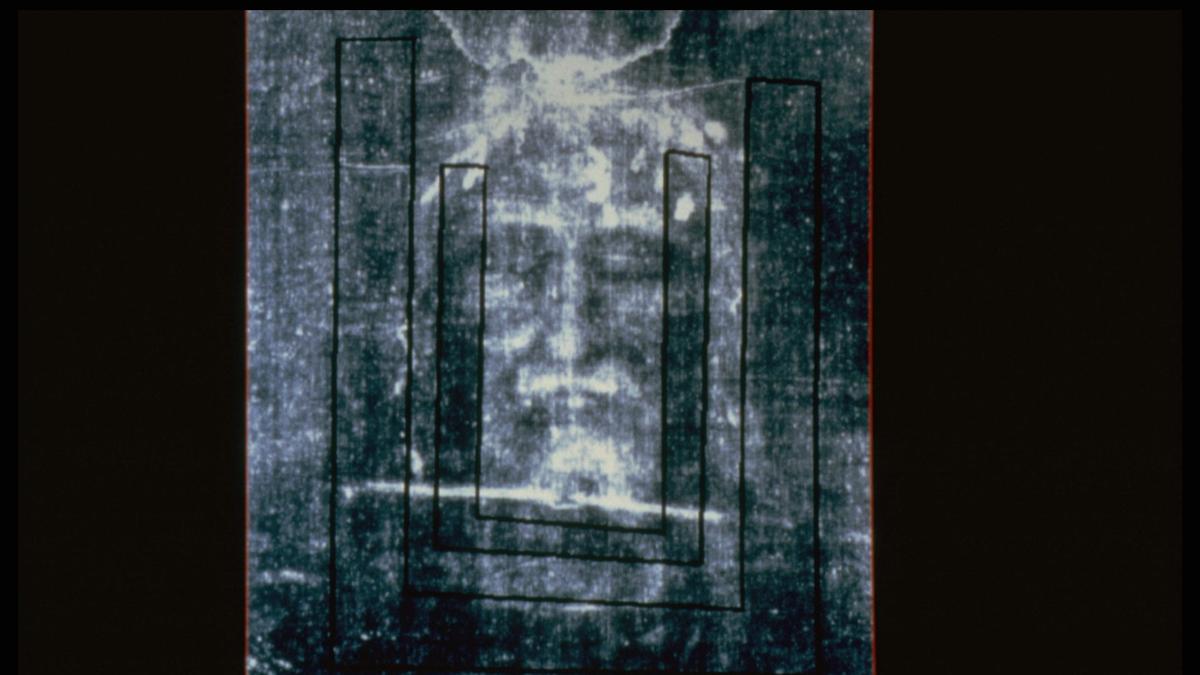
In 1988, a team of scientists used carbon-14 dating to determine when the fabric of the shroud was manufactured. The tests were performed at three labs, all working independently. Based on data from these labs, scientists said there was “conclusive evidence” that the shroud originated between the years 1260 and 1390.

Results from another scientific study over 30 years later appeared to debunk these findings. Using an advanced X-ray technique to study the structure of materials, the scientists concluded that the fabric of the shroud was much older and could likely be from the first century. They also noted, however, that their results could be considered conclusive only if the shroud had been stored at a relatively constant temperature and humidity – between 68-72.5 degrees Fahrenheit and 55% to 75% – for the entirety of two millennia.

This would be highly unlikely for any artifact from that period. And when it comes to the shroud, the conditions under which it has survived have been less than ideal.

In 1532, while the shroud was being kept in Chambéry in southern France, the building it was housed in caught fire. The silver case that held the shroud melted; despite intricate repair attempts, the burn marks in the fabric remain visible to this day. It was saved from another fire in Turin as recently as 1997.

Despite the ongoing debate, the carbon-14 dating results have continued to provide the most compelling scientific evidence that the shroud is a product of the Middle Ages and not an ancient relic.

The shroud as religious art

The shroud is undeniably a masterful work of art, crafted with remarkable skill and using methods that were complicated and ahead of their time. For centuries, many experts struggled to understand how the image was imprinted onto the fabric, and it wasn’t until 2009 that scientists were successfully able to reproduce the technique using medieval methods and materials.

Pope Francis once referred to the shroud as an “icon,” a type of religious art that can be used for a variety of purposes, including teaching, theological expression and even worship. Without addressing the authenticity of the shroud, the pope suggested that by prompting reflection on the face and body of the crucified Jesus, the shroud encouraged people to also consider those around them who may be suffering.

It is at least possible that the shroud was created as a tool that would encourage viewers to meditate on the death of Jesus in a tangible way.

Ultimately, the shroud of Turin will continue to intrigue and draw both believers and skeptics into a debate that has spanned centuries. But I believe that the shroud encourages viewers to think about how history, art and belief come together and influence how we see the past.

This article is republished from The Conversation under a Creative Commons license. Read the original article.

Published – September 11, 2024 06:18 pm IST



Source link

Science Tags:Shroud of Turin, the science behind shroud of turin

Post navigation

Previous Post: How A Bag Of Cheetos Unleashed Chaos In A Fragile US Cave Ecosystem
Next Post: Anton Roux Announces Decision To Quit As Sri Lanka Cricket Team Fielding Coach

Related Posts

  • In pictures | Rare blue supermoon dazzles stargazers around the globe
    In pictures | Rare blue supermoon dazzles stargazers around the globe Science
  • Leaders hail work of visionary scientist M.S. Swaminathan
    Leaders hail work of visionary scientist M.S. Swaminathan Science
  • Fighting mosquito menace with repellents, vaccines
    Fighting mosquito menace with repellents, vaccines Science
  • Unpredictable rainfall makes farming in Marathwada even harder
    Unpredictable rainfall makes farming in Marathwada even harder Science
  • Nylon: A synthetic fibre that created a craze
    Nylon: A synthetic fibre that created a craze Science
  • Life pays universe a ‘heat tax’ to run precise chemical reactions
    Life pays universe a ‘heat tax’ to run precise chemical reactions Science

More Related Articles

Sci-Five | The Hindu Science Quiz: On Autism Sci-Five | The Hindu Science Quiz: On Autism Science
Indian Institute of Science study reveals how cancer cells adapt while moving across tissues Indian Institute of Science study reveals how cancer cells adapt while moving across tissues Science
How are we protecting astronauts from deadly space debris? How are we protecting astronauts from deadly space debris? Science
Climate Change and Climate Justice: India’s efforts to balance economic growth with green transition Climate Change and Climate Justice: India’s efforts to balance economic growth with green transition Science
Significance of Boeing Starliner’s first crewed test flight on May 7 | Explained Significance of Boeing Starliner’s first crewed test flight on May 7 | Explained Science
When a DNA analysis reveals a closely guarded family secret… When a DNA analysis reveals a closely guarded family secret… Science
SiteLock

Archives

  • May 2026
  • April 2026
  • March 2026
  • February 2026
  • January 2026
  • December 2025
  • November 2025
  • October 2025
  • September 2025
  • August 2025
  • July 2025
  • June 2025
  • May 2025
  • April 2025
  • March 2025
  • February 2025
  • January 2025
  • December 2024
  • November 2024
  • October 2024
  • September 2024
  • August 2024
  • July 2024
  • June 2024
  • May 2024
  • April 2024
  • March 2024
  • February 2024
  • January 2024
  • December 2023
  • November 2023
  • October 2023
  • September 2023
  • August 2023
  • July 2023
  • June 2023
  • May 2023
  • April 2023
  • March 2023
  • February 2023
  • January 2023
  • December 2022
  • November 2022
  • October 2022
  • September 2022
  • August 2022
  • July 2022
  • June 2022
  • May 2022

Categories

  • Business
  • Nation
  • Science
  • Sports
  • World

Recent Posts

  • Tamil Nadu Assembly session LIVE: CM Vijay moves resolution seeking confidence vote
  • What is in the U.S. Senate’s landmark crypto bill?
  • Trinamool’s land policy delayed West Bengal border fencing: MHA’s 2023 affidavit in Supreme Court
  • ‘Take action to remove deceased Gruha Lakshmi beneficiaries’
  • Hanuman Jayanti: Muslim residents offer buttermilk to Hindu devotees in Kadapa days after clashes

Recent Comments

  1. DavidAnymn on UP Teacher Who Asked Students To Slap Muslim Classmate
  2. Jesusetexy on UP Teacher Who Asked Students To Slap Muslim Classmate
  3. JeffryFok on UP Teacher Who Asked Students To Slap Muslim Classmate
  4. StanleyPeapy on UP Teacher Who Asked Students To Slap Muslim Classmate
  5. RonaldLam on UP Teacher Who Asked Students To Slap Muslim Classmate
  • US Envoy’s Praise For India
    US Envoy’s Praise For India Nation
  • Olympics 2024: India Put One Foot In Hockey Quarter-Finals With 2-0 Win Over Ireland
    Olympics 2024: India Put One Foot In Hockey Quarter-Finals With 2-0 Win Over Ireland Sports
  • Access Denied Sports
  • NASA Will Soon Provide Advanced Training To Indian Astronauts: US Envoy
    NASA Will Soon Provide Advanced Training To Indian Astronauts: US Envoy Nation
  • Access Denied World
  • Access Denied Business
  • ”Stop it!” United Nations’ nuclear chief pushes Iran to end block on international inspectors
    ”Stop it!” United Nations’ nuclear chief pushes Iran to end block on international inspectors World
  • Access Denied Sports

Editor-in-Chief:
Mohammad Ariff,
MSW, MAJMC, BSW, DTL, CTS, CNM, CCR, CAL, RSL, ASOC.
editor@artifex.news

Associate Editors:
1. Zenellis R. Tuba,
zenelis@artifex.news
2. Haris Daniyel
daniyel@artifex.news

Photograher:
Rohan Das
rohan@artifex.news

Artifex.News offers Online Paid Internships to college students from India and Abroad. Interns will get a PRESS CARD and other online offers.
Send your CV (Subjectline: Paid Internship) to internship@artifex.news

Links:
Associate Journalism
About Us
Privacy Policy

News Links:
Breaking News
World
Nation
Sports
Business
Entertainment
Lifestyle

Registered Office:
72/A, Elliot Road, Kolkata - 700016
Tel: 033-22277777, 033-22172217
Email: office@artifex.news

Editorial Office / News Desk:
No. 13, Mezzanine Floor, Esplanade Metro Rail Station,
12 J. L. Nehru Road, Kolkata - 700069.
(Entry from Gate No. 5)
Tel: 033-46011099, 033-46046046
Email: editor@artifex.news

Copyright © 2023 Artifex.News Newsportal designed by Artifex Infotech.