


Skip to content
  • Facebook
  • X
  • Linkedin
  • WhatsApp
  • YouTube
  • Associate Journalism
  • About Us
  • Privacy Policy
  • 033-46046046
  • editor@artifex.news
Artifex.News

Artifex.News

Stay Connected. Stay Informed.

  • Breaking News
  • World
  • Nation
  • Sports
  • Business
  • Science
  • Entertainment
  • Lifestyle
  • Toggle search form
  • T.N. govt. allocates ₹828.36 crore for MLACDS
    T.N. govt. allocates ₹828.36 crore for MLACDS Nation
  • Iran President Ebrahim Raisi To Be Buried In Holy City Of Mashhad
    Iran President Ebrahim Raisi To Be Buried In Holy City Of Mashhad World
  • Who is Susie Wiles, Donald Trump’s new White House chief of staff?
    Who is Susie Wiles, Donald Trump’s new White House chief of staff? World
  • Madhya Pradesh Chief Minister Hints At Total Ban On Liquor After Big Move
    Madhya Pradesh Chief Minister Hints At Total Ban On Liquor After Big Move Nation
  • Delhi HC awards ₹50k compensation to bank manager who foiled armed robbery in 1998
    Delhi HC awards ₹50k compensation to bank manager who foiled armed robbery in 1998 Nation
  • Local BJP Leader Shot Dead By Maoists In Chhattisgarh’s Bijapur: Cops
    Local BJP Leader Shot Dead By Maoists In Chhattisgarh’s Bijapur: Cops Nation
  • Railway Board Forms Committee To Review Speed Violation By Train Drivers
    Railway Board Forms Committee To Review Speed Violation By Train Drivers Nation
  • “India’s Dream To Host Olympics 2036, We Are Preparing”: PM Narendra Modi
    “India’s Dream To Host Olympics 2036, We Are Preparing”: PM Narendra Modi Sports
Mosquito species from Asia pose growing risk to Africa’s anti-malaria efforts

Mosquito species from Asia pose growing risk to Africa’s anti-malaria efforts

Posted on May 28, 2024 By admin


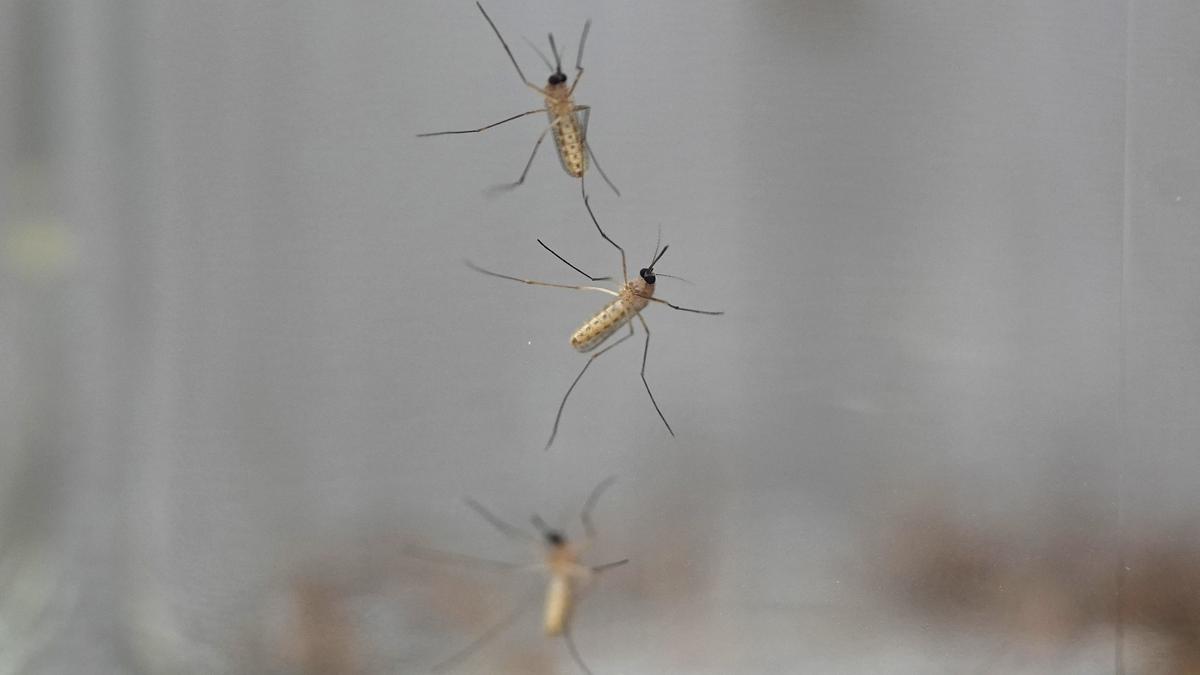
Mosquitoes cling to the inside of a jar loaded with repellent during a test as part of a tour of the Center for Disease Control laboratory, Thursday, April 4, 2024, in Fort Collins, Colo.
| Photo Credit: AP

The spread of the mosquito species Anopheles stephensi across Africa poses a significant problem to a continent already heavily burdened by malaria. Most – 90% – of the world’s malaria deaths are on the continent.

Researchers from Djibouti reported the presence of An. stephensi in the Horn of Africa in 2012. Until then it had not been found in Africa although it was known to be widespread in Southeast Asia and parts of the Arabian Peninsula. By 2017 it had spread through the Horn of Africa, reaching Ethiopia, Somalia and Sudan.

The spread of An. stephensi is particularly concerning because the mosquito has a number of characteristics that make it difficult to control. This species can thrive in urban areas and likes being near humans. They lay their eggs in any available water source – such as water containers, abandoned tyres and flowerpots – and their eggs can survive being dry for a long period of time. In addition, An. stephensi feeds on its vertebrate host both indoors and outdoors. This reduces the impact of commonly used vector control methods such as insecticide-treated nets and indoor residual spraying.

The invasion of this urban mosquito into Africa threatens the malaria elimination aspirations of the continent, particularly as 42.5% of Africa’s population now live in urban areas.

As a result, national malaria control programmes have increased surveillance efforts in urban areas to enable early detection and control. Countries have also run awareness campaigns to encourage communities to reduce potential breeding sites.

The species has not yet been detected in southern Africa. Nevertheless the South African national malaria control programme, with the support of the National Institute for Communicable Diseases, is increasing surveillance activities in areas where this species may occur.

Invasive species

Many epidemics and pandemics have been driven by pathogens, hosts and vectors invading new areas. These include the Black Death in 14th century Europe, caused by the invasion of rats carrying fleas infected with the plague.

The Asian tiger mosquito (Aedes albopictus) and the yellow fever mosquito (Aedes aegypti) both carry dangerous diseases such as dengue, yellow fever and Zika. The spread of these mosquito species into North America and Europe during the 1970s and 1980s was associated with large increases in these diseases.

While Aedes mosquitoes transmit viral diseases, Anopheles mosquitoes transmit malaria. Of the 500 Anopheles species, only 30-40 can spread malaria. Common species that transmit malaria in Africa are Anopheles gambiae, An. arabiensis and An. funestus.

Anopheles gambiae is one of the most effective malaria vectors in the world. It invaded South America in the 1930s. This species rapidly established itself in Brazil, causing a malaria epidemic with an estimated fatality rate of 13%. Anopheles gambiae was eventually eliminated from Brazil in the 1940s after a highly co-ordinated and resource-intensive effort.

Anopheles stephensi is a malaria vector native to South Asia. It transmits both Plasmodium falciparum and P. vivax. It rapidly adapts to changes in the environment and is found in both rural and urban areas. This is different from African malaria vectors, which are typically found in rural areas.

Controlling this invasive mosquito is very challenging. It is difficult to find, particularly in urban areas, and is resistant to a number of insecticides. Although there are no specific programmes to eliminate this species from Africa, the affected countries are implementing a range of control measures.

Urgent action

The presence of An. stephensi in Africa is a call to action to all interested in controlling and eliminating malaria.

It is imperative that entomological surveillance (the search for and biological investigation of insects, including malaria vectors) is strengthened across the continent. New information about the species must be shared promptly to ensure malaria control programmes use the correct methods to prevent it from spreading further into the continent.

And an integrated approach to vector control is urgently required. Vector control measures, adapted to local conditions, are key to preventing the spread of An. stephensi. National malaria control programmes cannot rely solely on insecticides to control this mosquito. They must invest in novel vector control methods that target outdoor-biting mosquitoes.

Governments must also invest in educating communities on the appropriate methods for storing water as well as eliminating potential breeding sources. South America has implemented strong policies to reduce breeding areas for Aedes mosquitoes. Similar approaches in Africa would reduce the presence of An. stephensi, as well as of Aedes mosquitoes, which carry many dreaded diseases including dengue, yellow fever, chikungunya and Zika.

Crucially, a healthy population without circulating parasites is key to a malaria-free future. Integrating clinical care, vector control and community awareness of the disease is the best way to ensure a malaria-free future for the continent.

This article is republished from The Conversation under a Creative Commons license. Read the original article.



Source link

Science Tags:health news, malaria deaths, mosquito species, mosquitoes, science news, species of mosquito that causes in malaria

Post navigation

Previous Post: What causes landslides? Can we predict them to save lives?
Next Post: How clothed pig carcasses are revealing the secrets of mummification

Related Posts

  • UTIs, tooth decay: how common infections may be fast-tracking dementia
    UTIs, tooth decay: how common infections may be fast-tracking dementia Science
  • Margaret Hamilton, scientist who worked on NASA’s Apollo program, dead at 90
    Margaret Hamilton, scientist who worked on NASA’s Apollo program, dead at 90 Science
  • Rain inside the house – The Hindu
    Rain inside the house – The Hindu Science
  • Shielding humans alone won’t prevent pandemics if animals can fall ill
    Shielding humans alone won’t prevent pandemics if animals can fall ill Science
  • Sci-Five | The Hindu Science Quiz: On Solstice
    Sci-Five | The Hindu Science Quiz: On Solstice Science
  • Pragyan rover confirms sulphur at moon’s south pole, searching for hydrogen
    Pragyan rover confirms sulphur at moon’s south pole, searching for hydrogen Science

More Related Articles

Airline pilots’ body calls attention to lithium battery fire risk | Explained Airline pilots’ body calls attention to lithium battery fire risk | Explained Science
Odisha tribal healer’s remedies for chronic diseases to undergo scientific validation under Ministry of Ayush initiative Odisha tribal healer’s remedies for chronic diseases to undergo scientific validation under Ministry of Ayush initiative Science
New book throws light on the people who helped build India’s first rockets New book throws light on the people who helped build India’s first rockets Science
Three groups of cicadas emerge together for first time in 1,547 years Three groups of cicadas emerge together for first time in 1,547 years Science
Spin Science: Explaining the Magnus effect Spin Science: Explaining the Magnus effect Science
New study finds how calcium and pH regulate ovarian cancer spheroids New study finds how calcium and pH regulate ovarian cancer spheroids Science
SiteLock

Archives

  • October 2026
  • September 2026
  • August 2026
  • July 2026
  • June 2026
  • May 2026
  • April 2026
  • March 2026
  • February 2026
  • January 2026
  • December 2025
  • November 2025
  • October 2025
  • September 2025
  • August 2025
  • July 2025
  • June 2025
  • May 2025
  • April 2025
  • March 2025
  • February 2025
  • January 2025
  • December 2024
  • November 2024
  • October 2024
  • September 2024
  • August 2024
  • July 2024
  • June 2024
  • May 2024
  • April 2024
  • March 2024
  • February 2024
  • January 2024
  • December 2023
  • November 2023
  • October 2023
  • September 2023
  • August 2023
  • July 2023
  • June 2023
  • May 2023
  • April 2023
  • March 2023
  • February 2023
  • January 2023
  • December 2022
  • November 2022
  • October 2022
  • September 2022
  • August 2022
  • July 2022
  • June 2022
  • May 2022

Categories

  • Business
  • Nation
  • Science
  • Sports
  • World

Recent Posts

  • 100 kg of ganja seized in Thanjavur
  • Iran reports cargo ship sinks after hitting mine in Strait of Hormuz
  • HC grants bail to accused in Kavin caste killing case
  • UN says wants Lebanon stability as end of peacekeepers’ mandate looms
  • Rahul, Revanth rise to the occasion again, thwart Karnataka’s victory push

Recent Comments

  1. WalterBoumn on UP Teacher Who Asked Students To Slap Muslim Classmate
  2. HermanTwito on UP Teacher Who Asked Students To Slap Muslim Classmate
  3. JamesWhazy on UP Teacher Who Asked Students To Slap Muslim Classmate
  4. JamesWhazy on UP Teacher Who Asked Students To Slap Muslim Classmate
  5. ShawnFeach on UP Teacher Who Asked Students To Slap Muslim Classmate
  • T20 World Cup, Super 8: Australia Beat Bangladesh By 28 Runs Under DLS Method
    T20 World Cup, Super 8: Australia Beat Bangladesh By 28 Runs Under DLS Method Sports
  • Vinesh Phogat Gets Notice From National Anti-Doping Body For “Apparent Failure To Comply With…”
    Vinesh Phogat Gets Notice From National Anti-Doping Body For “Apparent Failure To Comply With…” Sports
  • Science Quiz: On medical disasters
    Science Quiz: On medical disasters Science
  • Access Denied World
  • Access Denied
    Access Denied Nation
  • Pakistan Cricket Board Chairman Says Strategy In Place For T20 World Cup, Urges Fans To Fully Back Team
    Pakistan Cricket Board Chairman Says Strategy In Place For T20 World Cup, Urges Fans To Fully Back Team Sports
  • New model finds hovering doesn’t need a complex brain
    New model finds hovering doesn’t need a complex brain Science
  • Access Denied
    Access Denied Nation

Editor-in-Chief:
Mohammad Ariff,
MSW, MAJMC, BSW, DTL, CTS, CNM, CCR, CAL, RSL, ASOC.
editor@artifex.news

Associate Editors:
1. Zenellis R. Tuba,
zenelis@artifex.news
2. Haris Daniyel
daniyel@artifex.news

Photograher:
Rohan Das
rohan@artifex.news

Associate Journalists
1. Subrata Paul - AN/2020/01
2. Quamruz Zaman - AN/2021/22
3. Ahmed Sha - AN/2021/035
4. Ajay Kumar Shaw - AN/2021/39
5. Tahqiqul Hoda - AN/2021/21

Artifex.News offers Online Paid Internships to college students from India and Abroad. Interns will get a PRESS CARD and other online offers.
Send your CV (Subjectline: Paid Internship) to internship@artifex.news

Links:
Associate Journalism
About Us
Privacy Policy

News Links:
Breaking News
World
Nation
Sports
Business
Entertainment
Lifestyle

Registered Office:
72/A, Elliot Road, Kolkata - 700016
Tel: 033-22277777, 033-22172217
Email: office@artifex.news

Editorial Office / News Desk:
No. 13, Mezzanine Floor, Esplanade Metro Rail Station,
12 J. L. Nehru Road, Kolkata - 700069.
(Entry from Gate No. 5)
Tel: 033-46011099, 033-46046046
Email: editor@artifex.news

Copyright © 2023 Artifex.News Newsportal designed by Artifex Infotech.