





Skip to content
  • Facebook
  • X
  • Linkedin
  • WhatsApp
  • YouTube
  • Associate Journalism
  • About Us
  • Privacy Policy
  • 033-46046046
  • editor@artifex.news
Artifex.News

Artifex.News

Stay Connected. Stay Informed.

  • Breaking News
  • World
  • Nation
  • Sports
  • Business
  • Science
  • Entertainment
  • Lifestyle
  • Toggle search form
  • U.S. lawmaker urges Pentagon to reconsider beard-shaving policy for Sikhs
    U.S. lawmaker urges Pentagon to reconsider beard-shaving policy for Sikhs World
  • Access Denied Sports
  • Access Denied World
  • Rupee falls 8 paise to close at 87.66 against U.S. dollar
    Rupee falls 8 paise to close at 87.66 against U.S. dollar Business
  • ASHA Worker Allegedly Forces Daughter-In-Law To Miscarry Fearing 3rd Girl Child
    ASHA Worker Allegedly Forces Daughter-In-Law To Miscarry Fearing 3rd Girl Child Nation
  • Saudi Arabia Ready For Summer Or Winter World Cup After Rapid Bid Process
    Saudi Arabia Ready For Summer Or Winter World Cup After Rapid Bid Process Sports
  • Access Denied Sports
  • Access Denied World
Three groups of cicadas emerge together for first time in 1,547 years

Three groups of cicadas emerge together for first time in 1,547 years

Posted on November 20, 2024 By admin


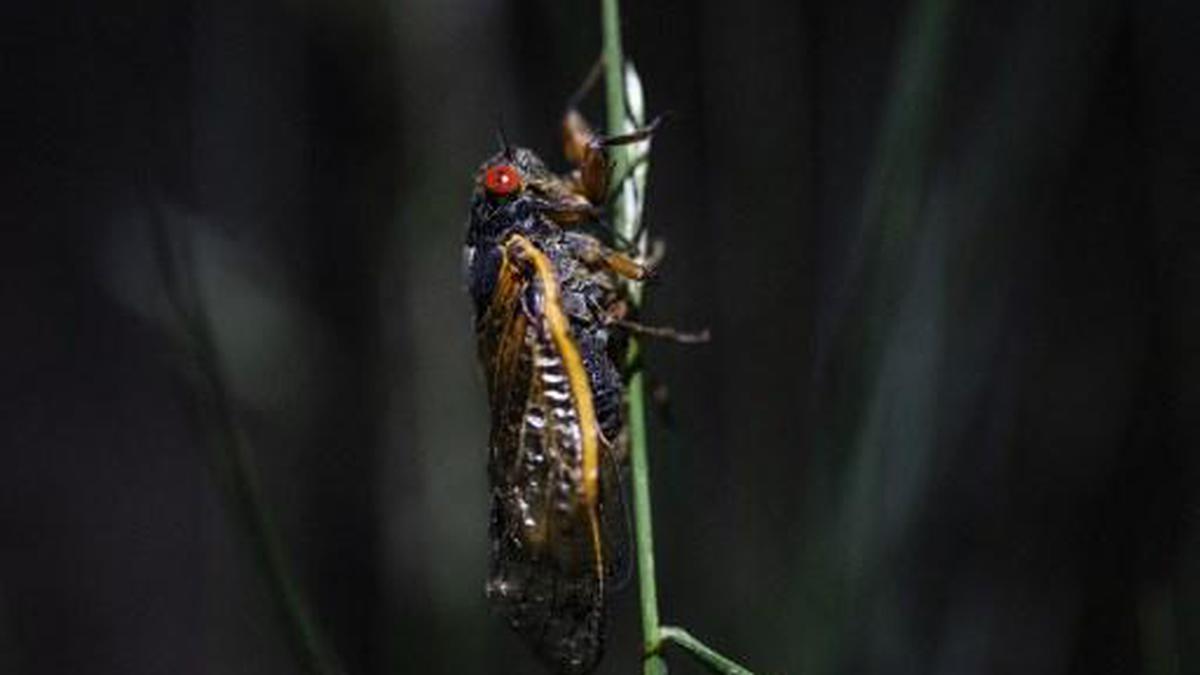
It’s a big year in America – for wildlife as well as for politics. I’m talking about periodical cicadas.

These curious creatures spend most of their lives in the ground, emerging after 13 or 17 years to eat, breed, die and repeat the cycle. For the first time in more than 200 years, two specific broods of the 13- and 17-year cicadas have emerged together: Brood XIX, in the southeastern United States, and Brood XIII, found in the country’s Midwest.

What’s more, this time the emergence of these broods also happens to coincide with an unrelated event on the other side of the world: the emergence of a big batch of Australian greengrocer cicadas, which have a seven-year life cycle.

This remarkable event has been 1,547 years in the making. Thinking about it sheds light on some of the deepest questions about mathematics.

Did we invent mathematics, or was it there all along?

Are mathematical facts created or discovered? Ask a mathematician, and they are likely to tell you that mathematical facts are discovered.

But this is perplexing: if such facts are discovered, what are we discovering? Are mathematical facts somehow “out there” before we discover them? Does that mean there’s some realm of pure mathematics that we uncover with our minds?

These sorts of questions quickly begin to feel pretty uncomfortable. We find ourselves in deep metaphysical territory, beset by questions about the nature of reality.

For it seems that in addition to the physical components of the world, there must also exist things like numbers, and even more exotic mathematical entities such as sets and functions. These seem to be real objects, that we gradually uncover through the activity of mathematics.

On the other hand, if we think of mathematics as an act of creation, these metaphysical questions disappear. Mathematics can be like a language we’ve invented to describe the world.

In this picture, mathematics is just a very precise way of speaking that happens to be useful.

Which brings us back to the cicadas: these little critters put pressure on the idea that mathematics is something we created ourselves.

Cicada life cycles

North American cicadas have life cycles that last for prime numbers of years. Why 13 or 17 years? Why not 12, 14, 15 or 16?

One explanation asks us to imagine the cicadas are hunted by periodical predators that spend most of their lives in the ground and then, after a period of time, emerge to hunt. In particular, suppose there are five species of predator, with life cycles of two, three, four, five, six and seven years.

A cicada will have the best chance of survival if it can emerge from the ground when its predators are lying dormant. The cicadas with the best chance of survival will therefore be those that manage to avoid emerging at the same time as their predators.

It turns out the best way to avoid periodical predators is to move to a life cycle that lasts a prime number of years.

To see this, suppose a cicada has 12-year life cycle. Whenever it comes out of the ground, there will be predators with two-, three-, four- and six-year life cycles on the hunt.

A cicada with a 14-year life cycle will overlap with predators possessing two- and seven-year life cycles, and a cicada with a 15-year life cycle will overlap with predators on three- and five-year cycles. Cicadas with 13- or 17-year life cycles, by contrast, will generally avoid all of these predators.

There is a general mathematical result that explains all of this, involving the lowest common multiple of two numbers: the smallest number that both can divide into evenly.

How often a cicada overlaps with a predator turns out to depend on the lowest common multiple of the cicada and predator life-cycles. For instance, a cicada with a 12-year life cycle and a predator with a two-year life cycle will overlap every 12 years, which is the lowest common multiple of two and 12. By contrast, a cicada with a 13-year life cycle and a predator with a 2-year life cycle will only overlap every 26 years.

As a general rule, having a prime-numbered life cycle is a very good way for a cicada to ensure it overlaps as little as possible with its predator.

Another theory suggests the prime-numbered life cycles actually help cicadas avoid interbreeding with other broods. Either way, similar mathematical logic applies.

This is also why Australian cicadas (with their seven-year cycle) overlap so infrequently with their US cousins (with 13- and 17-year cycles). The lowest common multiple of seven, 13 and 17 is 1,547!

What happens when mathematics explains biology?

As the US philosopher Alan Baker has argued, this biological explanation for why cicadas have prime-numbered life cycles relies heavily on mathematics. In this case, it seems like facts about mathematics explain facts about biology and evolution.

This is very hard to understand if mathematics is something we have simply created. If mathematics is a language we invented, why should it apparently guide the evolutionary history of cicadas? This would be a bit like saying the planets move the way they do because of how we talk about them in English.

Once we start looking for these explanations involving mathematics, they seem to be everywhere. To take an example from my own research: why do gears in machinery generally have prime numbers of teeth?

The answer is very similar to the cicada story. If gears have a prime-numbered amount of teeth, then the same two teeth will contact each other much less frequently than if the gear-teeth are not prime-numbered.

This ensures that if there is an imperfection on a specific pair of teeth, one from each gear, then the imperfections won’t keep striking each other. This way, the chance of the gear failing is minimised.

The end of an empire

One thousand, five hundred and forty-seven years is a long time – long enough to see empires rise and fall.

Indeed, the last time American and Australian cicadas emerged together, in the year 477, the Western Roman Empire was in the throes of collapse.

It is, of course, a coincidence that they have emerged again at what may be another turning point in Western civilisation. One can’t help but wonder, though: are the bugs to blame?

Sam Baron is associate professor, Philosophy of Science, The University of Melbourne. This article is republished from The Conversation.

Published – November 20, 2024 07:00 am IST



Source link

Science

Post navigation

Previous Post: Maharashtra Assembly Election, Jharkhand Assembly Election: Maharashtra Votes For High-Stakes Polls, Phase-2 In Jharkhand: 10 Points
Next Post: No, Centre Has Not Raised Age Of Retirement To 62

Related Posts

  • What’s the issue with the way Africa is shown on maps? | Explained
    What’s the issue with the way Africa is shown on maps? | Explained Science
  • ISRO 100th mission LIVE: Countdown for ISRO’s satellite launch begins at Sriharikota
    ISRO 100th mission LIVE: Countdown for ISRO’s satellite launch begins at Sriharikota Science
  • What is ORS? Why is it in the news?
    What is ORS? Why is it in the news? Science
  • Chandrayaan 4 and 5 design complete; 70 satellites likely to be launched in 5 years: ISRO chief
    Chandrayaan 4 and 5 design complete; 70 satellites likely to be launched in 5 years: ISRO chief Science
  • Libya dam collapse: engineering expert raises questions about management
    Libya dam collapse: engineering expert raises questions about management Science
  • Can CAR-T, a therapy for cancer, help treat autoimmune diseases? | In Focus podcast
    Can CAR-T, a therapy for cancer, help treat autoimmune diseases? | In Focus podcast Science

More Related Articles

Why do we lose muscle mass with age? Scientists find one factor Why do we lose muscle mass with age? Scientists find one factor Science
Rise and shine: morning sunlight and your wellbeing Rise and shine: morning sunlight and your wellbeing Science
Reshaping during healing in plants Reshaping during healing in plants Science
ISRO to launch U.S. satellite on December 24 ISRO to launch U.S. satellite on December 24 Science
Scientists are using ancient DNA to reveal the Iberian lynx’s ‘weapon’ against extinction Scientists are using ancient DNA to reveal the Iberian lynx’s ‘weapon’ against extinction Science
Why does water stay cool in a claypot even in peak summers? Why does water stay cool in a claypot even in peak summers? Science
SiteLock

Archives

  • May 2026
  • April 2026
  • March 2026
  • February 2026
  • January 2026
  • December 2025
  • November 2025
  • October 2025
  • September 2025
  • August 2025
  • July 2025
  • June 2025
  • May 2025
  • April 2025
  • March 2025
  • February 2025
  • January 2025
  • December 2024
  • November 2024
  • October 2024
  • September 2024
  • August 2024
  • July 2024
  • June 2024
  • May 2024
  • April 2024
  • March 2024
  • February 2024
  • January 2024
  • December 2023
  • November 2023
  • October 2023
  • September 2023
  • August 2023
  • July 2023
  • June 2023
  • May 2023
  • April 2023
  • March 2023
  • February 2023
  • January 2023
  • December 2022
  • November 2022
  • October 2022
  • September 2022
  • August 2022
  • July 2022
  • June 2022
  • May 2022

Categories

  • Business
  • Nation
  • Science
  • Sports
  • World

Recent Posts

  • China, U.S. should be ‘partners not rivals’, says Xi Jinping after meeting Donald Trump
  • Iran working on Hormuz ‘protocol’ to cover ‘costs’, says Deputy Foreign Minister Gharibabadi
  • Zydus Lifesciences arm to acquire U.S. oncology firm Assertio for $166 million
  • Israel-Iran war LIVE: Iran working on Hormuz ‘protocol’ to cover ‘costs’, says Dy FM Gharibabadi
  • Russia to fulfil all agreements on energy supply to India: FM Lavrov

Recent Comments

  1. OrvalMaync on UP Teacher Who Asked Students To Slap Muslim Classmate
  2. Jeffreyroure on UP Teacher Who Asked Students To Slap Muslim Classmate
  3. Stevemonge on UP Teacher Who Asked Students To Slap Muslim Classmate
  4. RichardClage on UP Teacher Who Asked Students To Slap Muslim Classmate
  5. StevenLek on UP Teacher Who Asked Students To Slap Muslim Classmate
  • Europe urges Trump to support Ukraine, avoid trade wars
    Europe urges Trump to support Ukraine, avoid trade wars World
  • DMK Trying To Divert Attention From Misdeeds: BJP On “Sanatana” Remark
    DMK Trying To Divert Attention From Misdeeds: BJP On “Sanatana” Remark Nation
  • Robert Lewandowski Double As Barcelona Shred Real Madrid In La Liga Clasico
    Robert Lewandowski Double As Barcelona Shred Real Madrid In La Liga Clasico Sports
  • 2 Candidates Withdraw Nomination, Sikkim Assembly To Remain Opposition-Less
    2 Candidates Withdraw Nomination, Sikkim Assembly To Remain Opposition-Less Nation
  • Harris calls Trump ’incredibly irresponsible’ for spreading misinformation about Helene response
    Harris calls Trump ’incredibly irresponsible’ for spreading misinformation about Helene response World
  • Access Denied Sports
  • Access Denied Sports
  • Who Is G Kamalini: 16-Year-Old Bought By Mumbai Indians For Rs 1.6 Crore At WPL 2025 Auction
    Who Is G Kamalini: 16-Year-Old Bought By Mumbai Indians For Rs 1.6 Crore At WPL 2025 Auction Sports

Editor-in-Chief:
Mohammad Ariff,
MSW, MAJMC, BSW, DTL, CTS, CNM, CCR, CAL, RSL, ASOC.
editor@artifex.news

Associate Editors:
1. Zenellis R. Tuba,
zenelis@artifex.news
2. Haris Daniyel
daniyel@artifex.news

Photograher:
Rohan Das
rohan@artifex.news

Artifex.News offers Online Paid Internships to college students from India and Abroad. Interns will get a PRESS CARD and other online offers.
Send your CV (Subjectline: Paid Internship) to internship@artifex.news

Links:
Associate Journalism
About Us
Privacy Policy

News Links:
Breaking News
World
Nation
Sports
Business
Entertainment
Lifestyle

Registered Office:
72/A, Elliot Road, Kolkata - 700016
Tel: 033-22277777, 033-22172217
Email: office@artifex.news

Editorial Office / News Desk:
No. 13, Mezzanine Floor, Esplanade Metro Rail Station,
12 J. L. Nehru Road, Kolkata - 700069.
(Entry from Gate No. 5)
Tel: 033-46011099, 033-46046046
Email: editor@artifex.news

Copyright © 2023 Artifex.News Newsportal designed by Artifex Infotech.