

Skip to content
  • Facebook
  • X
  • Linkedin
  • WhatsApp
  • YouTube
  • Associate Journalism
  • About Us
  • Privacy Policy
  • 033-46046046
  • editor@artifex.news
Artifex.News

Artifex.News

Stay Connected. Stay Informed.

  • Breaking News
  • World
  • Nation
  • Sports
  • Business
  • Science
  • Entertainment
  • Lifestyle
  • Toggle search form
  • Egypt’s president makes his first visit to Türkiye as relations thaw
    Egypt’s president makes his first visit to Türkiye as relations thaw World
  • Exiled Iranian writer Shahrnush Parsipur on her International Booker Prize-nominated novella
    Exiled Iranian writer Shahrnush Parsipur on her International Booker Prize-nominated novella World
  • Assam Congress’s X Account Hacked, Profile Name Changed To ‘Tesla Event’
    Assam Congress’s X Account Hacked, Profile Name Changed To ‘Tesla Event’ Nation
  • 83 traffic marshals deployed at various junctions in Cyberabad
    83 traffic marshals deployed at various junctions in Cyberabad Nation
  • Mizoram Doesn’t Want BJP, Says Rahul Gandhi On Day 2 Of Campaign In State
    Mizoram Doesn’t Want BJP, Says Rahul Gandhi On Day 2 Of Campaign In State Nation
  • “Don’t Talk To BCCI”: Kolkata Knight Riders Pacer’s Hilarious Dig After ‘Teasing’ Celebration
    “Don’t Talk To BCCI”: Kolkata Knight Riders Pacer’s Hilarious Dig After ‘Teasing’ Celebration Sports
  • Defence Secretary Lloyd Austin Says India-US Jet Engine Deal Is Revolutionary
    Defence Secretary Lloyd Austin Says India-US Jet Engine Deal Is Revolutionary Nation
  • OpenAI establishes Indian unit, plans to open office in New Delhi
    OpenAI establishes Indian unit, plans to open office in New Delhi Business
Microplastics finally found in human brains, but that’s not the full picture

Microplastics finally found in human brains, but that’s not the full picture

Posted on August 29, 2024 By admin


Plastic is in our clothes, cars, mobile phones, water bottles and food containers. But recent research adds to growing concerns about the impact of tiny plastic fragments on our health.

A study from the United States has, for the first time, found microplastics in human brains. The study, which has yet to be independently verified by other scientists, has been described in the media as scary, shocking and alarming.

But what exactly are microplastics? What do they mean for our health? Should we be concerned?

What are microplastics? Can you see them?

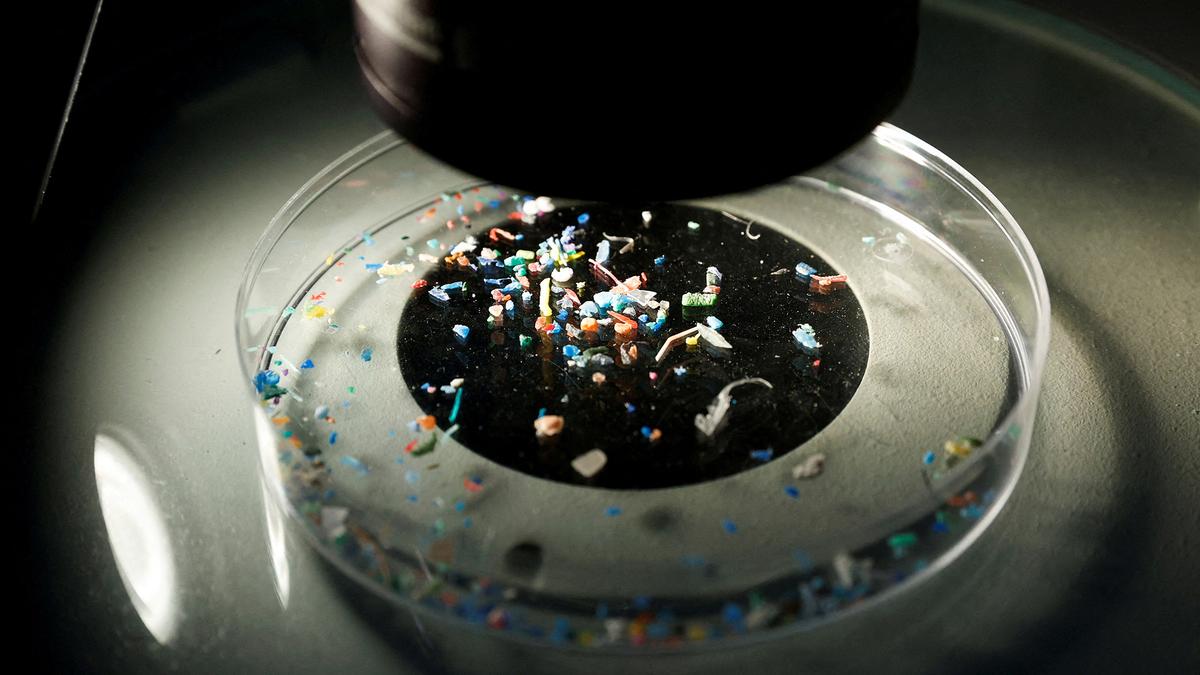
We often consider plastic items to be indestructible. But plastic breaks down into smaller particles. Definitions vary but generally microplastics are smaller than five millimetres.

This makes some too small to be seen with the naked eye. So, many of the images the media uses to illustrate articles about microplastics are misleading, as some show much larger, clearly visible pieces.

Microplastics have been reported in many sources of drinking water and everyday food items. This means we are constantly exposed to them in our diet.

Such widespread, chronic (long-term) exposure makes this a serious concern for human health. While research investigating the potential risk microplastics pose to our health is limited, it is growing.

How about this latest study?

The study looked at concentrations of microplastics in 51 samples from men and women set aside from routine autopsies in Albuquerque, New Mexico. Samples were from the liver, kidney and brain.

These tiny particles are difficult to study due to their size, even with a high-powered microscope. So rather than trying to see them, researchers are beginning to use complex instruments that identify the chemical composition of microplastics in a sample. This is the technique used in this study.

The researchers were surprised to find up to 30 times more microplastics in brain samples than in the liver and kidney.

They hypothesised this could be due to high blood flow to the brain (carrying plastic particles with it). Alternatively, the liver and kidneys might be better suited to dealing with external toxins and particles. We also know the brain does not undergo the same amount of cellular renewal as other organs in the body, which could make the plastics linger here.

The researchers also found the amount of plastics in brain samples increased by about 50% between 2016 and 2024. This may reflect the rise in environmental plastic pollution and increased human exposure.

The microplastics found in this study were mostly composed of polyethylene. This is the most commonly produced plastic in the world and is used for many everyday products, such as bottle caps and plastic bags.

This is the first time microplastics have been found in human brains, which is important. However, this study is a “pre-print”, so other independent microplastics researchers haven’t yet reviewed or validated the study.

How do microplastics end up in the brain?

Microplastics typically enter the body through contaminated food and water. This can disrupt the gut microbiome (the community of microbes in your gut) and cause inflammation. This leads to effects in the whole body via the immune system and the complex, two-way communication system between the gut and the brain. This so-called gut-brain axis is implicated in many aspects of health and disease.

We can also breathe in airborne microplastics. Once these particles are in the gut or lungs, they can move into the bloodstream and then travel around the body into various organs.

Studies have found microplastics in human faeces, joints, livers, reproductive organs, blood, vessels and hearts.

Microplastics also migrate to the brains of wild fish. In mouse studies, ingested microplastics are absorbed from the gut into the blood and can enter the brain, becoming lodged in other organs along the way.

To get into brain tissue, microplastics must cross the blood-brain-barrier, an intricate layer of cells that is supposed to keep things in the blood from entering the brain.

Although concerning, this is not surprising, as microplastics must cross similar cell barriers to enter the urine, testes and placenta, where they have already been found in humans.

Is this a health concern?

We don’t yet know the effects of microplastics in the human brain. Some laboratory experiments suggest microplastics increase brain inflammation and cell damage, alter gene expression and change brain structure.

Aside from the effects of the microplastic particles themselves, microplastics might also pose risks if they carry environmental toxins or bacteria into and around the body.

Various plastic chemicals could also leach out of the microplastics into the body. These include the famous hormone-disrupting chemicals known as BPAs.

But microplastics and their effects are difficult to study. In addition to their small size, there are so many different types of plastics in the environment. More than 13,000 different chemicals have been identified in plastic products, with more being developed every year.

Microplastics are also weathered by the environment and digestive processes, and this is hard to reproduce in the lab.

A goal of our research is to understand how these factors change the way microplastics behave in the body. We plan to investigate if improving the integrity of the gut barrier through diet or probiotics can prevent the uptake of microplastics from the gut into the bloodstream. This may effectively stop the particles from circulating around the body and lodging into organs.

How do I minimise my exposure?

Microplastics are widespread in the environment, and it’s difficult to avoid exposure. We are just beginning to understand how microplastics can affect our health.

Until we have more scientific evidence, the best thing we can do is reduce our exposure to plastics where we can and produce less plastic waste, so less ends up in the environment.

An easy place to start is to avoid foods and drinks packaged in single-use plastic or reheated in plastic containers. We can also minimise exposure to synthetic fibres in our home and clothing.

This article is republished from The Conversation under a Creative Commons license. Read the original article.


Source link

Science Tags:health news, Microplastics, Microplastics found in human brain, plastic pollution, science news

Post navigation

Previous Post: Microplastics finally found in human brains, but that’s not the full picture
Next Post: UTT 2024: Sathiyan G Shines Bright In Dabang Delhi’s 9-6 Win Over Goa Challengers

Related Posts

  • Science Snapshots: May 10, 2026
    Science Snapshots: May 10, 2026 Science
  • Anusandhan National Research Foundation’s SARAL tool to simplify scientific research papers
    Anusandhan National Research Foundation’s SARAL tool to simplify scientific research papers Science
  • How SpaceX’s rocket diplomacy backfired in the Bahamas
    How SpaceX’s rocket diplomacy backfired in the Bahamas Science
  • More than 800 coal plants worldwide could be profitably decommissioned, research group says
    More than 800 coal plants worldwide could be profitably decommissioned, research group says Science
  • Is BSF’s idea to have reptiles in the water along Bangladesh border sound?
    Is BSF’s idea to have reptiles in the water along Bangladesh border sound? Science
  • NASA chief says U.S. and India to expand collaboration in space; to train Indian astronaut for ISS
    NASA chief says U.S. and India to expand collaboration in space; to train Indian astronaut for ISS Science

More Related Articles

Why better prediction of cyclone intensity, heavy rainfall is needed Why better prediction of cyclone intensity, heavy rainfall is needed Science
Science Snapshots: May 3, 2026 Science Snapshots: May 3, 2026 Science
WiFi signals can quietly surveil you: study WiFi signals can quietly surveil you: study Science
The Science Quiz | Could you slow down? The Science Quiz | Could you slow down? Science
Painter draws up a crown for the bottling industry Painter draws up a crown for the bottling industry Science
How bat genomes provide insights into immunity and cancer How bat genomes provide insights into immunity and cancer Science
SiteLock

Archives

  • May 2026
  • April 2026
  • March 2026
  • February 2026
  • January 2026
  • December 2025
  • November 2025
  • October 2025
  • September 2025
  • August 2025
  • July 2025
  • June 2025
  • May 2025
  • April 2025
  • March 2025
  • February 2025
  • January 2025
  • December 2024
  • November 2024
  • October 2024
  • September 2024
  • August 2024
  • July 2024
  • June 2024
  • May 2024
  • April 2024
  • March 2024
  • February 2024
  • January 2024
  • December 2023
  • November 2023
  • October 2023
  • September 2023
  • August 2023
  • July 2023
  • June 2023
  • May 2023
  • April 2023
  • March 2023
  • February 2023
  • January 2023
  • December 2022
  • November 2022
  • October 2022
  • September 2022
  • August 2022
  • July 2022
  • June 2022
  • May 2022

Categories

  • Business
  • Nation
  • Science
  • Sports
  • World

Recent Posts

  • Nicobarese oppose proposal for three wildlife sanctuaries
  • Visakhapatnam Collector calls for inter-departmental synergy to boost investments
  • Kohli’s masterful knock powers Royal Challengers to the top
  • Senior IPS officer Asra Garg posted IGP Intelligence
  • Vijay Narayan earns rare distinction of being Advocate General under two different governments

Recent Comments

  1. StevenLek on UP Teacher Who Asked Students To Slap Muslim Classmate
  2. Leonardren on UP Teacher Who Asked Students To Slap Muslim Classmate
  3. NathanQuins on UP Teacher Who Asked Students To Slap Muslim Classmate
  4. Davidgof on UP Teacher Who Asked Students To Slap Muslim Classmate
  5. NathanJobre on UP Teacher Who Asked Students To Slap Muslim Classmate
  • Brazil blocks Musk’s X after company refuses to name local representative amid feud with Judge
    Brazil blocks Musk’s X after company refuses to name local representative amid feud with Judge World
  • Mukhtar Ansari’s Funeral Today, To Be Buried In Family Graveyard In UP
    Mukhtar Ansari’s Funeral Today, To Be Buried In Family Graveyard In UP Nation
  • PM Modi Holds Bilateral Talks With Iranian President At BRICS Summit
    PM Modi Holds Bilateral Talks With Iranian President At BRICS Summit Nation
  • Taiwan Boxer Lin Yu-ting In Olympics Gender Row Reaches Quarter-Finals
    Taiwan Boxer Lin Yu-ting In Olympics Gender Row Reaches Quarter-Finals Sports
  • Missile interceptors in U.S.-Iran war | Explained
    Missile interceptors in U.S.-Iran war | Explained Science
  • Access Denied World
  • PressReader renews partnership with The Hindu
    PressReader renews partnership with The Hindu Business
  • Watch: Israel’s attack on Rafah: What is India’s position?
    Watch: Israel’s attack on Rafah: What is India’s position? World

Editor-in-Chief:
Mohammad Ariff,
MSW, MAJMC, BSW, DTL, CTS, CNM, CCR, CAL, RSL, ASOC.
editor@artifex.news

Associate Editors:
1. Zenellis R. Tuba,
zenelis@artifex.news
2. Haris Daniyel
daniyel@artifex.news

Photograher:
Rohan Das
rohan@artifex.news

Artifex.News offers Online Paid Internships to college students from India and Abroad. Interns will get a PRESS CARD and other online offers.
Send your CV (Subjectline: Paid Internship) to internship@artifex.news

Links:
Associate Journalism
About Us
Privacy Policy

News Links:
Breaking News
World
Nation
Sports
Business
Entertainment
Lifestyle

Registered Office:
72/A, Elliot Road, Kolkata - 700016
Tel: 033-22277777, 033-22172217
Email: office@artifex.news

Editorial Office / News Desk:
No. 13, Mezzanine Floor, Esplanade Metro Rail Station,
12 J. L. Nehru Road, Kolkata - 700069.
(Entry from Gate No. 5)
Tel: 033-46011099, 033-46046046
Email: editor@artifex.news

Copyright © 2023 Artifex.News Newsportal designed by Artifex Infotech.