



Skip to content
  • Facebook
  • X
  • Linkedin
  • WhatsApp
  • YouTube
  • Associate Journalism
  • About Us
  • Privacy Policy
  • 033-46046046
  • editor@artifex.news
Artifex.News

Artifex.News

Stay Connected. Stay Informed.

  • Breaking News
  • World
  • Nation
  • Sports
  • Business
  • Science
  • Entertainment
  • Lifestyle
  • Toggle search form
  • Once I’m done, I’ll be gone; you won’t see me for a while: Kohli
    Once I’m done, I’ll be gone; you won’t see me for a while: Kohli Sports
  • No Drugs, No Tests, Say Patients’ Families On Maharashtra Hospital Horror
    No Drugs, No Tests, Say Patients’ Families On Maharashtra Hospital Horror Nation
  • Zimbabwe Captain Sikandar Raza’s Honest “World Champions” Remark For India After Loss In Second T20I
    Zimbabwe Captain Sikandar Raza’s Honest “World Champions” Remark For India After Loss In Second T20I Sports
  • Access Denied Sports
  • Access Denied World
  • Trump’s Canada ’51st State’ Jab Ahead Of Hockey Match
    Trump’s Canada ’51st State’ Jab Ahead Of Hockey Match World
  • Delhi court grants bail to Supertech chairman R.K. Arora in money laundering case
    Delhi court grants bail to Supertech chairman R.K. Arora in money laundering case Business
  • Access Denied
    Access Denied Nation
How bat genomes provide insights into immunity and cancer

How bat genomes provide insights into immunity and cancer

Posted on October 22, 2023 By admin


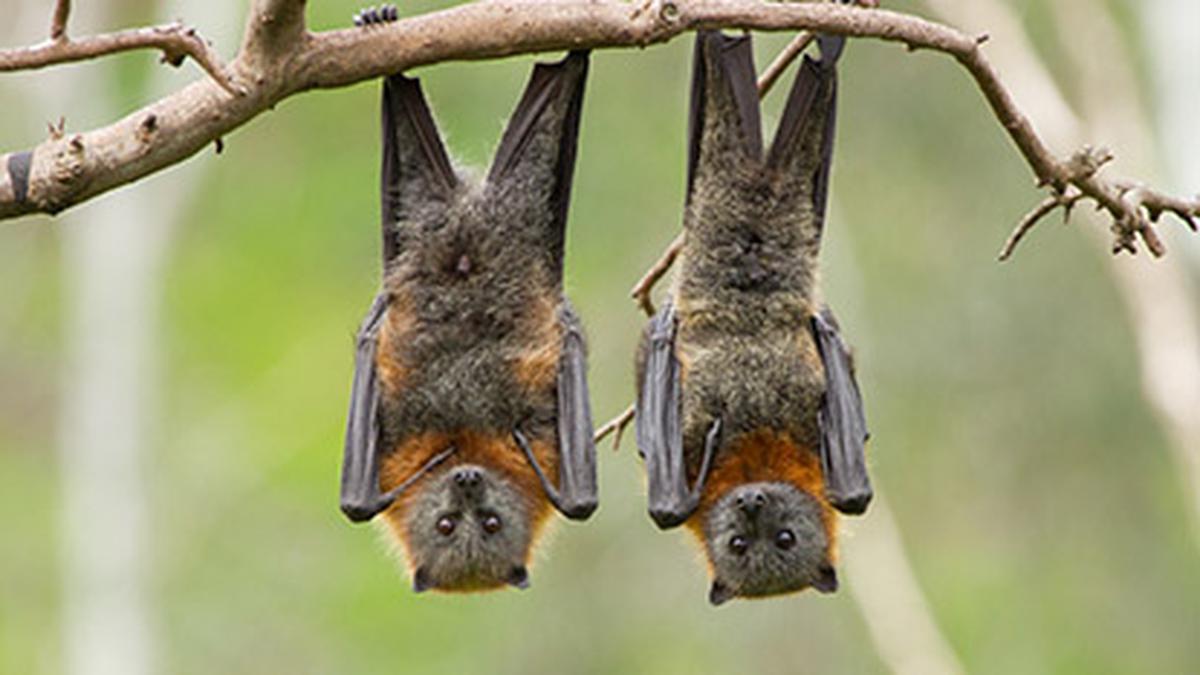
Bats are extraordinary organisms in many ways. They are the only mammals on the earth that can maintain sustained flight. They also have relatively long life-spans and are relatively more protected from a variety of diseases, including cancer. They also have a unique ability in echolocation, whereby they use sound to navigate and locate objects, freeing them from being constrained by the availability of light like humans are.

By population, bats make up 20% of all mammals. There are more than 1,400 species of bats today around the world; more than 60 are endangered and 170-odd are classified as vulnerable. The bumblebee bat weighs only 2 grams whereas the flying foxes, which have a wingspan of 1.5 metres, weigh up to 1.6 kg.

In all bats play crucial roles in maintaining the ecological balance, and are essential for pollination, insect control, etc.

However, bats have grabbed the headlines of late for the wrong reasons. Their notoriety stems from the fact that many deadly viruses use bats as a reservoir host, including coronaviruses, Nipah, Ebola, Marburg virus, and Hendra virus, among others. The COVID-19 pandemic also cast a bright spotlight on the habits of bats.

Bats do host a wide variety of pathogens, including ones deadly to other mammals, but they themselves don’t get infected. Scientists have been curious about the source of this protection.

The bat genomes

Scientists’ first object of study is the bat genome. Over the years, researchers have unearthed significant insights by sequencing the genomes of many bat species. Bats are also unique because they have a relatively small genome, around 2 billion bases.

One watershed moment came in 2013. In a paper published in the journal Science, scientists compared the genomes of a fruit-eating and an insect-eating species and found that genes involved in metabolism and immune response had been positively selected. That is, these bats had evolved by improving these two biological domains.

In the following decade, scientists sequenced a large number of bat genomes. The ambitious Bat1K global genome consortium – to sequence all the 1,400 or so species’ genomes – is also currently underway.

A number of studies have also shed insights into the peculiar biological features of bats. For example, by analysing bat genomes, scientists have found the natural selection of a protein called prestin, which is involved in echolocation (dolphins have the same protein).

Immune insights

Of course, immunity-related genes have been one of the more well-studied gene classes in bats. The fraction of these genes is also unique in bats: some 2.7-3.5% of the bat genome versus roughly 7% of the human genome. Emerging evidence also suggests that a set of immune-related genes have been undergoing positive selection in bats, adapting them to control the spread of viruses while mitigating the antiviral inflammatory response. As a result, the bats are shielded from the effects of the clinical response of their bodies to these viruses.

The heightened pro-inflammatory activity is what makes these viruses deadly in humans.

One of the first Bat1K genome consortium papers described six high-quality bat species genomes in the journal Nature. It suggested that echolocation, loss of pro-inflammatory genes, and expansion of antiviral genes are ancestral traits of bats. This suggests that bats have molecular mechanisms that allow them to host a range of deadly viruses but evade clinical disease.

It is not surprising, therefore, that genome sequencing – but especially metagenomic sequencing, adept at providing an unbiased view of the diversity of viruses – has been the mainstay of investigations of the viruses that bats carry, also known as the bat virome. Aside from knowing that bats can harbour all types of viruses, we have also found that bats can harbour multiple viruses at the same time, i.e. in a state of co-infection, without themselves falling ill.

Long reads, deeper insights

Long-read sequencing technologies are those that can ‘read’ thousands to tens of thousands of bases of a genome at a time. With their advent, it has become possible today for scientists to quickly assemble the nearly complete whole-genomes of organisms. Another benefit to them is that they no longer had to use more complex, time-consuming, and expensive molecular technologies in the pursuit of building complete genomes.

A recent report by researchers from the Cold Spring Harbor Laboratory, New York, used a long-read technology to sequence two bat genomes as well as compared the genomes of 15 species that were already available. Their results were published in the recent edition of the journal Genome Biology and Evolution.

The researchers reported that subsets of genes involved in mounting an immune response – which encode proteins called interferons (IFN) – had contracted significantly. This in turn changed the relative proportions of two subsets, interferon-alpha (IFN-α) and interferon-omega (IFN-ω), relative to each other. The researchers attributed bats’ immune properties to these changes. By shedding the genes for IFN-α, bats can dampen the pro-inflammatory response against a number of viruses, thus protecting themselves from clinical disease.

The researchers also reported that a number of genes involved in suppressing tumours and in repairing DNA contained signs of positive selection. According to them, this could contribute to the bats’ longer life span and a significantly lower risk of developing cancer.

With rapid deforestation, ecological degradation, and more and more unfavourable human-animal interactions, we should expect significantly enhanced outbreaks of zoonotic diseases in future. The Nipah outbreaks in Kerala over the last few years is a good example, as are outbreaks of Marburg disease and the Ebola virus in some African countries. In this milieu, genome-sequencing – especially its more advanced avatars – could help us cope without violating the balances of nature.

The authors are senior consultants at Vishwanath Cancer Care Foundation. All opinions expressed here are personal.




Source link

Science Tags:bat genome, bat virome, Bat1K global genome consortium, long-read sequencing, metagenomic sequencing, Nipah virus Kerala, prestin echolocation

Post navigation

Previous Post: ICC World Cup | Afghanistan coach Trott hopeful of win against under-pressure Pakistan
Next Post: ISRO prefers woman fighter test pilots for its manned mission, possible in future, says Somanath

Related Posts

  • Science for all newsletterScientists discover a binary star system near Milky Way’s supermassive black hole 
    Science for all newsletterScientists discover a binary star system near Milky Way’s supermassive black hole  Science
  • NCBS museum hosts bee species from across India to spur research
    NCBS museum hosts bee species from across India to spur research Science
  • Women with no sexual autonomy twice likely to get STIs: study
    Women with no sexual autonomy twice likely to get STIs: study Science
  • 23 species of blood-sucking flies recorded in Andaman & Nicobar Islands
    23 species of blood-sucking flies recorded in Andaman & Nicobar Islands Science
  • What are bio-based chemicals and enzymes? | Explained
    What are bio-based chemicals and enzymes? | Explained Science
  • Delhi HC issues notice to Centre on PIL challenging ban on adopting frozen embryos
    Delhi HC issues notice to Centre on PIL challenging ban on adopting frozen embryos Science

More Related Articles

Science for All | Quest to crack blues mystery in Pollock painting reveals colour-tuning technique Science for All | Quest to crack blues mystery in Pollock painting reveals colour-tuning technique Science
Mythos | Double-edged sword – The Hindu Mythos | Double-edged sword – The Hindu Science
Undervaluing faculty fellowships is bad for scientists, and science Undervaluing faculty fellowships is bad for scientists, and science Science
How dead birds, old maps are helping scientists track biodiversity loss How dead birds, old maps are helping scientists track biodiversity loss Science
US judge signals Elon Musk’s xAI may lose lawsuit accusing Altman’s OpenAI of stealing trade secrets US judge signals Elon Musk’s xAI may lose lawsuit accusing Altman’s OpenAI of stealing trade secrets Science
If anxiety is in my brain, why is my heart pounding? A psychiatrist explains the neuroscience and physiology of fear If anxiety is in my brain, why is my heart pounding? A psychiatrist explains the neuroscience and physiology of fear Science
SiteLock

Archives

  • May 2026
  • April 2026
  • March 2026
  • February 2026
  • January 2026
  • December 2025
  • November 2025
  • October 2025
  • September 2025
  • August 2025
  • July 2025
  • June 2025
  • May 2025
  • April 2025
  • March 2025
  • February 2025
  • January 2025
  • December 2024
  • November 2024
  • October 2024
  • September 2024
  • August 2024
  • July 2024
  • June 2024
  • May 2024
  • April 2024
  • March 2024
  • February 2024
  • January 2024
  • December 2023
  • November 2023
  • October 2023
  • September 2023
  • August 2023
  • July 2023
  • June 2023
  • May 2023
  • April 2023
  • March 2023
  • February 2023
  • January 2023
  • December 2022
  • November 2022
  • October 2022
  • September 2022
  • August 2022
  • July 2022
  • June 2022
  • May 2022

Categories

  • Business
  • Nation
  • Science
  • Sports
  • World

Recent Posts

  • Five convicted in connection with Matthew Perry’s death
  • Hotel staff assaulted, case registered
  • IPL 2026 | RCB opts to field in rain-delayed clash against KKR
  • Africa must drop ‘victim mentality’: mogul Tony Elumelu
  • Suspended SI held for sexually assaulting woman on pretext of marriage

Recent Comments

  1. StanleyPeapy on UP Teacher Who Asked Students To Slap Muslim Classmate
  2. Bryandut on UP Teacher Who Asked Students To Slap Muslim Classmate
  3. NathanJobre on UP Teacher Who Asked Students To Slap Muslim Classmate
  4. DavidNup on UP Teacher Who Asked Students To Slap Muslim Classmate
  5. JeffryFok on UP Teacher Who Asked Students To Slap Muslim Classmate
  • “Privilege Of Seeing You Grow…”: India Head Coach Gautam Gambhir’s Emotional Message On Ravichandran Ashwin’s Retirement
    “Privilege Of Seeing You Grow…”: India Head Coach Gautam Gambhir’s Emotional Message On Ravichandran Ashwin’s Retirement Sports
  • Kiwi birds return to New Zealand: A citizen campaign brings birds back to the country
    Kiwi birds return to New Zealand: A citizen campaign brings birds back to the country World
  • “Maybe Because I’m…”: Jonty Rhodes’ Blockbuster Take On Not Being Appointed India Fielding Coach
    “Maybe Because I’m…”: Jonty Rhodes’ Blockbuster Take On Not Being Appointed India Fielding Coach Sports
  • ‘Gulf Huge’ Between India, England: Ex-Captain Gives Ben Stokes And Co. A Reality Check
    ‘Gulf Huge’ Between India, England: Ex-Captain Gives Ben Stokes And Co. A Reality Check Sports
  • Trump’s Big Attack On Zelensky
    Trump’s Big Attack On Zelensky World
  • The ICC Clause That Can Still See Rinku Singh Participate In T20 World Cup 2024
    The ICC Clause That Can Still See Rinku Singh Participate In T20 World Cup 2024 Sports
  • Market benchmarks tumble on profit booking
    Market benchmarks tumble on profit booking Business
  • Two Plead Guilty In Formula One Legend Michael Schumacher Blackmail Plot
    Two Plead Guilty In Formula One Legend Michael Schumacher Blackmail Plot Sports

Editor-in-Chief:
Mohammad Ariff,
MSW, MAJMC, BSW, DTL, CTS, CNM, CCR, CAL, RSL, ASOC.
editor@artifex.news

Associate Editors:
1. Zenellis R. Tuba,
zenelis@artifex.news
2. Haris Daniyel
daniyel@artifex.news

Photograher:
Rohan Das
rohan@artifex.news

Artifex.News offers Online Paid Internships to college students from India and Abroad. Interns will get a PRESS CARD and other online offers.
Send your CV (Subjectline: Paid Internship) to internship@artifex.news

Links:
Associate Journalism
About Us
Privacy Policy

News Links:
Breaking News
World
Nation
Sports
Business
Entertainment
Lifestyle

Registered Office:
72/A, Elliot Road, Kolkata - 700016
Tel: 033-22277777, 033-22172217
Email: office@artifex.news

Editorial Office / News Desk:
No. 13, Mezzanine Floor, Esplanade Metro Rail Station,
12 J. L. Nehru Road, Kolkata - 700069.
(Entry from Gate No. 5)
Tel: 033-46011099, 033-46046046
Email: editor@artifex.news

Copyright © 2023 Artifex.News Newsportal designed by Artifex Infotech.