





Skip to content
  • Facebook
  • X
  • Linkedin
  • WhatsApp
  • YouTube
  • Associate Journalism
  • About Us
  • Privacy Policy
  • 033-46046046
  • editor@artifex.news
Artifex.News

Artifex.News

Stay Connected. Stay Informed.

  • Breaking News
  • World
  • Nation
  • Sports
  • Business
  • Science
  • Entertainment
  • Lifestyle
  • Toggle search form
  • Access Denied Sports
  • Israel forces kill at least 14 people waiting to receive aid in Gaza: health ministry
    Israel forces kill at least 14 people waiting to receive aid in Gaza: health ministry World
  • Data | The problems with the Prime Minister’s economic claims
    Data | The problems with the Prime Minister’s economic claims Business
  • Several Injured After Fresh Clashes Erupt In Dhaka Amid Political Turmoil
    Several Injured After Fresh Clashes Erupt In Dhaka Amid Political Turmoil World
  • Access Denied Sports
  • Kerala Assembly polls 2026: Bitter battle for nine seats that can turn electoral fortunes
    Kerala Assembly polls 2026: Bitter battle for nine seats that can turn electoral fortunes Nation
  • Ship anchored off east coast of UAE seized, heading toward Iranian waters
    Ship anchored off east coast of UAE seized, heading toward Iranian waters World
  • ISRO Chief Sreedhara Somanath Meets Chess Grandmaster R Praggnanandhaa
    ISRO Chief Sreedhara Somanath Meets Chess Grandmaster R Praggnanandhaa Nation
Gene that helps race horses manage BP could help human athletes, too

Gene that helps race horses manage BP could help human athletes, too

Posted on August 6, 2024 By admin


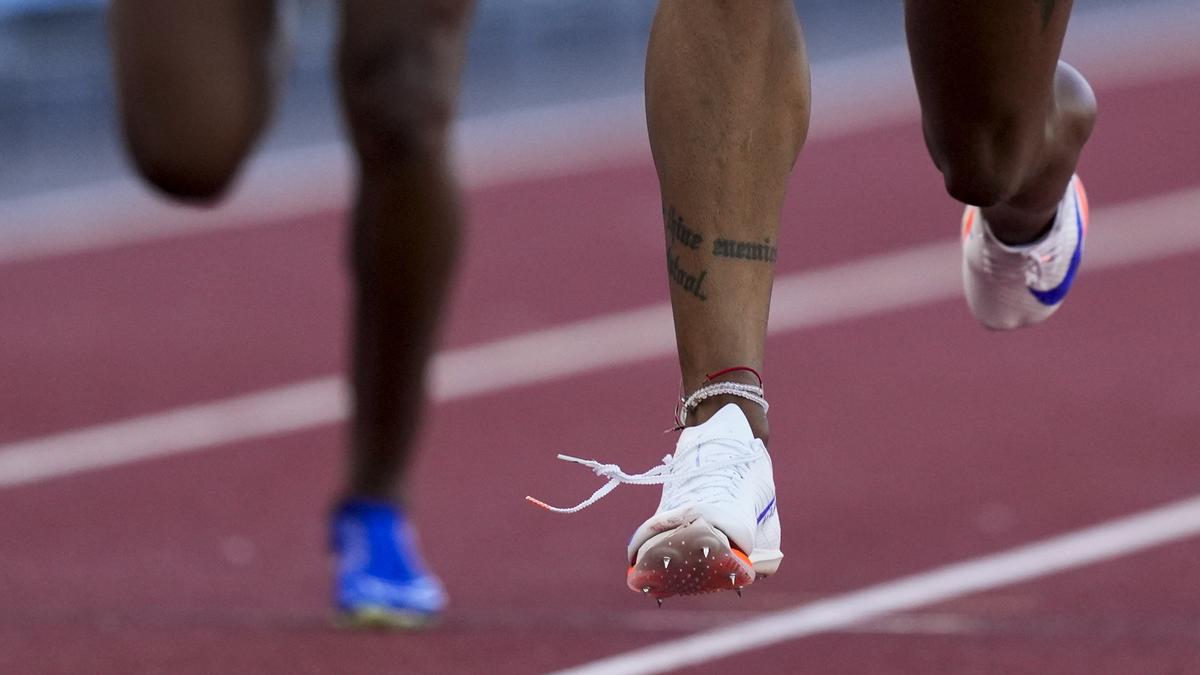
Humans have entertained themselves with horse racing for hundreds of years. Even so, who would have guessed that some day the sport might help us understand how our blood pressure is regulated during exercise?

On June 17, researchers from the Swedish University of Agricultural Sciences in Uppsala reported discovering a DNA sequence in horses that underlies superior racing performance. The sequence influenced levels of two proteins involved in regulating blood pressure. Their results were published in the journal PLoS Genetics.

“By shedding light on the intricate mechanisms governing blood pressure modulation, the findings hold promise for advancing our understanding of cardiovascular health and disease,” the researchers wrote in their paper. They added that the implications also encompass “a myriad … physiological processes influenced by hormone signalling”.

Six years ago, the researchers had reported that horses with the genomic region ran faster. But at the time they couldn’t link the region to any underlying physiological trait. This has changed now.

Cold- and hot-blooded equines

The North Swedish draught horse is a sturdy breed people in the Nordic region use for farm and forestry work. It is ‘cold-blooded’, in this context meaning a large, heavy horse with an easy-going temperament. Faster, lighter, more energetic, and temperamentally more skittish horses are said to be ‘hot-blooded’. (The actual body temperature of all horses is 37.5-38.5 degrees C.)

By the early 1800s, people began to use the North Swedish horse in harness races, where the horse pulls a two-wheeled cart with a seat for the jockey. At first they used the farm horses, but inevitably, to gain a leg up, breeders began illegally crossbreeding the North Swedish horse with a hot-blooded American harness-racing breed called the standardbred.

Faced with this fait accompli, racing authorities divided the North Swedish into two new breeds: the North Swedish draught horse for farm work and the cold-blooded trotter for racing. Cold-blooded trotters share much of their genome with the North Swedish draught horse, but they also contain segments from the standardbred that enhance their racing ability.

The promoter and the enhancer

The horse genome has 32 chromosomes. Each chromosome is defined by a DNA molecule that runs throughout its length. Chromosomal proteins and RNA organise the DNA and regulate its expression.

Different cell types have different chromosomal proteins and RNA, but their DNA content remains constant. Each horse cell, like each human cell, contains two sets of the genome distributed in 64 chromosomes. One set is inherited from the father’s sperm and the other set from the mother’s egg.

The DNA molecule is like a ladder whose rails are made of a long series of alternating units of phosphate and deoxyribose (a sugar). Each deoxyribose unit is bonded to one of four chemical bases: adenosine (A), cytosine (C), guanine (G), and thymine (T). The As and Cs on one sugar-phosphate rail form hydrogen bonds with the Ts and Gs on the other, making up the DNA ladder’s rungs. The A-T and G-C base-pairs hold the two strands together as one large molecule.

In this way, each set of 32 chromosomes contains a little less than 3 billion base-pairs and code for just over 20,000 genes. Different horse breeds share much the same DNA sequence — just that about one in every few hundred base-pairs is different, giving rise to the breed’s variations.

A gene is a stretch of a few thousand base-pairs. A cell ‘reads’ this sequence as an instruction to make a specific protein. Next to the protein-coding sequence is another sequence called the promoter. The promoter allows the cell to express the relevant gene. Other sequences called enhancers, located tens to thousands of base-pairs away from the gene, influence the activity of nearby promoters.

These promoter-enhancer interactions influence gene expression in different types of cells.

The prize-money enhancer

The Swedish Trotting Association has recorded data about the racing performance of all competing horses, including the prize money earnt per race. The researchers collected DNA from blood and hair samples of 400 cold-blooded trotters that ran races between 2003 and 2015. In these DNA, they identified genes that both the cold-blooded trotters and the standardbreds shared but which trotters and draught horses didn’t.

Next, by examining the racing performance data, they found that trotters that had a sequence derived from standardbred horses on one or both copies of one chromosome performed much better in races and won more money.

This gene, associated with superior racing performance, had 5,564 base-pairs.  It was different from the ‘non-enhanced’ version by virtue of possessing different base-pair combinations in 14 positions on the DNA ladder.

When two DNA sequences are mostly identical and only a few base-pairs differ, the alternative versions are called haplotypes. Haplotypes are defined by listing the bases differing on one DNA strand.  The ‘élite’ and the ‘sub-élite’ haplotypes were respectively called EPH and SPH.

Effects on blood pressure genes

Trotters with the EPH haplotype had significantly lower blood pressure during and after exercise than trotters with the SPH haplotype. There was no difference before exercise, which suggested to the researchers that the EPH’s blood pressure regulation was related to exercise.

They also found the EPH haplotype decreased the levels of endothelin1 (EDN1) and increased the levels of endothelin3 (EDN3) — two proteins involved in regulating blood pressure — in the blood.

The EPH/SPH gene was located around 50,000 base-pairs away from the gene that made the EDN3 protein, so the researchers surmised the haplotype served as an enhancer.

That is, if the EPH and the SPH haplotypes enhanced the expression of the EDN3 expression in different ways, they could result in different blood pressure regulation pathways, leading to the differences in racing performance.

Taking the rough with the smooth

The researchers found the EPH/SPH haplotype gene was located in chromosome 22 in horse cells and in chromosome 20 in human cells. They conducted an experiment using human heart tissue to identify the promoters that interacted with the corresponding human sequence.

They found all the promoters that interacted with this sequence belonged to known blood pressure genes. Some of the proteins encoded by these genes also interacted with the EDN3 gene. Thus, the researchers were able to confirm the human counterpart of the horses’ ‘racing’ gene had a role in regulating blood pressure.

“These results are key to understanding the biological mechanisms behind blood pressure regulation in both human and horse elite athletic performance,” the researchers wrote in their paper.

Had the Nordic breeders been more scrupulous, they may not have allowed the EPH haplotype to be smuggled into the cold-blooded trotter’s genome. Had the race stewards been less scrupulous, corrupt practices such as doping or throwing the race might have made it harder to detect the superior performance because of EPH in the racing data. In this instance, the combination of human foibles and rectitude was just right.

D.P. Kasbekar is a retired scientist.



Source link

Science Tags:blood pressure management, cold-blooded trotter, hormone signalling, horse breeding, horse racing, standardbred racing horse, Swedish Trotting Association

Post navigation

Previous Post: Timekeeping through time | Explained
Next Post: Nvidia’s AI chip demand to face limited impact from potential production delay, analysts say

Related Posts

  • IIT Bombay researchers develop GPS-free control scheme for autonomous drone swarms Science
  • Sci-Five | The Hindu Science Quiz: On Dormancy
    Sci-Five | The Hindu Science Quiz: On Dormancy Science
  • Why the location of China’s magnitude 7.1 quake matters
    Why the location of China’s magnitude 7.1 quake matters Science
  • Trump moves to shut down NASA missions that measure carbon dioxide and plant health
    Trump moves to shut down NASA missions that measure carbon dioxide and plant health Science
  • The green and crimson chemistry of the watermelon
    The green and crimson chemistry of the watermelon Science
  • Kerala scientist bags Marie Skłodowska-Curie Postdoctoral Fellowship
    Kerala scientist bags Marie Skłodowska-Curie Postdoctoral Fellowship Science

More Related Articles

How are salamanders able to take off and stick their landing with ease? How are salamanders able to take off and stick their landing with ease? Science
Fossils, genomes clash as scientists debate the mosquito’s origins Fossils, genomes clash as scientists debate the mosquito’s origins Science
New Zealand to loosen gene editing regulation, make commercialisation easier New Zealand to loosen gene editing regulation, make commercialisation easier Science
Science This Week | Scientists discovers ‘bubble of galaxies’, bird-like dinosaur found in China and more Science This Week | Scientists discovers ‘bubble of galaxies’, bird-like dinosaur found in China and more Science
How women in India have fared How women in India have fared Science
Cloud clustering patterns reveal increasing severity of extreme rainfall in tropics in new study Cloud clustering patterns reveal increasing severity of extreme rainfall in tropics in new study Science
SiteLock

Archives

  • May 2026
  • April 2026
  • March 2026
  • February 2026
  • January 2026
  • December 2025
  • November 2025
  • October 2025
  • September 2025
  • August 2025
  • July 2025
  • June 2025
  • May 2025
  • April 2025
  • March 2025
  • February 2025
  • January 2025
  • December 2024
  • November 2024
  • October 2024
  • September 2024
  • August 2024
  • July 2024
  • June 2024
  • May 2024
  • April 2024
  • March 2024
  • February 2024
  • January 2024
  • December 2023
  • November 2023
  • October 2023
  • September 2023
  • August 2023
  • July 2023
  • June 2023
  • May 2023
  • April 2023
  • March 2023
  • February 2023
  • January 2023
  • December 2022
  • November 2022
  • October 2022
  • September 2022
  • August 2022
  • July 2022
  • June 2022
  • May 2022

Categories

  • Business
  • Nation
  • Science
  • Sports
  • World

Recent Posts

  • Jaisalmer civic body swings into action, buries hundreds of cattle carcasses after public outrage
  • Delhi HC to hear plea on Gymkhana Club eviction today
  • Astronomers spot blue straggler star hosting brown dwarf companion
  • Bengaluru: Toyota BizIntel Hub to come up at KWIN City with ₹1,200 cr. investment
  • P&T apartment residents to lay indefinite siege to GCDA office

Recent Comments

  1. Robertprern on UP Teacher Who Asked Students To Slap Muslim Classmate
  2. Stanleyphomo on UP Teacher Who Asked Students To Slap Muslim Classmate
  3. JeremyNaw on UP Teacher Who Asked Students To Slap Muslim Classmate
  4. Michaelvoise on UP Teacher Who Asked Students To Slap Muslim Classmate
  5. Pierrewrold on UP Teacher Who Asked Students To Slap Muslim Classmate
  • Brazil declares acai a national fruit to ward off ‘biopiracy’
    Brazil declares acai a national fruit to ward off ‘biopiracy’ World
  • Israel Hamas War Latest Congress BJP
    Israel Hamas War Latest Congress BJP World
  • NASA’s Artemis II moonship returns home to its launch site after historic voyage
    NASA’s Artemis II moonship returns home to its launch site after historic voyage Science
  • Access Denied Sports
  • Ashish Sood asks Delhi Fire Services to strengthen fire prevention measures
    Ashish Sood asks Delhi Fire Services to strengthen fire prevention measures Nation
  • Relatives Of Israeli Hostages Burn Symbolic Table Outside Netanyahu’s House
    Relatives Of Israeli Hostages Burn Symbolic Table Outside Netanyahu’s House World
  • Tiger Woods’ Son Charlie Stuns Golf World With Hole-In-One Shot, Father’s Celebration Is Viral
    Tiger Woods’ Son Charlie Stuns Golf World With Hole-In-One Shot, Father’s Celebration Is Viral Sports
  • Was KL Rahul Out Or Not Out? Umpiring Great Simon Taufel Puts End To Controversy
    Was KL Rahul Out Or Not Out? Umpiring Great Simon Taufel Puts End To Controversy Sports

Editor-in-Chief:
Mohammad Ariff,
MSW, MAJMC, BSW, DTL, CTS, CNM, CCR, CAL, RSL, ASOC.
editor@artifex.news

Associate Editors:
1. Zenellis R. Tuba,
zenelis@artifex.news
2. Haris Daniyel
daniyel@artifex.news

Photograher:
Rohan Das
rohan@artifex.news

Artifex.News offers Online Paid Internships to college students from India and Abroad. Interns will get a PRESS CARD and other online offers.
Send your CV (Subjectline: Paid Internship) to internship@artifex.news

Links:
Associate Journalism
About Us
Privacy Policy

News Links:
Breaking News
World
Nation
Sports
Business
Entertainment
Lifestyle

Registered Office:
72/A, Elliot Road, Kolkata - 700016
Tel: 033-22277777, 033-22172217
Email: office@artifex.news

Editorial Office / News Desk:
No. 13, Mezzanine Floor, Esplanade Metro Rail Station,
12 J. L. Nehru Road, Kolkata - 700069.
(Entry from Gate No. 5)
Tel: 033-46011099, 033-46046046
Email: editor@artifex.news

Copyright © 2023 Artifex.News Newsportal designed by Artifex Infotech.