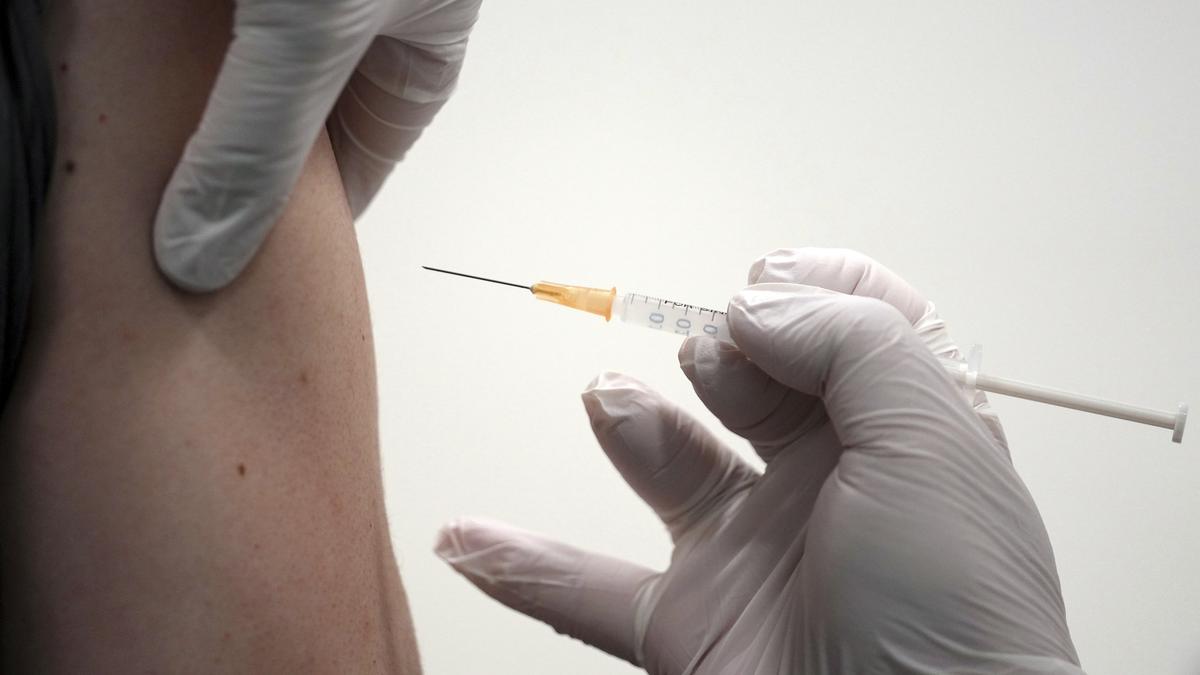







In a video uploaded to the internet in November, Ardem Patapoutian, who shared the medicine Nobel Prize in 2021, unbuttoned his cuff and pulled up his sleeve to reveal a tattoo near his elbow. As he flexed his arm, the tattoo came to life. The tattoo was of the PIEZO mechanosensitive channel – a class of proteins that helps us sense pressure – and the flexing demonstrated how the channel opened and closed in response to pressure.
Patapoutian, a molecular biologist and neuroscientist at the Scripps Research institute, California, and Betrand Coste, then a postdoctoral researcher in Patapoutian’s lab, discovered the PIEZO ion channels in 2010.
Ion channels are proteins that have a pore in their structure. In response to certain stimuli, the protein’s structure changes and the pore widens. When this happens, ions can flow through, changing the voltage across a cell’s membrane. If the cell is a neuron, it can use the resulting electric signal to communicate with other neurons. This is how the human nervous system works.
The stimuli that open an ion channel are called its gates. When researchers say voltage-gated ion channels, they mean a particular channel opens when the voltage across a cell membrane changes. Since the ion channels discovered by Patapoutian and Coste were gated by pressure, they called them mechanosensitive ion channels.
They discovered two such channels and named them PIEZO1 and PIEZO2, both from the Greek word ‘piezi’ meaning ‘pressure’.
Since their 2010 discovery, PIEZO channels have been implicated in our ability to sense touch and pain, to understand how our bodies are positioned in space (proprioception), to perceive our body’s internal state (interoception), and to respire, urinate, form blood vessels, regulate bone density, and heal skin wounds.
Two new studies — which independent experts called “pivotal” and a “breakthrough” to this reporter — have now expanded the ambit of PIEZO channels’ functions.
One, a preprint from the labs of Patapoutian and his colleague at Scripps Research, Li Ye, demonstrates the role PIEZO2 plays in sensing mechanical changes in fat tissue. The second study, published in the journal Science and led by Danijela Matic Vignjevic from the Curie Institute in Paris and Tae-Hee Kim from the University of Toronto, shows the importance of the two PIEZO channels in regulating the fate of stem cells in mouse intestines.
The papers lend credence to the idea that biochemical cues don’t have a monopoly on regulating biological processes: many of them involve mechanical stimuli as well. The findings open “intriguing avenues for future research,” Namrata Gundiah, a professor of mechanical engineering at the Indian Institute of Science (IISc), Bengaluru, who studies how mechanical stimuli affect the movement of cells, said.
‘What is it sensing in fat?’
The fat, or adipose, tissues in our bodies need to communicate with the brain to adjust the body’s metabolism. Typically, scientists study how the brain communicates with adipose tissue through the sympathetic nervous system and how the adipose tissue replies through circulating chemical signals.
But the new Patapoutian et al. study, which is awaiting peer-review, focused on a different link between the brain and adipose tissue: sensory afferents.
Neurons are a type of cells that make up our nervous system. Each neuron has two main parts: a cell body and a tail-like extension called the axon. The spinal cord has some cell clusters called the dorsal root ganglia (DRG). The axons of the neurons in these clusters are called sensory afferents. They enter tissues and sense various stimuli.
The researchers injected adipose tissues in mice with cholera toxin-B (CTB) that had been bound to molecules that could glow if hit with light. CTB is a part of the cholera toxin, a set of proteins produced by the bacterium Vibrio cholerae. These proteins bind to certain compounds on the membranes of neurons. By injecting CTB in mice adipose tissues, the team could identify these tissues using the glow molecules and isolate them.
When the team looked for the most abundant ion channels in these neurons, they found an unexpected candidate: PIEZO2.
PIEZO2 is known to be a specialised mechanosensitive ion channel: it is gated only by pressure, not other factors. It is thus safe to say these sensory afferents are sensing mechanical changes in adipose tissues.
Gautam Menon, a professor of physics and biology at Ashoka University who studies how cells sense and respond to mechanical forces, called this “a major discovery”.
One question, however, remains unanswered: what is the source of these mechanical changes? As Patapoutian remarked on the social media platform Bluesky, “What is it sensing in fat?”
Scientists don’t have an answer yet — but the rest of the study shows a way. When the team used genetic techniques to reduce the levels of PIEZO2 proteins in sensory afferents, they found that parts of the adipose tissue innervated by these afferents had larger cells. These parts also more expressed genes involved in metabolic processes that help the body produce heat and convert carbohydrates, proteins, and alcohol into fat. These changes have been previously reported to result from the removal of DRG — where the sensory afferents are rooted — in mice.
The researchers also showed that if the levels of PIEZO2 are artificially increased in mice whose DRGs have been removed, the changes of such removal can be reversed.
Taken together, the experiments suggest that different metabolic processes in adipose tissue cause mechanical changes in the tissue. The sensory afferents sense these mechanical changes through PIEZO channels and communicate them to the brain.
A gut feeling
In 1745, German physician Johann Nathanel Lieberkühn described in detail glands found between finger-like projections called villi in the small intestine. These glands house intestinal stem cells (ISCs) that have the ability to develop into other cell types required by the intestinal tract. The development process is tightly controlled and important to regenerate and maintain the gut lining.
The cells of these glands are arranged in a particular pattern on a network of proteins and other molecules called the extracellular matrix. The matrix helps keep the gland tissue stiff, which is another way to say the glands are potentially capable of sensing and responding to mechanical stimuli. The ISCs also exert forces on other cells in the gland as they change into other cell types.
To understand how these mechanical forces affect the ISCs, researchers in the labs of Vignjevic and Tae-Hee Kim generated 3D miniature guts, called organoids, on Petri dishes. These mini-guts replicate the structure and function of the intestines in animals, albeit in simpler fashion. The researchers then used chemicals to inhibit PIEZO channels in the mini-guts, reducing the size of the organoids, the number of glands in each organoid, and the number of ISCs.
When they removed the PIEZO channels in the guts of living mice, the animals suffered from diarrhoea, showed blood in their stools, had lower body weight, and “died quickly”, Kim said. The team concluded that “PIEZO channels in intestinal epithelia are essential” to maintain “adequate intestinal architecture and homeostasis”.
The ISCs in mice whose guts lacked PIEZO channels also lost their ability to reproduce more ISCs and transform into other cell types. Instead, they became cells that divided rapidly and depleted away.
In subsequent experiments, the researchers modelled the mechanical forces on ISCs. In one approach, they modelled how the stiffness of the extracellular matrix changed; in the other, they studied the tension (the force exerted on an object when it is pulled) in the tissue. In the first approach, the scientists grew mini-guts — this time 2D — on artificial substrates whose stiffness they could control. Then they quantified the activation of PIEZO channels by measuring the amount of calcium in the cells of the organoids. When PIEZO channels open, they allow calcium ions to enter cells.
In their paper, the team reported the PIEZO channels were “more prone to activation” on stiffer substrates. Using atomic force microscopy, they found the area of the gland where the ISCs lived was stiffer than elsewhere. The researchers concluded the PIEZO channels were important for ISCs to sense and respond to stiffness.
In the second approach, the researchers engineered a “cell-stretching device” to stretch the mini-guts. At the same time they inhibited PIEZO activity using chemicals, and found that the number of ISCs dropped.
Taken together, the researchers concluded that PIEZO channels help ISCs sense mechanical changes in their surroundings, which in turn regulates their behaviour.
Kim said “stem cell activity is dysregulated in many gut diseases such as inflammatory bowel disease and cancer. Thus, a better understanding of the mechanistic roles of PIEZO channels would help identify novel therapies against them.”
The physics of biology
For Gautam Menon, the Science study “adds to the view that mechanical signals, as opposed to purely biochemical ones, play an important role in deciding stem cell fates.”
Two decades ago, he said, the prevalent view was that the type of cells that stem cells turn into is determined only by biochemical signals in the form of small molecules. Since then, scientists have found more and more evidence that “the mechanical environment of cells and the forces that act on them” play an important role in deciding their fate, he added.
As the view has changed, researchers have confronted newer — and according to Menon “harder” — questions. These include “measuring forces in a cellular context that is realistic, and figuring out how these forces produce signals that cells can interpret.”
The two new studies imply the PIEZO mechanosensitive ion channels might be the answer to the latter: these channels sense mechanical forces and open in response, allowing calcium ions to flow into cells. These ions can then trigger a series of changes within the cells that determine their fate.
Kim hopes the team’s study motivates other researchers to investigate the roles of PIEZO channels in stem cells of other tissues, especially when there is tissue disease. This “would be critical for the development of more effective and targeted therapies,” he said.
Sayantan Datta is a science journalist and a faculty member at Krea University.
Published – January 22, 2025 05:30 am IST