
Skip to content
  • Facebook
  • X
  • Linkedin
  • WhatsApp
  • Associate Journalism
  • About Us
  • Privacy Policy
  • 033-46046046
  • editor@artifex.news
Artifex.News

Artifex.News

Stay Connected. Stay Informed.

  • Breaking News
  • World
  • Nation
  • Sports
  • Business
  • Science
  • Entertainment
  • Lifestyle
  • Toggle search form
  • Governor Versus Trinamool On Poll-Related Violence In Sandeshkhali
    Governor Versus Trinamool On Poll-Related Violence In Sandeshkhali Nation
  • Access Denied
    Access Denied Nation
  • SEBI proposes retail investors participate in algo trading
    SEBI proposes retail investors participate in algo trading Business
  • Access Denied Sports
  • Sunil Narine Lifts Gautam Gambhir After KKR Win Third IPL Title, He Does This In Return. Watch
    Sunil Narine Lifts Gautam Gambhir After KKR Win Third IPL Title, He Does This In Return. Watch Sports
  • When AI changes the way we do science, will we understand the results?
    When AI changes the way we do science, will we understand the results? Science
  • Access Denied Sports
  • Donald Trump thinks Vladimir Putin is ready to make a deal on Ukraine
    Donald Trump thinks Vladimir Putin is ready to make a deal on Ukraine World
How humans came to inhabit every corner of the world

How humans came to inhabit every corner of the world

Posted on March 22, 2026 By admin


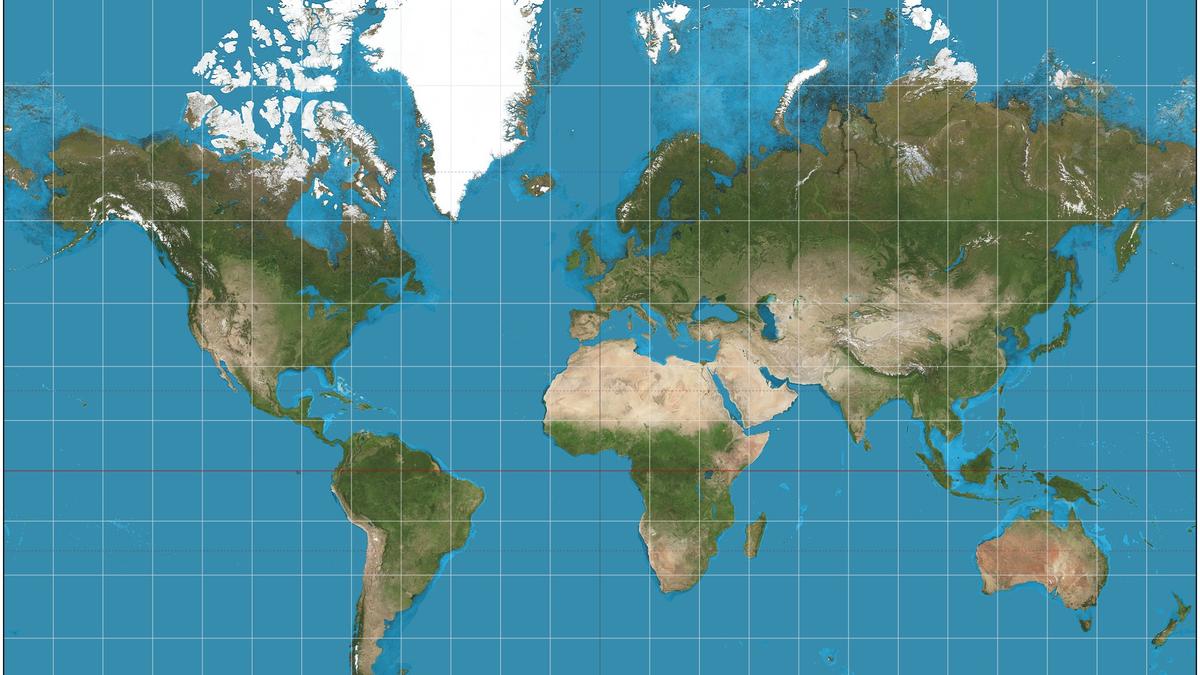
From African deserts to the Arctic circle: humans spread across the planet faster and farther than any other wild vertebrate, making us outliers in the animal kingdom. While we occupy 132 million sq. km of land, a typical wild mammal occupies 165 sq. km. How did humans achieve this feat?  

The answer lies in evolution – not biological adaptation or genetic mutations – but through a “cultural evolution,” according to a new study published in the Proceedings of the National Academy of Sciences, by a scientist from the Arizona State University (ASU).

The author of the paper, an associate professor at ASU’s School of Human Evolution and Social Change, defines cultural evolution as “a process that enabled the rapid and cumulative acquisition of adaptive behaviours and technologies.” Using empirical data, the scientist determined how important culture was relative to biology.

These cultural adaptations can emerge without genetic changes, since cultural evolution operates on faster timescales, he wrote in the paper. So, as humans moved into new environments, they didn’t have to wait for genetic mutations to adapt to Arctic cold, tropical forests, deserts or high altitudes, Dr. Perreault says in a release. “Instead, humans adapted through culturally transmitted technologies, ecological knowledge and cooperative social norms.”

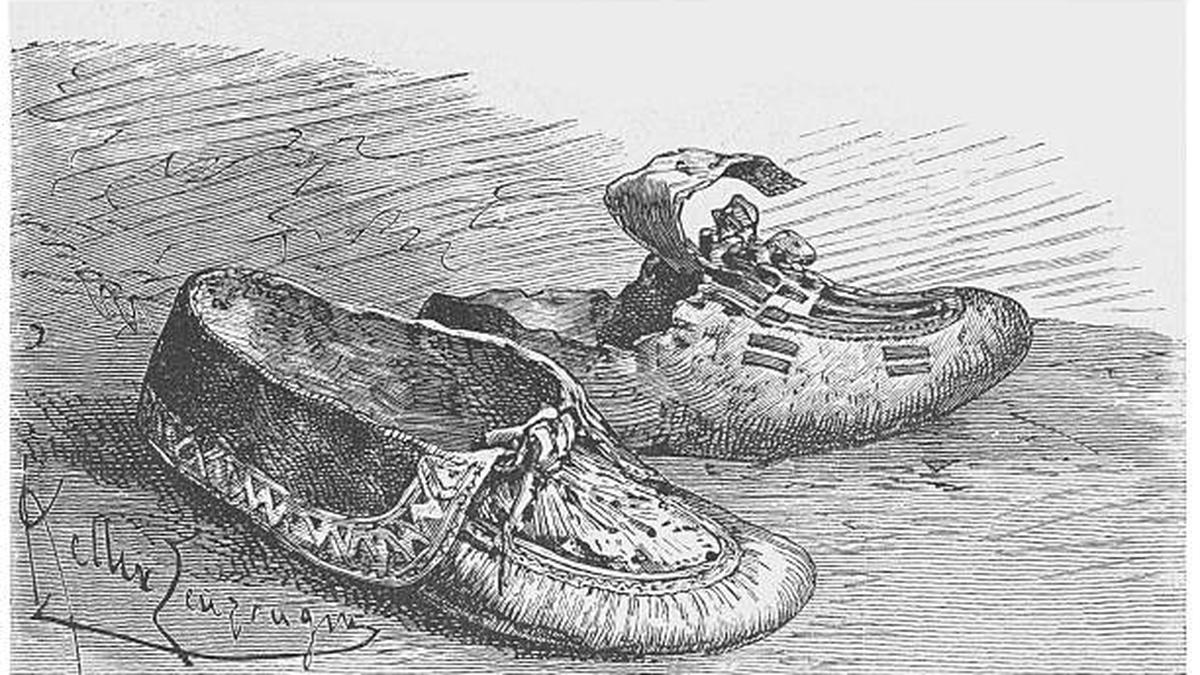
The rapid spread of ‘social learning’ brought about innovations in clothing, shelter, hunting strategies, food processing and social organisation, he added. Cultural traits diffused not only from parents to offspring, but also spread in an epidemic-like manner, the scientist wrote in the paper, citing the example of the creation of footwear.

What makes us different

Does culture separate us from nom-human species? Here we can estimate by how much, he said. The results suggest that cultural evolution compressed what would normally require roughly 88 million years of biological diversification into about 300,000 years within a single species.

“This research helps put human uniqueness into a measurable evolutionary perspective,” Dr. Perreault said. “We often say that culture makes us different, but here we can estimate by how much. The results suggest that cultural evolution compressed what would normally require roughly 88 million years of biological diversification into about 3,00,000 years within a single species.”

Unlike humans, most animals adapt to their environment through biological evolution (a combination of natural selection and phenotypic plasticity) for morphological, physiological, and behavioural adaptations. Signs of genetic adaptations have been found in humans, for instance, in physiological and metabolic adaptations to high-altitude zones.

Dr. Perreault compiled geographic range maps for nearly 6,000 species of terrestrial mammals, which he separated into genera, families and orders. Then he compared the size and ecological diversity of those ranges to the range of humans.

He finally compared mammal species’ ranges to cultural group territories, showing that culture uniquely enables humans to be globally generalists as a species while locally specialised as cultural groups.

Following a swift expansion within Africa around 70,000 years ago, a subset of the human population had begun moving into Eurasia 60,000 years ago. By 50,000 years ago, “humans had already navigated the deep ocean channels separating Asia from Sahul—a feat matched among terrestrial mammals only by a murid rodent,” said the paper.

By the end of the Pleistocene, human foragers had colonised every major ecosystem—arid deserts, high-altitude plateaus, savannas, temperate forests, coastal margins, tropical jungles, and polar tundra—across Africa, Eurasia, Sahul, and into the Americas.

7,150 languages

Homo sapiens then rapidly expanded their range into more challenging environments: By 45,000 years ago, some groups were hunting mammoths in the Siberian Arctic. By the end of the Pleistocene, human foragers inhabited every major ecosystem—arid deserts, high-altitude plateaus, savannahs, temperate forests, coastal margins, tropical jungles, and polar tundra—across Africa, Eurasia, Sahul, and into the Americas, said the paper.

How did early modern humans adapt to these ecological habitats so rapidly? “To expand into new ecological areas, a population must accumulate a certain amount of adaptive evolutionary change. In humans, this can be accomplished not only through biological evolution but also, crucially, through cultural evolution,” he wrote in the paper.

The behavioural diversity among human societies far exceeds that of any other species, he wrote. By comparing humans to mammals, we can more clearly isolate the distinctive effects of cultural evolution on the expansion of ecological range. For instance, there are more than 7,150 languages spoken by humans worldwide, said the paper.

Human foragers deployed an array of food-getting technologies, clothing, shelter and other habitat-specific cultural adaptations “resulting in a level of behavioural diversity among human societies that far exceeds that of any other species,” said the paper.

This study is part of a broader effort to build a quantitative science of human macroevolution, Dr. Perreault said. “By combining large comparative datasets with evolutionary theory, we can begin to measure the distinctive role of culture in shaping our species’ trajectory in a way that would have been almost impossible before.”

Published – March 23, 2026 08:30 am IST



Source link

Science

Post navigation

Previous Post: Access Denied
Next Post: Access Denied

Related Posts

  • India’s capacity to scale next-generation biologics draws focus at BioAsia 2026
    India’s capacity to scale next-generation biologics draws focus at BioAsia 2026 Science
  • Why is whale vomit worth millions?
    Why is whale vomit worth millions? Science
  • To boost ethanol production, Centre moots dedicated enzyme manufacturing
    To boost ethanol production, Centre moots dedicated enzyme manufacturing Science
  • Experts underscore the importance of extracting only relevant data
    Experts underscore the importance of extracting only relevant data Science
  • More than 60% of world’s coral reefs may have bleached in past year, NOAA says
    More than 60% of world’s coral reefs may have bleached in past year, NOAA says Science
  • ‘Fly me to the moon’ seems to be global ambition in 2023
    ‘Fly me to the moon’ seems to be global ambition in 2023 Science

More Related Articles

More space objects were placed in orbit in 2023 compared to 2022 More space objects were placed in orbit in 2023 compared to 2022 Science
The Science Quiz | Numbers have celebrities, too The Science Quiz | Numbers have celebrities, too Science
Forest loss from SE Asia rubber is up to 3 times more than thought: study Forest loss from SE Asia rubber is up to 3 times more than thought: study Science
Payload aboard Aditya-L1 mission detects solar wind impact of Coronal Mass Ejections Payload aboard Aditya-L1 mission detects solar wind impact of Coronal Mass Ejections Science
Science for all Curiosity-driven research in an unequal world Science for all Curiosity-driven research in an unequal world Science
Carabid beetles as potential bioindicators to track soil microplastics Carabid beetles as potential bioindicators to track soil microplastics Science
SiteLock

Archives

  • March 2026
  • February 2026
  • January 2026
  • December 2025
  • November 2025
  • October 2025
  • September 2025
  • August 2025
  • July 2025
  • June 2025
  • May 2025
  • April 2025
  • March 2025
  • February 2025
  • January 2025
  • December 2024
  • November 2024
  • October 2024
  • September 2024
  • August 2024
  • July 2024
  • June 2024
  • May 2024
  • April 2024
  • March 2024
  • February 2024
  • January 2024
  • December 2023
  • November 2023
  • October 2023
  • September 2023
  • August 2023
  • July 2023
  • June 2023
  • May 2023
  • April 2023
  • March 2023
  • February 2023
  • January 2023
  • December 2022
  • November 2022
  • October 2022
  • September 2022
  • August 2022
  • July 2022
  • June 2022
  • May 2022

Categories

  • Business
  • Nation
  • Science
  • Sports
  • World

Recent Posts

  • Watch: NATO chief: 22-nation group forming to secure Strait of Hormuz
  • Access Denied
  • PM On How India Is Responding To Hormuz Chokehold-Driven Energy Crisis
  • Access Denied
  • PM On How India Is Responding To Hormuz Chokehold-Driven Energy Crisis

Recent Comments

  1. Charlesdon on UP Teacher Who Asked Students To Slap Muslim Classmate
  2. FrancisHella on UP Teacher Who Asked Students To Slap Muslim Classmate
  3. TerryBum on UP Teacher Who Asked Students To Slap Muslim Classmate
  4. Carmineicerm on UP Teacher Who Asked Students To Slap Muslim Classmate
  5. Robertclula on UP Teacher Who Asked Students To Slap Muslim Classmate
  • Kerala High Court quashes government’s show-cause notice to Ciza Thomas, former VC in-charge of APJ Abdul Kalam Technological University
    Kerala High Court quashes government’s show-cause notice to Ciza Thomas, former VC in-charge of APJ Abdul Kalam Technological University Nation
  • Larry Summers takes leave from teaching at Harvard after release of Epstein emails
    Larry Summers takes leave from teaching at Harvard after release of Epstein emails World
  • Job opportunities dwindling in industrialised Gujarat 
    Job opportunities dwindling in industrialised Gujarat  Business
  • As in Kerala, local climate processes can worsen climate extremes | Analysis
    As in Kerala, local climate processes can worsen climate extremes | Analysis Science
  • Biden After 2nd Trump Assassination Bid
    Biden After 2nd Trump Assassination Bid World
  • Access Denied Sports
  • SEBI mulls revising block deal framework; minimum order size may increase to ₹25 crore
    SEBI mulls revising block deal framework; minimum order size may increase to ₹25 crore Business
  • Netanyahu meets with Biden, Harris to narrow gaps on Gaza war ceasefire deal
    Netanyahu meets with Biden, Harris to narrow gaps on Gaza war ceasefire deal World

Editor-in-Chief:
Mohammad Ariff,
MSW, MAJMC, BSW, DTL, CTS, CNM, CCR, CAL, RSL, ASOC.
editor@artifex.news

Associate Editors:
1. Zenellis R. Tuba,
zenelis@artifex.news
2. Haris Daniyel
daniyel@artifex.news

Photograher:
Rohan Das
rohan@artifex.news

Artifex.News offers Online Paid Internships to college students from India and Abroad. Interns will get a PRESS CARD and other online offers.
Send your CV (Subjectline: Paid Internship) to internship@artifex.news

Links:
Associate Journalism
About Us
Privacy Policy

News Links:
Breaking News
World
Nation
Sports
Business
Entertainment
Lifestyle

Registered Office:
72/A, Elliot Road, Kolkata - 700016
Tel: 033-22277777, 033-22172217
Email: office@artifex.news

Editorial Office / News Desk:
No. 13, Mezzanine Floor, Esplanade Metro Rail Station,
12 J. L. Nehru Road, Kolkata - 700069.
(Entry from Gate No. 5)
Tel: 033-46011099, 033-46046046
Email: editor@artifex.news

Copyright © 2023 Artifex.News Newsportal designed by Artifex Infotech.