
Skip to content
  • Facebook
  • X
  • Linkedin
  • WhatsApp
  • YouTube
  • Associate Journalism
  • About Us
  • Privacy Policy
  • 033-46046046
  • editor@artifex.news
Artifex.News

Artifex.News

Stay Connected. Stay Informed.

  • Breaking News
  • World
  • Nation
  • Sports
  • Business
  • Science
  • Entertainment
  • Lifestyle
  • Toggle search form
  • What to know about Iran’s nuclear programme as U.N. reimposes ‘snapback’ sanctions
    What to know about Iran’s nuclear programme as U.N. reimposes ‘snapback’ sanctions World
  • Israel declares two more Gaza hostages dead
    Israel declares two more Gaza hostages dead World
  • Access Denied Sports
  • Election Commission Warning To Political Parties Ahead Of Lok Sabha Elections 2024
    Election Commission Warning To Political Parties Ahead Of Lok Sabha Elections 2024 Nation
  • Access Denied
    Access Denied Nation
  • Access Denied Sports
  • India’s D Gukesh Plays Out Draw Against Reigning World Champion Ding Liren In First Round Of Sinquefield Cup
    India’s D Gukesh Plays Out Draw Against Reigning World Champion Ding Liren In First Round Of Sinquefield Cup Sports
  • What Pakistan PM Shehbaz Sharif Said On “Suspicious Powder” Laced Threat Letters To Islamabad, Lahore High Court Judges
    What Pakistan PM Shehbaz Sharif Said On “Suspicious Powder” Laced Threat Letters To Islamabad, Lahore High Court Judges World
How skuas, frigatebirds, and gulls are helping spread avian influenza

How skuas, frigatebirds, and gulls are helping spread avian influenza

Posted on September 17, 2024 By admin


It’s not easy finding food at sea. Seabirds often stay aloft, scanning the churning waters for elusive prey. Most seabirds take fish, squid, or other prey from the first few metres of seawater. Scavenging is common.

But there are other tactics. Frigatebirds, skuas, and gulls rely on the success of other seabirds. These large, strong birds chase, harry, and attack their targets until they regurgitate or drop the prey they’ve just caught. They’re the pirates of the seabird world, stealing hard-earned meals from other species. This behaviour is known as kleptoparasitism, from the Ancient Greek word kléptēs, thief.

The strategy is brutal, effective, and a core behaviour for these important seabirds. But as our new research shows, it comes with major risks for the thieves. The new strain of avian flu is killing birds by their millions – and we found kleptoparasitism could spread the virus very easily.

Food thieves at sea

It’s not that frigatebirds, skuas, and gulls can’t hunt. They can and do catch their own food. But hunting fish and squid is hard work. It’s much easier to use extortion tactics to win the food from other seabirds.

These tactics have made these birds very successful as foragers. They hang around the breeding sites of birds such as gannets and terns waiting for a tired parent to return from the sea with a crop of food.

For the seabirds being targeted, these kleptoparasitic birds are just one more threat. The world’s 362 species of seabird can be found across every ocean and many islands. At sea, they prey on fish and squid. When they nest or rest on islands, their nutrient-rich guano shapes soil and plant communities, defining entire ecosystems.

But they are not doing well. Just under half of all seabird species (155) are now classified between “near threatened” and “critically endangered” on the world’s list of threatened species, the IUCN Red List. Of those with known trends, 56% have populations in decline.

The threats they face are daunting. Invasive predators such as mice and rats eat eggs or chicks on breeding islands. Many are caught by fishing boats as accidental bycatch, while overfishing depletes their prey. Then there’s climate change, habitat loss, and many other threats, including disease.

Seabirds are generally long-lived. They often raise only one chick every one or two years. Many species breed in only a few locations. They take many years to mature. Put together, these traits make recovery from population declines slow.

Of parasites and viruses

Three years ago, a more lethal strain of avian influenza virus emerged. This HPAI H5N1 2.3.4.4b strain has spread around the world, killing at least 280 million wild birds. The strain can also infect and kill marine mammals such as seals.

“HPAI” stands for Highly Pathogenic Avian Influenza, meaning the virus can more readily cause severe disease and death. The strain has become an animal pandemic (formally, a panzootic). It’s made it to Antarctica, but not yet to Australia or the rest of Oceania.

We know seabirds are particularly at risk. Our new research has shown kleptoparasites are at an even higher risk relative to other seabirds.

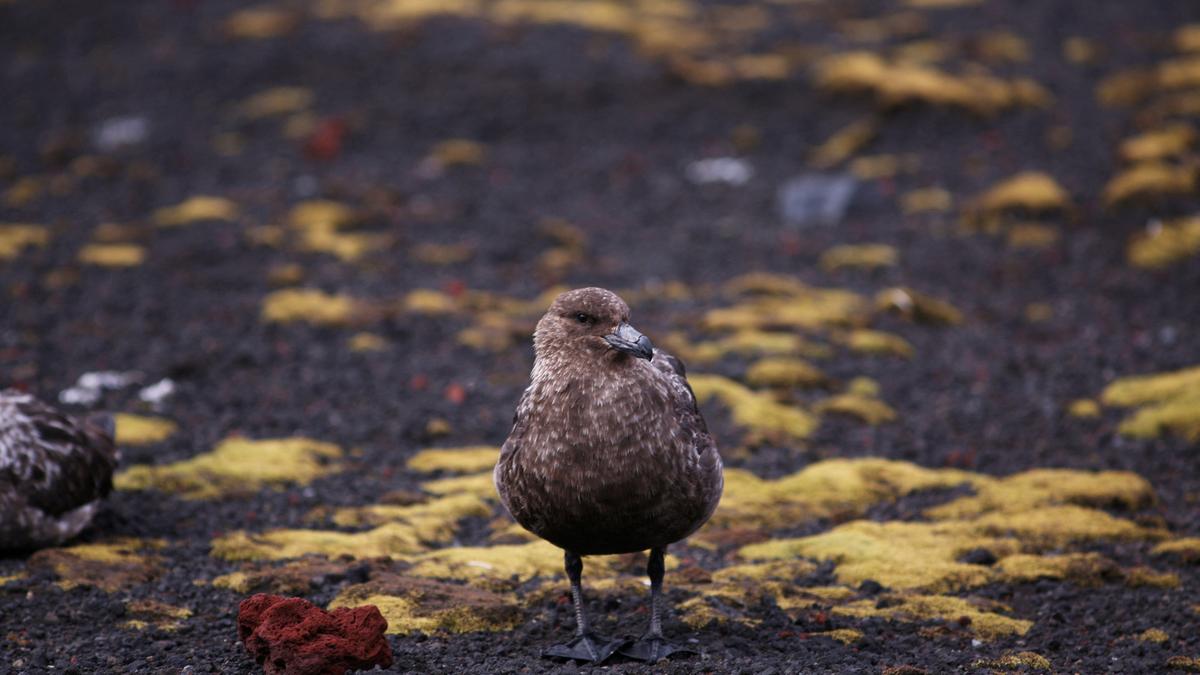
During the 2022 northern hemisphere summer, the virus killed roughly half of the world’s great skua (Stercorarius skua).

Food-stealing behaviour can enable the virus to spread. When a great skua harasses a gannet and makes it regurgitate food, the skua gets a fish meal – coated in saliva. If the gannet is infectious, its saliva will likely have a high viral load.

Once infected, these pirate birds can drive spread faster. Skuas, frigatebirds and gulls can cover great distances across polar regions and the tropics. They can transmit the disease to their mates, chicks, and other seabirds.

This means we could see outbreaks in new populations or places, hundreds or even thousands of kilometres apart. We have already seen signs of this in skua populations in the northern and southern hemispheres, with brown (Stercorarius antarcticus) and great skuas being some of the first detected H5N1 infections at new locations.

Skuas more often steal food from other seabirds when away from their breeding sites – including when they’re migrating back to these areas. If skuas get infected en route, they could bring the disease to their breeding sites and then beyond.

Frigatebirds are known for the red pouches on the necks of the males, which they inflate during breeding season. But they have other remarkable traits, such as travelling tens of thousands of kilometres across oceans outside breeding season. These travels are often broken up by “island-hopping”, where they will encounter and potentially infect other seabirds.

Frigatebirds and skuas have already suffered mass deaths from this strain of avian influenza.

While the virus is now almost everywhere, it hasn’t reached Australia, New Zealand, Oceania, and parts of Antarctica and the subantarctic. We can monitor skuas, frigatebirds and gulls for signs of illness to give us early warning that the virus has arrived.

By itself, avian influenza is a major threat to seabirds. But the outlook is even more dire when this is compounded with further human-caused threats. Identifying, managing, and reducing these threats is critical for their conservation, and the health of our islands and oceans.

This article is republished from The Conversation under a Creative Commons license. Read the original article.

Published – September 17, 2024 01:25 pm IST



Source link

Science Tags:Avian Influenza, Environment news, kleptoparasites birds, science news, seabirds, seabirds that steal other birds’ food

Post navigation

Previous Post: Wholesale Inflation Falls For Second Month In A Row To 1.31% In August
Next Post: How The Internet Went From Being Fun To Frustrating

Related Posts

  • Astronomers build galaxy-sized ‘detector’ to map universe’s vibrations
    Astronomers build galaxy-sized ‘detector’ to map universe’s vibrations Science
  • India’s first solar observatory mission Aditya-L1 to be launched at 11.50 a.m. on September 2, 2023
    India’s first solar observatory mission Aditya-L1 to be launched at 11.50 a.m. on September 2, 2023 Science
  • ISRO successfully launches PSLV-C59 rocket with European Space Agency’s Proba-3 satellites
    ISRO successfully launches PSLV-C59 rocket with European Space Agency’s Proba-3 satellites Science
  • South Africa passes its first sweeping climate change law
    South Africa passes its first sweeping climate change law Science
  • Science for all | Footprints of two ancient hominin species found at the same spot in Kenya
    Science for all | Footprints of two ancient hominin species found at the same spot in Kenya Science
  • Antimatter idea offers scientists clue to cracking cosmic mystery
    Antimatter idea offers scientists clue to cracking cosmic mystery Science

More Related Articles

GalaxEye launches Mission Drishti, India’s largest privately developed Earth observation satellite GalaxEye launches Mission Drishti, India’s largest privately developed Earth observation satellite Science
AI has a large and growing carbon footprint AI has a large and growing carbon footprint Science
NASA’s LRO captures Chandrayaan-3 landing site on the Moon NASA’s LRO captures Chandrayaan-3 landing site on the Moon Science
A seismic decision: On revision to India’s earthquake zoning, rollback A seismic decision: On revision to India’s earthquake zoning, rollback Science
Asteroid named after Bengaluru Professor Asteroid named after Bengaluru Professor Science
New moiré superconductor opens the door to new quantum materials New moiré superconductor opens the door to new quantum materials Science
SiteLock

Archives

  • May 2026
  • April 2026
  • March 2026
  • February 2026
  • January 2026
  • December 2025
  • November 2025
  • October 2025
  • September 2025
  • August 2025
  • July 2025
  • June 2025
  • May 2025
  • April 2025
  • March 2025
  • February 2025
  • January 2025
  • December 2024
  • November 2024
  • October 2024
  • September 2024
  • August 2024
  • July 2024
  • June 2024
  • May 2024
  • April 2024
  • March 2024
  • February 2024
  • January 2024
  • December 2023
  • November 2023
  • October 2023
  • September 2023
  • August 2023
  • July 2023
  • June 2023
  • May 2023
  • April 2023
  • March 2023
  • February 2023
  • January 2023
  • December 2022
  • November 2022
  • October 2022
  • September 2022
  • August 2022
  • July 2022
  • June 2022
  • May 2022

Categories

  • Business
  • Nation
  • Science
  • Sports
  • World

Recent Posts

  • Attack on Indian-flagged ship off Oman coast ‘unacceptable’, says MEA; crew members safe
  • MP pulls up Adani Total Gas for delay in PNG supply line project for Udupi district
  • Heavy Russian strikes on Kyiv kill one, wound 31; Ukraine links attack to Trump-Xi summit
  • Vijay govt. says it needs time to ‘restructure’ Magalir Urimai Thogai programme; funds to be disbursed soon
  • Premier League title race: Manchester City keeps pressure on Arsenal with win over Crystal Palace

Recent Comments

  1. JamesHeR on UP Teacher Who Asked Students To Slap Muslim Classmate
  2. RafaelNar on UP Teacher Who Asked Students To Slap Muslim Classmate
  3. CarlosExorb on UP Teacher Who Asked Students To Slap Muslim Classmate
  4. Robertfloup on UP Teacher Who Asked Students To Slap Muslim Classmate
  5. Davidcag on UP Teacher Who Asked Students To Slap Muslim Classmate
  • Israel Orders More Gaza Evacuations After School Shelter Attack Kills 90
    Israel Orders More Gaza Evacuations After School Shelter Attack Kills 90 World
  • GST Council lifts tax blockages for rupee trade 
    GST Council lifts tax blockages for rupee trade  Business
  • Access Denied Sports
  • 6 Dead, 10 Injured In Mexico Bar Shooting
    6 Dead, 10 Injured In Mexico Bar Shooting World
  • Rachel Reeves: Britain’s first woman finance chief
    Rachel Reeves: Britain’s first woman finance chief World
  • Access Denied
    Access Denied Nation
  • Access Denied
    Access Denied Nation
  • Lt Governor Points Out Civic Issues In Delhi, Alleges “Inaction” By AAP
    Lt Governor Points Out Civic Issues In Delhi, Alleges “Inaction” By AAP Nation

Editor-in-Chief:
Mohammad Ariff,
MSW, MAJMC, BSW, DTL, CTS, CNM, CCR, CAL, RSL, ASOC.
editor@artifex.news

Associate Editors:
1. Zenellis R. Tuba,
zenelis@artifex.news
2. Haris Daniyel
daniyel@artifex.news

Photograher:
Rohan Das
rohan@artifex.news

Artifex.News offers Online Paid Internships to college students from India and Abroad. Interns will get a PRESS CARD and other online offers.
Send your CV (Subjectline: Paid Internship) to internship@artifex.news

Links:
Associate Journalism
About Us
Privacy Policy

News Links:
Breaking News
World
Nation
Sports
Business
Entertainment
Lifestyle

Registered Office:
72/A, Elliot Road, Kolkata - 700016
Tel: 033-22277777, 033-22172217
Email: office@artifex.news

Editorial Office / News Desk:
No. 13, Mezzanine Floor, Esplanade Metro Rail Station,
12 J. L. Nehru Road, Kolkata - 700069.
(Entry from Gate No. 5)
Tel: 033-46011099, 033-46046046
Email: editor@artifex.news

Copyright © 2023 Artifex.News Newsportal designed by Artifex Infotech.