



Viruses are ubiquitous entities that have long plagued humans, often presenting in pesky, self-limiting infections, like a bout of the common cold. While most viral encounters are transient and merely inconvenient, some can have devastating or chronic consequences, leading to severe disease or even death. The recent COVID-19 pandemic and other emerging infectious diseases around us are good examples.
However, this battle between host and pathogen churns up a fascinating question: could viral infections have reshaped the human genome in the process?
A unique enzyme
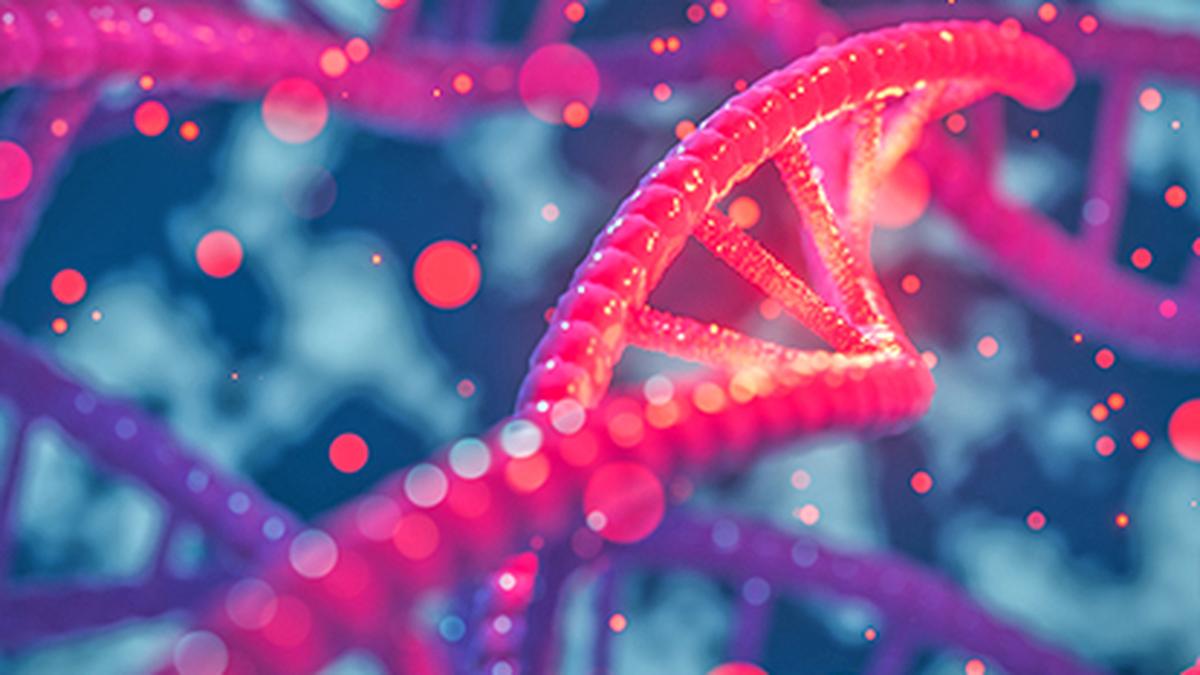
Most viruses can’t really affect the genome. However, retroviruses buck this trend: they are a group of viruses that can integrate and reshape the genomes of the hosts they infect. Retroviruses have an RNA genome; can reverse-transcribe it to DNA and thus insert it into the host’s genome.
Their name comes from a unique enzyme they possess, called reverse transcriptase. It’s the one with the ability to convert the virus’s RNA into a corresponding DNA sequence. Teams led by Howard Temin at the University of Wisconsin–Madison and David Baltimore at the Massachusetts Institute of Technology reported its discovery in 1971. It spawned a widespread search for viruses that have this enzyme.
The knowledge that these viruses could cause cancer was even then well-known, even if the mechanism wasn’t clear until the 1971 teams’ reports. Oluf Bang and Vilhelm Ellermann had discovered the viral cause of chicken leukosis back in 1908 while Ludwik Gross isolated a leukaemia-causing virus in mice in 1957.
The discovery of HIV
But it wasn’t until 1980 that researchers — Robert C. Gallo & co. — found the first human retrovirus. Dr. Gallo had extensively worked on the human T lymphotropic virus (HTLV) and his group isolated it from a patient with cutaneous T-cell lymphoma. This work was later published in the Proceedings of The National Academy of Sciences.
As if in quick succession, in 1983, Françoise Barré-Sinoussi, working closely with Luc Montagnier at the Institut Pasteur in Paris, reported the discovery of a retrovirus from the lymph node of a patient suffering from acquired immune deficiency syndrome (AIDS).
French researchers initially called the virus the lymphadenopathy-associated virus (LAV) while American researchers called it HTLV-3. Both these names were superseded by the name ‘human immunodeficiency virus’ (HIV) in 1986. For their discovery, Dr. Barré-Sinoussi and Dr. Montagnier were awarded the medicine Nobel Prize in 2008.
Genomic elements left behind
In the life cycle of a retrovirus, the reverse-transcribed DNA is integrated into the host’s DNA along with another enzyme called integrase, which acts like glue to bind the two DNA genomes. Once bound, the viral DNA is called a provirus, and is complete with all the ingredients it needs to be functional. At the end of this process, the virus practically hijacks human cells and turns them into virus-making factories.
It’s typically not possible for a person to inherit retrovirus infections or even the provirus because these integrations usually damage only a subset of cells. However, such genome invasions can sometimes mess up the integration process, causing ‘zombie’ regions in the host’s genome. These parts are called endogenous retroviruses (ERVs). ERVs usually can’t replicate and produce functional proteins since they lack their regulatory regions.
If the abortive integrations involve the germ cells — i.e. those that produce the gametes, sperm cells and ova — the host will be able to transmit its ERVs to its offspring. This happens in rare instances. This said, over the tens of thousands of years of mammalian evolution, many retroviruses have left a number of genomic elements in the genome, sort of the genetic fossils of early infections. These elements have long lost the potential to produce viruses but researchers believe they have played a big hand in the evolution of their hosts. In fact, research strongly suggests around 8% of the human genome is composed of ERVs.
Biomarker for preeclampsia?
A good example of their influence are the syncytins, a class of genes thought to be descended from an ERV. That is, these genes originally came from viruses and were acquired by chance as the mammalian host evolved. But at some point they became essential for the host because they helped create the placenta, an organ that became crucial to support a growing baby.
This change is thought to have been important for the evolution of mammals with placentas from their egg-laying ancestors. Over time, the original ERV’s envelope gene (env) was thought to be modified or replaced by new versions, forming the syncytin genes as we see today in different mammal species.
Syncytins are important genes involved in placental development; many ERVs are also highly expressed in the placenta. In a recent paper in the Proceedings of the National Academy of Sciences, researchers from Sun Yat Sen University in China reported that a particular RNA was dysregulated in early-onset preeclampsia — a condition during pregnancy where the blood pressure shoots up. This RNA was derived from an ERV. The study also suggested that the presence of this RNA could be used as a biomarker for the condition.
Tumours in colorectal cancer
ERVs are also involved in cell-type differentiation. In the early stages of embryo development, cells transition from totipotency (the ability to become any cell type) to pluripotency (the ability to become the three primary germ cell types). This transition is important because it produces pluripotent stem cells that can form different cell types. Scientists recently discovered a protein called MERVL-gag derived from an ERV. They found MERVL-gag plays a key role in controlling some other proteins during this transition. They also found MERVL-gag works closely with another protein called URI, which helps the embryo transition from totipotency to pluripotency. Their results were published recently in the journal Science Advances.
In another recent paper in the same journal, researchers at the University of Colorado, Boulder, suggested that one human ERV element — or a portion of its DNA — called LTR10 significantly affects the formation of tumours in colorectal cancer. The LTR10 retroelement seems to have been integrated into the genome some 30 million years ago. The authors found conclusive evidence that among humans, different cancers could regulate LTR10 retroelements differently using specific epigenetic marks in the element.
The study also reported that the retroelement’s presence could produce large genomic changes, which could in turn affect the expression of the genes involved in tumour formation.
In future, as research techniques continue to advance, scientists may uncover more wonderful insights into the evolutionary significance of ERVs and their contribution to human biology. Such knowledge will undoubtedly lead to breakthroughs in regenerative medicine, cancer therapies, and personalised medicine, ultimately enhancing our understanding of human health and evolution.
The authors are senior consultants at Vishwanath Cancer Care Foundation and adjunct professors at IIT Kanpur and Dr. D.Y. Patil Medical College, Hospital & Research Centre, Pune.