




Skip to content
  • Facebook
  • X
  • Linkedin
  • WhatsApp
  • YouTube
  • Associate Journalism
  • About Us
  • Privacy Policy
  • 033-46046046
  • editor@artifex.news
Artifex.News

Artifex.News

Stay Connected. Stay Informed.

  • Breaking News
  • World
  • Nation
  • Sports
  • Business
  • Science
  • Entertainment
  • Lifestyle
  • Toggle search form
  • No class 12 student of CBSE from Mangaluru has expressed concern over OSM evaluation of papers
    No class 12 student of CBSE from Mangaluru has expressed concern over OSM evaluation of papers Nation
  • A total of 146 land defenders killed globally in 2024, one-third in Colombia: Global Witness NGO
    A total of 146 land defenders killed globally in 2024, one-third in Colombia: Global Witness NGO World
  • Former Australia Captain Allan Border Demands Demolition Of India’s Historic Win Venue
    Former Australia Captain Allan Border Demands Demolition Of India’s Historic Win Venue Sports
  • Access Denied
    Access Denied Nation
  • Access Denied Sports
  • Probe Agency Opposes Hemant Soren’s Bail In Supreme Court
    Probe Agency Opposes Hemant Soren’s Bail In Supreme Court Nation
  • Access Denied Sports
  • Access Denied
    Access Denied Nation
Drug used to treat clots can protect against cobra venom damage

Drug used to treat clots can protect against cobra venom damage

Posted on July 24, 2024 By admin


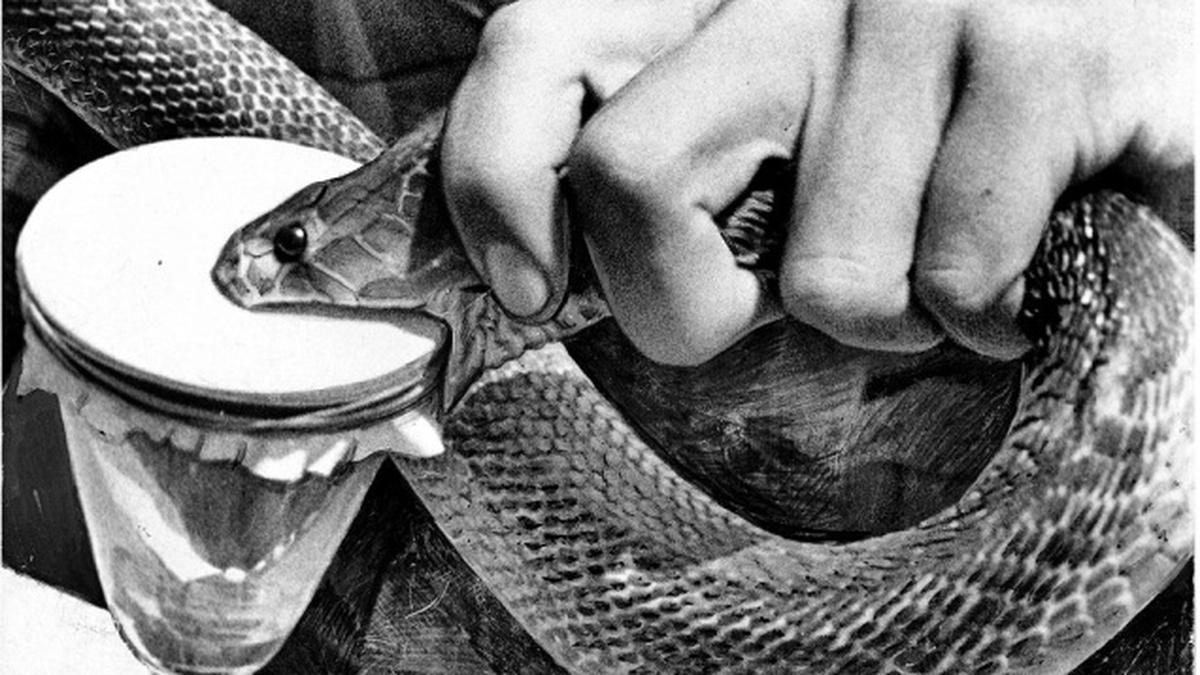
Orange-red in colour and native to Tanzania, the Naja pallida — the red spitting cobra — is a formidable, 1.2-metre-long foe. When threatened, it raises its hood and hisses loudly. If this display doesn’t deter its predator, it opens its mouth. Muscles around the snake’s venom glands squeeze, releasing jets of venom onto the eyes, nose, and mouth of the threat. As the victim’s face sears in pain, the cobra takes the opportunity to lunge forward and bite, delivering a massive quantity of venom into the victim’s body.

The venom attacks cells in the body and damages the nervous system. For most of the cobra’s regular victims — toads, frogs, birds, and other snakes — the only fate is death. A lucky human might be spared but with a permanent disability.

Bad deal on antivenoms

Encounters with venomous snakes kill about 1.4 lakh people every year, especially in the tropical regions of Africa and Asia. Despite this alarming number, the treatment for snakebites has remained archaic.

Based on the work of French scientists in the late 1800s, antivenom is made today by injecting domestic animals like horses and sheep with small amounts of snake venom. This kicks the animal’s immune system into action, producing antibodies to neutralise the venom. Researchers extract these antibodies from the animal’s blood and transport them in cold storage to hospitals, where they are injected into the bodies of snakebite victims.

Difficulties in production, storage, transportation, and administration aside, antivenoms are also expensive and can have severe side effects in humans; some of them could be fatal.

That may soon change. In a July 2024 study published in the journal Science Translational Medicine, a team of Australian, British, Canadian, and Costa Rican scientists have reported that tinzaparin, a drug commonly used to prevent blood clots, significantly reduces damage to cells due to spitting cobra venom. The team also found the drug could reduce skin damage in mice injected with the venom.

According to a press release, the scientists have filed for a patent and may start human clinical trials soon.

According to Kartik Sunagar, an associate professor at the Centre for Ecological Sciences, Indian Institute of Science (IISc), Bengaluru, who studies the evolution of snake venoms and advanced snakebite medicines, “This discovery could pave the way for a real-world solution for regions that suffer the highest burden of snakebite morbidity.”

How venom kills cells

The venom of the red- and the black-necked spitting cobras — the two species whose venom the researchers used in the study — is “poorly understood,” R.N.V. Krishna Deepak, who studies snake venoms using computational methods at Azim Premji University, Bengaluru, said.

Our understanding of how these venoms kill human cells is worse, which contributes to the lack of advances in antivenom development.

To address this issue, the researchers first investigated how spitting cobra venom affects human cells. They grew a collection of human cells in the laboratory; each member of this collection had a single gene removed. (They used CRISPR-Cas9, a Nobel-winning genome-editing tool, to build this collection.) When a gene is knocked out, cells are unable to manufacture a particular protein.

The researchers then treated this collection with the venom of either of the two snakes and selected cells that survived. Given that this resistance to spitting cobra venom had been conferred by the absence of a gene, the authors concluded the said genes were involved in facilitating the venom’s effects on normal human cells.

Further investigation revealed that many of these genes were involved in the synthesis of a sugar compound called heparan sulphate, which is known to regulate the formation of blood vessels and clots in the human body.

Blood thinner to antidote

The researchers hypothesised that if the venom’s toxicity depended on the biological pathway that synthesised heparan sulphate, artificially stopping this pathway could ameliorate the venom’s toxic effects.

One way of doing so is to introduce molecules that closely resemble heparan sulphate. As the body senses an excess of these molecules, it shuts down the pathways responsible for heparan sulphate synthesis. One such molecule is tinzaparin, a drug used to treat serious blood clots.

When the team introduced tinzaparin immediately after subjecting cells to the snake venom, the cells survived. Tinzaparin could protect these cells even when it was introduced an hour after the cells had been exposed to the venom. Further experiments revealed that tinzaparin worked by blocking the interaction between the venom and its receptor in the cell by binding to venom molecules.

When the researchers injected mice with venom from either of the two cobras along with tinzaparin, they found that skin damage resulting from the venom was much less when the mice were provided with the drug versus when they were deprived of it.

‘Hiding right under our noses’

Dr. Deepak, the Azim Premji University biologist, said the study’s use of the “highly efficient CRISPR approach” to a “mighty but neglected problem” could potentially renew the interest of the global scientific community to better understand mechanisms underlying snake venom toxicity. 

The IISc’s Dr. Sunagar added that the study is “one of the few research undertakings where the molecular mechanism of how venom causes damage is taken into account to design a targeted therapy.” The therapeutic agent itself that the study proposes — tinzaparin — is inexpensive, widely available, and has been “hiding right under our noses”, Dr. Deepak said.

He added that he is excited to see how different research groups follow up on the study’s findings. In the meanwhile, he hoped the study would garner enough attention to make a case to increase funding that will allow researchers to employ “advanced and precise technologies like CRISPR-Cas9 to address the molecular mechanisms behind snakebite envenoming.”

Sayantan Datta is a science journalist and a faculty member at Krea University. They tweet at @queersprings.


Source link

Science

Post navigation

Previous Post: Budget 2024: Fostering sustainable development and economic opportunities
Next Post: Kamala Harris At Campaign Rally

Related Posts

  • Where do the wild colours of domesticated silkworm cocoons come from?
    Where do the wild colours of domesticated silkworm cocoons come from? Science
  • Study reveals history and oceanic voyages of remarkable baobab tree
    Study reveals history and oceanic voyages of remarkable baobab tree Science
  • The first human-made object recovered from space
    The first human-made object recovered from space Science
  • ISRO shares video showing Pragyan rover roaming around Shiv Shakti point
    ISRO shares video showing Pragyan rover roaming around Shiv Shakti point Science
  • U.S. and China renew bilateral S&T Agreement | Explained
    U.S. and China renew bilateral S&T Agreement | Explained Science
  • Proba-3 mission launch delayed to December 5 due to anomaly: ISRO
    Proba-3 mission launch delayed to December 5 due to anomaly: ISRO Science

More Related Articles

Semaglutide guidelines based on BMI may exclude at-risk Indians Semaglutide guidelines based on BMI may exclude at-risk Indians Science
Science for all newsletter how do lidocaine ointments work?  Science for all newsletter how do lidocaine ointments work?  Science
The Science Quiz: The science hidden in proverbs and idioms The Science Quiz: The science hidden in proverbs and idioms Science
The two vaccines that brought us to the brink of eradicating polio | Explained The two vaccines that brought us to the brink of eradicating polio | Explained Science
We need more mega-science projects, says CERN Director-General We need more mega-science projects, says CERN Director-General Science
Chandrayaan-3 Lander slowed down to move it to lower orbit Chandrayaan-3 Lander slowed down to move it to lower orbit Science
SiteLock

Archives

  • September 2026
  • August 2026
  • July 2026
  • June 2026
  • May 2026
  • April 2026
  • March 2026
  • February 2026
  • January 2026
  • December 2025
  • November 2025
  • October 2025
  • September 2025
  • August 2025
  • July 2025
  • June 2025
  • May 2025
  • April 2025
  • March 2025
  • February 2025
  • January 2025
  • December 2024
  • November 2024
  • October 2024
  • September 2024
  • August 2024
  • July 2024
  • June 2024
  • May 2024
  • April 2024
  • March 2024
  • February 2024
  • January 2024
  • December 2023
  • November 2023
  • October 2023
  • September 2023
  • August 2023
  • July 2023
  • June 2023
  • May 2023
  • April 2023
  • March 2023
  • February 2023
  • January 2023
  • December 2022
  • November 2022
  • October 2022
  • September 2022
  • August 2022
  • July 2022
  • June 2022
  • May 2022

Categories

  • Business
  • Nation
  • Science
  • Sports
  • World

Recent Posts

  • U.S. military says it killed 4 in strike on alleged drug-smuggling boat in Caribbean
  • Davis Cup: Czechs beat USA to qualify for finals
  • Ed Sheeran set to return to stage after Palestinian controversy
  • Asian Games 2026 opens in Japan with 11,000 athletes competing | LIVE updates
  • Union Home Minister Amit Shah falls ill in Hubballi, skips function

Recent Comments

  1. AlvinNet on UP Teacher Who Asked Students To Slap Muslim Classmate
  2. AlvinNet on UP Teacher Who Asked Students To Slap Muslim Classmate
  3. Jamesslits on UP Teacher Who Asked Students To Slap Muslim Classmate
  4. MichaelClear on UP Teacher Who Asked Students To Slap Muslim Classmate
  5. Jamesslits on UP Teacher Who Asked Students To Slap Muslim Classmate
  • UST in partnership with Kaynes to invest ₹3,330 crore for semiconductor manufacturing unit in Gujarat
    UST in partnership with Kaynes to invest ₹3,330 crore for semiconductor manufacturing unit in Gujarat Business
  • Access Denied
    Access Denied Nation
  • Six killed in German ‘family tragedy’ shooting: police
    Six killed in German ‘family tragedy’ shooting: police World
  • Saransh earns maiden call-up to India Test squad for tour of Sri Lanka
    Saransh earns maiden call-up to India Test squad for tour of Sri Lanka Sports
  • UK’s Queen Camilla Immortalised As Barbie
    UK’s Queen Camilla Immortalised As Barbie World
  • Israel Used American-Made Bomb In Attack On Hezbollah Chief: US Senator
    Israel Used American-Made Bomb In Attack On Hezbollah Chief: US Senator World
  • Access Denied Business
  • Harmanpreet and Co. have strong foundation for Los Angeles 2028 gold, says Mike Horn
    Harmanpreet and Co. have strong foundation for Los Angeles 2028 gold, says Mike Horn Sports

Editor-in-Chief:
Mohammad Ariff,
MSW, MAJMC, BSW, DTL, CTS, CNM, CCR, CAL, RSL, ASOC.
editor@artifex.news

Associate Editors:
1. Zenellis R. Tuba,
zenelis@artifex.news
2. Haris Daniyel
daniyel@artifex.news

Photograher:
Rohan Das
rohan@artifex.news

Artifex.News offers Online Paid Internships to college students from India and Abroad. Interns will get a PRESS CARD and other online offers.
Send your CV (Subjectline: Paid Internship) to internship@artifex.news

Links:
Associate Journalism
About Us
Privacy Policy

News Links:
Breaking News
World
Nation
Sports
Business
Entertainment
Lifestyle

Registered Office:
72/A, Elliot Road, Kolkata - 700016
Tel: 033-22277777, 033-22172217
Email: office@artifex.news

Editorial Office / News Desk:
No. 13, Mezzanine Floor, Esplanade Metro Rail Station,
12 J. L. Nehru Road, Kolkata - 700069.
(Entry from Gate No. 5)
Tel: 033-46011099, 033-46046046
Email: editor@artifex.news

Copyright © 2023 Artifex.News Newsportal designed by Artifex Infotech.