





Search for power
The concept of underwater transport is deeply embedded in human history. It wasn’t until the 17th Century, however, that the first practical submarine was built. And it was only during World War I that submarines became a huge factor in naval warfare.
Even in the decades after World War I, the submarines could last underwater for only about 12-48 hours. This practical limitation was due to their power source, something that the U.S. Navy were trying to overcome for years by pursuing alternate sources of energy for their vessels.
The news of the atom having been split in 1939 didn’t immediately lead to the beginning of the Manhattan Project. The potential of nuclear energy for power generation and explosives, however, didn’t go unnoticed and the U.S. Navy began experimenting nuclear-powered propulsion.
A labelled cutaway drawing released by the U.S. Department of Defense depicts the insides of USS Nautilus – the world’s first atomic-powered submarine.
| Photo Credit:
THE HINDU ARCHIVES
This was under the aegis of Ross Gunn, a physicist heading the Mechanics and Electricity Division at the Naval Research Lab (NRL). Submarines of the time relied on electric batteries that were charged by diesel-powered generators, thereby requiring resurfacing, fuel, and oxygen. Even if the submarines used fuel cells for propulsion, oxygen remained a limiting factor. Gunn dreamt of a new power source with a uranium core that would heat water to run a steam power plant onboard.
Once Gunn’s team secured funding, work began to explore ways to separate uranium isotopes. Their work got a fillip once Philip Abelson, a physicist at the Carnegie Institute of Washington, got on board. Abelson pioneered a method of liquid thermal diffusion to separate the isotopes and in his own words “the facility at the Naval Research Laboratory was the world’s most successful separator of uranium isotopes” for a time.
Seeing the success that Abelson’s method was able to produce, the Manhattan Project – operating in secrecy – were quick to replicate it, building a liquid thermal diffusion plant with 2,142 columns, each 15 m tall, at Oak Ridge National Laboratory – the S-50. The S-50 turned out to be the first feeder plant in a trio of plants that enriched uranium in series for the first atomic bomb that was dropped on August 6, 1945 on Hiroshima, Japan.
Gunn’s contribution was recognised and he urged the Navy in 1946 to send people to learn about nuclear energy from scientists who were involved with the Manhattan Project. With Abelson returning to Carnegie Institution the same year and Gunn switching NRL for the U.S. Weather Bureau, the onus of building the nuclear-powered submarine fell on Russian-born engineer Captain Hyman G. Rickover.
Building the Nautilus
Rickover was one of the five people who went to learn about nuclear energy from Manhattan Project scientists following Gunn’s recommendation. Quick to see the benefits of nuclear power in their realm, Rickover led the effort to design a power plant for a submarine that would be both safe and compact.
With Rickover at the helm, a group of engineers began experimenting on reactor designs. They came up with a pressurised water reactor, which continues to be a model for a common type of nuclear reactor even today.
According to this design, water in a coolant loop is kept under high pressure. Pumped near a core of uranium that is slightly enriched, the water heats up but is prevented from boiling by the high pressure. Once the heated water moves into a steam generator, it vaporises water in a secondary loop. The steam that results from this process turns a turbine generator and electricity is produced.
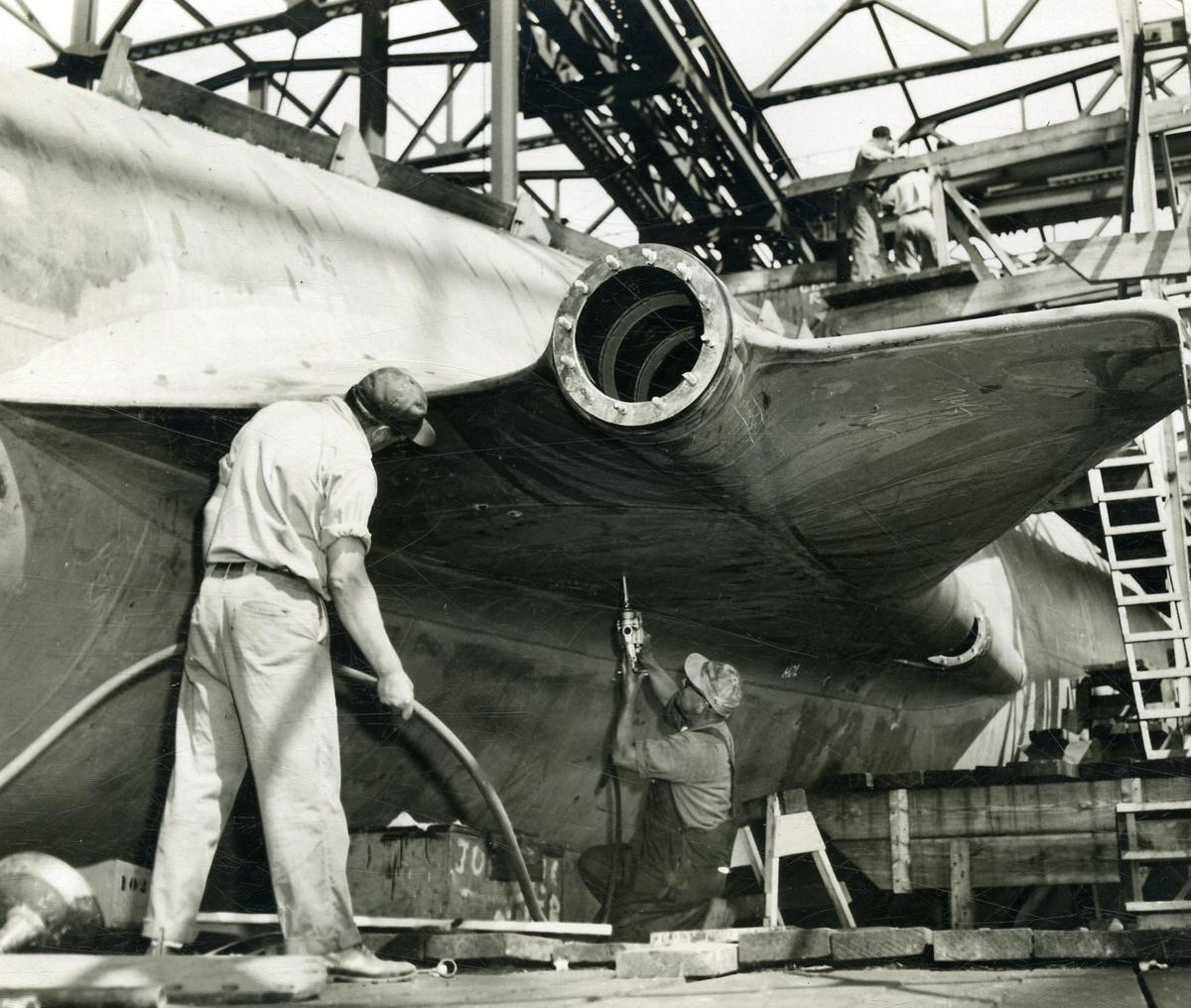
These first overall close-up pictures of the world’s first atomic-powered submarine were made inside the yard of the General Dynamics Corporation’s Electric Boat division and cleared by the Department of Defense.
| Photo Credit:
THE HINDU ARCHIVES
Rickover contracted with Westinghouse, a manufacturing company, to build the reactor in the early 1950s. In order to build SSN-571 – the submarine that this reactor would power – he brought in the Electric Boat Division of General Dynamics.
The resulting submarine was tested time and time again, both before and after the reactor was installed by the Navy. Rickover, meanwhile, took it upon himself to personally interview and approve every single Navy officer involved in the programme, not just in the beginning, but for decades thereafter.
His methods might have been very different, and even earned him the reputation of being a fanatic among his detractors, but Rickover did succeed in building the world’s first nuclear submarine. What’s more, he managed it years ahead of schedule as the USS Nautilus was launched on January 21, 1954. With more than 1,200 people gathered, the submarine was commissioned on September 30, officially entering the Navy service. On the morning of January 17, 1955, the Nautilus ran on nuclear power for the very first time.
Travelling under the North Pole
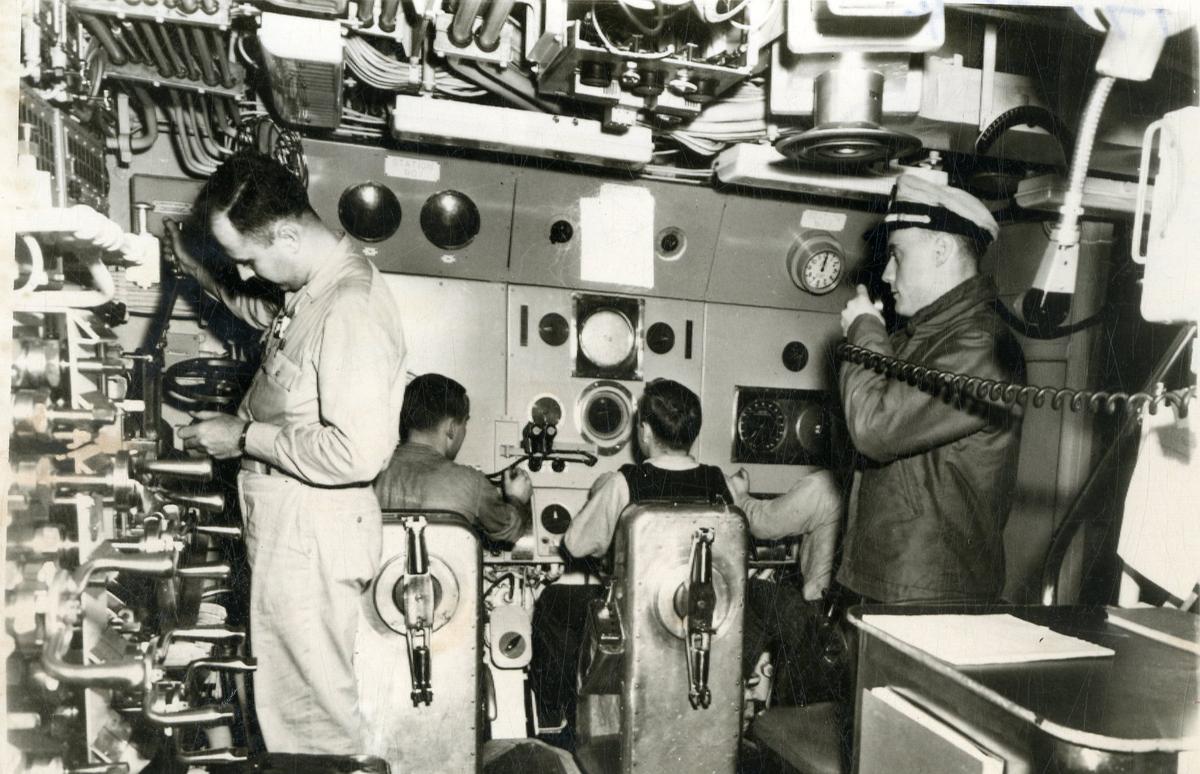
One of the first photos released by the U.S. Navy once USS Nautilus was commissioned.
| Photo Credit:
THE HINDU ARCHIVES
Stretching nearly 320 feet and displacing over 3,000 tons, the Nautilus was much larger than the diesel-electric submarines that came before it. In addition to being able to travel underwater at speeds in excess of 20 knots, the submarine was also capable of being submerged for almost unlimited time periods. This was a direct result of the method of propulsion as the atomic engine had no need for air and only used up a small amount of nuclear fuel.
In 25 years of operation, Nautilus smashed speed and distance records, remained capable of avoiding detection by even the best such systems, and remained continuously underwater for more than two weeks in one shot. Among its many firsts and successes, its journey under the North Pole in 1958 is rather special.
Nautilus became the first craft to cross under the North Pole thanks to Operation Sunshine. For this historic voyage, 116 men were on board – a party that included Commander William R. Anderson, 111 officers and crew members, and four scientists, who were civilians.
Having departed from Pearl Harbor, Hawaii on July 23, 1958, it passed north through Bering Strait and surfaced only at Point Barrow, Alaska. On August 1, Nautilus went under the Arctic ice cap as it left the north coast of Alaska.
With the submarine diving to a depth of nearly 500 feet, the ice cap above it varied from anywhere between 10 to 50 feet. Around 11:15 p.m. EDT (Eastern Daylight Time in the U.S.) on August 3, Commander Anderson made the following announcement: “For the world, our country, and the Navy — the North Pole.”
The historic moment passed as the Nautilus carried on without stopping under the geographic North Pole. It surfaced next only on August 5, in the Greenland Sea between Spitsbergen and Greenland. It ended its historic journey at Iceland two days later.
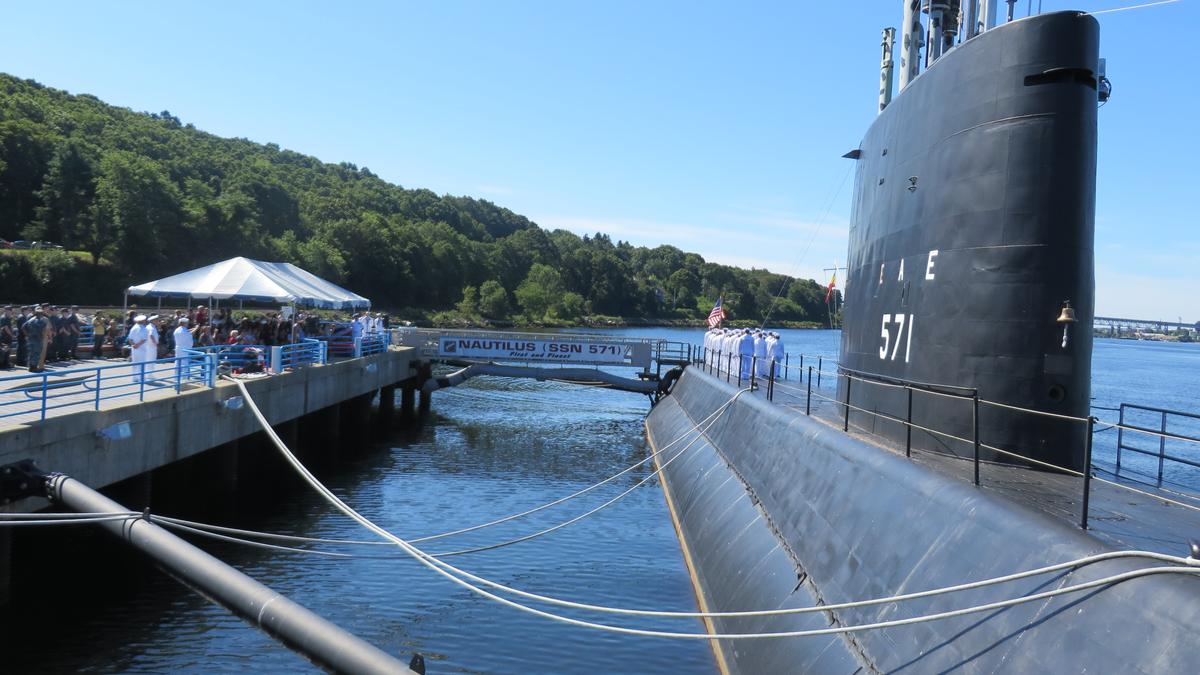
In a career spanning a quarter of a century, the Nautilus travelled about half a million miles. It was decommissioned on March 3, 1980 and designated a National Historic Landmark in 1982. Having first gone on exhibit in 1986, it is now a permanent exhibit open to the public at the Submarine Force Museum in Groton, Connecticut, U.S.