




Only two countries in the world have persisted with a breeder reactor programme: Russia and India. Recently, India loaded the core of its long-delayed prototype fast breeder reactor (PFBR) vessel, bringing it to the cusp of stage II of its three-stage nuclear programme. At the end of this programme, India hopes to be able to use its vast reserves of thorium in reactors to produce nuclear power to sate the country’s surging energy demand and provide some energy independence. But there are two barriers to this realisation: nuclear waste and power tariffs.
What is nuclear waste?
When a nuclear fission reactor operates, it allows neutrons with a specific energy to bombard the nuclei of atoms of certain elements. When one of these nuclei absorbs such a neutron, it destabilises and splits into two (i.e. fissions). This event yields some energy and the nuclei of different elements. For example, when the uranium-235 (U-235) nucleus absorbs a neutron, it can disintegrate to barium-144, krypton-89, and three neutrons. If the ‘debris’ (barium-144 and krypton-89) constitute elements that can’t gainfully undergo fission, they become nuclear waste.
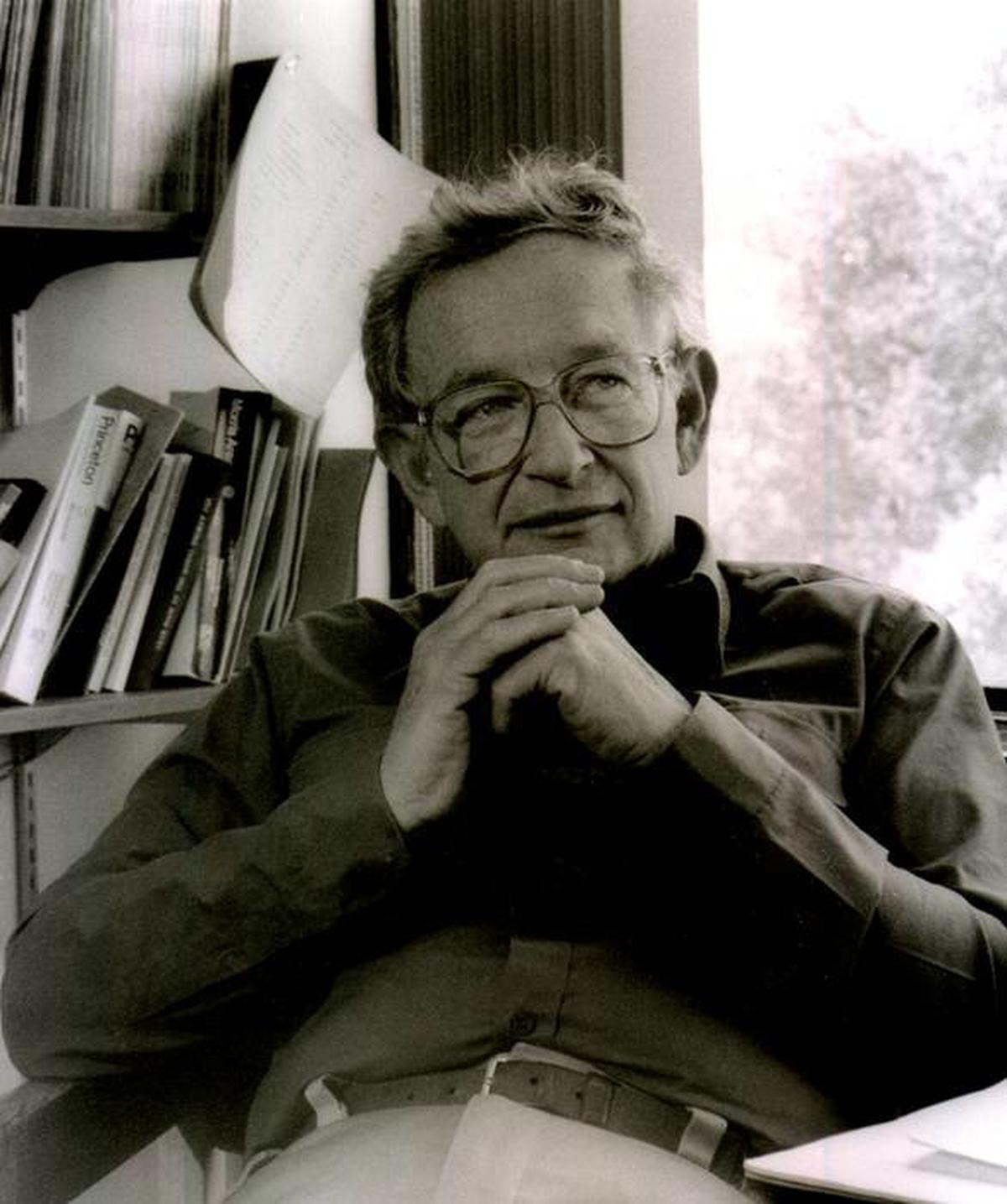
An important source of nuclear waste is the fuel itself, the substance that undergoes fission — such as the U-235. “The spent fuel contains all the radioactive fission products that are produced when each nucleus of uranium or plutonium breaks apart to produce energy, as well as those radioactive elements, including plutonium, that are produced when uranium is converted into heavier elements following the absorption of neutrons and subsequent radioactive decays,” M.V. Ramana, a professor and the Simons Chair in Disarmament, Global and Human Security at the School of Public Policy and Global Affairs, University of British Columbia, wrote in a 2018 paper.
Nuclear waste is often highly radioactive and needs to be stored in special facilities that are reinforced to prevent leakage into and/or contamination of the surrounding soil, air, and water.
How do we handle nuclear waste?
The composition and quantity of nuclear waste produced depends on the nuclear reactions happening inside a reactor. This said, handling the spent fuel is the main challenge: it is very hot and radioactive, and needs to be kept underwater for up to a few decades. Once it has cooled, it can be transferred to dry casks for longer-term storage.
All countries with longstanding nuclear power programmes have accumulated a considerable inventory of spent fuel. For example, the U.S. had 69,682 tonnes (as of 2015), Canada 54,000 tonnes (2016), and Russia 21,362 tonnes (2014).
Depending on radioactivity levels, the storage period can run up to a few millennia. Thus, “they have to be isolated from human contact for periods of time that are longer than anatomically modern Homo sapiens have been around on the planet,” Dr. Ramana wrote in his paper.
Nuclear power plants also have liquid waste treatment facilities. “Small quantities of aqueous wastes containing short-lived radionuclides may be discharged into the environment,” International Agency for Atomic Energy (IAEA) scientist V. Tsyplenkov wrote in a 1993 feature. Other liquid waste, depending on its composition, can be evaporated or “chemically precipitated” to yield a sludge that can be treated and stored, “absorbed on solid matrices” or incinerated.
Liquid high-level waste, however, that contains “almost all of the fission products produced in the fuel” is vitrified to form glass that goes to dry casks.

“The vast majority of the radioactivity in the waste from [pressurised heavy-water reactors of stage I] … can’t be used to fuel the PFBR,” Dr. Ramana said of India’s situation. “Only uranium and plutonium can be used as fuel. Because India reprocesses its spent fuel, these fission products will have to be stored, at least for a while, in the form of liquid waste, which poses accident hazards.”
How can nuclear waste be stored?
Once spent fuel has been cooled in the spent fuel pool for at least a year, but up to a decade if required, it can be moved to dry-cask storage. Here, the spent fuel is placed inside large steel cylinders and surrounded by an inert gas. The cylinders are welded or bolted shut and sealed inside larger steel or concrete containers.
Some experts have also rooted for geological disposal: the waste is sealed in “special containers”, to quote Dr. Ramana’s paper, and buried underground in a suitable “geological medium” like granite or clay. According to the DoE, the upside here is safe long-term storage away from human activity. Other studies have pointed to some potential downsides, including the radioactive material becoming exposed to humans if the storage is disturbed, such as nearby digging activity.
A 2015 paper in Nature Materials also wrote “the act of emplacement of the waste affects some of the fundamental properties of the surrounding rock. The construction of tunnels creates a disturbed zone of increased fracture, and pore waters move in response to the thermal pulse generated by the decay of radionuclides”.
What are the issues associated with nuclear waste?
In 2013, Der Spiegel reported on engineers’ years’ long effort to access the Asse II salt mine, where “thousands of drums filled with nuclear waste” had been kept for “over three decades”. The effort is part of “a bold, perhaps foolhardy, project that will consume … likely somewhere between €5 billion and €10 billion” to decontaminate the site in “30 years, or longer”. The team hadn’t been able to find the chamber after driving a drill 35 m underground over seven months. Geologists said they missed by 2.5 m “because the mountain has a life of its own and changes shape”.
Dr. Ramana also used the example of the Waste Isolation Pilot Plant in the U.S. to illustrate the issue of “unknown unknowns”. The facility has been operational since March 1999 and has a licence to store waste for a few millennia. “For long, WIPP had been held up as a model for how radioactive wastes should be dealt with,” Dr. Ramana wrote, but in 2014, an accident at the site released small quantities of radioactive materials to the environment, revealing serious failures in its maintenance.
He also expressed concerns to The Hindu about uncertainties with treating liquid waste: “How well have the vitrification plants at reprocessing plants functioned? How much liquid waste — high level and intermediate level — is yet to be vitrified?”

“Almost all countries that have tried to site repositories have experienced one or more failures,” he wrote. He also highlighted “normative problems with the idea of exporting nuclear waste, including the environmental injustice inherent in the exports of such hazardous materials, and the ethical argument that those enjoying the benefits of nuclear power should also incur the costs”.
How does waste-handling add to the cost of nuclear power?
The Nuclear Waste Policy Act 1982 in the U.S. imposed on electricity from nuclear power, to be funnelled into a ‘Nuclear Waste Fund’, which in turn would fund a geological disposal facility. As of July 2018, the fund had a corpus of $40 billion and attracted criticism for being unspent for the “intended purpose”.
In the 1993 feature, Dr. Tsyplenkov considered a nuclear power plant of 1,000 MWe capacity “operating at a capacity factor of 70% for 30 years”. They estimated “the waste management at the front end of the cycle leads to about 10% of the total waste management cost. Of this, about one-third is due to the management of depleted uranium as a waste. The management of wastes from power plant operation accounts for about 24% of the costs and 15% is due to power plant decommissioning. The remaining 50% of costs is associated with the back end of the fuel cycle.”
In the final estimate, they added, waste management imposed a cost of $1.6-7.1 per MWh of nuclear energy.
How does India handle nuclear waste?
According to a 2015 report of the International Panel on Fissile Materials (IPFM), India has reprocessing plants in Trombay, Tarapur, and Kalpakkam.
The Trombay facility reprocesses 50 tonnes of heavy metal per year (tHM/y) spent fuel from two research reactors to produce plutonium-239 pure enough to use in nuclear weapons. Of the two in Tarapur, one used to reprocess 100 tHM/y of fuel from some pressurised heavy water reactors (stage I) and the other, commissioned in 2011, had a capacity of 100 tHM/y. The third facility in Kalpakkam processes 100 tHM/y.
According to the IPFM report, one reason for the delays in readying the PFBR could be a lack of plutonium, which in turn suggests the Tarapur and Kalpakkam reprocessing facilities — which produce fissile plutonium from spent fuel — “must have operated quite poorly, with a combined average capacity factor of around 15%”.
Also in 2015, Jitendra Singh, the Minister of State for the Prime Minister’s Office (among other portfolios), said in the Rajya Sabha: “The wastes generated at the nuclear power stations during the operation are of low and intermediate activity level and are managed at the site itself.” He added that they are treated and stored in dry-cask facilities on-site, that “such facilities are located at all nuclear power stations”, and the surrounding area “is monitored for radioactivity”.
The IPFM reported that even a reprocessing capacity of 900 tonnes/year — which the Department of Atomic Energy had planned to install by 2018 — wouldn’t be able to “deal with all the spent fuel produced by all of India’s … heavy-water reactors”. This then restricts the pace at which stage II of the Indian nuclear power programme — which requires large quantities of fissile plutonium — can progress, setting aside the nuclear administration’s “history of long delays and operational problems”. “Given this reality,” the report added, “one might expect India’s policy makers to reexamine their com-mitment to reprocess all of India’s unsafeguarded spent fuel. But for various institutional and other reasons, this is unlikely.”
“If and when the PFBR starts functioning and spent fuel from it is discharged, that will bring its own complications because it will have a different distribution of fission products and transuranic elements,” Dr. Ramana added.