



Skip to content
  • Facebook
  • X
  • Linkedin
  • WhatsApp
  • Associate Journalism
  • About Us
  • Privacy Policy
  • 033-46046046
  • editor@artifex.news
Artifex.News

Artifex.News

Stay Connected. Stay Informed.

  • Breaking News
  • World
  • Nation
  • Sports
  • Business
  • Science
  • Entertainment
  • Lifestyle
  • Toggle search form
  • Trump rally shooting: Focus to shift on shooter and security lapses World
  • Tiger Woods Misses Cut At 152nd British Open Sports
  • Biden approves largest offshore wind project in U.S. history World
  • 16-Year-Old Girl Gang-Raped In Jharkhand, 4 Arrested: Police Nation
  • “Safety, Security Of Indians In Israel Is Of Prime Concern For Us”: Centre Nation
  • Maryam Nawaz becomes first-ever woman Chief Minister of a province in Pakistan World
  • Uncertainty piles up with unsold grains in Poland as Ukraine war rages on World
  • 58 Dead As Boat Carrying Over 300 People To Funeral Capsizes In Central Africa’s Bangui World

Rise and shine: morning sunlight and your wellbeing

Posted on July 20, 2024 By admin


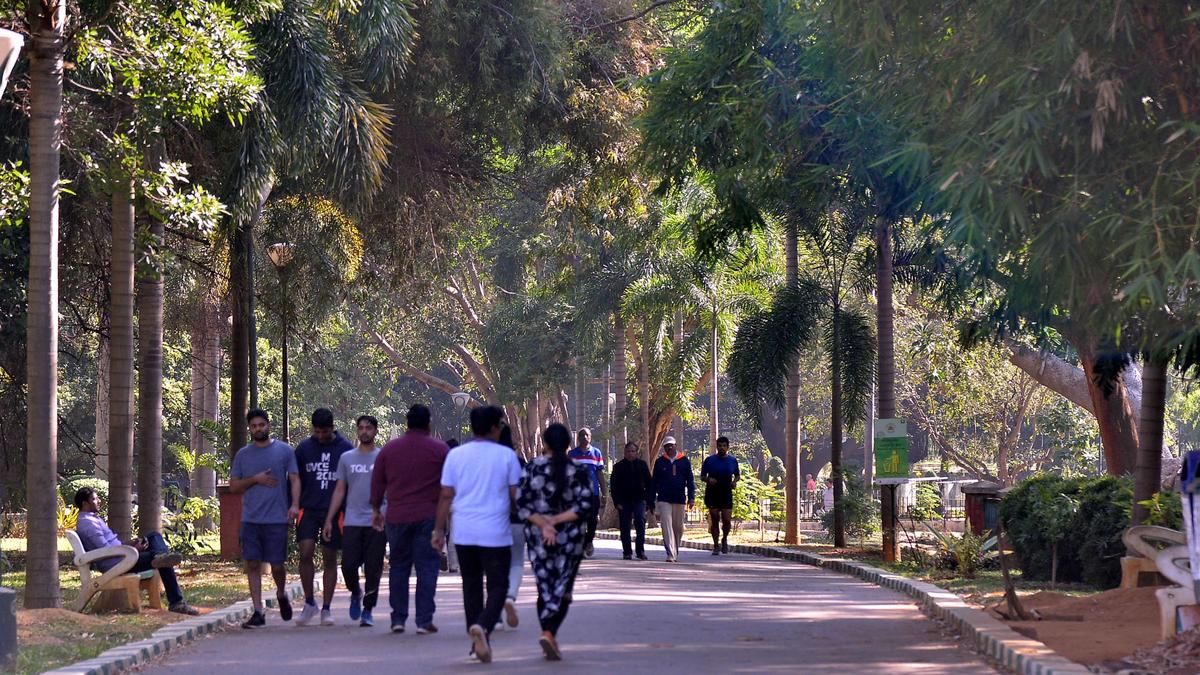
 A pattern of earlier sleep timing is associated with a lowered risk of major depressive disorder
| Photo Credit: FILE PHOTO

We humans are affected by the cycle of light and darkness that occurs every day. Our bodies have a 24-hour (circadian) rhythm that is translated into physiological processes such as hormone secretion, which in turn drive our actions. To stay in synchrony with the environment, and therefore to perform the right activities at the right time, light serves as an alarm clock. This light synchronisation, photoentrainment, happens in the brain by light signals coming from the eye.

Many other species also depend on light to provide them with cues for their daily routine. When these light patterns are disrupted, their natural rhythms and behaviours can be affected. An example: tourism operators in the Maldives take boatloads of visitors out at night, and shine bright lights of about 4000 watts on the ocean surface. Biological activity in the water picks up as if it is morning, and tourists get to see whale sharks.

Our vision is enabled by the rods and cones, which are photoreceptor cells in the outer retina. The rods are very sensitive to light but are not colour sensitive and so are most useful in dim light; the cones work best in bright light, giving us colour vision. Rods and cones convert photons of light into electrical signals, which are passed on to retinal ganglion cells. These cells process information from the retina and pass it on to the brain.

Photosensitive cells

About 20 years ago, a new class of cells that could perceive light was found in the inner retina. Called the intrinsically photosensitive retinal ganglion cells (ipRGC), these cells contain a photopigment, melanopsin, that allows them to directly respond to light. These cells have very important roles in our body’s interaction with light that are not related to seeing.

Electrical impulses from the ipRGC travel to areas of the brain that are involved in sleep, alertness and mood regulation. Signals also project to the area of the brain that controls the pupils of the eyes, causing them to constrict in response to bright light.

Importantly, electrical signals travel to a part of the hypothalamus that regulates circadian rhythms. This part of the brain has long been known to be the master clock, where your body’s internal clock is synchronised with the light-dark cycle in the outside world that is driven by the sun.

Morning birds

Morning diurnal preference is the classification for people who prefer early sleep and who rise early. Peak performance is earlier in the day, and the condition is associated with a reduced risk of obesity as well as better academic performance. Several studies have also shown that a pattern of earlier sleep timing is associated with a lowered risk of major depressive disorder (Scientific Reports, 12003, 2021).

Stanford neurobiology professor Andrew Huberman, in his popular podcast has pointed to the beneficial effects of low-angle light from the morning sun in resetting the circadian clock. ipRGC cells are most responsive to blue light (480 nm). The morning light has a low ratio of blue to yellow light, just enough to send a message to the hypothalamus marking the start of another circadian cycle. Sixteen hours later, your body is going to be sleepy. So go out and be in the morning light — sunny or cloudy, but don’t stare at the sun! Synchronizing your clock will improve your health — physical and mental.

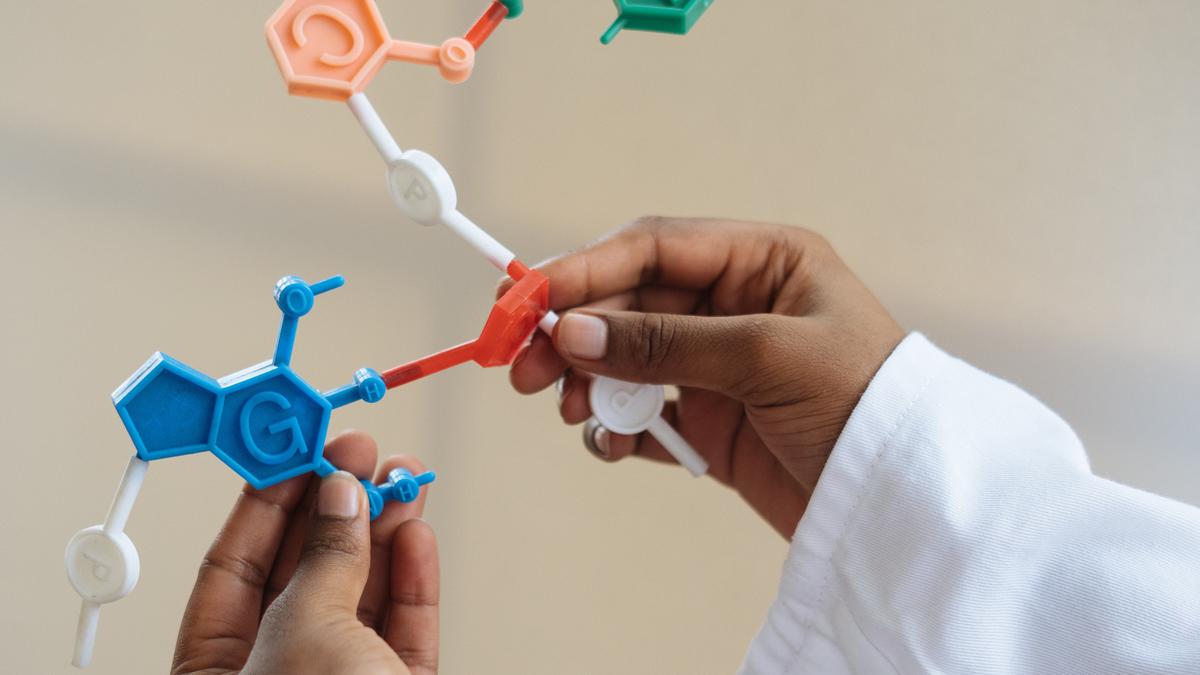
(The article was written in collaboration with Sushil Chandani, who works in molecular modelling)

Source link

Science Tags:Hormone secretion, Light impacts our life, Morning light, Photosensitive cells

Post navigation

Previous Post: Had Distinct Misfortune Of Watching Trump’s Speech
Next Post: Woman With 2 Kids Punched In Road Rage Case

Related Posts

  • National Research Foundation’s chance to bridge India’s science-society gap Science
  • Researchers call Australia carbon credit scheme a ‘catastrophe’ Science
  • What is micellar water and how does it work? Science
  • People with two copies of a risk gene have genetic form of Alzheimer’s, scientists say Science
  • Study reveals alarming economic burden of TB treatment Science
  • Where do the wild colours of domesticated silkworm cocoons come from? Science

More Related Articles

Why do fish in schools have an easier time swimming in rough waters? Science
2023 Nobel Prize in Physics: Seeing electrons through brief pulses of light | Explained Science
Antarctic winter sea ice hits ‘extreme’ record low Science
What is the legal framework for space missions like the Chandrayaan 3 and Aditya L-1? | Explained Science
Why are scientists looking for the Higgs boson’s closest friend? Science
Groundwater is heating up, threatening life below and above the surface Science
SiteLock

Archives

  • July 2024
  • June 2024
  • May 2024
  • April 2024
  • March 2024
  • February 2024
  • January 2024
  • December 2023
  • November 2023
  • October 2023
  • September 2023
  • August 2023
  • July 2023
  • June 2023
  • May 2023
  • April 2023
  • March 2023
  • February 2023
  • January 2023
  • December 2022
  • November 2022
  • October 2022
  • September 2022
  • August 2022
  • July 2022
  • June 2022
  • May 2022

Categories

  • Business
  • Nation
  • Science
  • Sports
  • World

Recent Posts

  • Finance Minister Sitharaman tables Economic Survey 2023-24 in Lok Sabha
  • Bangladesh calm a day after top court scrapped some job quotas
  • Vivek Ramaswamy’s Prediction On Joe Biden, Kamala Harris Comes True, Elon Musk Reacts
  • PM Narendra Modi, Budget Session, Parliament: Negative Politics Denied Many MPs Chance To Speak: PM Jabs Opposition
  • Hunter Biden drops lawsuit against Fox News over ‘mock trial’ Miniseries

Recent Comments

  1. ywdVpqHiNZCtUDcl on UP Teacher Who Asked Students To Slap Muslim Classmate
  2. bRstIalYyjkCUJqm on UP Teacher Who Asked Students To Slap Muslim Classmate
  3. GkJwRWEAbS on UP Teacher Who Asked Students To Slap Muslim Classmate
  4. xreDavBVnbGqQA on UP Teacher Who Asked Students To Slap Muslim Classmate
  5. aANVRzfUdmyb on UP Teacher Who Asked Students To Slap Muslim Classmate
  • Rupee trades in narrow range against U.S. dollar in early trade Business
  • US Shoots Down Turkish Drone In Syria: Pentagon World
  • Odisha Man Gets 20-Year Jail Term For Raping Girl Nation
  • Road Accidents Increased By 12% In 2022, 19 Deaths Reported Every Hour Nation
  • India vs Australia: India vs Australia, 2023 Live Cricket Score, Live Score Of Today's Match on NDTV Sports Sports
  • “…If I Didn’t Find You”: Virat Kohli’s Heartwarming Birthday Wish For Anushka Sharma Sports
  • Markets trade firm on global rally, fresh foreign fund inflows Business
  • Arsenal Survive Tottenham Fightback To Boost Premier League Title Charge Sports

Editor-in-Chief:
Mohammad Ariff,
MSW, MAJMC, BSW, DTL, CTS, CNM, CCR, CAL, RSL, ASOC.
editor@artifex.news

Associate Editors:
1. Zenellis R. Tuba,
zenelis@artifex.news
2. Haris Daniyel
daniyel@artifex.news

Photograher:
Rohan Das
rohan@artifex.news

Artifex.News offers Online Paid Internships to college students from India and Abroad. Interns will get a PRESS CARD and other online offers.
Send your CV (Subjectline: Paid Internship) to internship@artifex.news

Links:
Associate Journalism
About Us
Privacy Policy

News Links:
Breaking News
World
Nation
Sports
Business
Entertainment
Lifestyle

Registered Office:
72/A, Elliot Road, Kolkata - 700016
Tel: 033-22277777, 033-22172217
Email: office@artifex.news

Editorial Office / News Desk:
No. 13, Mezzanine Floor, Esplanade Metro Rail Station,
12 J. L. Nehru Road, Kolkata - 700069.
(Entry from Gate No. 5)
Tel: 033-46011099, 033-46046046
Email: editor@artifex.news

Copyright © 2023 Artifex.News Newsportal designed by Artifex Infotech.