

Skip to content
  • Facebook
  • X
  • Linkedin
  • WhatsApp
  • YouTube
  • Associate Journalism
  • About Us
  • Privacy Policy
  • 033-46046046
  • editor@artifex.news
Artifex.News

Artifex.News

Stay Connected. Stay Informed.

  • Breaking News
  • World
  • Nation
  • Sports
  • Business
  • Science
  • Entertainment
  • Lifestyle
  • Toggle search form
  • Ben Stokes Clean-Bowls Rohit Sharma On His First Ball Of Series, England Team In Disbelief. Watch
    Ben Stokes Clean-Bowls Rohit Sharma On His First Ball Of Series, England Team In Disbelief. Watch Sports
  • Access Denied Business
  • Ocean Heat Behind Helene Made 500 Times More Likely By Climate Change
    Ocean Heat Behind Helene Made 500 Times More Likely By Climate Change World
  • World Cup 2023 Points Table: Afghanistan Surpass Pakistan And Sri Lanka, Race To Semi-final Intensifies
    World Cup 2023 Points Table: Afghanistan Surpass Pakistan And Sri Lanka, Race To Semi-final Intensifies Sports
  • “Yashasvi Jaiswal Now Has…”: How Being India Star Has Changed The Youngster, Childhood Coach Reveals
    “Yashasvi Jaiswal Now Has…”: How Being India Star Has Changed The Youngster, Childhood Coach Reveals Sports
  • Access Denied World
  • India Yet To Make Formal Bid For Hosting World Athletics Championships In 2027
    India Yet To Make Formal Bid For Hosting World Athletics Championships In 2027 Sports
  • Cops File Cases Against Protestors
    Cops File Cases Against Protestors Nation
Cities warming due to combined effect of urbanisation, climate change

Cities warming due to combined effect of urbanisation, climate change

Posted on June 1, 2024 By admin


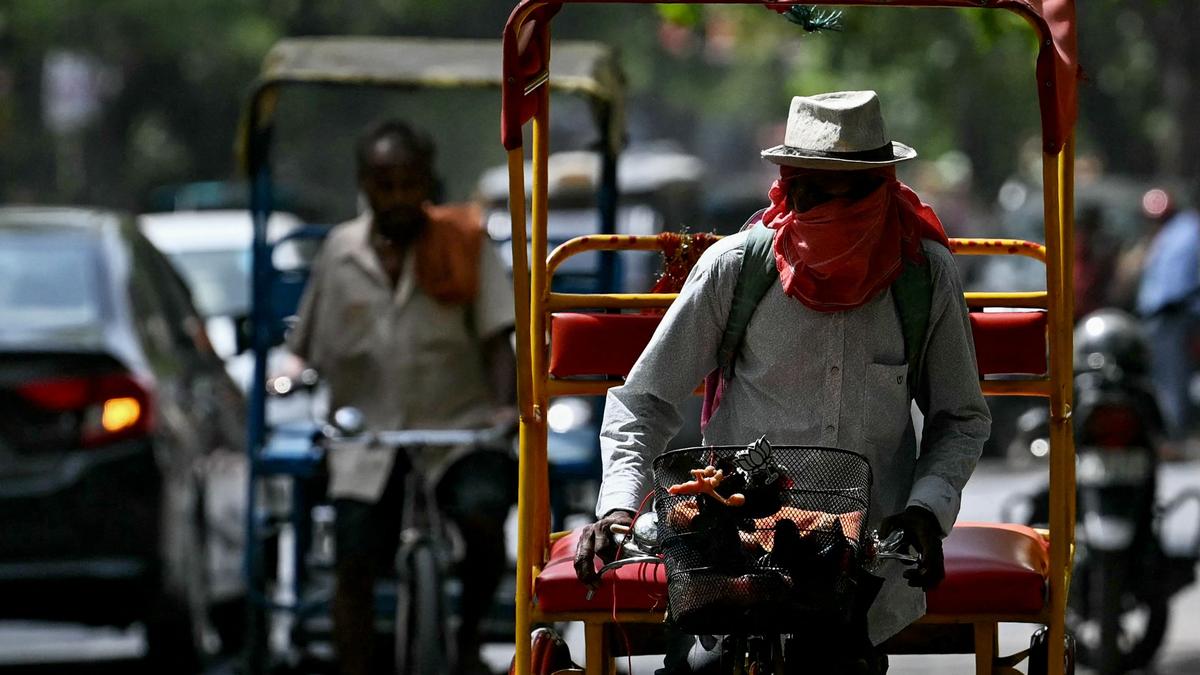
Recently, for two consecutive days, Delhi reported daytime temperature above 50 degree C, the highest ever recorded in the city. There is a reason why cities are experiencing higher temperatures than non-urban and rural areas. The ongoing climate change and rapid urbanisation are now defining the Anthropocene, with the cities experiencing both thereby making the urban population vulnerable to the compounding impact. India’s urban landscape (especially population) is projected to double by 2050, adding more than 450 million residents. This rise outnumbers the present total population of the United States and the European Union, signaling a huge historical shift. Given the breakneck urbanisation, our cities must be prepared for future challenges.

The altered thermodynamic, aerodynamic properties of the cities tend to trap more heat, making cities warmer than their rural and suburban counterparts, a phenomenon well-known as the urban heat island (UHI) effect. In addition, climate change is causing a significant increase in record-breaking temperatures and frequent prolonged heat waves. Therefore, the overall warming in any city tends to be complex with both urbanisation and global warming playing a pivotal role. This significantly alters the resultant micro-climate of the cities with influence on heat, rainfall distribution and even air pollution dispersion with implication to public health. As a result, the pace and course of urbanisation must be carefully planned using strong scientific information.

In a study published recently, we seek to separate the warming caused by local scale urbanisation and regional scale climate change in the context of 141 major cities in India and quantify their relative contributions. This kind of segregation is scientifically quite complex. One strategy is to determine the contributions of various factors to warming over time. These factors include information on concrete structures, roads, industries, parks, water bodies, residential activities, air conditioning, vehicular activities, and so on. Such detailed analysis requires enormous time, effort and investment, even for just one city and has to be incorporated into models or combined with extremely high-resolution satellite images for further analysis. A much simpler approach was followed using high-resolution night-time land surface temperature from MODIS, a sensor aboard Aqua satellite in NASA’s A-train constellation. Under the assumption that the observed changes in warming (2003 to 2020) over the rural areas are driven primarily by regional climate change, the warming over the urban built-up areas for each city was compared to its rural counterpart at every one sq. km area. Thus, after the removal of regional warming signatures from the urban areas, the signal related to urbanisation was estimated for 141 major and minor cities providing first-time information on global warming-free urbanisation signatures.   

Overall, the rate of warming in cities is nearly twice that of the rest of the country, with local-scale urbanisation alone causing additional warming of about 60%. While all cities showed an increase in night-time land surface temperature, with an average increase of 0.53 degree C per decade, a large divide among cities was seen. The tier-II cities in the eastern part of the country have stronger urbanisation-driven warming, surprisingly not seen even for the larger metros and mega cities. This may be indicating a window of opportunity as smaller highly urbanising cities could be managed well by proper urban planning than large megacities that have limited land and other resources that could be altered at this point in time.

Mitigation efforts

India is aggressively acting to reduce emissions and shift to non-fossil fuel based energy sources as clearly stated in the updated nationally determined contribution (NDC) working towards climate justice. State level heat action plans and implementation of early warning and forecasting systems for heatwaves show India’s commitment towards saving lives by reducing heat related mortality. Considering escalated risks for cities with a large heat exposure, tailored city specific action plans are needed for sustainable urban growth.

Based on the predominant contribution to warming (urbanisation or climate change), the study emphasises that urban heat management must follow a differential approach for each city. Information on the dominant contributor will help urban planners and policymakers to better allocate limited resources. Cities with a large urbanisation contribution may benefit from local scale interventions —use of sustainable materials like cool roofs and cool/permeable pavements, green infrastructures, creation of maintenance of lakes and parks, urban forests, and comprehensive emission reduction strategies. While other cities may require more regional scale efforts —  national or regional level emission reduction, large-scale afforestation/plantation, rejuvenation of surrounding water bodies — for effective warming mitigation with both having implications for extreme urban rainfall, floods, air pollution etc.

(V. Vinoj is Associate Professor, School of Earth, Ocean and Climate Sciences, IIT Bhubaneswar, and S.S. Sethi is PhD scholar in the School of Earth, Ocean and Climate Sciences, IIT Bhubaneswar)



Source link

Science Tags:Cities warming, Climate change, Heat, Heat island effect, Urbanisation

Post navigation

Previous Post: Roman Baths may harbour novel antimicrobial natural products
Next Post: H5N1 remains infectious on milking equipment for over one hour

Related Posts

  • Machine learning can help blood tests have a separate ‘normal’ for each patient
    Machine learning can help blood tests have a separate ‘normal’ for each patient Science
  • What caused Morocco’s earthquake? A geologist studying the Atlas mountains explains
    What caused Morocco’s earthquake? A geologist studying the Atlas mountains explains Science
  • Patriarchy, the Matilda effect, and the erasure of women in STEM
    Patriarchy, the Matilda effect, and the erasure of women in STEM Science
  • An unlikely mystery: studies shed new light on how genes are made
    An unlikely mystery: studies shed new light on how genes are made Science
  • Drew Weissman, Nobel-winning mRNA pioneer
    Drew Weissman, Nobel-winning mRNA pioneer Science
  • Hidden dangers of irrational use of antibiotics on microbiome
    Hidden dangers of irrational use of antibiotics on microbiome Science

More Related Articles

RRI researchers develop new algorithm which can produce better images to study ultracold atoms RRI researchers develop new algorithm which can produce better images to study ultracold atoms Science
Budget gives science missions big numbers but core funding gaps persist Budget gives science missions big numbers but core funding gaps persist Science
Why better prediction of cyclone intensity, heavy rainfall is needed Why better prediction of cyclone intensity, heavy rainfall is needed Science
In search of skin lightening creams, kidneys take a hit In search of skin lightening creams, kidneys take a hit Science
Hearing tests show that minke whales can hear high-frequency sounds Hearing tests show that minke whales can hear high-frequency sounds Science
Scientists, civil society members write open letter to Bharat Biotech and ICMR over prosecution of researchers Scientists, civil society members write open letter to Bharat Biotech and ICMR over prosecution of researchers Science
SiteLock

Archives

  • May 2026
  • April 2026
  • March 2026
  • February 2026
  • January 2026
  • December 2025
  • November 2025
  • October 2025
  • September 2025
  • August 2025
  • July 2025
  • June 2025
  • May 2025
  • April 2025
  • March 2025
  • February 2025
  • January 2025
  • December 2024
  • November 2024
  • October 2024
  • September 2024
  • August 2024
  • July 2024
  • June 2024
  • May 2024
  • April 2024
  • March 2024
  • February 2024
  • January 2024
  • December 2023
  • November 2023
  • October 2023
  • September 2023
  • August 2023
  • July 2023
  • June 2023
  • May 2023
  • April 2023
  • March 2023
  • February 2023
  • January 2023
  • December 2022
  • November 2022
  • October 2022
  • September 2022
  • August 2022
  • July 2022
  • June 2022
  • May 2022

Categories

  • Business
  • Nation
  • Science
  • Sports
  • World

Recent Posts

  • Xi warns Trump Taiwan issue could lead to ‘conflict’ as U.S.-China summit starts
  • New pop-ups and menus to try in Bengaluru this May
  • Congress MLA-elects make a beeline for Indira Bhavan as AICC inches closer to announcing its Chief Minister pick for Kerala
  • Woman gang-raped in sleeper bus in New Delhi
  • Lebanon, Israel to hold new talks in U.S. as ceasefire nears end

Recent Comments

  1. Davidcag on UP Teacher Who Asked Students To Slap Muslim Classmate
  2. OrvalMaync on UP Teacher Who Asked Students To Slap Muslim Classmate
  3. Jeffreyroure on UP Teacher Who Asked Students To Slap Muslim Classmate
  4. Stevemonge on UP Teacher Who Asked Students To Slap Muslim Classmate
  5. RichardClage on UP Teacher Who Asked Students To Slap Muslim Classmate
  • Community Health Officers demand timely incentives, payment of dues
    Community Health Officers demand timely incentives, payment of dues Nation
  • Did Milk Prices Increase After Maharashtra Assembly Polls?
    Did Milk Prices Increase After Maharashtra Assembly Polls? Nation
  • PAK vs BAN | Zaman-Shafique duo dazzles, keeps Pakistan in the hunt
    PAK vs BAN | Zaman-Shafique duo dazzles, keeps Pakistan in the hunt Sports
  • Access Denied Sports
  • Access Denied
    Access Denied Nation
  • Nayara energy CEO resigns after EU sanctions; company names new chief executive
    Nayara energy CEO resigns after EU sanctions; company names new chief executive Business
  • Nepal’s interim government: Two new ministers take oath as PM Sushila Karki expands Cabinet
    Nepal’s interim government: Two new ministers take oath as PM Sushila Karki expands Cabinet World
  • Access Denied
    Access Denied Nation

Editor-in-Chief:
Mohammad Ariff,
MSW, MAJMC, BSW, DTL, CTS, CNM, CCR, CAL, RSL, ASOC.
editor@artifex.news

Associate Editors:
1. Zenellis R. Tuba,
zenelis@artifex.news
2. Haris Daniyel
daniyel@artifex.news

Photograher:
Rohan Das
rohan@artifex.news

Artifex.News offers Online Paid Internships to college students from India and Abroad. Interns will get a PRESS CARD and other online offers.
Send your CV (Subjectline: Paid Internship) to internship@artifex.news

Links:
Associate Journalism
About Us
Privacy Policy

News Links:
Breaking News
World
Nation
Sports
Business
Entertainment
Lifestyle

Registered Office:
72/A, Elliot Road, Kolkata - 700016
Tel: 033-22277777, 033-22172217
Email: office@artifex.news

Editorial Office / News Desk:
No. 13, Mezzanine Floor, Esplanade Metro Rail Station,
12 J. L. Nehru Road, Kolkata - 700069.
(Entry from Gate No. 5)
Tel: 033-46011099, 033-46046046
Email: editor@artifex.news

Copyright © 2023 Artifex.News Newsportal designed by Artifex Infotech.